How to Play A Feast for Odin
Feuerland Spiele, Cranio Creations, Devir · Board game · 2016What do you want to do now
Ask anything about A Feast for Odin: rules, setup, components, complexity, price, or whether it fits your group.
Video: How to Play
Start here, then follow the written guide
Step by step
1. Objective of the Game
In A Feast for Odin, you play as a Viking tribe leader. Your goal is to build the most valuable collection of goods, ships, houses, and explored territories by the end of the game. The player whose home board and exploration boards together hold the highest total value of silver coins, goods tiles, ships, houses, and occupation cards wins. The game ends after the final round (7 rounds in the long game, 6 rounds in the short game). The winner is the player with the greatest total value at that point.
2. Preparation (Setup)
- Action Board: Place the large action board in the center of the table. In a 4‑player game, add the two extension tiles to the board, choosing a random side to face up. In 1–3 player games, no extension tiles are needed.
- Supply Boards: Put the oval special tiles board and the small ship supply board next to the goods boxes.
- Goods Boxes: Open the two goods boxes and arrange the tiles as described in the manual. Keep the boxes within easy reach of all players.
- Occupation & Weapon Decks: Separate the occupation cards into the light‑brown and dark‑brown stacks. Each player draws one light‑brown occupation card into their hand and discards the rest of the light‑brown cards. Shuffle the dark‑brown occupation cards and the weapon cards into two face‑down piles.
- Home Boards & Vikings: Each player takes a home board. Flip the side that matches the chosen game length (7 rounds for the long game, 6 rounds for the short game). Players choose a color and take the 12 Vikings of that color. Place a Viking on each numbered space of the Banquet Table track on the home board and the remaining Vikings on the Thing Square. Place the white round tracking cube on space 1 of the round overview tile.
- Ships: Sort the 32 ship tiles by type and place each type in a face‑up stack on the ship supply board.
- Mountain Strips: Shuffle the eight mountain strips, turn two face up (three in a 4‑player game), and place the remaining strips face down as a draw pile.
- Exploration Boards: Lay out the four exploration boards with the Shetland, Faroe Islands, Iceland, and Greenland sides facing up.
- Building Tiles: Place the “shed”, “stone house”, and “long house” tiles in separate face‑up stacks on the table.
- Dice & Coins: Place the orange eight‑sided die, the blue twelve‑sided die, and all 125 silver coins (80x “1 Silver”, 22x “2 Silver”, 18x “4 Silver”, 5x “10 Silver”) within easy reach.
3. Flow of the Game
Each round consists of 12 phases that occur in the following order:
- Phase 1: A New Viking – Take the leftmost Viking from the Banquet Table track and place it on the Thing Square.
- Phase 2: Harvest – Receive orange goods according to the current round’s harvest rule (see the manual for the exact crop list). Place them in your personal supply.
- Phase 3: Turn Exploration Boards & Place Silver – If the round requires turning an exploration board, turn it face up, return any silver on it to the general supply, and place 2 silver on all other unclaimed exploration boards. No action in the first and last round.
- Phase 4: Draw a New Weapon – Draw one weapon card from the face‑down weapon pile and place it face up in your supply.
- Phase 5: Actions – Starting with the start player, each player may place Vikings from the Thing Square onto unoccupied action spaces on the action board. After all players have passed or placed all available Vikings, the action phase ends.
- Phase 6: Determine Start Player – The player who placed the last Viking in Phase 5 receives the start player moose and will start the next round.
- Phase 7: Income – Cover the lowest uncovered income value on the diagonal of your home board to receive that amount of silver.
- Phase 8: Animal Breeding – Turn pregnant sheep/cattle to non‑pregnant and add new animals to the stables.
- Phase 9: Feast – Place orange and red food tiles (or 1‑silver coins) on empty Banquet Table spaces according to the placement rules. If a space is left empty, you must take a Thing Penalty tile.
- Phase 10: Bonus – If you have surrounded a goods‑symbol space, you receive that good as a bonus each round.
- Phase 11: Update and Add New Mountain Strips – Remove the leftmost resource from each face‑up mountain strip and return it to the general supply. If a strip becomes empty, remove it. Then turn a new mountain strip face up and place its goods on it.
- Phase 12: Remove Placed Vikings – Return all Vikings from the action board to the Thing Square, completing the round.
4. Actions and How to Play
During Phase 5: Actions, you may occupy any number of action spaces, provided you have enough Vikings for the space’s requirement (1 Viking for the first column, 2 for the second, 3 for the third, 4 for the fourth). Each action space has a specific effect, described in the rulebook. Below are the main categories of action spaces you will encounter:
- Production Spaces – Gain goods or resources directly from the board (e.g., 1 stockfish, 1 milk per cattle, 1 wool per sheep, 1 spice + 1 silver, etc.).
- Exchange Spaces – Trade goods or building resources for other items (e.g., pay 2 wood for a shed, trade a green good for a blue good, etc.).
- Mountain & Trading Spaces – Take building resources from mountain strips or trade goods for more valuable ones.
- Ship‑Related Spaces – Build ships, arm them with ore, or use them for exploration, emigration, raiding, pillaging, hunting, or whaling.
- Occupation Spaces – Draw or play occupation cards, which may grant immediate benefits or allow you to play additional cards.
- Exploration Spaces – Claim exploration boards by placing the required number of Vikings and a suitable ship.
- Emigration Spaces – Turn a knarr or longship into an emigration tile and place it on the Banquet Table, reducing future feast requirements.
- Raiding, Pillaging, Hunting, and Whaling Spaces – Roll the appropriate die (orange 8‑sided for raiding/hunting, blue 12‑sided for pillaging/whaling) and apply modifiers from weapons, ore, and dice rolls to determine success or failure.
All actions must be completed immediately after occupying the space. You may also perform Anytime Actions (placing goods on boards, buying ships, making change, arming ships, playing occupation cards, etc.) at any point during the game, as long as the rules for each action are followed.
5. End of Game and Scoring
The game ends after the final round’s Phase 12. Scoring is performed as follows:
- Goods and Silver – Add the value of all silver coins, blue luxury goods, and any special blue tiles on your home board and exploration boards.
- Ships – Add the value of each ship on your home board. Large ships (knarrs, longships) increase in value if they have been used for emigration.
- Houses – Add the value of each shed, stone house, and long house. Covering negative‑point spaces with goods tiles prevents penalty points.
- Exploration Boards – Add the value of each claimed exploration board, including any silver placed on it during the game.
- Occupation Cards – Add the point value of each occupation card played. Negative‑point cards (e.g., Undertaker) subtract points.
- Animal Bonuses – Add points for sheep and cattle, including extra points for pregnant animals.
- Thing Penalties – Subtract 3 points for each Thing Penalty tile held at game end.
The player with the highest total value after all deductions wins. If a player’s total value is lower than the minimum required to finish the game, they lose.
6. Tips for Winning
- Plan Your Feast Early – Use the Anytime Actions to place goods on your home board before the Income phase. This can give you extra silver that may be used for bonuses or to purchase ships.
- Balance Exploration and Raiding – Claim exploration boards early to gain additional placement areas, but also use raiding and pillaging to acquire high‑value blue goods. Remember that each exploration board requires a specific ship type and number of Vikings.
- Manage Thing Penalties – Keep your Banquet Table full by placing food tiles efficiently. A full table reduces the number of Thing Penalty tiles you must take, saving you 3 points per tile at game end.
More videos
More rules explanations from the community
In English
-
 How to Play A Feast for Odin - Nights Around a Table
-
 A Feast for Odin Board Game – How to Play
-
 How to Play A Feast for Odin in 20 Minutes
-
 How to play A Feast for Odin
-
 Heavy Cardboard Teaches A Feast for Odin & Full Playthrough!
-
 A Feast for Odin - SLOW Introductory Tutorial and Play-through for Non-Heavy Gamers
-
 A Feast for Odin + The Norwegians Expansion | Solo Board Game Tutorial and Playthrough
-
 Heavy Cardboard Teaches A Feast for Odin & Full Playthrough (2nd playthru)
-
 BGN: A Feast for Odin Unboxing
-
 Learn to Play A Feast for Odin
-
 A Feast For Odin Gamesplained - Part 1
Rules manual
Official PDF file
Frequently Asked Questions
Quick answers about the rules
What is the objective of A Feast for Odin?
How do you set up A Feast for Odin?
How do you play A Feast for Odin?
How does A Feast for Odin end, and how do you score?
What are some tips for winning A Feast for Odin?
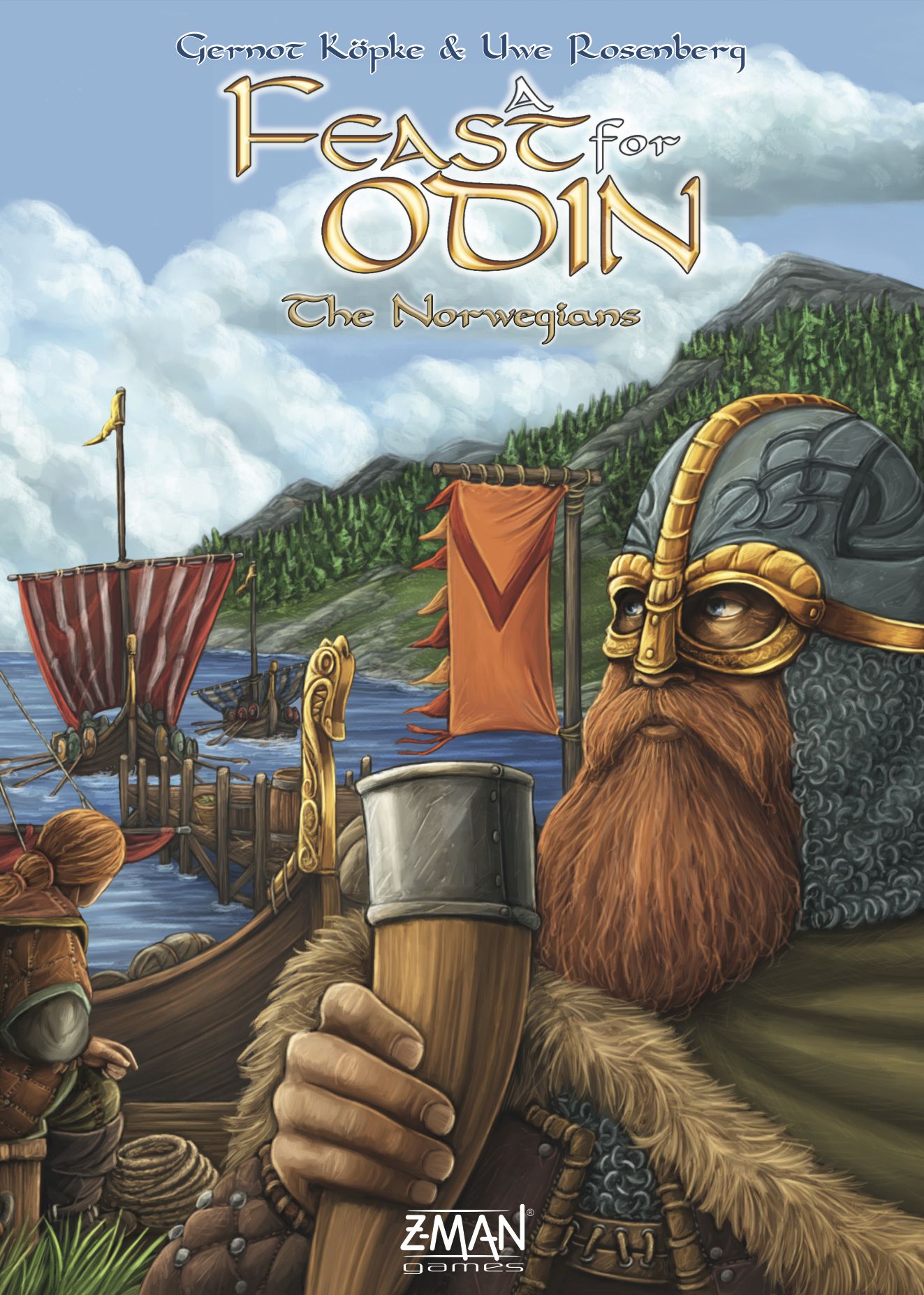
Expansions
Published additional content


Other Games You'll Like
Based on mechanics and theme