How to Play Age of Steam
Warfrog Games, Arclight Games, CZ Cloud Soft Co. Ltd · Board game · 2002What do you want to do now
Ask anything about Age of Steam: rules, setup, components, complexity, price, or whether it fits your group.
Video: How to Play
Start here, then follow the written guide
Step by step
The Ultimate Guide: How to Play Age of Steam: Deluxe Edition
Prepare to embark on an epic journey of railway construction, goods transportation, and economic dominance! In Age of Steam: Deluxe Edition, you are not just an engineer, but a visionary magnate, competing to build the most lucrative railway empire. Buckle up, because the locomotive is about to depart!
Game Objective
In Age of Steam: Deluxe Edition, your objective is simple yet challenging: be the player with the most Victory Points at the end of the game. To do this, you'll need to build an efficient railway network, deliver valuable goods, and master your finances. The game is a race against time and your opponents to become the supreme Railroad Baron!
Preparation (Setup)
Let's set up the table and prepare your railways for takeoff!
- Main Board: Choose one of the 3 Double-Sided Game Boards and place it in the center of the table. For this guide, we will use the Rust Belt map.
- Common Components:
- Place the 3 Display Boards, the Money ($1, $5, and $25 tokens), the Track Tiles (136 in total), the City Discs (white), and the New City Tiles (8 in total) near the main board.
- The 6 Dice should also be within reach.
- Position the Turn Marker on the "Start" circle on the Turn Counter.
- Take all the Goods Cubes (red, blue, purple, yellow, and black) and place them in the Cloth Bag. The white cubes are for specific expansions.
- Now, draw one cube at a time from the bag and fill the Goods Display on the Display Boards, starting from the top left corner and filling the rows, until you have a total of 52 cubes.
- Map Preparation (Rust Belt):
- Randomly draw three Goods Cubes from the bag and place them in Pittsburgh.
- Randomly draw three Goods Cubes from the bag and place them in Wheeling.
- For the remaining cities on the board, randomly draw and place two Goods Cubes from the bag in each.
- Player Preparation:
- Each player chooses a color and takes 25 Round Wooden Discs of that color. Set aside 5 discs, as they are for expansions. You will use 20 Track Ownership Discs.
- Each player places a disc on the Engine Counter, on the "link 1" square.
- Each player places a disc on the Income Counter, on the "0" square.
- To determine the initial Player Order, each player rolls 3 dice. The player with the highest result places a disc in the "1st" spot on the Player Order Counter, the second highest in the "2nd", and so on.
- Each player places a disc in the first box (2 shares) on the Shares Issued Counter and receives $10.
- Each player places a fifth disc near the Selected Actions Marker to use later when choosing an Action.
- The remaining 20 discs are your Track Ownership Discs.
The game begins with the Issue Shares phase!
The Game Turn
A turn in Age of Steam is divided into ten distinct phases. Let's detail them:
- I. Issue Shares:
In this phase, players can choose to issue shares of their railway to obtain money. For each share issued, you receive $5 and advance your disc on the Shares Issued Counter by 1 space. You cannot issue more shares than the counter allows. Issuing occurs in Player Order, starting with the first player. Remember, you already start with 2 shares issued.
- II. Determine Player Order:
This is the auction phase for turn order! The discs on the Player Order Counter are slid up from the printed circles. The current 1st player starts the auction, being able to bid $1 or more to stay in the dispute, or drop out and go to the last position. Other players can bid a higher amount or drop out. The auction continues until only one player remains. The last two players who remained in the bid pay the full amount bid. The others pay their bids rounded up. Those who drop out pay nothing. The "Turn Order" action allows you to "pass" once without bidding.
- III. Select Actions:
Seven Special Actions are available on the Action Counter. In the new Player Order, each player chooses an action by placing one of their discs on it. Each action can only be selected by one player.
- First Move: Allows you to move goods first in both movement turns, regardless of Player Order.
- First Build: Allows you to build tracks first, regardless of Player Order.
- Engineering: Allows you to build up to 4 track tiles, instead of the conventional 3.
- Locomotive: Allows you to advance your disc on the Engine Counter by up to one link (maximum limit of 6 links).
- Urbanization: Allows you to place one of the New City Tiles in a city before building your track.
- Production: At the start of the Goods Growth phase, allows you to draw 2 random goods cubes from the bag and place them in any 2 empty boxes on the Goods Counter (one cube per box). (Useless in the first turn, as there are no empty boxes).
- Turn Order (Pass): Allows you to say "pass" once in the bids of the next Determine Player Order phase without having to make a bid.
- IV. Build Track:
In Player Order, each player can place (or replace) up to 3 Track Tiles (4 if they have the Engineering action). The player with the "First Build" action builds first. A player's first track tile must be adjacent to a city and connect to it. All subsequent tracks must connect to the player's existing network or to a city via their tracks.
Track Types and Costs:
- Simple Track Tiles: Cost $2. If the hex is a river, $3. If it's a mountain, $4.
- Complex Coexistence Track Tiles: Cost $3. If the hex is a river, $4. If it's a mountain, $5.
- Complex Crossing Track Tiles: Cost $4. If the hex is a river, $5. If it's a mountain, $6.
- Dedicated City Tiles: Can only be placed on hexes with a city. The cheapest (one exit) costs $2. The most expensive (complex track with city disc) costs $5.
- Replacing Tracks:
- Replacing a simple track with a complex crossing track costs $3.
- Replacing a track in a city costs $3.
- All other replacements cost $2.
- Redirecting Tracks: Cost $2.
When building, place a Track Ownership Disc on each Complete Railway Link (connects two cities/towns) or Incomplete Track Section. If an Incomplete Track Section is not extended in a turn, the disc is removed, and it becomes unowned.
- V. Move Goods:
In Player Order, each player can move one Goods Cube. Then, there is a second turn of goods movement, again in Player Order. The player with the "First Move" action acts first. Goods must be moved through Complete Railway Links and end in a city of the same color as the goods. They cannot visit the same city/town more than once and must stop upon entering a city of their color. Movement is limited by the number of links on your Engine Counter. After movement, the cube is returned to the bag.
Each Complete Railway Link used increases the owner's income by 1 on the Income Counter. You can use other players' railways, and they also gain income. In one of the two movement opportunities, you can choose to advance your disc on the Engine Counter by one link, instead of moving goods.
- VI. Collect Income:
Players receive the amount of money indicated by their discs on the Income Counter.
- VII. Pay Expenses:
Players pay their expenses, which are $1 for each link their locomotives can cross (indicated on the Engine Counter). If you don't have enough money, you must reduce your income by $1 for each dollar owed. If your income falls below $0, you enter insolvency and are eliminated from the game. All your Track Ownership Discs on Incomplete Sections are removed.
- VIII. Income Reduction:
Railway income is reduced based on its current value:
- More than 49: Reduces by 10.
- Between 41-49: Reduces by 8.
- Between 31-40: Reduces by 6.
- Between 21-30: Reduces by 4.
- Between 11-20: Reduces by 2.
- IX. Goods Growth:
If a player chose the "Production" action, they draw 2 random goods cubes from the bag and place them in empty boxes on the Goods Counter. Then, roll a number of dice equal to the number of players at the start of the game. For each column of goods on the Goods Counter, take a number of cubes equal to the die roll in the equivalent column and place them in the cities that correspond to the column number. Goods are placed on New City Tiles on the map, but not on those off the board.
- X. Advance Turn Marker:
Advance the Turn Marker on the Turn Counter. If it's not the last turn, the game returns to the Issue Shares phase. If it's the last turn, the game ends, and scoring is calculated.
End of Game and Scoring
The game ends when the last turn is completed, as indicated on the Turn Counter (e.g., 7th turn for 5 players).
Computing Victory Points:
Players receive Victory Points as follows:
- 3 Victory Points for each dollar of income shown on the Income Counter.
- 1 Victory Point for each track section comprised in a Complete Railway Link. (Sections are the separations between track tiles and cities/towns).
- Lose 3 Victory Points for each share issued, according to the Shares Issued Counter.
Money has no value at the end of the game; it is merely a tool during the game.
The player with the most Victory Points WINS the game! Ties are possible.
Tips for Winning
To excel in Age of Steam, a solid strategy is crucial. Here are some tips to get you started:
- Income Management is King: Your income is the lifeblood of your railway empire. Prioritize building Complete Railway Links that allow you to move high-value goods or that are frequently used by other players. Remember that each link used increases your income. Keep an eye on the Income Reduction phase and try to maintain your income at levels that minimize losses.
- Strategic Actions: The Special Actions are powerful and can define your turn. Evaluate the state of the game and the immediate needs of your railway. Do you need more tracks to complete a crucial route? The "Engineering" action can be vital. Do you want to ensure the first move to block an opponent or deliver important goods? "First Build" or "First Move" are your allies. Don't underestimate "Urbanization" to create new delivery opportunities.
- Beware of Debt: Issuing shares gives you quick money, but each share issued costs 3 Victory Points at the end of the game. Additionally, you have fixed expenses based on your Engine Counter. Finding the balance between having enough money to build and not getting too indebted is fundamental to avoiding insolvency and maximizing your final score. Think carefully before issuing that extra share!
More videos
More rules explanations from the community
In English






Rules manual
Official PDF file
Frequently Asked Questions
Quick answers about the rules
How do you play Age of Steam?
Expansions
Published additional content
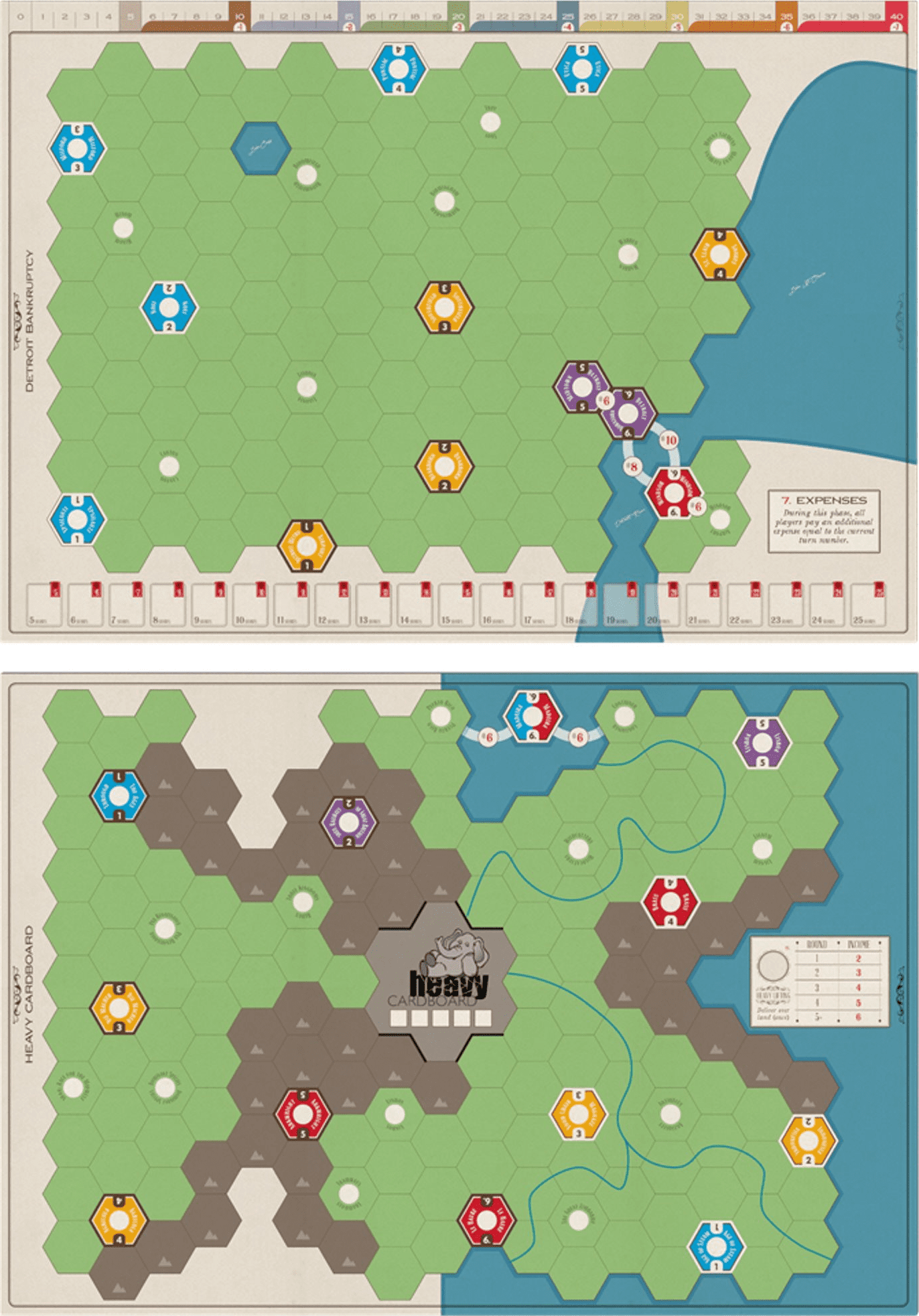 Age of Steam Deluxe Expansion: Detroit Bankruptcy & Heavy Cardboard Maps
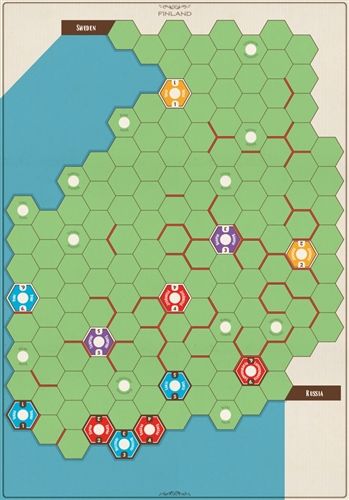 Age of Steam Deluxe Expansion: Hungary & Finland Maps
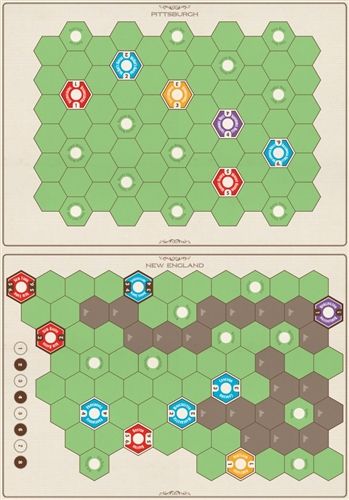 Age of Steam Deluxe Expansion: New England/Pittsburgh & Switzerland Maps
 Age of Steam Deluxe: Expansion Volume I
 Age of Steam Deluxe: Expansion Volume II
 Age of Steam Deluxe: Expansion Volume III
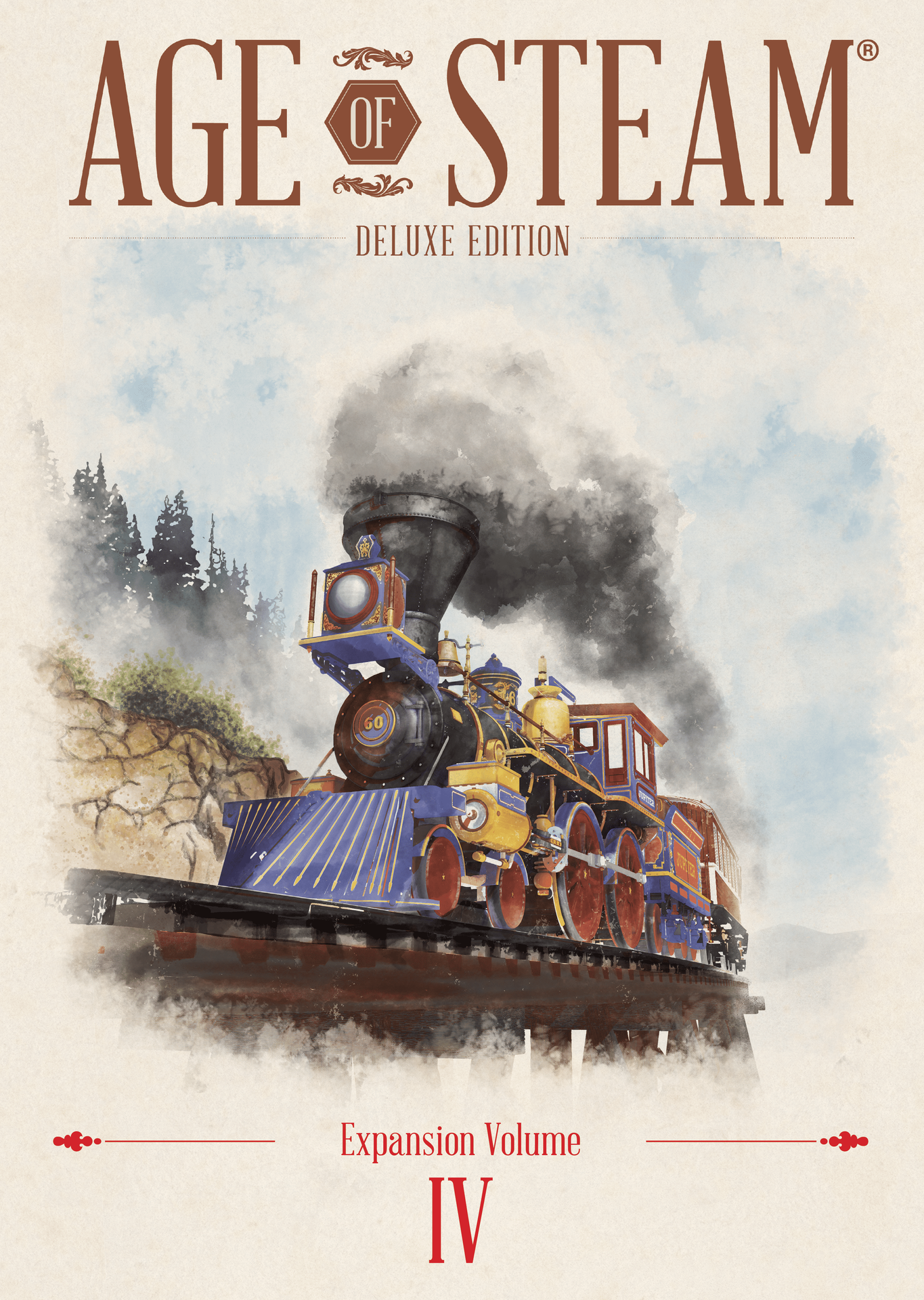 Age of Steam Deluxe: Expansion Volume IV
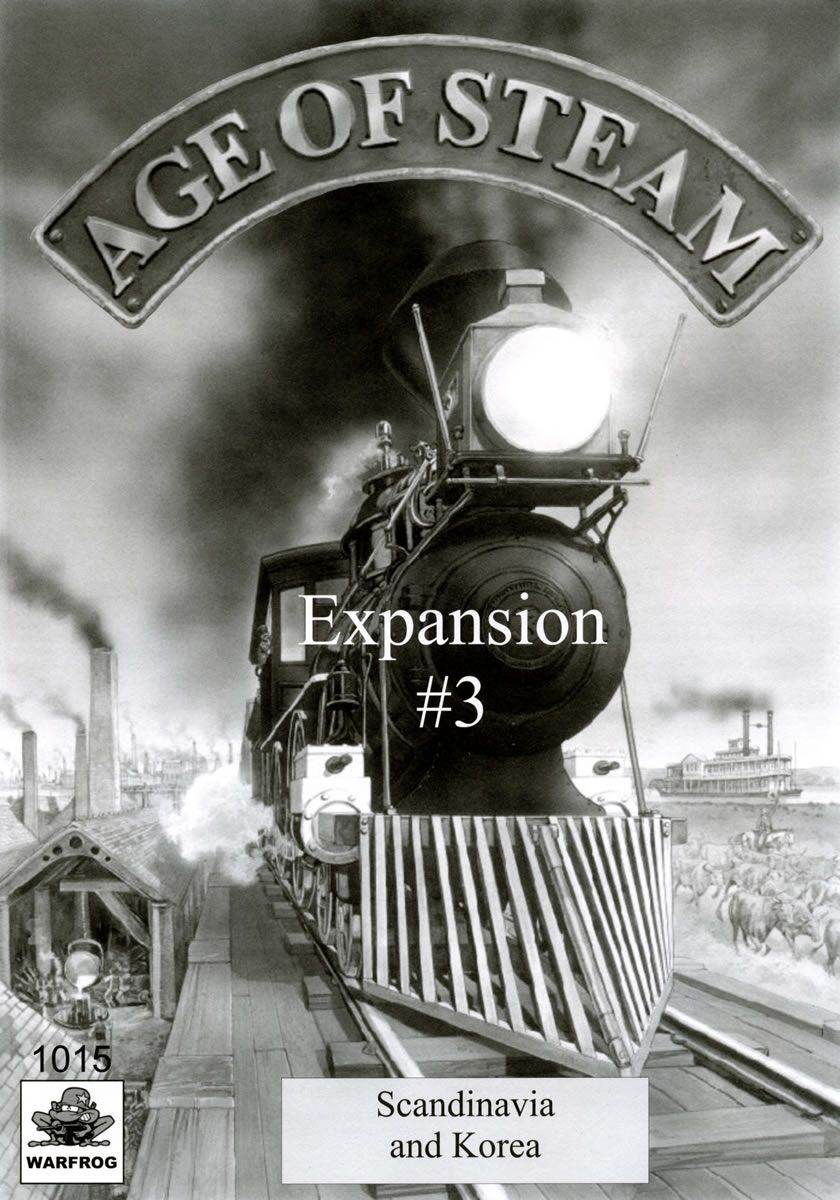 Age of Steam Expansion #3: Scandinavia and Korea
 Age of Steam Expansion: Barbados / St. Lucia
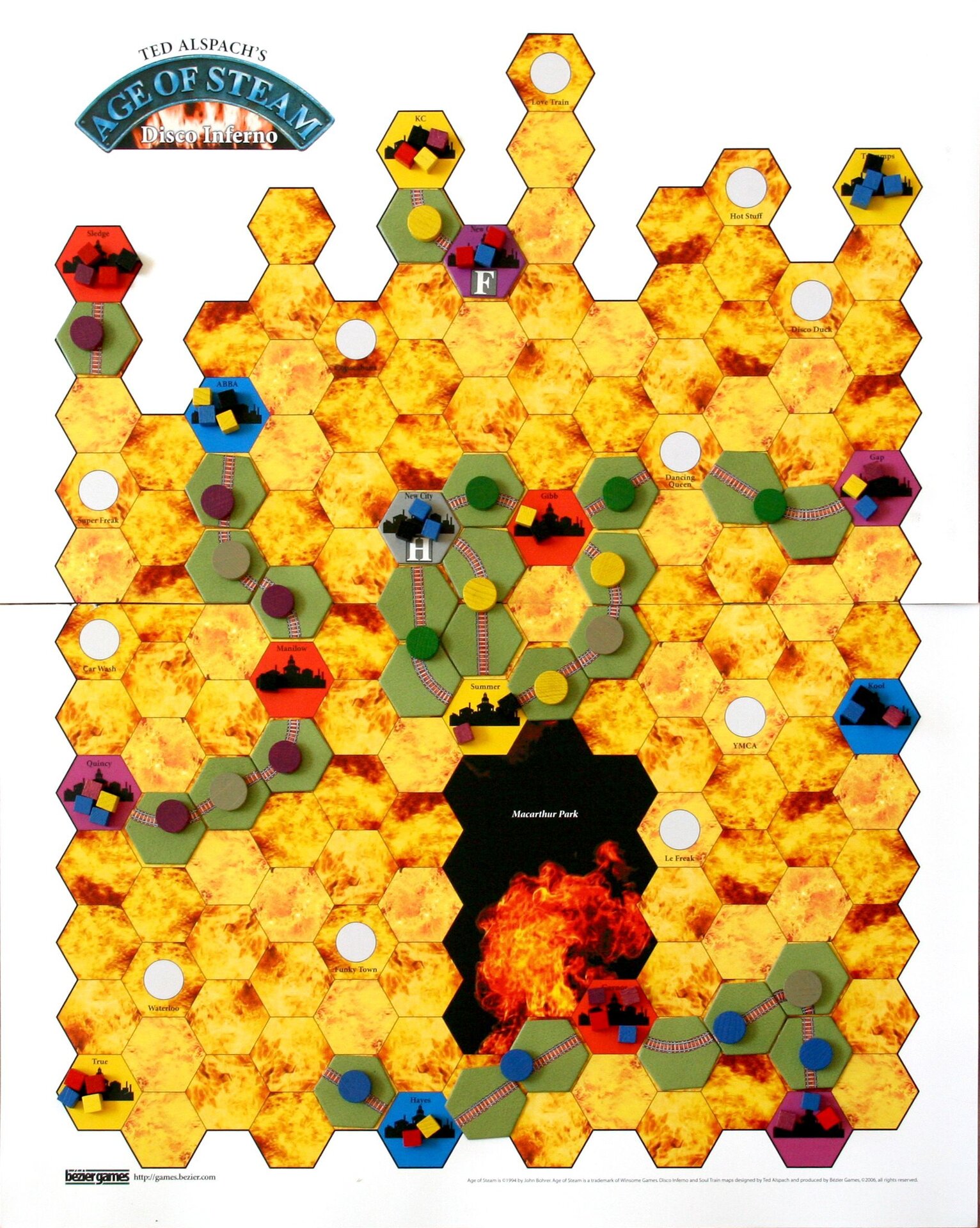 Age of Steam Expansion: Disco Inferno / Soul Train
 Age of Steam Expansion: Fukushima/Chernobyl
 Age of Steam Expansion: Germany & France
 Age of Steam Expansion: Holland / Madagascar
 Age of Steam Expansion: Human Body/Synapses
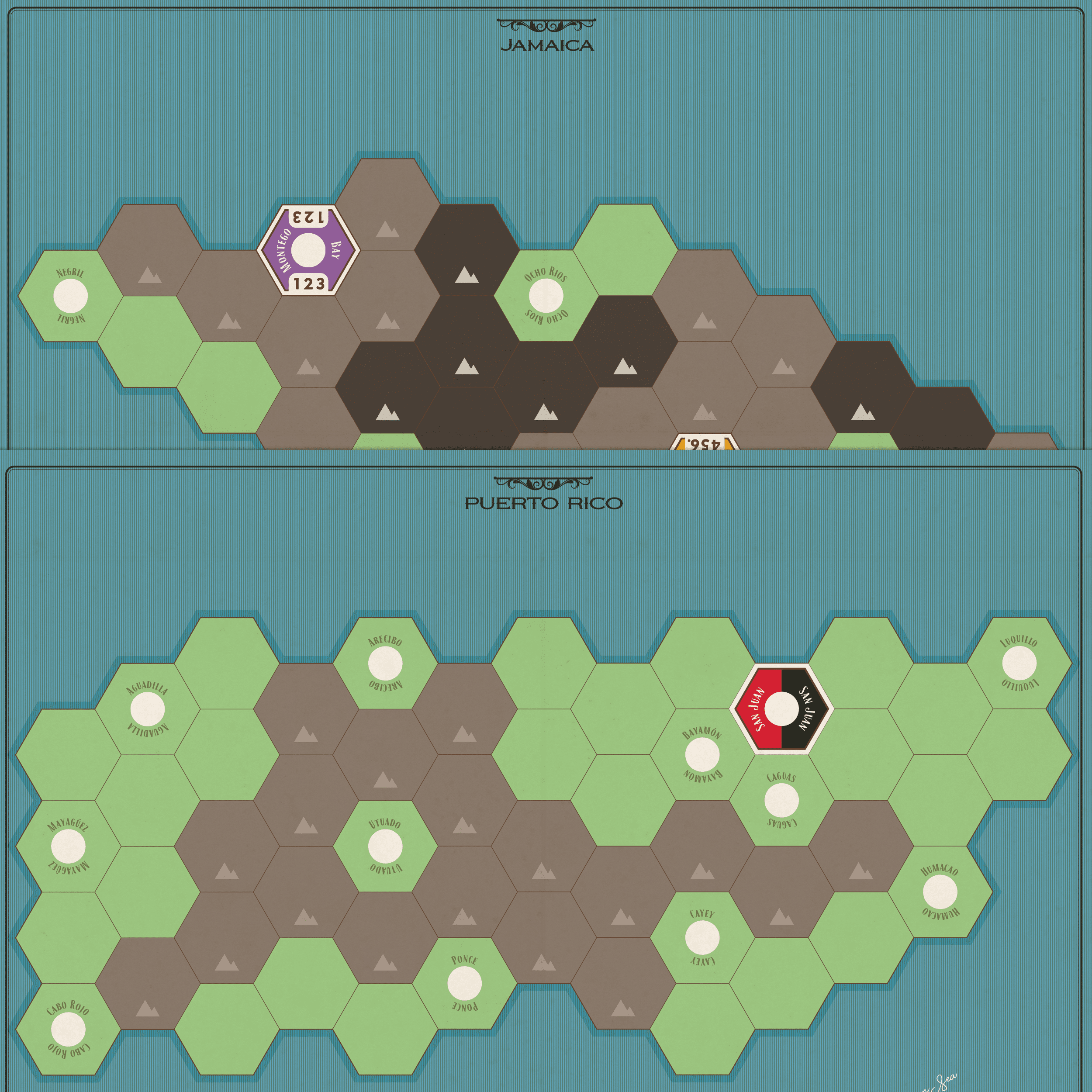 Age of Steam Expansion: Jamaica / Puerto Rico
 Age of Steam Expansion: Mexico & China
 Age of Steam Expansion: Mississippi Steamboats / Golden Spike
 Age of Steam Expansion: Montréal Métro
 Age of Steam Expansion: Moon and Berlin Wall
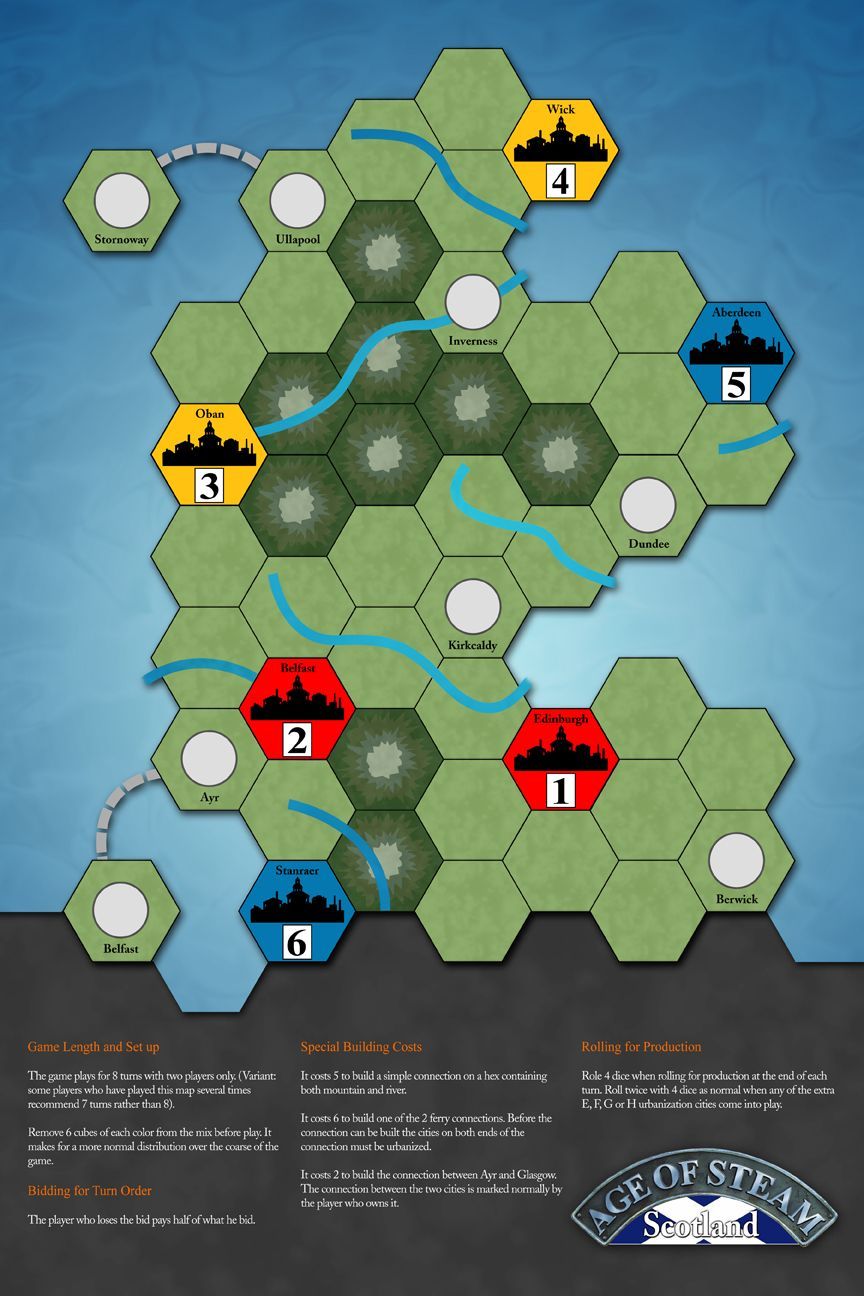 Age of Steam Expansion: Scotland
 Age of Steam Expansion: South America / South Africa
 Age of Steam Expansion: The Zombie Apocalypse
 Age of Steam Expansion: Vermont, New Hampshire & Central New England
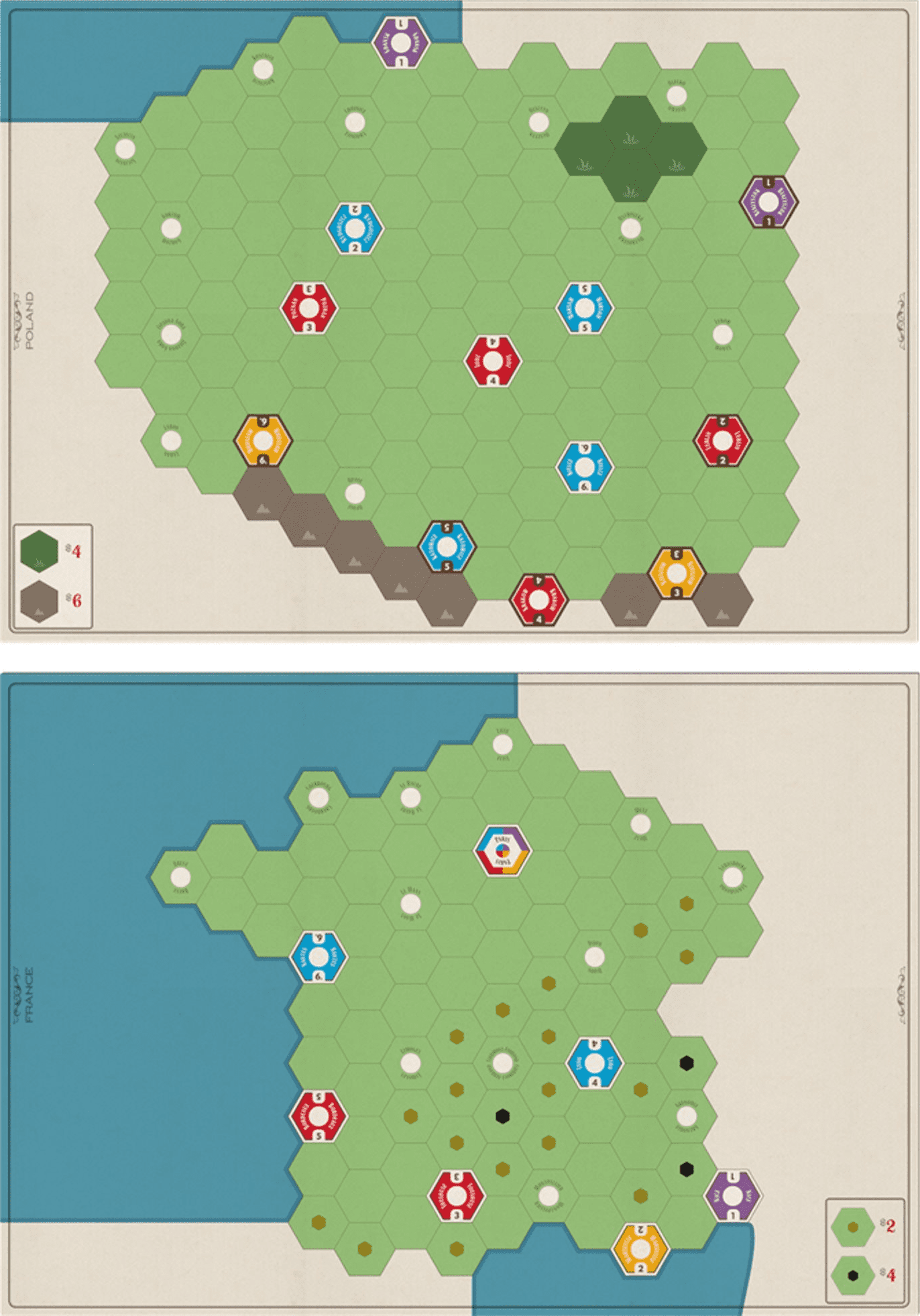 Age of Steam: Deluxe Expansion – France & Poland Maps
Other Games You'll Like
Based on mechanics and theme