How to Play Arcadia Quest
Cool Mini Or Not, Spaghetti Western Games, asmodee · Board game · 2014What do you want to do now
Ask anything about Arcadia Quest: rules, setup, components, complexity, price, or whether it fits your group.
Video: How to Play
Start here, then follow the written guide
Step by step
Objective of the Game
Welcome to Arcadia, brave Heroes! In Arcadia Quest, you and your fellow Guilds are vying for the title of the Greatest and Most Famous Guild in all the land. While you're all technically allies against the monstrous hordes, remember: only one Guild can claim ultimate victory!
In this thrilling Overlord Mode, the game shifts to a cooperative experience for the Guilds, with a twist! A fifth player takes on the role of the menacing Overlord, controlling the monsters and aiming to crush your heroic aspirations. Your primary goal as a Guild is to complete challenging PvE missions and gather valuable rewards. The Overlord, on the other hand, seeks to decimate your Heroes and spread evil across Arcadia.
The ultimate winner of the campaign is declared after the final scenario (scenario 6). If a Guild wins, medals are counted as usual. If the Overlord triumphs, their victory is measured by the number of scenarios they've won throughout the campaign, showcasing the intensity of the evil they've unleashed!
Preparation (Setup)
Getting ready for an epic adventure in Arcadia Quest is straightforward. Here’s how you set up your game:
- Choose Your Guilds: Each of the 4 Guild players selects their Guild and their starting Heroes.
- Prepare the Scenario: Set up the game board according to the chosen scenario.
- Distribute Upgrade Cards: Each Guild Player receives 6 upgrade cards. Keep these hidden for now!
- Overlord's Starting Gear: The Overlord begins with no special tokens or abilities at the start of the first scenario.
- Monster Placement: Place monsters on the board as indicated by the scenario. Ensure the Spawn Tile is ready for new monster arrivals.
- Objective Tokens: Place any mission tokens or objectives on the board as specified by the scenario.
The Game Turn
A round in Arcadia Quest is a dynamic dance between the Guilds and the Overlord. Here’s how it unfolds:
- Guilds' Turn Order: The 4 Guild Players decide the order they will take their turns in each round. This is a crucial strategic decision, so discuss it and optimize your approach! (The Overlord might set a time limit to keep things moving.)
- Tip: Use a token (like a Guild token) to track who has completed their turn to avoid confusion.
- Guild Player's Turn: When it's a Guild Player's turn, they activate their Heroes and perform actions according to the normal game rules. This includes moving, attacking, and using abilities.
- Overlord's Turn: After all four Guilds have completed one turn (even if they just rested), it's the Overlord's turn. The Overlord plays like a Guild, controlling the "Monster's Guild." Since monsters don't have equipment to exhaust, they don't need to rest for that purpose. The Overlord will always be able to activate one of their monsters and perform one of the following actions:
- Rest his army: All Dazed Monsters return to normal, and the first Monster on the Spawn Tile is automatically spawned in one of the available specific spaces.
- Activate a Minion: Activate a Minion (Minor or Major) and execute its actions (following the same rules as Heroes).
- Activate a Villain: Activate a Villain (Minor or Major) in the same way, provided it has Line of Sight to an Enemy (any Hero).
Remember: Heroes have no Guard nor Payback Reactions against Overlord attacks! (MWAHAHAHAHA!)
- Monster Reactions: The Overlord is also responsible for performing Guard and Payback Reactions for monsters, and rolling dice to spawn new monsters.
Upgrade Phase (After a Scenario)
After a scenario concludes, the Guilds enter the Upgrade Phase to prepare for the next challenge. The process differs based on who won the scenario:
If the Guilds Win the Scenario:
The resolution remains mostly the same as the official rules, with one exciting difference: the draft of upgrade cards is open for negotiation! You can even trade Coins with other Players. Here's how the draft proceeds:
- Each Player opens their 6 received cards on the table and reserves 2, placing them close to themselves.
- Next, each Player chooses 2 cards from the 4 open cards in front of the Player to their right and places them in front of themselves, alongside their first two reserved cards.
- Lastly, each Player takes the 2 cards that remained in front of the Player to their left, completing their deck of 6 upgrade cards.
- From here, the official rules are followed again, including the 3-card buying limit.
If the Overlord Wins the Scenario:
The Guilds face penalties before the Upgrade Phase:
- All Heroes receive 1 Death token (Skull).
- Each Guild loses a number of Coins equivalent to the quantity of Skull tokens they have (including the three extra tokens received in the last step).
- Players must then collectively choose between two paths:
- Accept their destiny: Move on to the next scenario. However, the draft phase will be leaner (50%): only 3 cards are dealt, 1 is reserved by the Player, 1 is chosen from the Player on the right, and the last is the 1 remaining in front of the Player on the left.
- Refuse their destiny: Move to a different, unchosen scenario from the same circle as the current scenario, playing it at the same level. However, they must give up all Coins obtained and skip the "cards buying" step of the Upgrade Phase.
The Overlord is rewarded with 1 Skull token, 4 Guilds tokens (one of each), and 4 Coins. These grant them the right to use 3 special abilities in the next scenario:
- Summon the Wrath Power (single use): On their turn, the Overlord can spend the Skull token to spawn any Villain (except Lord Fang!) from the game box into an available specific space, even if that Villain isn't in the current scenario.
- Summon the Misfortune Power: At any moment, the Overlord can spend 1 of the 4 Guilds tokens to nullify a dice roll (attack or defense) of any Character from the corresponding Guild, making it a failure.
- Summon the Greed Power: At any moment, the Overlord can spend 1 of the 4 Coins to reject a dice roll (attack or defense) of any of their Characters, allowing them to reroll from scratch.
End of Game and Scoring
The scenario can end in a few ways, determining who claims victory for that round:
Guilds Victory Conditions:
- Two Players complete 2 PvE missions each. The Player who fulfills this condition first wins the match.
- If condition (a) isn't met, the match ends when one Player completes all 2 PvE missions of the scenario, being proclaimed the winner.
- If neither (a) nor (b) are met, the match ends when no more missions can be fulfilled. The Player who completed more Quests wins. In case of a tie, the one who fulfilled that condition first wins.
- There's also a remote possibility of the match ending due to a lack of Monsters on the board and Spawn Tile. In this case, the Guilds win the match. The winning Player is the one who completed more Quests. In case of a tie, the one who fulfilled that condition first wins.
Overlord's Victory Condition:
- The count of defeated Heroes reaches 15. That is, when the Death tokens (Skull) distributed across all Guilds total fifteen.
The overall campaign winner is decided after the final scenario (scenario 6). If a Guild wins, their accumulated Medals are counted. If the Overlord wins the final scenario, their victory is measured by the number of scenarios they've won throughout the campaign, showcasing the intensity of evil that prevailed over Arcadia!
Tips for Winning
- Coordinate Your Guilds: Even though only one Guild can be "the Greatest," in Overlord Mode, you're all working together against a common enemy. Strategize your turn order carefully and consider which Guilds should focus on which PvE missions to achieve the scenario victory conditions efficiently.
- Manage Your Death Tokens: The Overlord wins if 15 Death tokens are accumulated across all Guilds. Be mindful of your Heroes' health and try to prevent unnecessary defeats. Sometimes retreating or resting to heal is better than pushing for a risky attack.
- Leverage the Upgrade Draft (Guilds): When the Guilds win a scenario, the open draft for upgrade cards is a powerful tool. Don't be afraid to negotiate and trade Coins with other players to get the cards that best suit your Guild's strategy. "Business is business," after all!
- Overlord's Power Play: As the Overlord, don't forget your special abilities if you win a scenario! Summon the Wrath Power can bring a powerful Villain into play, Summon the Misfortune Power can nullify a crucial Hero dice roll, and Summon the Greed Power gives you a valuable reroll. Use these strategically to turn the tide against the Guilds.
More videos
More rules explanations from the community
In English
-
 Battling Brushes 12: Arcadia Quest
-
 Painting Seth
-
 Arcadia Quest - Painting Lilith
-
 Arcadia Quest - Painting Luke, the Lucky
-
 Arcadia Quest - Painting Papa Ruk
-
 Learn to Play Arcadia Quest
-
 Painting 3D printed door for Arcadia Quest & Inferno
-
 Painting Lydia
-
 Arcadia Quest - Painting Orc Marauders
-
 Arcadia Quest - Painting Poison Dragon
-
 Arcadia Quest - Painting Schmetterling/Troll
Rules manual
Official PDF file
Frequently Asked Questions
Quick answers about the rules
What is the objective of Arcadia Quest?
How do you set up Arcadia Quest?
How does Arcadia Quest end, and how do you score?
What are some tips for winning Arcadia Quest?
Expansions
Published additional content
 Arcadia Quest: Aeric
 Arcadia Quest: Anvil & Valma
 Arcadia Quest: Beyond the Grave
 Arcadia Quest: Bob the Conjurer
 Arcadia Quest: Chaos Dragon
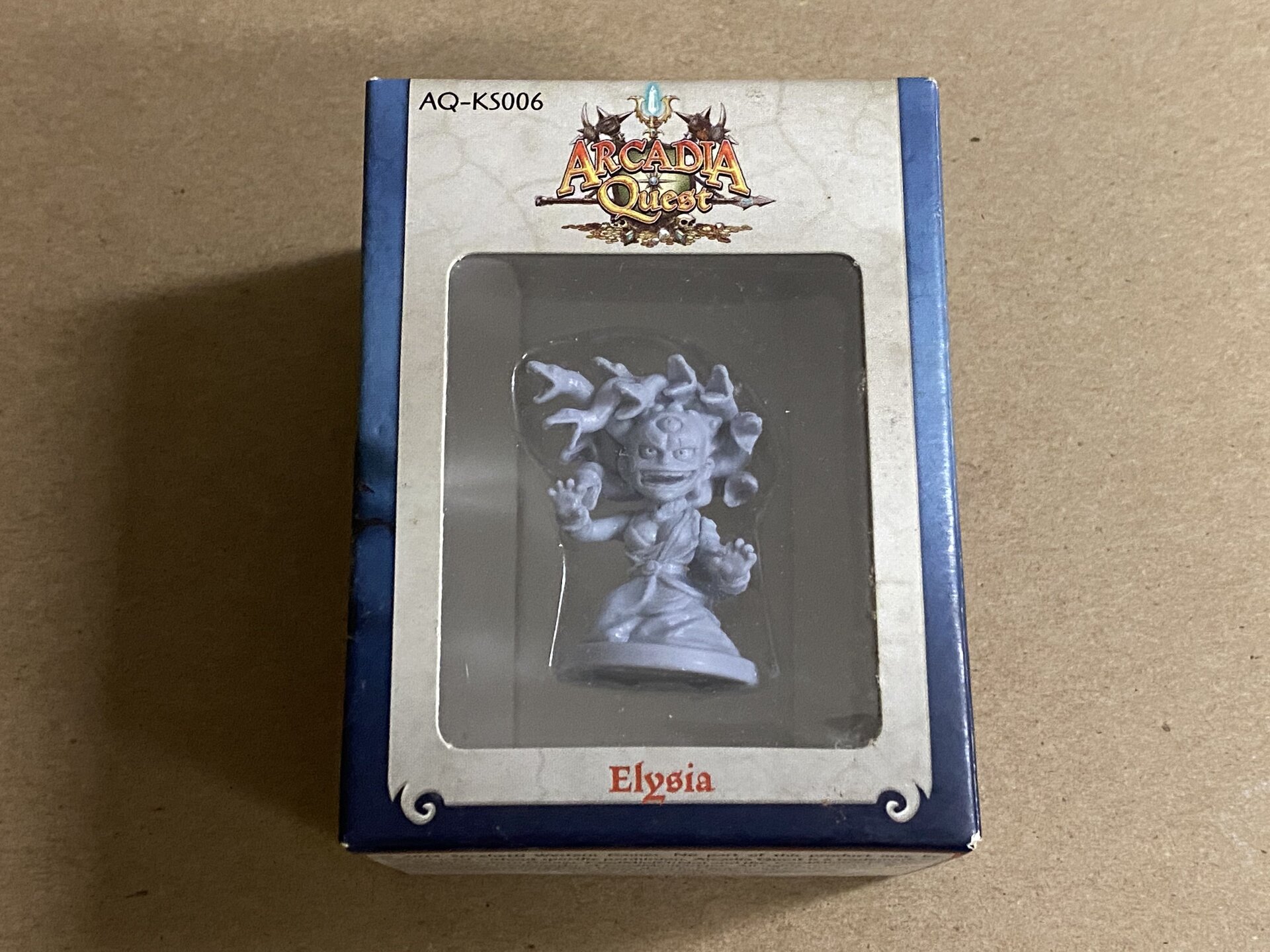 Arcadia Quest: Elysia
 Arcadia Quest: Farfalla
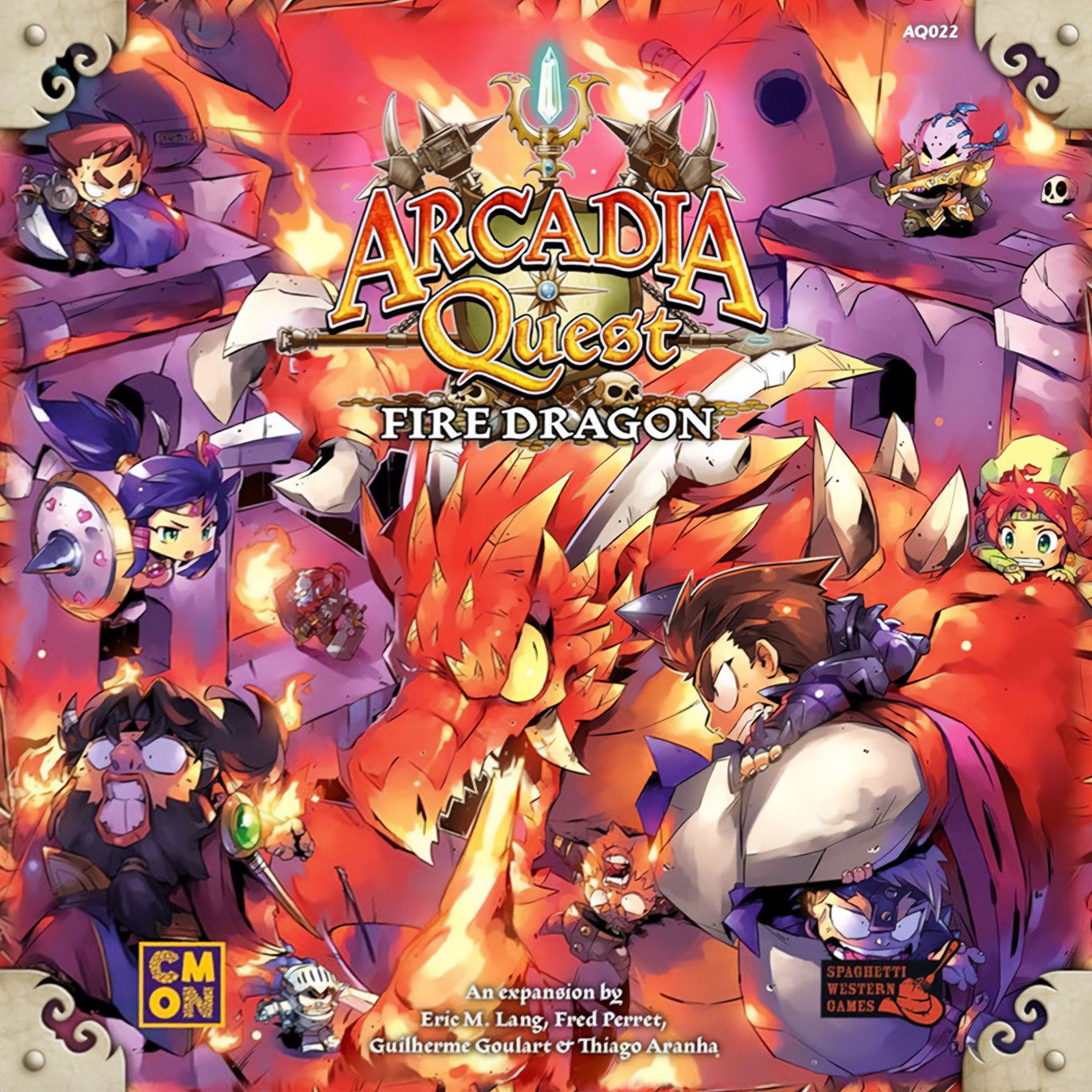 Arcadia Quest: Fire Dragon
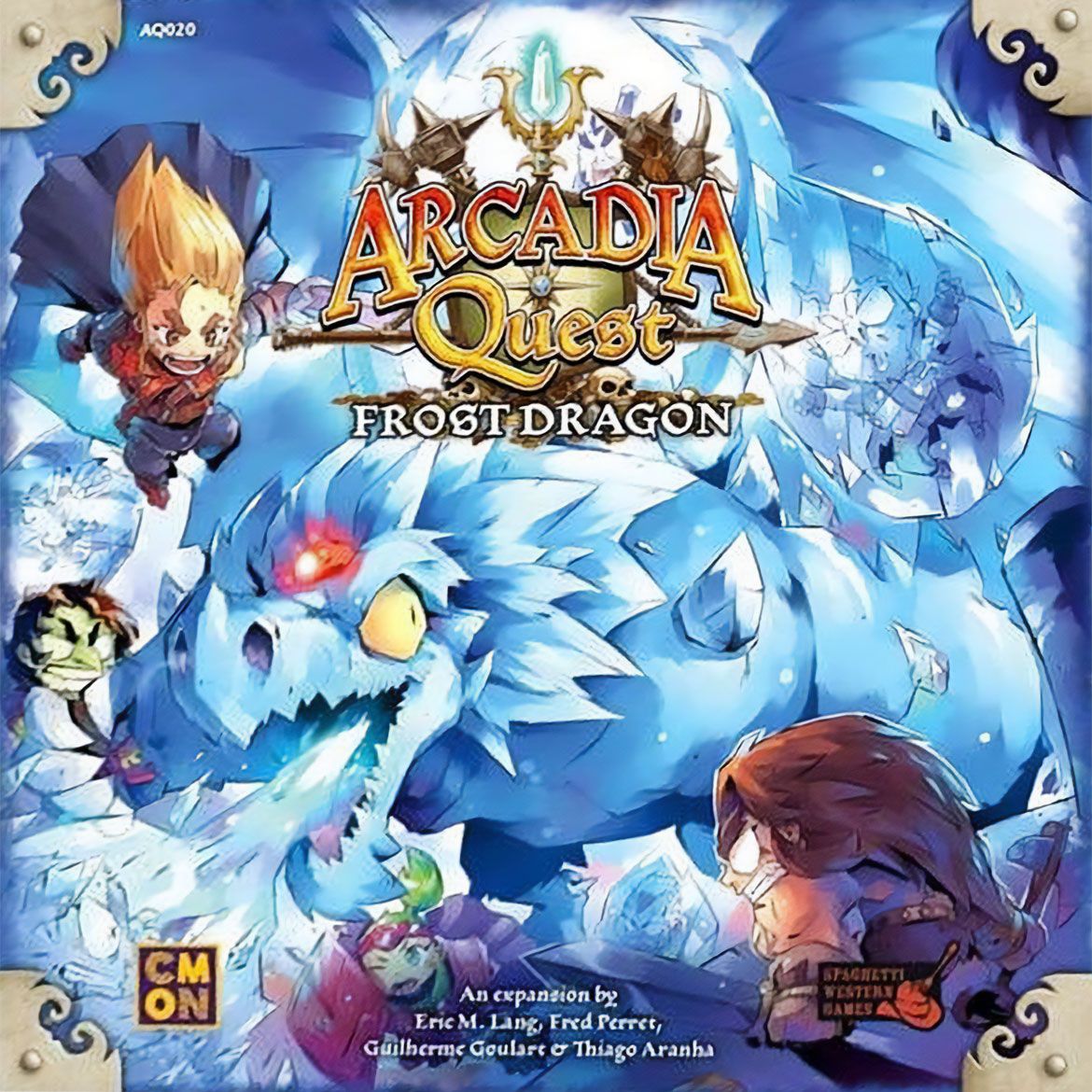 Arcadia Quest: Frost Dragon
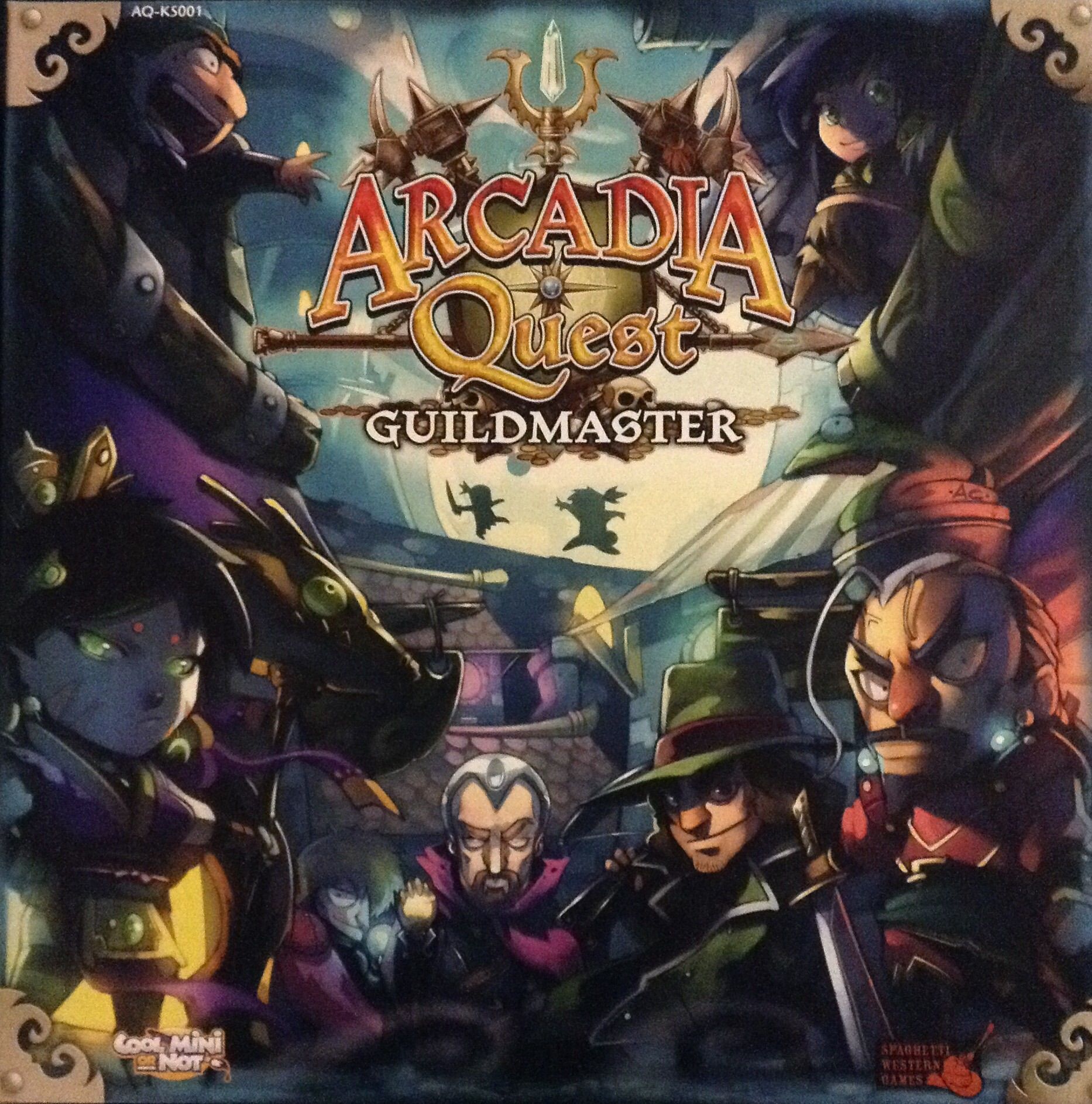 Arcadia Quest: Guildmaster Kickstarter Heroes
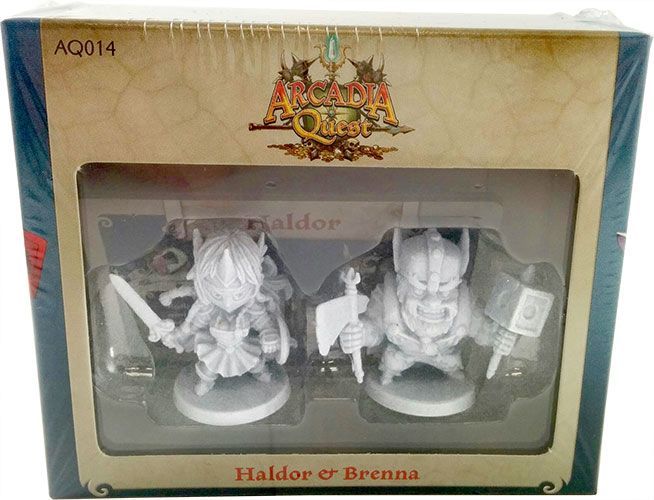 Arcadia Quest: Haldor & Brenna
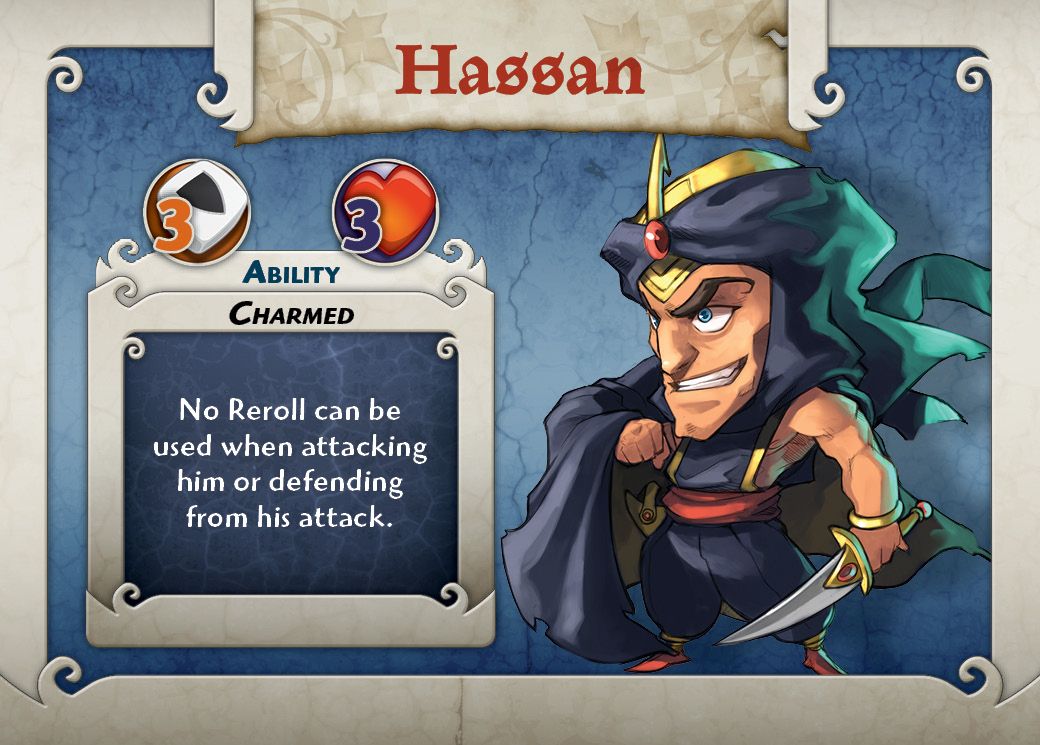 Arcadia Quest: Hassan
 Arcadia Quest: Healing Fountain
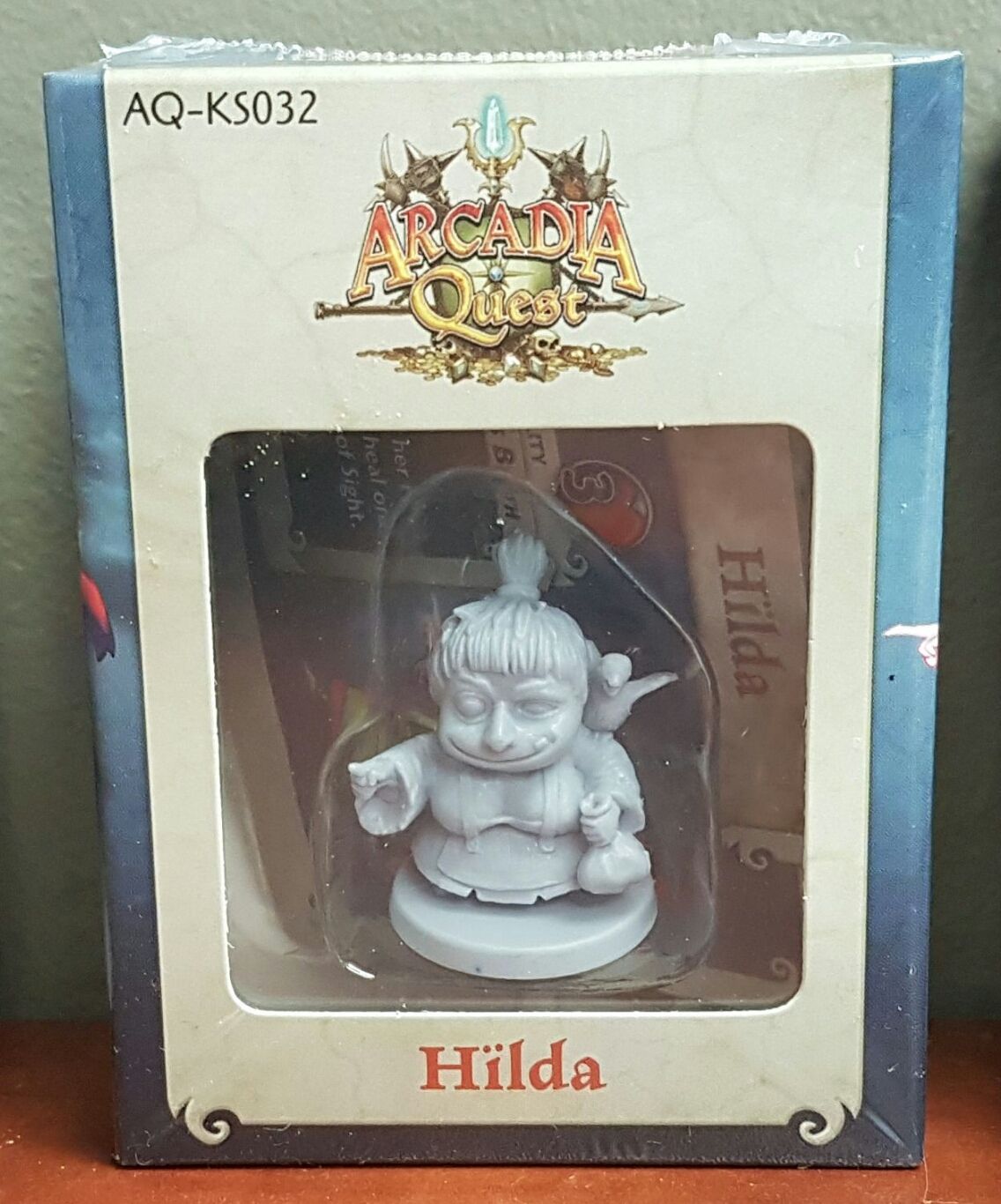 Arcadia Quest: Hïlda
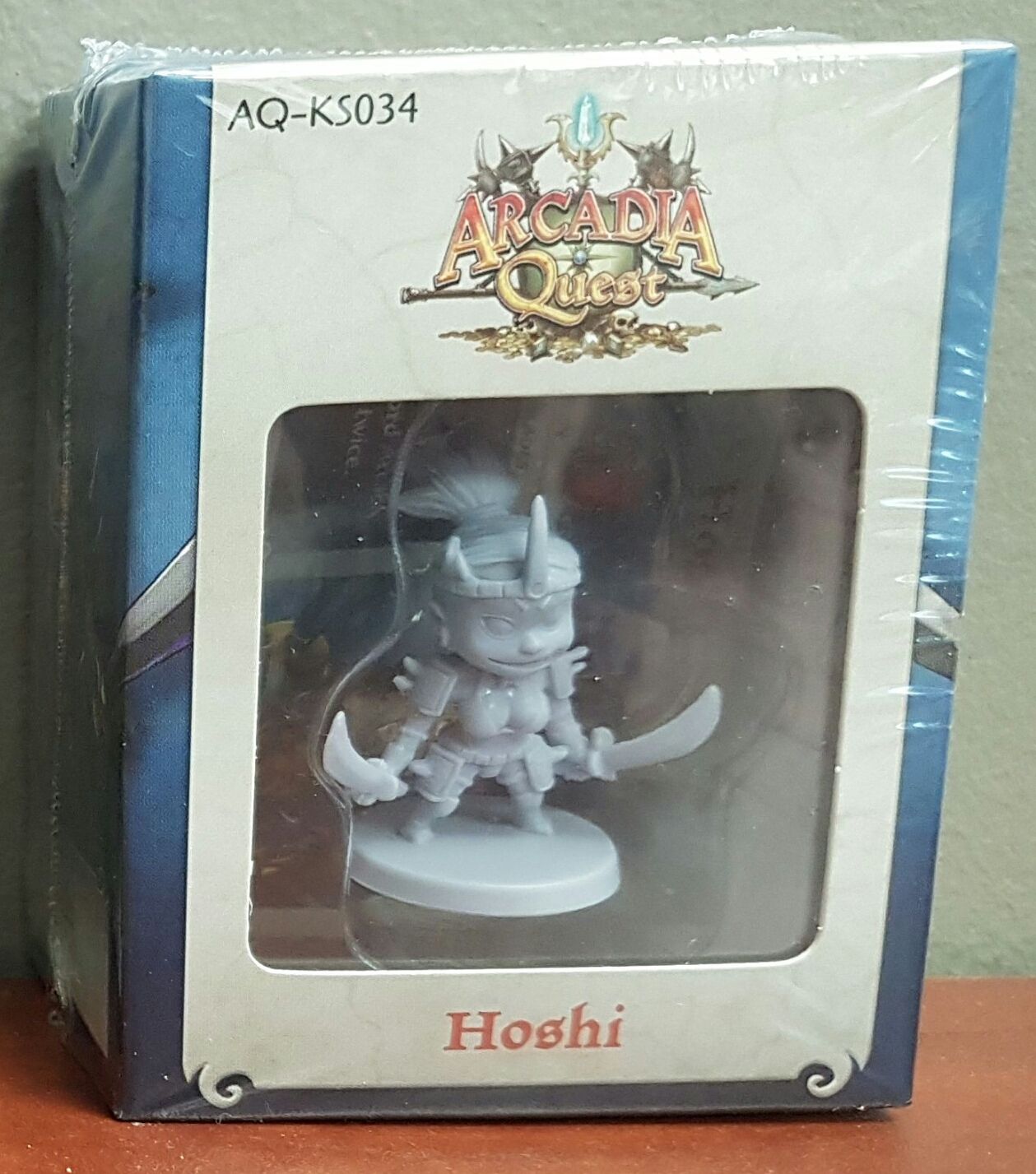 Arcadia Quest: Hoshi
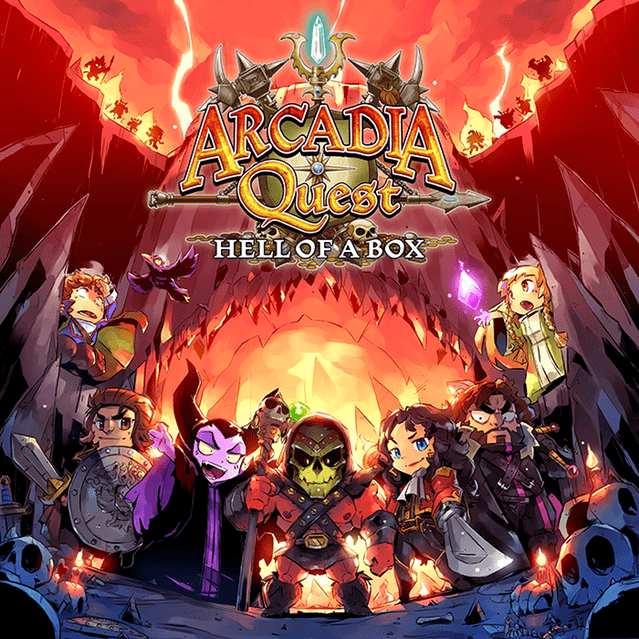 Arcadia Quest: Inferno – Kickstarter Exclusives
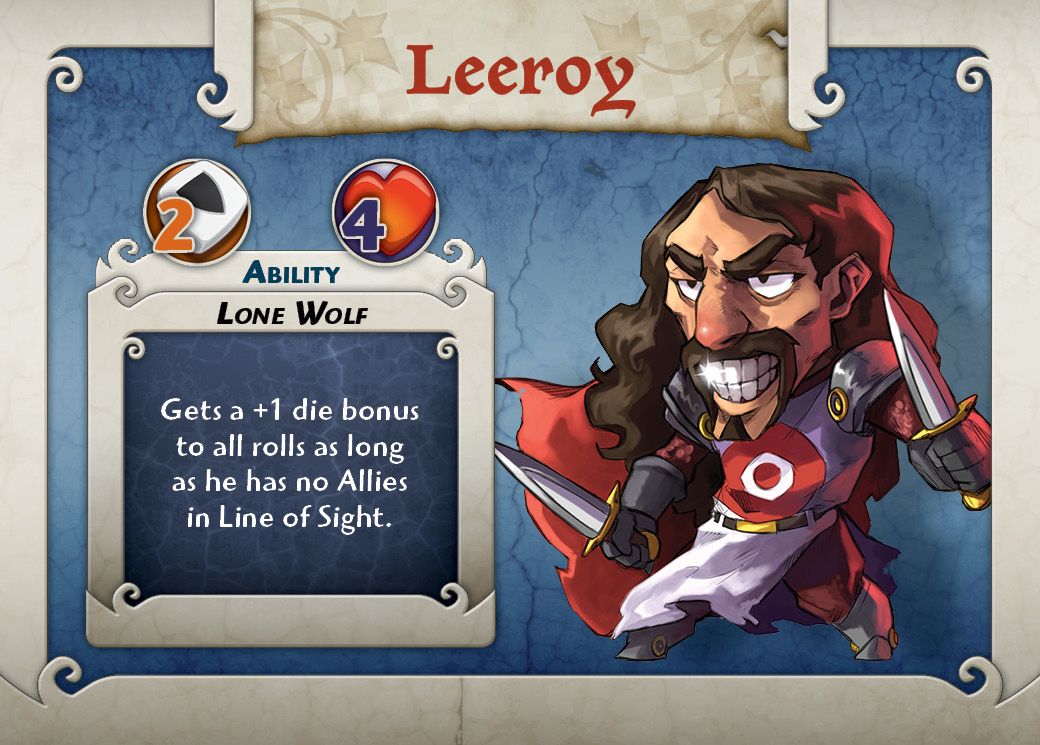 Arcadia Quest: Leeroy
 Arcadia Quest: Mamba & Rosh
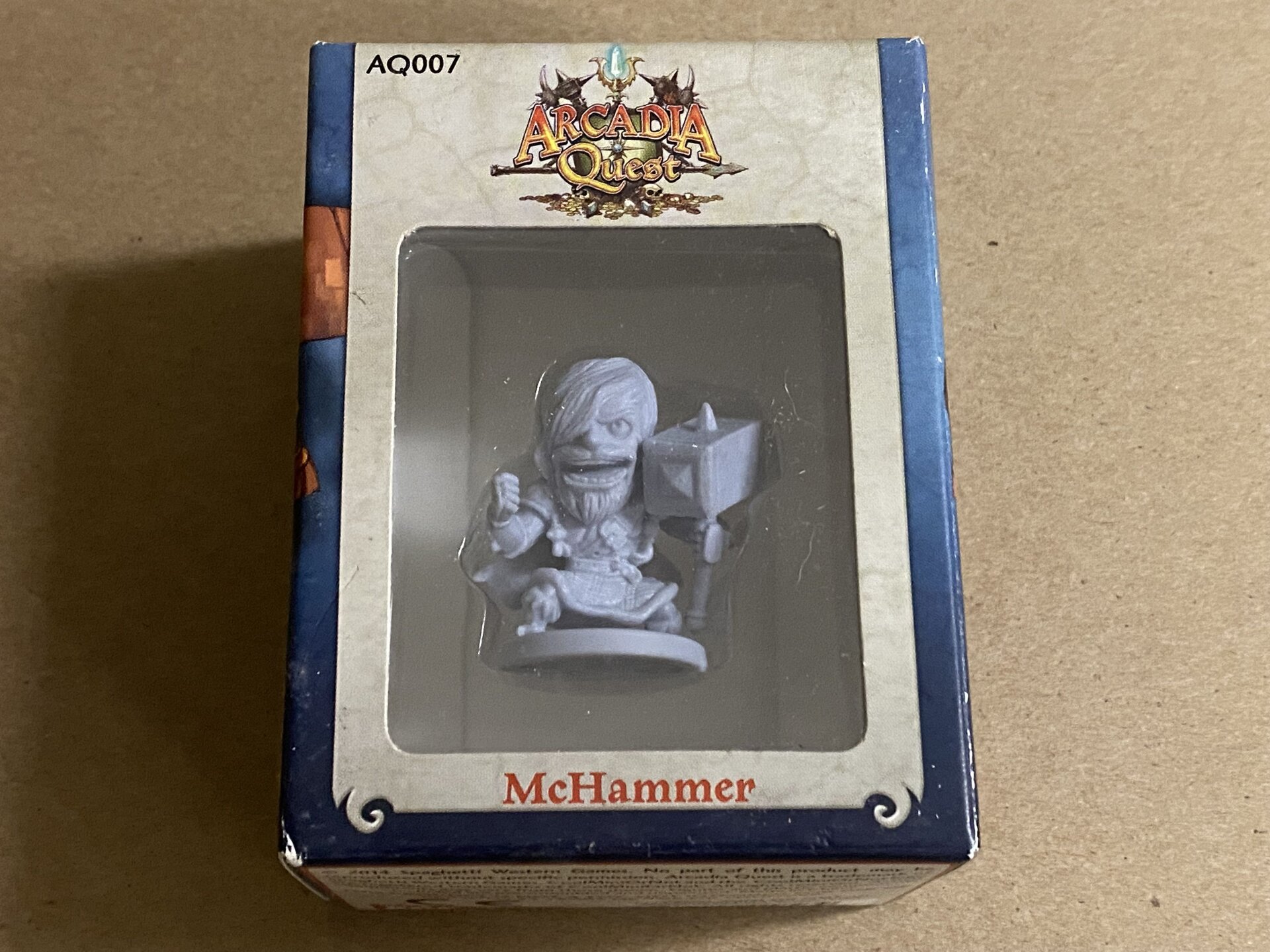 Arcadia Quest: McHammer
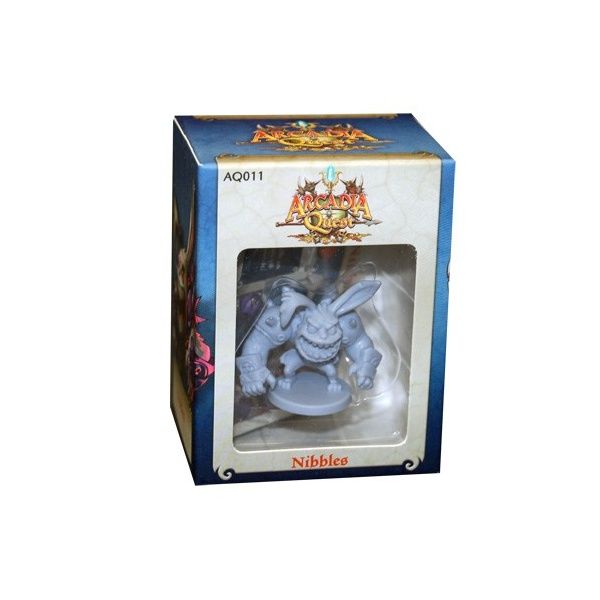 Arcadia Quest: Nibbles
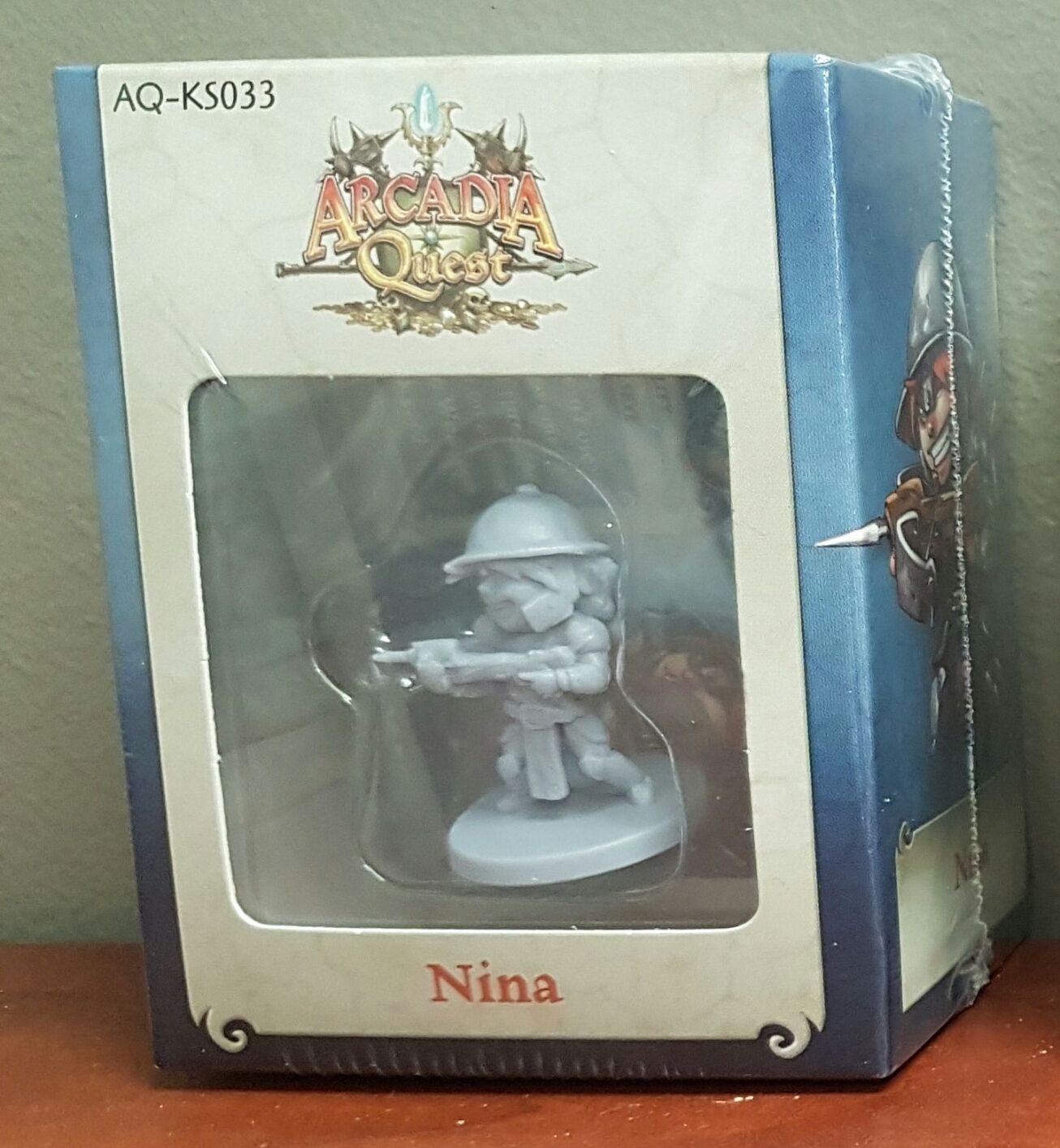 Arcadia Quest: Nina
 Arcadia Quest: Pet Pack 1
 Arcadia Quest: Pet Pack 2
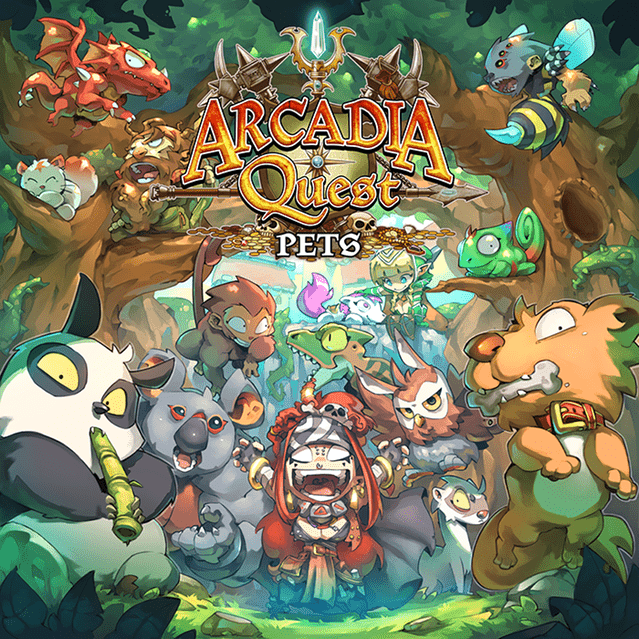 Arcadia Quest: Pets
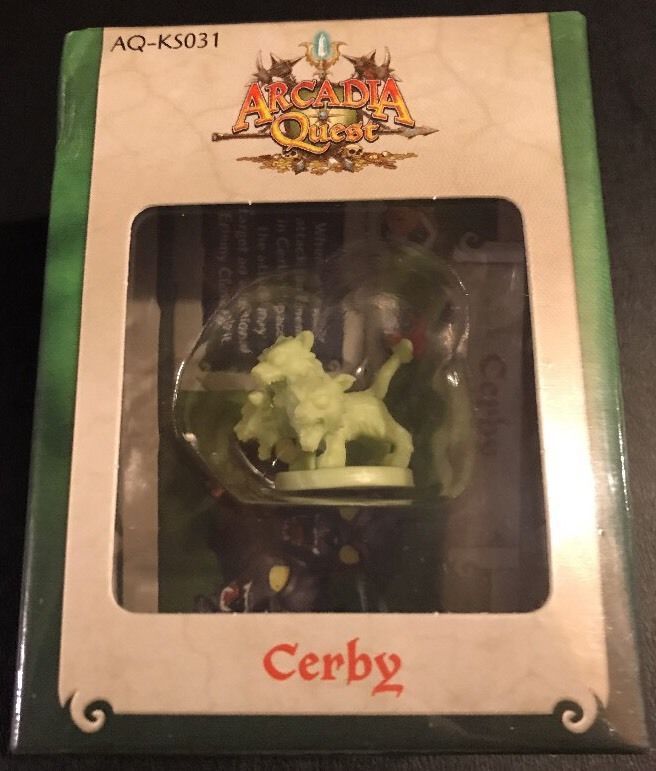 Arcadia Quest: Pets – Cerby
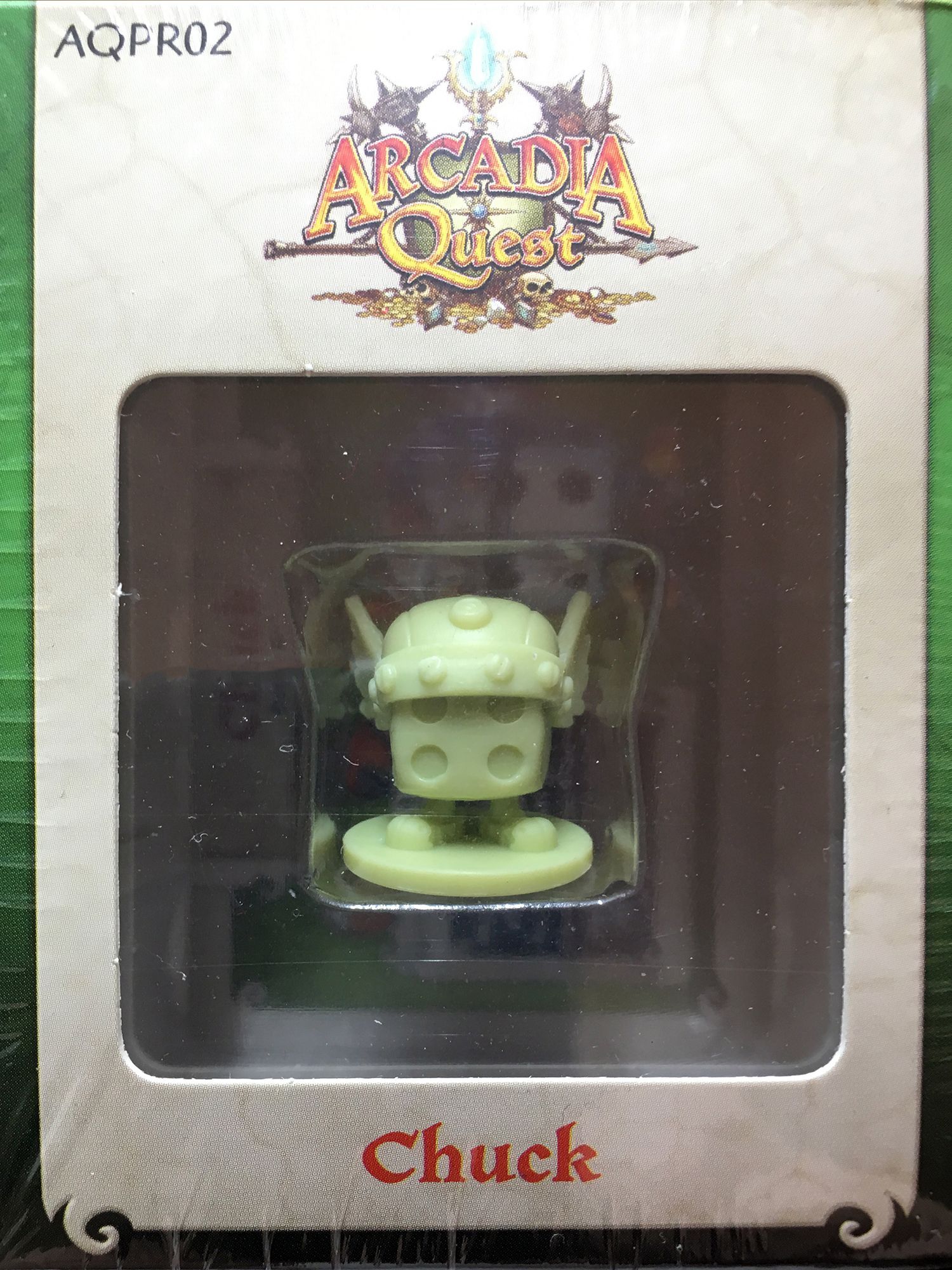 Arcadia Quest: Pets – Chuck
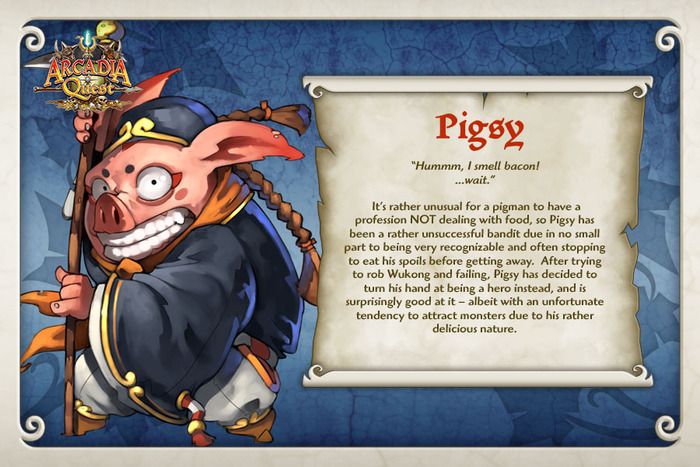 Arcadia Quest: Pigsy
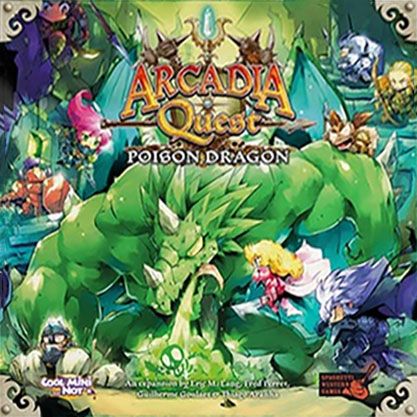 Arcadia Quest: Poison Dragon
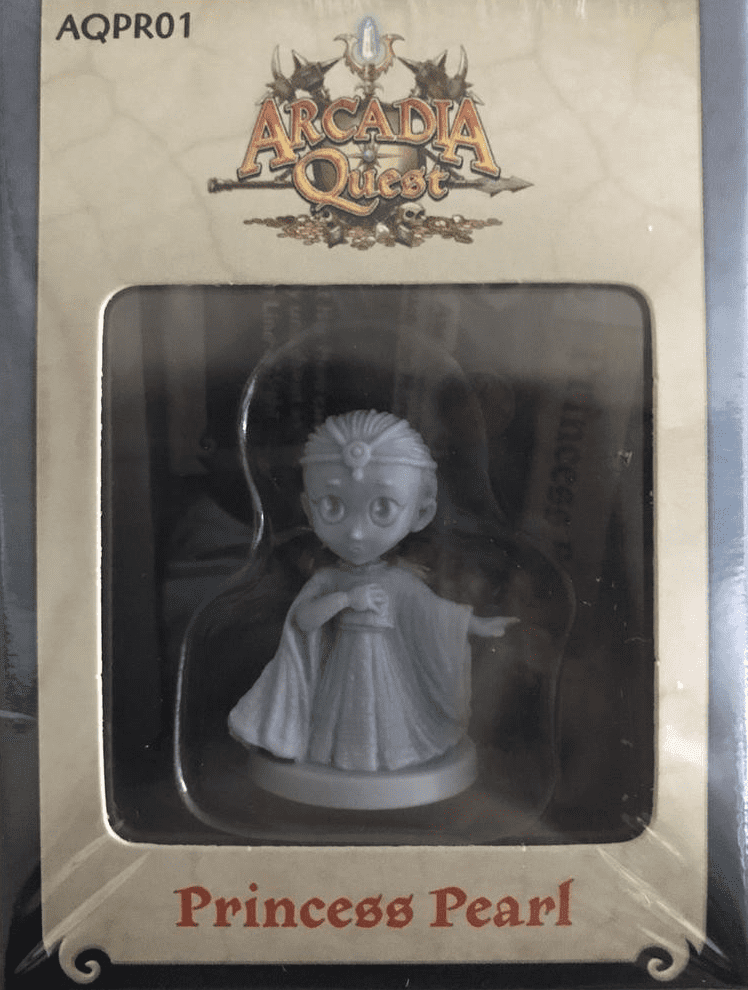 Arcadia Quest: Princess Pearl
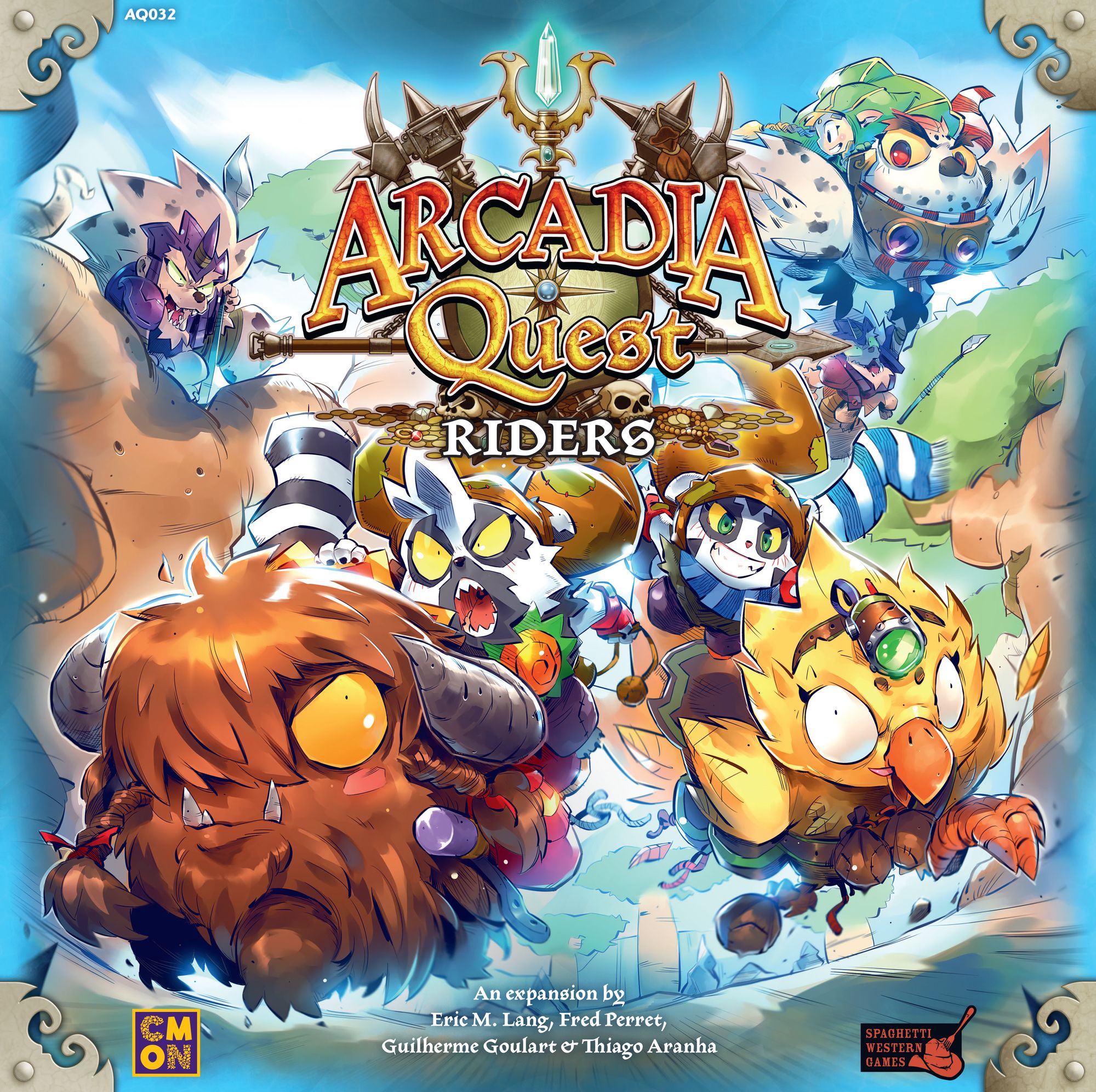 Arcadia Quest: Riders
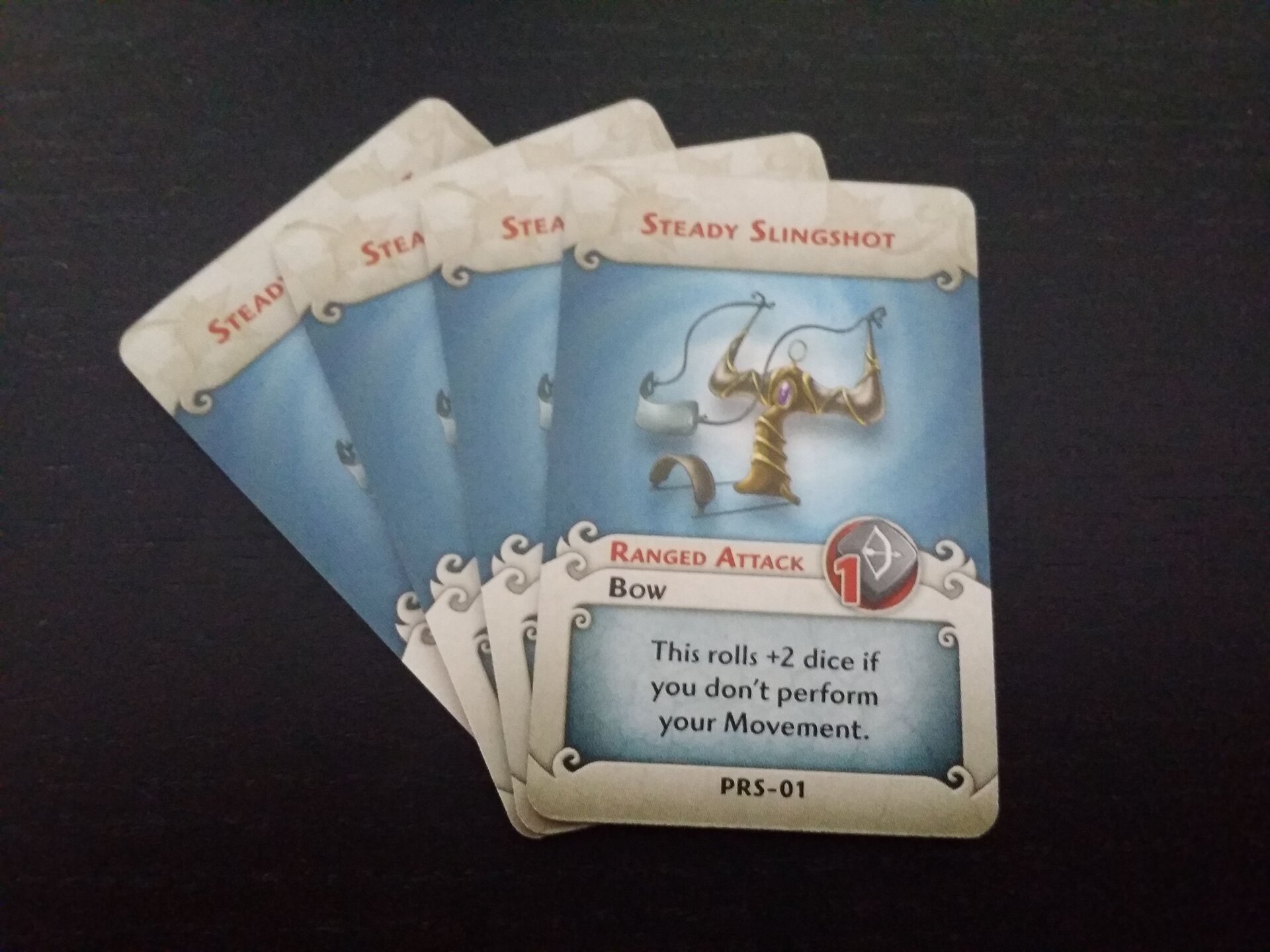 Arcadia Quest: Steady Slingshot Promo Pack
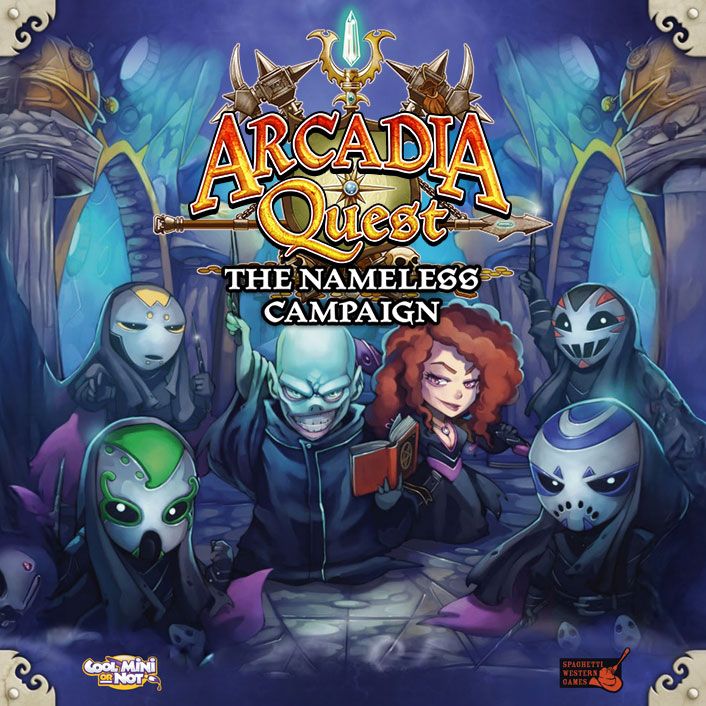 Arcadia Quest: The Nameless Campaign
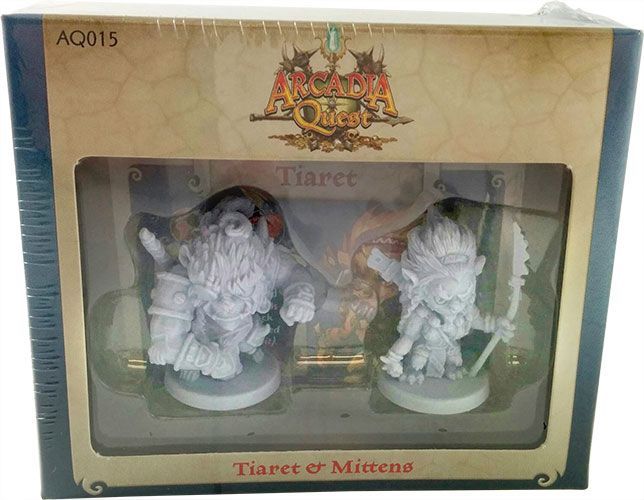 Arcadia Quest: Tiaret & Mittens
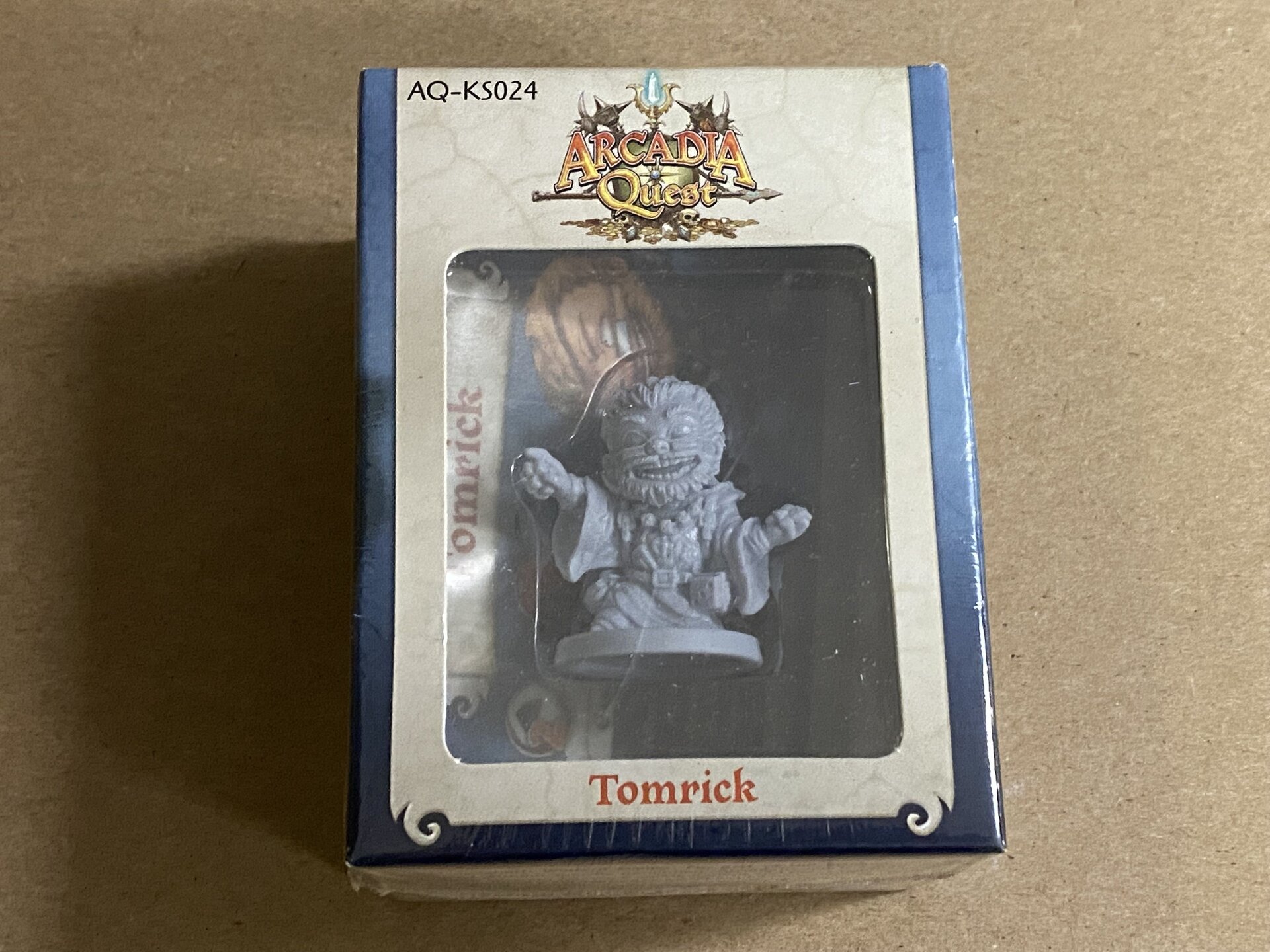 Arcadia Quest: Tomrick
 Arcadia Quest: Viola & Crash
 Arcadia Quest: Yona & Kuruk
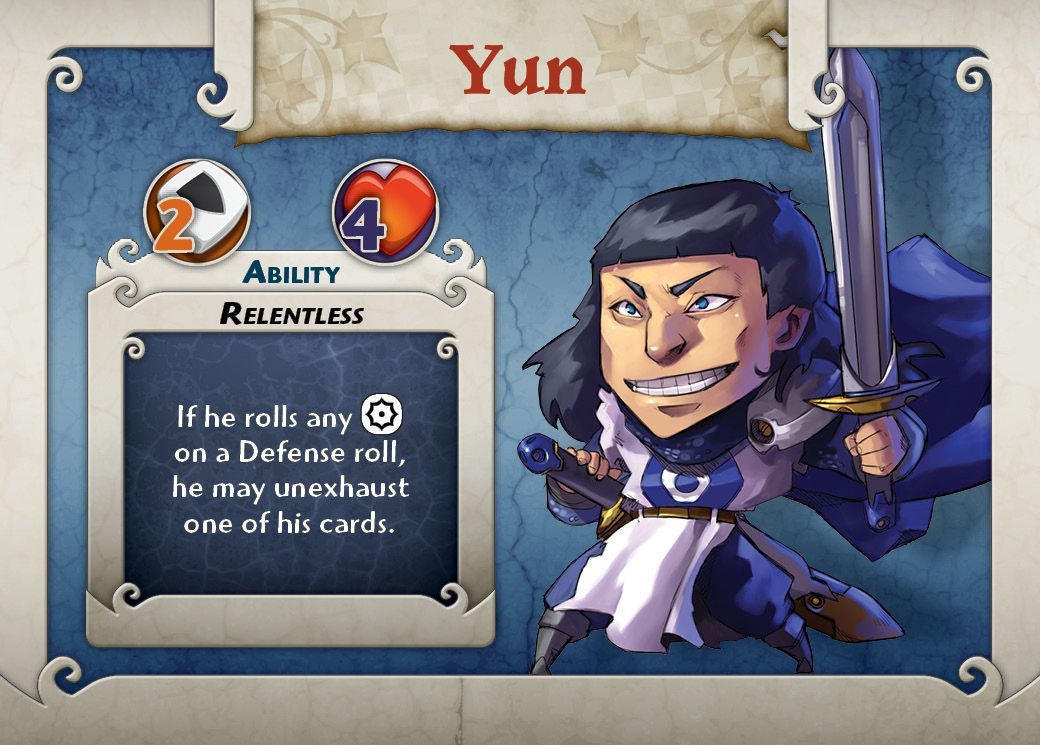 Arcadia Quest: Yun
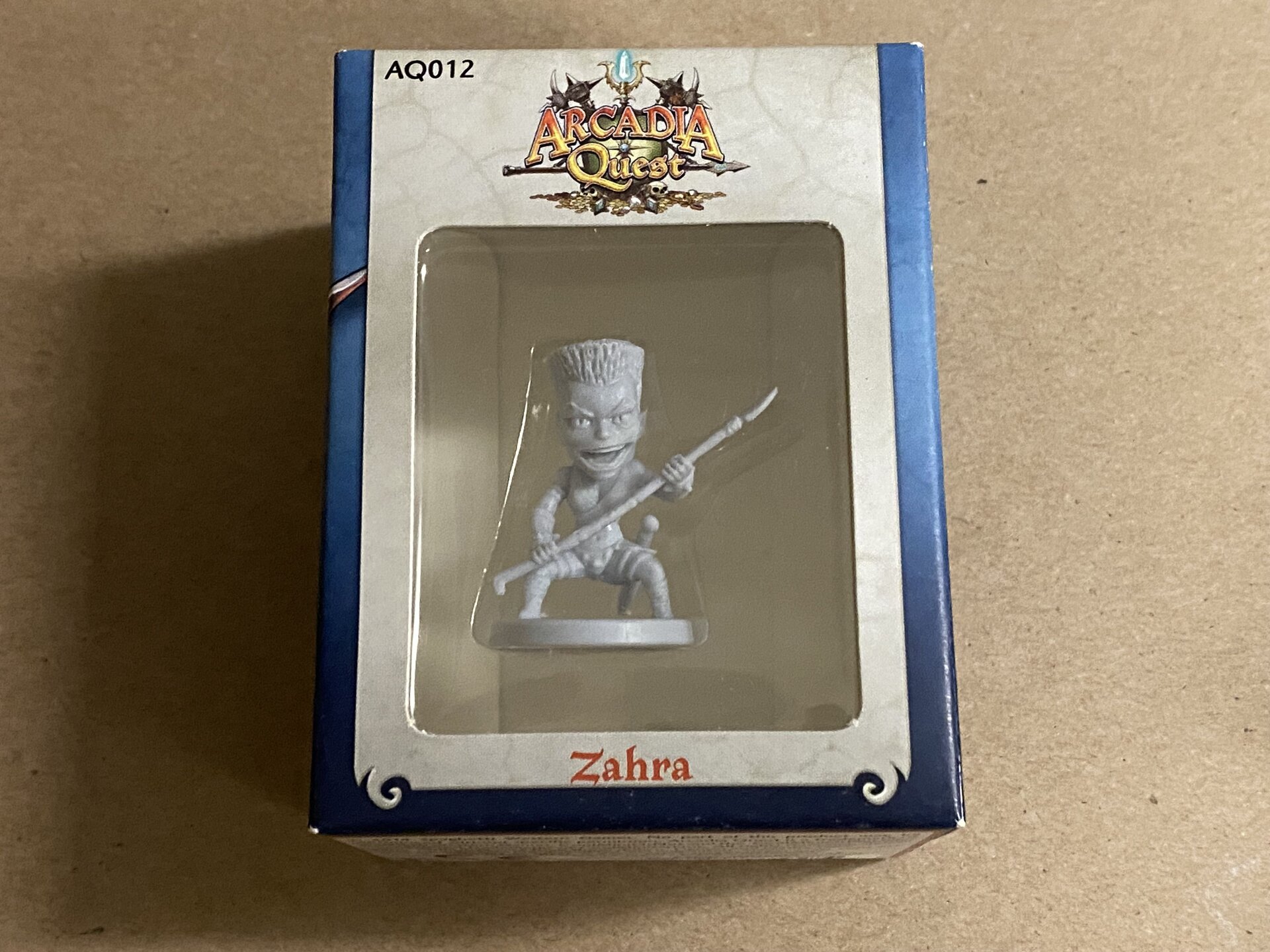 Arcadia Quest: Zahra
 Cool Mini Or Not Promo Pack 2016
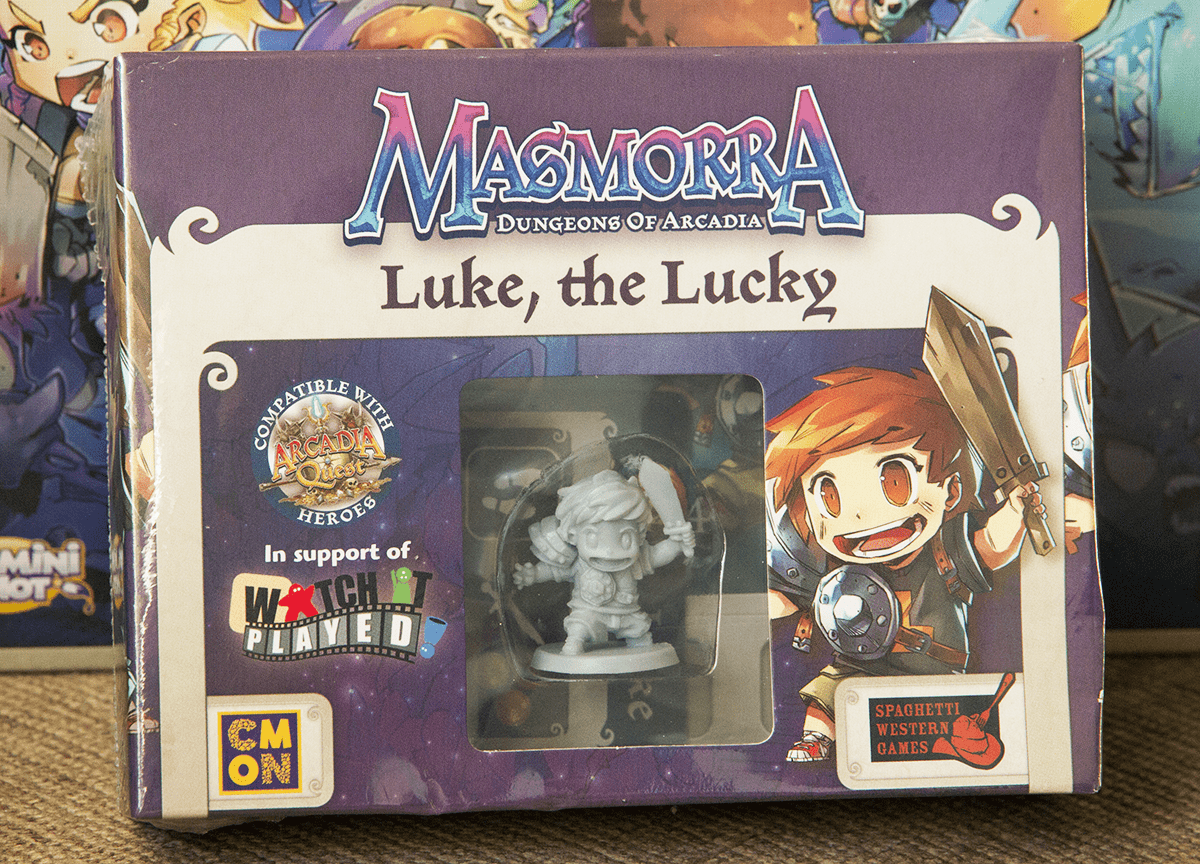 Masmorra: Dungeons of Arcadia – Luke, the Lucky
 Starcadia Quest: Showdown
Other Games You'll Like
Based on mechanics and theme