How to Play Catan
KOSMOS, 64 Ounce Games, 999 Games · Board game · 1995Video: How to Play
Start here, then follow the written guide
Step by step
Objective of the Game
Welcome to Catan, future settler! In The Settlers of Catan, you'll guide your group of settlers to tame the remote, resource-rich island of Catan. Your goal is to be the first to reach 10 Victory Points (VPs) by cleverly trading resources, expanding your road network, building settlements and cities, and acquiring powerful Development Cards. The island is yours for the taking, but beware of rivals and the pesky robber!
Preparation (Setup)
Let's get Catan ready for discovery! The game board is variable, meaning it changes almost every game, but for your first time, we recommend the "Starting Set-up for Beginners" for a balanced experience.
Beginner Setup (Recommended for First Games)
- Assemble the Frame: Match the numbers at the ends of the 6 sea frame pieces (e.g., 1-1, 2-2) to form the outer border of the island.
- Place Terrain Hexes: Lay out the 19 terrain hexes (4 forests, 4 fields, 4 pastures, 3 hills, 3 mountains, and 1 desert) inside the frame exactly as shown in "Illustration A" (or your beginner setup guide).
- Place Number Tokens: Place the 18 circular number tokens on top of the designated terrain hexes, again following "Illustration A." The desert hex never gets a number token.
- Sort Game Components:
- Sort the Resource Cards (Grain, Brick, Ore, Lumber, Wool) into 5 face-up stacks next to the board.
- Shuffle the Development Cards and place them face down by the board.
- Place the "Longest Road" and "Largest Army" Special Cards, along with the 2 dice, beside the game board.
- Place the robber in the desert hex.
- Player Pieces & Starting Resources:
- Each player chooses a color and takes their 5 settlements (house-shaped), 4 cities (church-shaped), 15 roads (bar-shaped), and their color's Building Costs Card. Place your remaining pieces in front of you.
- Following "Illustration A," each player places 2 settlements and 2 adjacent roads on the game board. Remember the Distance Rule: a settlement can only be built on an open intersection if none of the 3 adjacent intersections contain a settlement or city. Roads must connect to your settlements.
- After placing your second settlement, immediately collect Resource Cards for each terrain hex adjacent to *that second settlement*. Take 1 card of the corresponding type for each adjacent hex. Keep your Resource Cards hidden in your hand.
- Determine Starting Player: The oldest player takes the first turn.
Experienced Player Setup (Random Board)
For a fresh challenge every game, try the variable setup:
- Assemble the Frame: Same as the beginner setup.
- Randomly Place Terrain Hexes: Turn the 19 terrain hexes face down, shuffle them, and randomly place them face up inside the frame.
- Randomly Place Harbors: Take the 9 harbor pieces and randomly place one on top of each harbor location on the frame.
- Place Number Tokens: Sort the 18 number tokens. Starting at a corner of the island, place 1 token on each land hex in alphabetical order, proceeding counter-clockwise toward the center, skipping the desert. Alternatively, place them randomly, but ensure no red numbers are on adjacent hexes.
- Sort Game Components: Same as the beginner setup, placing the robber in the desert.
- Player Pieces & Starting Settlements:
- Each player chooses a color and takes their 5 settlements, 4 cities, 15 roads, and 1 Building Costs Card.
- Round One: All players roll both dice. The highest roller is the starting player. This player places 1 settlement on an open intersection and 1 road adjacent to it. Players then follow clockwise, each placing 1 settlement and 1 adjoining road, observing the Distance Rule.
- Round Two: The player who went last in Round One starts this round. They place their second settlement and an adjacent road. Players then follow counterclockwise. The second settlement doesn't have to connect to the first.
- After placing their second settlement, each player immediately receives Resource Cards for each terrain hex adjacent to *that second settlement*.
- Determine Starting Player: The starting player (the last to place their second settlement in Round Two) begins the game.
The Turn of Play
A turn in Catan is straightforward, but full of exciting decisions! On your turn, you'll generally follow these steps:
- Roll for Resource Production: You must start your turn by rolling both dice.
- Trade Resources: You may trade resources with other players (domestic trade) or with the bank (maritime trade).
- Build & Buy Development Cards: You may build roads, settlements, or cities, and/or buy Development Cards. You can also play one Development Card at any time during your turn (but not one you just bought!).
Once you're done, pass the dice to the player on your left.
1. Resource Production
Roll both dice. The sum determines which terrain hexes produce resources. Each player with a settlement adjacent to a hex with the rolled number receives 1 Resource Card of that hex's type. If you have a city there, you receive 2 Resource Cards! If there aren't enough cards of a specific resource in the bank for everyone, no one gets that particular resource this turn.
- Terrain Types:
- Fields produce Grain.
- Hills produce Brick.
- Mountains produce Ore.
- Forests produce Lumber.
- Pastures produce Wool.
- The Desert produces nothing.
- Rolling a "7" and Activating the Robber:
- If you roll a "7," no one receives resources.
- Any player with more than 7 Resource Cards must discard half of them, rounding down (e.g., 9 cards means discard 4).
- You (the player who rolled the "7") must move the robber from its current hex to the number token of any *other* terrain hex (or back to the desert).
- The hex where the robber is placed is now blocked: players with settlements or cities adjacent to it receive no resources from that hex until the robber moves again.
- Finally, you steal 1 random Resource Card from a player who has a settlement or city adjacent to the hex where you moved the robber. If multiple players are there, you choose your victim.
2. Trade
After rolling, you can trade resources. You can't give away cards without receiving any in return.
- Domestic Trade: You can negotiate trades with any other player. Announce what you need and what you're willing to offer. Other players can make counter-offers. Only the current player can trade with other players; other players cannot trade among themselves.
- Maritime Trade: You can trade with the bank without involving other players.
- Basic Trade (4:1): Always available. Trade 4 identical Resource Cards for any 1 Resource Card of your choice.
- Generic Harbor (3:1): If you have a settlement or city on a generic 3:1 harbor, you can trade 3 identical Resource Cards for any 1 Resource Card.
- Special Harbor (2:1): If you have a settlement or city on a special harbor (e.g., a Wool Harbor), you can trade 2 of the specific resource shown on the harbor for any 1 Resource Card. This 2:1 rate only applies to that specific resource.
3. Build & Buy Development Cards
Now's the time to expand your empire! Consult your Building Costs Card for the resource combinations needed. Return spent resources to the supply.
- Road (Cost: 1 Brick, 1 Lumber):
- Connects your settlements and cities.
- You can only build 1 road per path (edge between hexes).
- Roads are crucial for expansion and can earn you the "Longest Road" Special Card (2 VPs) if you're the first to build a continuous road of at least 5 segments. If another player builds a longer road, they take the card and its VPs!
- You can break an opponent's road by building a settlement on an open intersection along their road.
- Settlement (Cost: 1 Brick, 1 Lumber, 1 Wool, 1 Grain):
- Built on intersections (where 3 hexes meet).
- Must connect to one of your existing roads.
- Must observe the Distance Rule: no other settlement or city (yours or opponents') can be on an adjacent intersection.
- Each settlement is worth 1 Victory Point.
- When a hex adjacent to your settlement produces resources, you receive 1 Resource Card.
- City (Cost: 3 Ore, 2 Grain):
- Upgrade an existing settlement to a city. Return the settlement piece to your supply.
- Each city is worth 2 Victory Points.
- Cities double resource production: you receive 2 Resource Cards from adjacent hexes when their number is rolled.
- Upgrading a settlement frees up a settlement piece, allowing you to build another settlement elsewhere.
- Development Card (Cost: 1 Ore, 1 Wool, 1 Grain):
- Draw the top card from the deck. Keep it hidden in your hand.
- There are three types:
- Knight Cards: Play a Knight Card to immediately move the robber and steal a random Resource Card from an adjacent player. The first player to play 3 Knight Cards receives the "Largest Army" Special Card (2 VPs). Only played Knight Cards count!
- Progress Cards: These have immediate effects and are removed from the game after use.
- Road Building: Place 2 free roads on the board.
- Year of Plenty: Take any 2 Resource Cards from the supply.
- Monopoly: Name a resource. All other players must give you all cards of that type they have in their hands.
- Victory Point Cards: These are worth 1 Victory Point each. Keep them hidden until you reveal them to win the game. You can play any number of VP cards on your turn, even the turn you buy them.
- You can only play 1 Development Card per turn (except for VP cards), and it cannot be a card you bought on the same turn.
End of Game and Scoring
The game ends immediately when a player reaches 10 or more Victory Points during their turn and declares victory! If you reach 10 VPs on another player's turn, you must wait until your next turn to claim victory.
Victory Point Breakdown:
- Each Settlement = 1 VP
- Each City = 2 VPs
- "Longest Road" Special Card = 2 VPs
- "Largest Army" Special Card = 2 VPs
- Each Victory Point Card = 1 VP
Remember, you start the game with 2 settlements, so you begin with 2 VPs already!
Tips for Winning
- Prioritize Brick and Lumber Early: These are your bread and butter for expansion! You need both to build roads and settlements. Try to place at least one of your first settlements on a good forest or hills hex to secure these vital resources.
- Plan Your Expansion (and Block Opponents!): When placing your first two settlements, leave enough room to expand. Look at your opponents' sites and roads to avoid getting surrounded. If you're eyeing a harbor, make sure you can reach it! Building a settlement on an opponent's road can even break their "Longest Road" and net you 2 VPs!
- Don't Underestimate Harbors: While coastal settlements might yield fewer resources initially, harbors offer fantastic trade rates. If you have strong production of a certain resource (e.g., lots of fields for grain), building on the corresponding 2:1 special harbor can give you a massive advantage in trading for what you need.
More videos
More rules explanations from the community
In English
-
 Catan Fixed | Part 2: Point Variant | Catan Board Game Review
-
 Catan in the style of Risk
-
 The Cleanest Guide to Trading in Catan
-
 Ultimate CATAN Strategy Guide | How To Win All the Time !
-
 5 Strategy Tips For Beginners
-
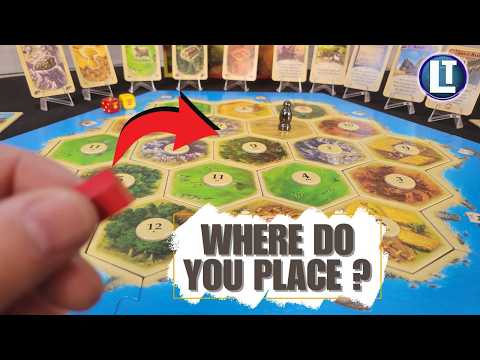 CATAN Placement Puzzle: Nationals
-
 CATAN U.S. National Championship 2021 INTIAL PLACEMENT PUZZLE Strategy
-
 Catan Utilities: How to use
-
 Catan in 30 seconds
-
 Catan | New Way to Play
-
 How to Play CATAN: The Game | 6th Edition (2025)
Frequently Asked Questions
Quick answers about the rules
What is the objective of Catan?
How do you set up Catan?
How do you play Catan?
How does Catan end, and how do you score?
What are some tips for winning Catan?
Expansions
Published additional content
 Brettspiel Adventskalender 2015
 Catan Scenarios: Easter Bunny
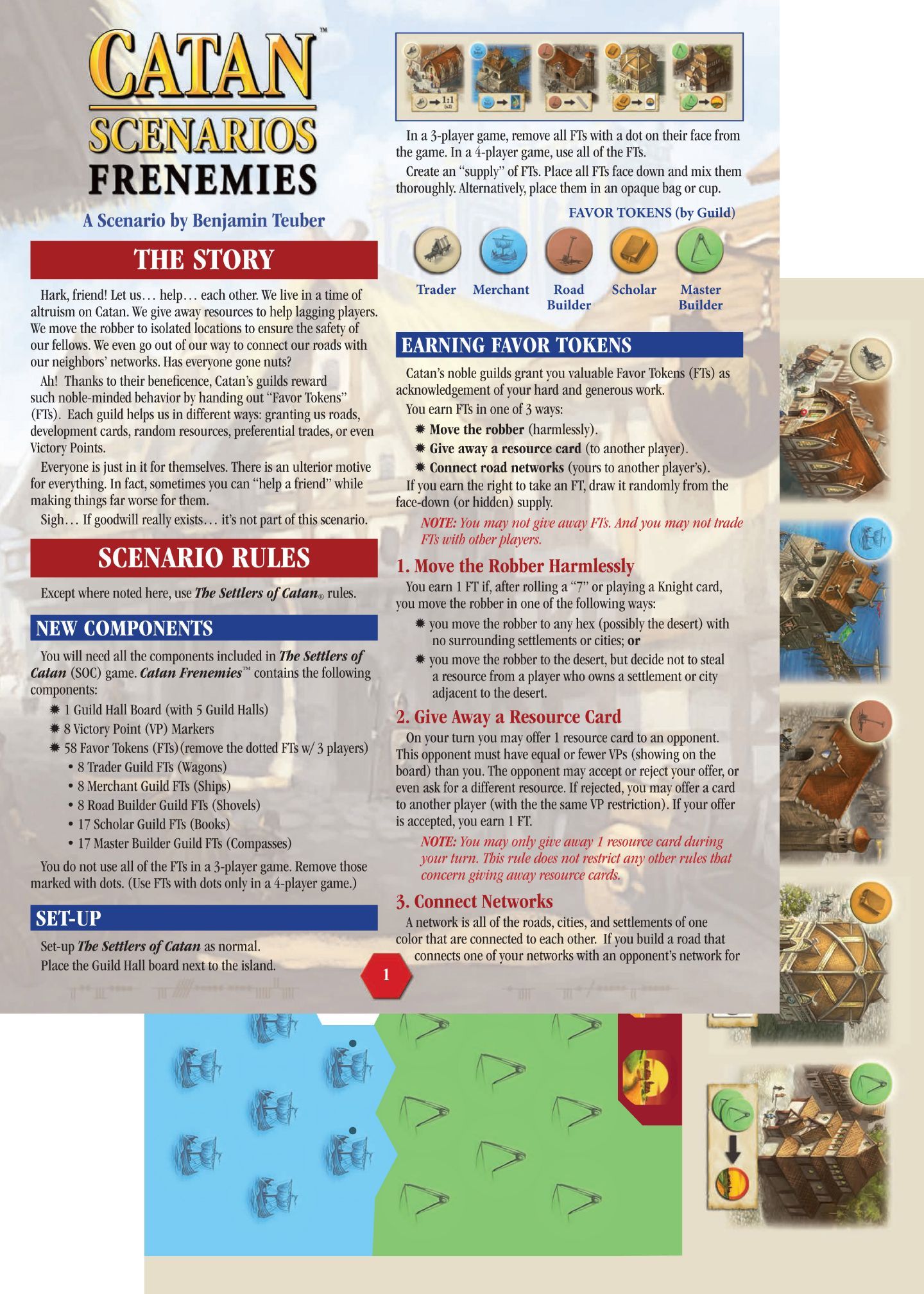 Catan Scenarios: Frenemies
 Catan Scenarios: Helpers of Catan
 Catan Scenarios: Oil Springs
 Catan: 5-6 Player Expansion
 Catan: Cities & Knights
 Catan: Cities & Knights – 5-6 Player Extension
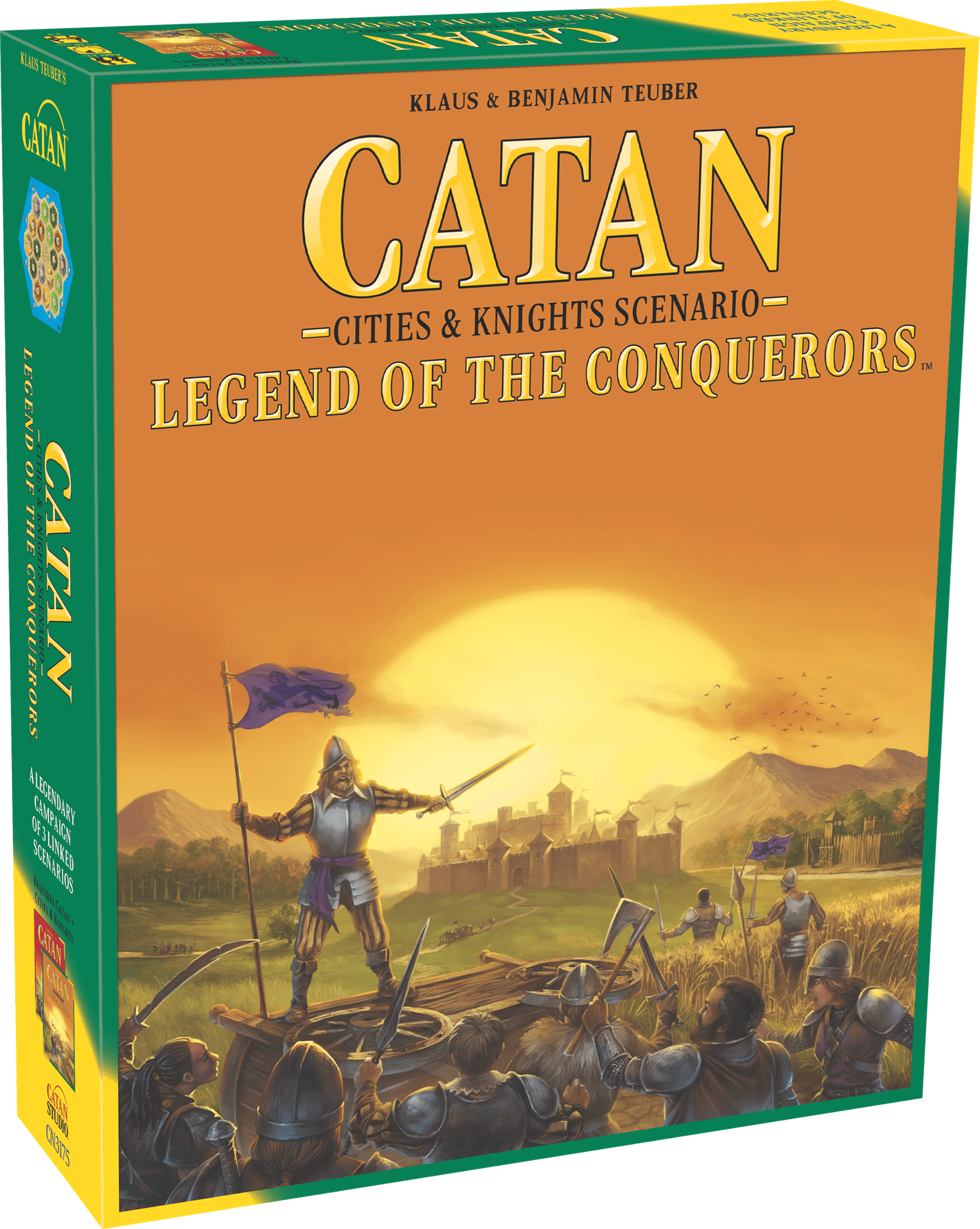 Catan: Cities & Knights – Legend of the Conquerors
 Catan: Event Cards
 Catan: Explorers & Pirates
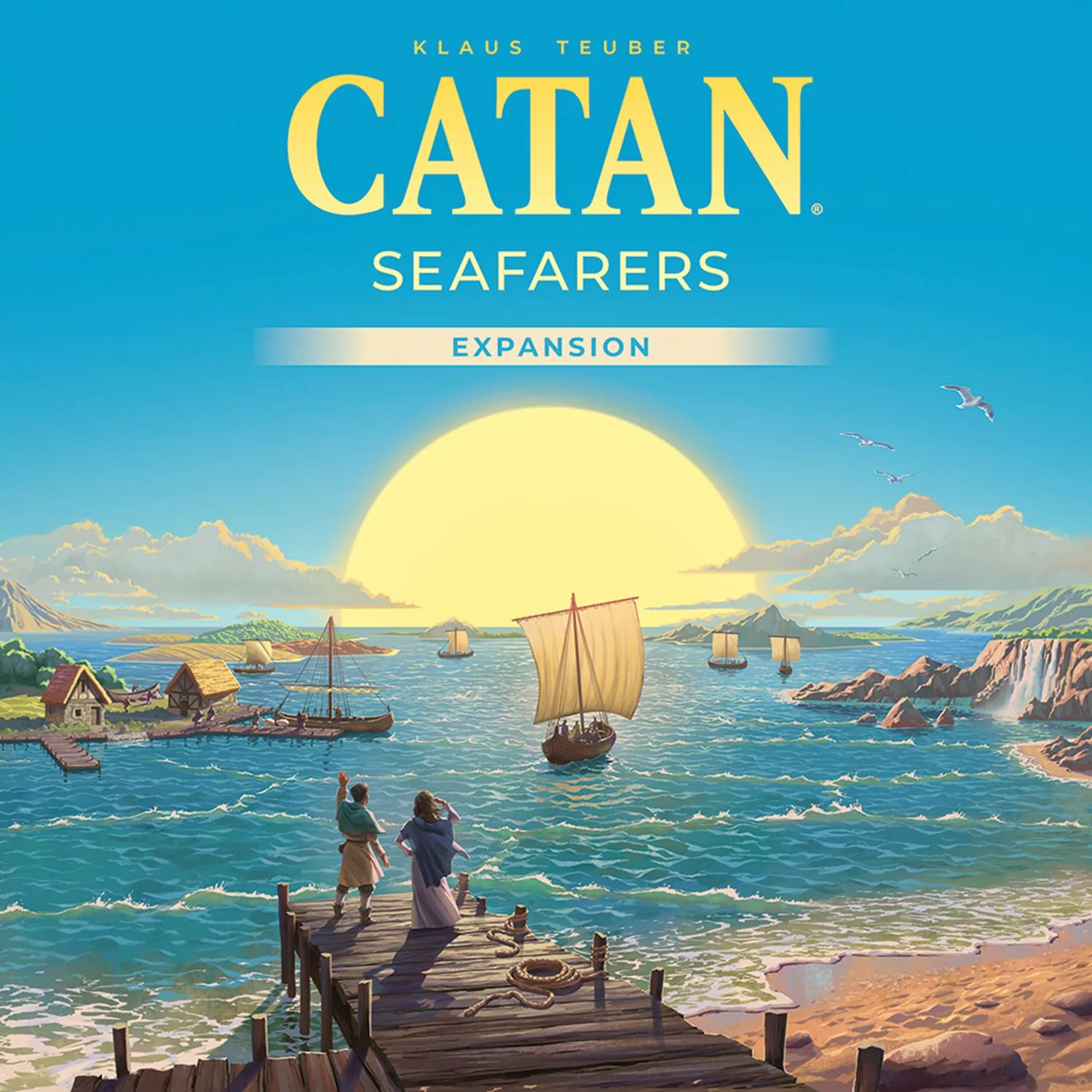 Catan: Seafarers
 Catan: Seafarers – 5-6 Player Extension
 Catan: Traders & Barbarians
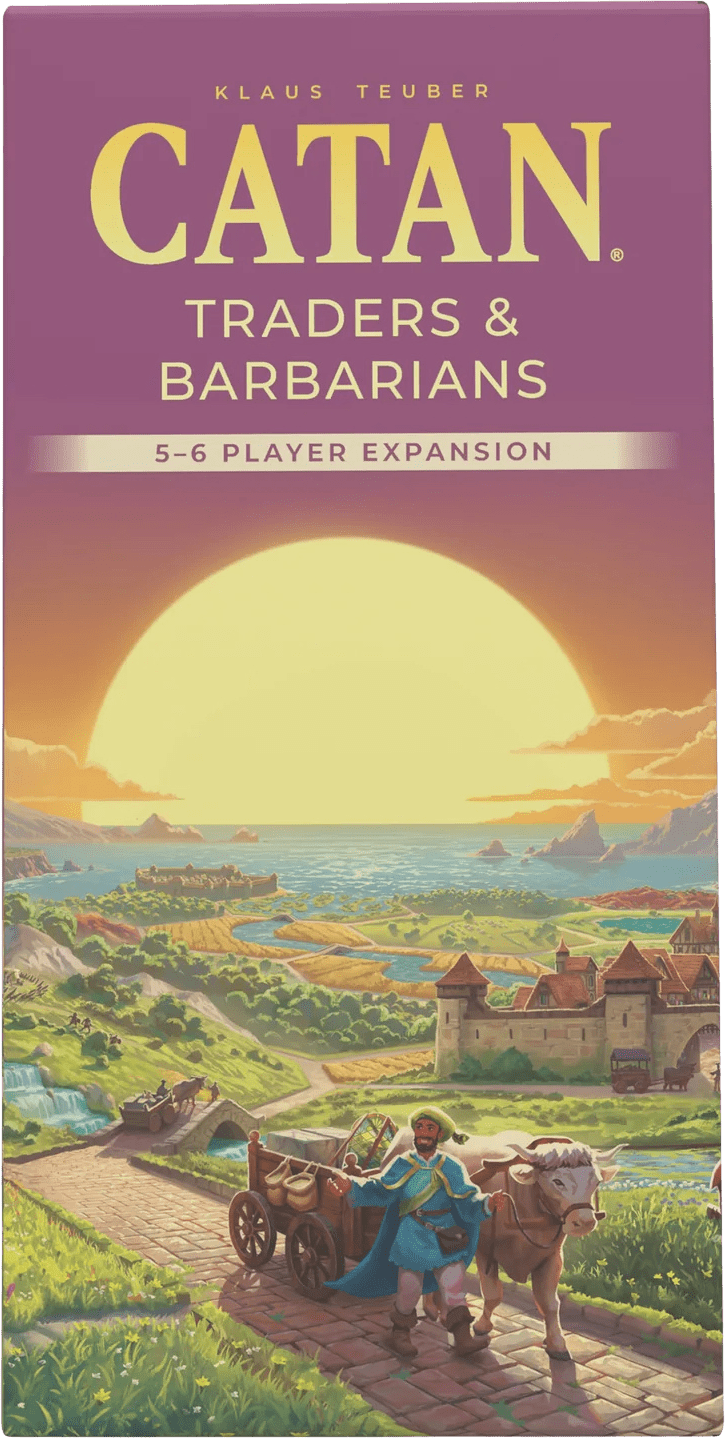 Catan: Traders & Barbarians – 5-6 Player Expansion
 Die Siedler von Catan: Das Buch zum Spielen
 The Settlers of Catan: The Fishermen of Catan
 The Settlers of Catan: The Great River
Other Games You'll Like
Based on mechanics and theme