
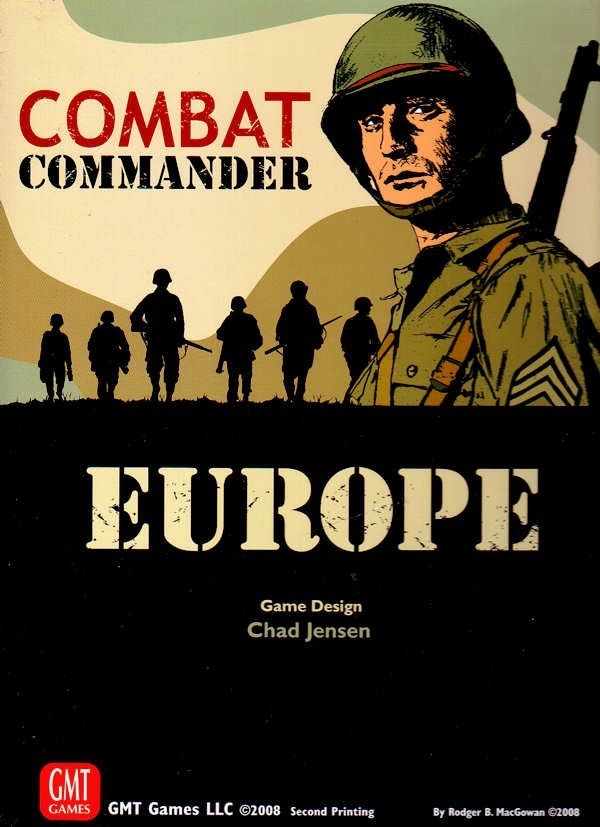
Combat Commander: Europe
GMT Games, Devir · Board game · 2006Step by step
Game Objective
In Combat Commander: Europe, each player controls an army in a war campaign. The goal is to eliminate the opponent’s units or force them to voluntarily leave the map. When this happens, the player who caused the elimination or withdrawal receives victory points according to the unit table (Squad: 2 VP, Team: 1 VP, Leader: 1 + command VPs, Hero: none). The game ends when one of the end‑game conditions described in the End of Game and Scoring section occurs. The winner is the player with the most victory points; in the event of a tie, the initiative card decides.
Setup
- Place the board in the center of the table.
- Distribute each player’s units according to their army sheet (no details in this context, see the manual).
- Build each player’s card decks: Attacker (6), Recon (5), Defender (4). Place the destination decks and discard piles next to each player.
- Distribute the smoke tokens, location markers, and time markers as indicated in the manual (no specific details in this context).
- Place the units on the map according to the campaign’s initial phase (no details in this context).
- Determine who starts the game (initiative card).
Game Flow
The game proceeds in turns, each turn consisting of the following phases in the order specified by the manual:
- Move Order: the active player may activate a single unit (or leader). If the unit is a leader, they can activate other units within their command radius.
- Advance Order: the player may move units to adjacent hexes ignoring movement cost and terrain, allowing entry into hexes occupied by enemies and initiating melee combat.
- Fire Order: the player declares firing pieces and target hexes within range and line of sight. Ordered weapons roll for the target; if successful, they roll attack (FP + roll). Defense is morale + defense roll.
- Recover Order: the player (not a unit) removes suppression markers from allied units and makes recovery rolls for wounded units.
- Disorder: the active player rolls disorder for each wounded unit they control, potentially suppressing or retreating units.
- Confusion Command: false card, no effect.
- Artillery Request: the player may activate a functioning radio to fire artillery or smoke, following the rules of Location, Accuracy, and Impact.
- Opportunity Fire: activated units may use opportunity fire against the opponent’s movement.
- Trigger Events: if a trigger card is activated, the game pauses to resolve the event before continuing.
After all phases, the turn ends and the other player takes their turn.
Actions and How to Play
Movement
- Activate a single unit; leaders can activate other units within their command radius.
- Units may move individually or in groups (units in the same hex). Group movement is determined by the unit with the lowest movement modifier.
- During a move order, an activated unit can transfer its weapon to an allied unit in the same hex, paying 1 movement point.
Advance
- Activate units and move to an adjacent hex ignoring movement cost and terrain.
- Units can enter hexes occupied by enemies, initiating melee combat.
- Opportunity fire cannot be used against an advance card.
Fire
- Declare firing pieces and target hexes within range and line of sight.
- Ordered weapons roll; if successful, they roll attack (FP + roll).
- Defense = Moral + defense roll.
- Results: attack < defense = no effect; attack = defense = hit if target is moving, otherwise suppression; attack > defense = hit.
Recover
- Remove all suppression markers from allied units.
- For each wounded unit, make a recovery roll: roll < morale = recovery; roll = morale = suppression; roll > morale = no effect.
Disorder
- For each wounded unit, roll: roll < morale = no effect; roll = morale = suppression; roll > morale = retreat hexes equal to the difference between roll and morale.
- When retreating, ignore movement point restrictions and barbed wire; no opportunity fire can be played.
- Retreated units can be eliminated if forced off the map, enter enemy hexes, an impassable hex, or a cliff.
Artillery Request
- Activate a functioning radio to fire artillery or smoke.
- Location: place a location marker on a hex in line of sight.
- Accuracy: roll to hit; a hit reveals the top card, moves the location marker; a miss reveals the top card, determines the direction and distance of the marker.
- Impact: the central hex and adjacent hexes are hit; smoke places a random marker in 7 hexes; artillery rolls normal attack for each hex, with the possibility of destroying a fortification if attack = vulnerability.
Opportunity Fire
- Activate units with a fire action (units already activated by opportunity fire cannot be activated again).
- Make a fire attack for each movement point spent toward the opponent’s total movement order.
- Order weapons cannot use opportunity fire.
End of Game and Scoring
The game ends when any of the following conditions occur (exactly as described in the manual):
- A player is forced to place an eliminated unit on the Surrender Marker on the low track – that player loses.
- The last unit of a player on the map is eliminated – the player loses.
- The last unit of a player voluntarily leaves the map – the player with the most victory points wins.
- The roll of Sudden Death is less than the number of the space on the Time Marker – the player with the most victory points wins.
To count victory points:
- When opponent units are eliminated, the player receives VP according to the table: Squad: 2 VP, Team: 1 VP, Leader: 1 + command VPs, Hero: none.
- When your own units voluntarily leave the map, they are placed on the time track and you receive VP according to the same table.
- Heroes are not placed on any track.
In the event of a tie, the initiative card decides who wins.
Tips for Winning
- Use leaders strategically: when you activate them, you can activate all units within the command radius, multiplying your firepower and coverage.
- Exploit opportunity fire against moving enemy units; this can eliminate units before they reach their objective.
- Manage disorder and radio resources to control the battlefield: retreating enemy units can force them off the map, generating victory points.
Rules videos
Learn by watching before you open the box
In English
-
 Combat Commander X-Plained (Tutorial/Demo)
-
 Harsh Rules - Let's Learn to Play Combat Commander: Europe - Part 1
-
 Harsh Rules - Let's Learn to Play Combat Commander: Europe - Part 2
-
 Random Scenario Generator Tutorial
-
 CCE Sample gameplay
-
 Combat Commander: Europe - Introduction for New Players - Part 1
-
 CCE Basic Card play
-
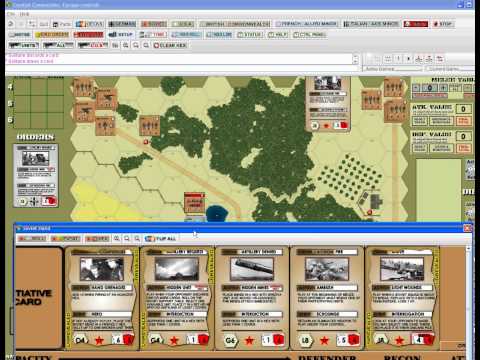 Combat Commander- Gameplay basic training- THE CARDS
-
 Combat Commander Vassal Instructions
-
 Combat Commander - The Ten Axioms for Better Play
-
 Fat Lipki in 17 minutes
-
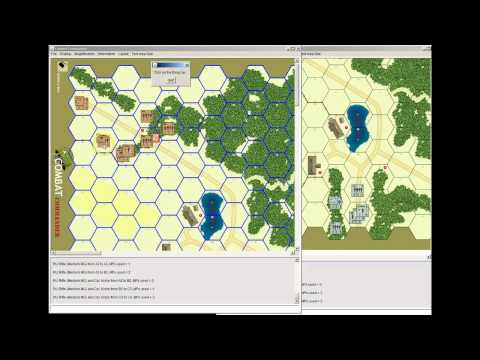 Learning how to play using wargameroom
Rules manual
Official PDF file
