
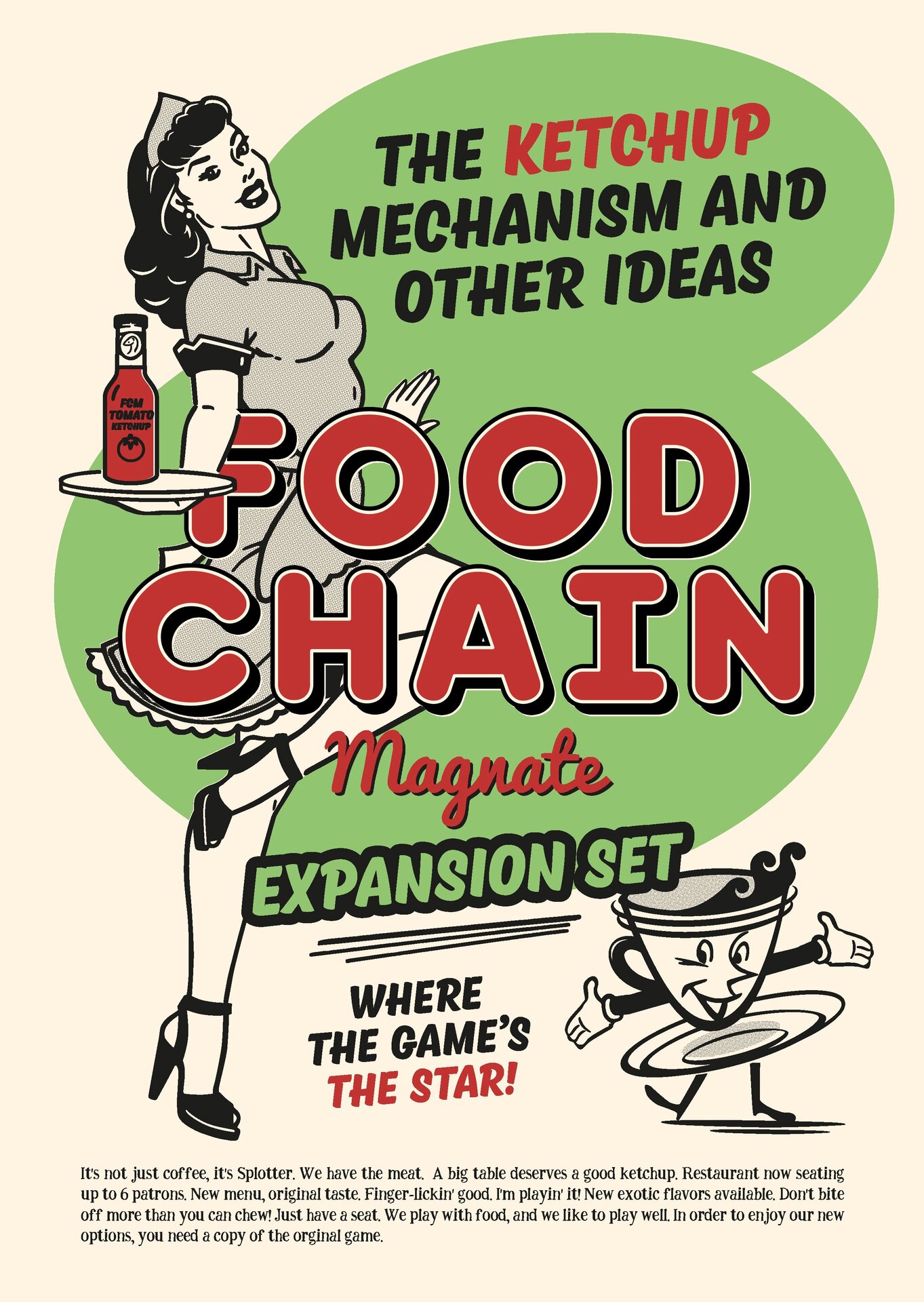
Food Chain Magnate: The Ketchup Mechanism & Other Ideas — How to Play
Splotter Spellen, Ediciones MasQueOca, Galápagos Jogos · Board game · 2019Video: How to Play
Start here, then follow the written guide
Step by step
Objective of the Game
In Food Chain Magnate: The Ketchup Mechanism & Other Ideas, players compete to build the most profitable fast-food empire by managing employees, marketing, and fulfilling customer demand. The goal is to earn the most money by strategically expanding your restaurant chain, hiring specialized staff, and adapting to new expansion modules like Kimchi, Sushi, Coffee, and Lobbyists. The game ends when the bank runs out of money during the Dinnertime phase, and the player with the most cash wins.
Preparation (Setup)
To set up the game:
- Assemble the map using the provided map tiles (including expansion tiles if using modules like New Districts or Lobbyists).
- Place the Milestone Board and attach any module-specific inserts (e.g., for Coffee or New Milestones).
- Each player chooses a restaurant chain (e.g., Golden Duck, Xango) and takes their corresponding menu, restaurant miniatures, and starting employee cards.
- Slot employee cards into the tray based on player count and active modules (e.g., replace Kitchen Trainees with Any Cook cards when using Sushi or Noodles).
- Place food/drink tokens, marketing campaigns, and other components (e.g., Freeways for the Rural Marketeer module) nearby.
Note: Some modules modify setup (e.g., Lobbyists require shuffling extra map tiles). Consulte o manual para detalhes sobre esta seção.
Flow of the Game
The game progresses in rounds, each with the following phases:
- Order of Business: Players determine turn order (modified by Movie Stars if used).
- Working 9-5: Players play employee cards to hire, train, or activate abilities (e.g., Lobbyists build roads, Fry Chefs unlock bonuses).
- Dinnertime: Houses/apartments visit restaurants to buy food/drinks, prioritizing specialties like Sushi or Kimchi. Coffee is sold en route.
- Marketing: Players place campaigns to generate demand (expanded by Mass Marketeers for extra phases).
- Payday: Pay employee salaries (or use items with the First Beer Sold milestone).
- Cleanup: Discard unsold items (except frozen ones), flip constructed roads, and reset for the next round.
Actions and How to Play
Key actions and modules:
- Hiring/Training: Use CEO slots to recruit employees (e.g., Sushi Chefs, Rural Marketeers). Train them for upgraded abilities (e.g., Waitress → Movie Star).
- Marketing: Place billboards, mailboxes, or Gourmet campaigns to create demand. Mass Marketeers add extra Marketing phases.
- Construction: Lobbyists build roads/parks; parks double/triple item prices for adjacent houses.
- Specialty Foods:
- Kimchi: Houses prefer restaurants with it (discard 1 per sale).
- Sushi: Only for houses with gardens; replaces all demand.
- Noodles: Substitute for unmet demand.
- Coffee: Sold automatically along routes to restaurants.
Restrictions: Some items (e.g., Coffee, Kimchi) cannot be marketed or frozen. Consulte o manual para detalhes sobre esta seção.
End of Game and Scoring
The game ends when the bank cannot pay out during Dinnertime. Players count their cash:
- Money earned from sales (including Fry Chef bonuses).
- No points for unsold items, unused employees, or milestones.
- Ties are broken by most remaining employees, then most restaurants.
Tips to Win
- Prioritize Milestones: Early milestones like First Coffee Sold or First Rural Marketeer Used provide lasting advantages.
- Adapt to Modules: Use Kimchi or Sushi to override competition; Lobbyists can block rivals with roads.
- Control Demand: Flood the Rural area or use Gourmet campaigns to target high-value houses with gardens.
More videos
More rules explanations from the community


Rules manual
Official PDF file
