

Lisboa — How to Play
Eagle-Gryphon Games, Angry Lion Games, Delta Vision Publishing · Board game · 2017What do you want to do now
Ask anything about Lisboa: rules, setup, components, complexity, price, or whether it fits your group.
Video: How to Play
Start here, then follow the written guide
Step by step
1. Objective of the Game
In Lisboa, you are an influential noble who survived the 1755 earthquake, tsunami, and fires. Your goal is to help rebuild the city, develop its economy, and earn the most wigs—the victory points of the game. The player with the highest wig count at the end of the game wins.
2. Preparation (Setup)
Follow these steps to set up the game:
- Player Boards: Each player chooses a color and takes a player board, a player aid book, 5 rubble set markers, 8 wooden houses, 8 official meeples, one good tile of each type (gold, books, cloth, tools), 10 réis, 2 random Clergy tiles (keep one), 1 random Royal Favor tile, and 1 random Starting Plan (blue back). Place all components face‑up on the board as shown in the rulebook illustration.
- Gameboard:
- Place the courtier meeple in one of the Royal Court spaces.
- Put the wigs marker on space 5 of the wig score track.
- Assign the starting player marker to the player who most recently visited Lisboa.
- Place each player’s influence disc on spaces 4–7 of the influence track (clockwise).
- Place one official meeple in the Marquis’s office; in a 2‑player game, place one unused official in each of the three nobles’ offices.
- Flip all 16 Public Buildings blue‑side‑up, shuffle, split into two stacks of 8, flip one stack green‑side‑up, and place each stack beside the matching architect’s plan space. Move the top tile of each stack into the architect’s plan space.
- Separate the Plan tiles into green and blue stacks, sort each by number of officials (fewest on top), and place each stack on the appropriate space.
- Place the 4 price markers on the market track in the spaces marked with the goods’ colors.
- Place one City tile on each of the yellow, pink, brown, blue, and small blue spaces of the downtown map; keep the rest in stacks nearby.
- Shuffle the 4 scoring tiles (wigs) and place one randomly in each downtown map space.
- In a 2‑player game, cover row E with the 2‑player overlay.
- Draw 6 Clergy tiles from the Clergy Tile bag, place them face‑up (wigs‑side‑down) on the dark spaces of the Church track, and place the Cardinal meeple on the Church track space with the envelope symbol.
- Dump remaining Royal Favor tiles into the appropriate portrait spaces.
- Place the big Treasury marker cube on space 3 of the Treasury track.
- Set aside the general supply of goods and money next to the board.
- Shuffle the Decree deck and place it face‑down; lay out the top 8 cards face‑up next to the board. In a 2‑player game, discard any Decree cards with the 2‑player symbol and replace them immediately.
- Simulate the earthquake: place all 63 Rubble cubes in the Rubble bag, then distribute random cubes to the bottom of each downtown column, to the right end of each row (skip row E in 2‑player), to each Public Building site (2 cubes each), and 6 cubes to the Rubble pile next to the Rubble values.
- Card Setup:
- Separate the Political cards into blue (1755–1757) and red (1758–1762) decks, shuffle each, and set aside.
- Deal 5 blue cards to each player; return the rest to the box. (Optional drafting: keep 2, pass 3 left, keep 1, pass 2 left, keep 1, pass 1 left.)
- Place all red cards face‑down in the Event display, separated by type; flip the top card of each deck face‑up.
- Determine the number of Ship cards to include: 3 copies each for 4 players, 2 copies each for 3 players, 1 copy each for 2 players; return extras to the box.
- Stack blue Ship cards atop red Ship cards, place face‑up in the shipyard; set aside the rest for later use.
3. Flow of the Game
The game is played over two Periods, each consisting of a variable number of Rounds. A round is a full cycle of turns, one for each player clockwise.
- Player Turn (see “Your Turn” below). After a player completes their actions, the turn passes to the next player.
- Period End: When a player completes 2 sets of rubble** (one brown, one red, one blue)** or when 3 Political card decks** are exhausted** (whichever occurs first), the current Period ends at the end of that player’s turn. Resolve the Period change (see “End of Period” in the rulebook).
Consult the manual for details on the exact actions taken during Period change and end‑of‑game procedures.
4. Actions and How to Play
During a turn, a player follows this sequence:
- Dock Your Ships: If any ship in your Portfolio is “in the sea” (goods face‑down), return the goods to the general supply and the ship is ready for new cargo.
- Get 1 Gold or Take an Action:
- Play a Political card from your hand to either take one of the four actions (see below) or to Get 1 Gold by discarding a card and drawing a gold token from the supply.
- Take an Action: Play a card into your Portfolio (for actions 1 or 2) or into the Royal Court (for actions 3 or 4). The action you can take depends on the card type you play:
- Action 1: Sell Goods – Sell goods to a ship in any player’s Portfolio.
- Action 2: Trade with Nobles – Trade goods for a State action.
- Action 3: Visit a Noble – Play a Noble card in the Royal Court, spend Influence, and optionally take a State action before the Noble action.
- Action 4: Sponsor an Event – Play a Treasury card in the Royal Court to sponsor an event.
- Draw a Political Card from the display to replenish your hand to 5 cards.
- End‑of‑Turn Maintenance: Perform any required basic maintenance (e.g., discard cards if Portfolio is full, resolve any remaining effects). Then pass the turn to the next player.
Consult the manual for the exact rules of each action and the restrictions on when they can be used.
5. End of Game and Scoring
The game ends when a player has collected 4 complete rubble sets** or when all 3 Political card decks** are exhausted again**. After the final round in which this occurs, each player takes one more turn, then the game proceeds to scoring.
Scoring is performed as follows (exact point values are given in the rulebook; consult the manual for each scoring tile and method):
- Wigs earned from building stores, opening public buildings, sponsoring events, and other actions.
- Wigs earned from Church Scoring when the Cardinal passes the Influence icon.
- Wigs earned from Decrees taken during the game.
- Wigs earned from Royal Favors and other end‑of‑game bonuses.
The player with the highest total number of wigs wins. If there is a tie, consult the manual for tie‑breaking rules.
6. Tips for Winning
- Build stores early to start earning wigs from the market and to unlock the ability to produce goods.
- Collect rubble sets** (one of each color) as soon as possible; each set increases your Portfolio size and warehouse capacity, allowing you to hold more goods and play more cards.
- Use Ships** to sell goods efficiently; a full ship earns you wigs and provides Influence for visiting nobles.
For additional strategic advice, consult the rulebook’s “Designer’s Tips” section.
More videos
More rules explanations from the community
In English
-
 Heavy Cardboard Teaches Lisboa & Full Playthrough! (2nd play w/Top-down view)
-
 Lisboa Preview by Man Vs Meeple
-
 Heavy Cardboard - Lisboa - Teaching & full play through
-
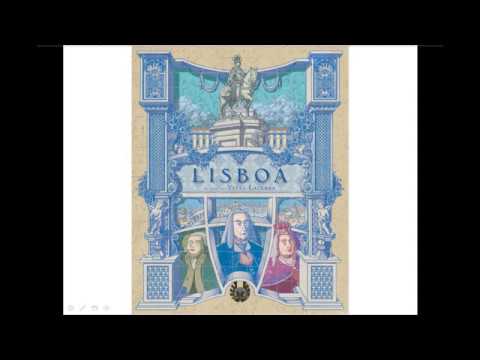 LISBOA: Nice and Slow Tutorial Followed by a Complete Solo Playthrough (Corrected)
-
 Lisboa: How to Play
-
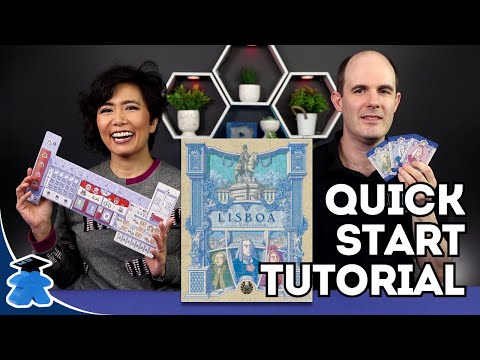 How To Play Lisboa Fast and Easy! Board Game Tutorial in 15 Minutes
-
 Lisboa: Nice and Slow Tutorial and a Complete Solo Playthrough
-
 Learn to Play Lisboa
-
 Lisboa Unboxing Video
-
 Game overview and interview with Vital Lacerda (Essen 2017)
-
 Idle Red Hands: Lisboa Organizational Unboxing
Rules manual
Official PDF file
