How to Play Scrabble
(Unknown), Alga, Barnes & Noble · Board game · 1948What do you want to do now
Ask anything about Scrabble: rules, setup, components, complexity, price, or whether it fits your group.
Video: How to Play
Start here, then follow the written guide
Step by step
Game Objective
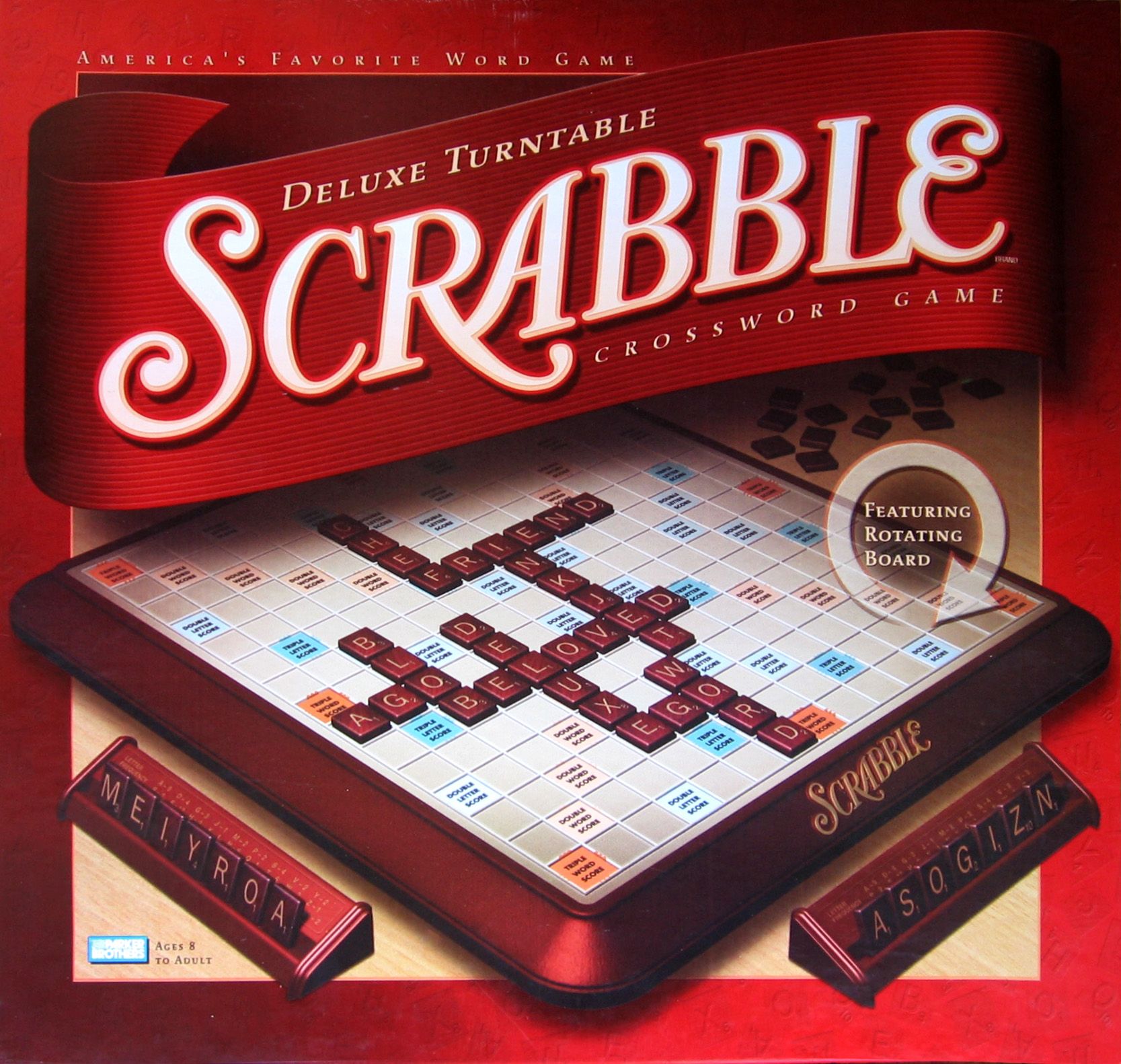
Ready to exercise your brain and vocabulary? In Scrabble, your objective is simple yet challenging: form interlocking words on the board, like in a good crossword puzzle, using the letters you have in hand. Each letter has a point value, and the big trick is to use combinations and board locations that give you the most points and take advantage of bonus squares. The player with the highest score at the end of the game is the grand master of words!
Preparation (Setup)
Let's set up the table for the fun to begin! Scrabble is for 2 to 4 players, and preparation is very straightforward:
- Always have paper and a pen handy. They will be your best friends for recording the score of each play.
- Place the board in the center of the table, accessible to everyone.
- Each player takes a tile rack and places it in front of them.
- Put all 120 letter tiles (117 alphabet letters and 3 blank tiles) into the bag. Give them a good mix!
- To decide who starts, each participant draws a tile from the bag. Whoever draws the letter closest to the beginning of the alphabet plays first (the blank tile is the very first, even before "A"). Return the drawn tiles to the bag and mix again.
- Now, each player draws seven tiles from the bag and places them on their rack, without others seeing them.
- Done! Everyone has their racks full, and the game should proceed clockwise.
The Game Turn
Each turn, you have a few options to try for the highest score. Remember that one of the players will be the "scorer" and will record the points for each play.
The First Word
The first player has a special mission: to form the inaugural word! They must combine two or more of their letters to create a word, placing them on the board vertically or horizontally. One of the letters must, obligatorily, be placed on the middle square of the board (the star). Oh, and no diagonal words, okay?
Your Options Each Turn
After the first word, each time, a player can choose between three actions:
- Place Tiles on the Board (and form words): This is the main action! You can add one or more letters to existing words on the board, forming new words. Letters must always be placed in a straight line (horizontal or vertical). If your tiles touch others already placed, they must form valid words with the adjacent letters, like in crosswords. You receive points for all words formed in your play.
- Exchange Tiles: If your letters aren't helping, you can use your turn to exchange one or all the tiles on your rack. Place the unwanted tiles face down on the table, draw the same number of tiles from the bag, and then return the separated tiles to the bag. If you exchange tiles, you cannot play words that turn and will have to wait for the next round.
- Pass Your Turn: If you cannot form a word or do not want to exchange letters, you can simply pass your turn. But beware: if all players pass their turn twice in a row, the game ends!
Allowed Word Types
- All words that exist in the dictionary are allowed.
- Not allowed are words that start with capital letters (proper nouns), abbreviations, prefixes, suffixes, or words with an apostrophe or hyphen.
- Foreign words are valid if they are in the Portuguese dictionary. It's good for everyone to agree on which dictionary to use before starting!
- Once a letter is placed, it cannot be removed unless it is challenged and the challenge is valid.
Challenging Words
If you suspect a word does not exist, you can challenge it! This must be done before the score is tallied and before the next player begins. Only at this moment can the dictionary be consulted. If the word is invalid, the player who placed it removes the letters and loses their turn. If the word is valid, the challenger loses their turn.
Bonus Squares
The board has special squares that boost your score:
- Letter bonus squares:
- Light blue: Doubles the score of the letter placed there.
- Dark blue: Triples the score of the letter placed there.
- Word bonus squares:
- Pink: Doubles the score of the entire word.
- Red: Triples the score of the entire word.
Important: If a word uses both letter and word bonuses, first sum the letter bonuses and only then multiply the word's score. Bonuses only count in the play in which the letters are placed. Blank tiles are worth zero, but if they land on a word bonus square, the bonus is applied to the word, even if the tile itself remains worth zero.
Scoring and End of Play
At the end of their turn, the player counts the points of the word (or words) formed, including bonuses. The scorer records everything. Then, the player draws the same number of tiles from the bag as they used, to always maintain seven tiles on their rack.
50-Point Bonus
Did you manage to use all seven letters from your rack in a single play? Congratulations! You earn a 50-point bonus, which is added to your score after calculating all letter and word bonuses.
End of Game and Scoring
A Scrabble game can end in three ways:
- All tiles have been drawn from the bag, and one of the players has no more tiles on their rack.
- It is no longer possible to form any words on the board.
- All players pass their turn two rounds in a row.
When the game ends, it's time for the final count:
- From each player's total score, the value of the letters remaining on their rack must be subtracted.
- If a player managed to use all their letters (leaving none on their rack), they add to their score the total value of the letters remaining on the other players' racks.
The player with the highest final score is the grand winner!
Tips for Winning
- Keep an Eye on Bonus Squares: Always try to position your words on bonus squares, especially word bonuses (pink and red). They multiply your score significantly! Remember that letter bonuses are added before word bonuses, so plan carefully.
- Think in Multiple Words: Don't limit yourself to forming just one word. Often, by crossing a word, you can form other smaller adjacent words, earning extra points for each of them. Look for opportunities to "score off the board"!
- Manage Your Letters: Try to maintain a good balance between vowels and consonants on your rack. Avoid accumulating difficult letters (like "Q" without "U" or "X" and "Z") for many rounds. If necessary, use the option to exchange tiles to improve your chances of forming high-scoring words.
More videos
More rules explanations from the community
In English
-
 How Modern Language Breaks Scrabble | Game/Show | PBS Digital Studios
-
 Scrabble - How to Play (Skip the Rulebook)
-
 Scrabble® To Go™ by Winning Moves
-
 Strategic Scrabble | The Beloved Classic Just Got Interesting Again
-
 How To Win At Scrabble
-
 Shawn Murphy's "How to Play": Scrabble
-
 How to play Scrabble (2023 rules)
-
 How to play Scrabble in 3 Minutes (Scrabble Tutorial)
-
 Game Folio Scrabble Travel Game With Zipper Case
-
 How to Play Scrabble
-
 Making Scrabble Fun For Scrabble Haters
Rules manual
Official PDF file
Frequently Asked Questions
Quick answers about the rules
What is the objective of Scrabble?
How do you set up Scrabble?
How does Scrabble end, and how do you score?
What are some tips for winning Scrabble?
Other Games You'll Like
Based on mechanics and theme