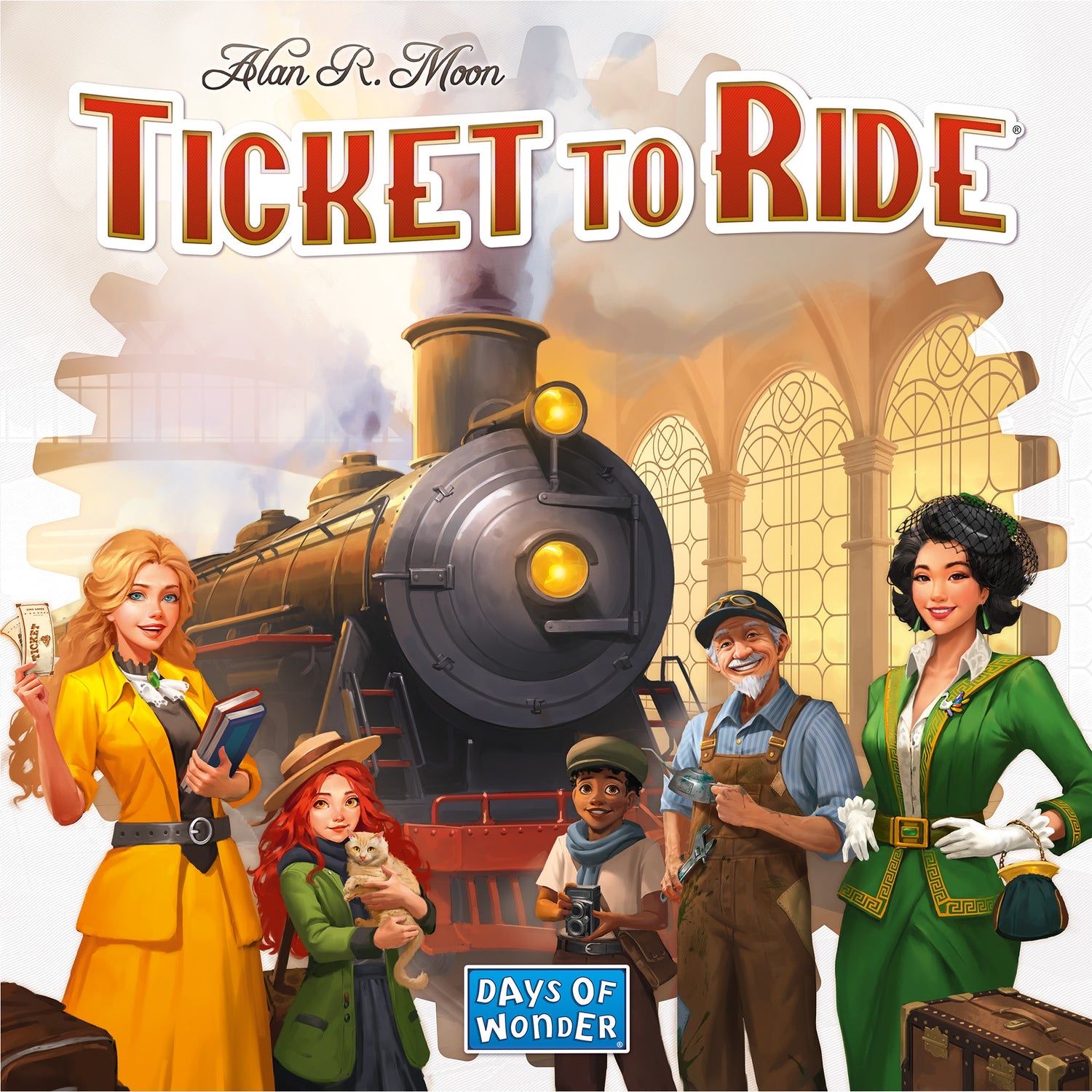
How to Play Ticket to Ride
Days of Wonder, ADC Blackfire Entertainment, asmodee · Board game · 2004What do you want to do now
Ask anything about Ticket to Ride: rules, setup, components, complexity, price, or whether it fits your group.
Video: How to Play
Start here, then follow the written guide
Step by step
Game Objective
Get ready for an epic railway adventure! In Ticket to Ride, you and your friends (2 to 5 players) will embark on an exciting race to connect cities across the USA via train routes. Inspired by Phileas Fogg's daring wager, the objective is simple yet challenging: be the player with the most points at the end of the game!
You will accumulate points in several ways:
- Claiming routes between adjacent cities on the map.
- Connecting the cities specified on your Destination Tickets.
- And, for the strategists among you, completing the Longest Continuous Path.
But beware! If you fail to complete the routes on your Destination Tickets, you will lose points. So, choose your routes wisely, plan your connections, and prepare for an unforgettable journey!
Setup
Let's set up the table and prepare the tracks for our adventure!
- Board in the Center: Place the Board with the map of USA railway routes in the center of the table.
- Choose Your Color: Each player takes a set of 45 colored Trains and their corresponding colored wooden Scoring Marker (Blue, Red, Green, Yellow, or Black).
- Start Scoring: Each player places their Scoring Marker on the Start space of the Score Track that circles the map. Remember: whenever you score, you advance your marker!
- Train Car Cards: Shuffle the Train Car Cards and deal an initial hand of 4 cards to each player. The remaining Train Car Cards form the draw pile, which should be placed near the board. Then, reveal the top five cards, turning them face-up next to the pile.
- Bonus Card: Place the Longest Continuous Path Bonus Card face-up near the board.
- Destination Tickets: Shuffle the Destination Tickets and deal 3 cards to each player. Each player looks at their Destination Tickets and decides which ones they want to keep. You must keep at least two Tickets, but you may keep all three if you prefer. Any unchosen Tickets are placed at the bottom of the Destination Ticket pile, which also sits near the board. Keep your Destination Tickets secret until the end of the game!
Ready! The locomotive is warmed up, and the journey is about to begin!
The Game Turn
The most experienced traveler starts the game. On their turn, each player can perform one (and only one) of the following actions, then play passes to the next player clockwise:
1. Draw Train Car Cards
You can draw 2 Train Car Cards. There are two ways to do this:
- Face-up Card: Take one of the five face-up cards. If you do this, immediately replace that card with another from the top of the draw pile.
- Face-down Card (Blind Draw): Draw a card directly from the top of the draw pile, without seeing it first.
You can mix the options: take one face-up and one face-down card, or two face-up, or two face-down. Remember the special rules for Locomotives:
- Locomotives are multi-colored cards that act as "wildcards" and can be used with any color to claim a route.
- If a Locomotive is one of the 5 face-up cards and you draw it, you can only draw one card that turn, instead of two.
- If, after drawing a face-up card, the replacement card is a Locomotive, you cannot draw it immediately.
- If, at any time, three of the five face-up cards are Locomotives, all five cards are immediately discarded and new cards are revealed until five face-up cards are formed again.
- If you are lucky enough to draw a Locomotive from the top of the pile (blind draw), you can still draw another card, totaling two cards for the turn.
There is no limit to the number of cards in your hand. If the draw pile runs out, the discard pile is shuffled and used as the new draw pile. In the rare event that there are no cards in either pile, you cannot draw Train Car Cards and must choose another action.
2. Claim a Route
This is the essence of the game! To claim a route, you must play a set of Train Car Cards that matches the length and color of the desired route. All cards in the set must be of the same color.
- Colored Routes: Most routes require a set of cards of a specific color (e.g., a blue route needs Blue Passenger Train Car Cards).
- Gray Routes: Gray routes are flexible! You can claim them with a set of cards of any color, as long as all cards in the set are of the same color.
After playing the cards, place one of your plastic Trains on each space of the claimed route. The used cards are discarded. Then, mark the corresponding points on the Score Track, consulting the Scoring Table:
- Route Length 1: 1 Point
- Route Length 2: 2 Points
- Route Length 3: 4 Points
- Route Length 4: 7 Points
- Route Length 5: 10 Points
- Route Length 6: 15 Points
You can claim any available route on the board, and it does not need to be connected to your previous routes. You can claim at most one route per turn. Some cities are connected by Double Routes. In games with 2 or 3 players, only one of the Double Routes can be used, and the other remains blocked. In games with 4 or 5 players, both routes can be claimed, but not by the same player.
3. Draw Destination Tickets
If you need more objectives or want to risk for more points, you can draw 3 Destination Tickets from the top of the pile. You must choose and keep at least one of these Tickets, but you may keep two or even all three if you prefer. The Tickets you do not choose return to the bottom of the Destination Ticket pile. If there are fewer than 3 Tickets in the pile, you only draw the available ones.
Each Destination Ticket shows two cities and a point value. At the end of the game, if you connect these two cities with a continuous series of your routes, you add the points. Otherwise, you subtract the points from your total. Keep your Destination Tickets secret until the end of the game. There is no limit to the number of Destination Tickets a player can have.
End of Game and Scoring
The journey is coming to an end! The game ends when a player's stock of plastic Trains reaches 0, 1, or 2 trains at the end of their turn. When this happens, all other players, including the one who triggered the end of the game, get one last turn. After that, the game ends, and it's time to calculate the final score!
Calculating Points
To determine the grand winner, follow these steps:
- Points from Claimed Routes: Points earned from claiming routes should already have been marked on the Score Track during the game. You can recount to ensure accuracy.
- Points from Destination Tickets: All players reveal their Destination Tickets. For each Ticket, check if the two listed cities have been connected by a continuous series of your routes.
- If the connection was made, add the Ticket's point value to your total.
- If the connection was not made, subtract the Ticket's point value from your total.
- Longest Continuous Path Bonus: The player who has the Longest Continuous Path of trains of the same color receives the Longest Continuous Path Bonus Card, which is worth an additional 10 points! A continuous path can have turns and pass through the same city multiple times, but a plastic train cannot be counted twice within the same path. In case of a tie for the Longest Continuous Path, all tied players receive the 10 points.
The player with the most points wins the game! In case of a tie, the player who completed the most Destination Tickets wins. If there is still a tie, the player with the Longest Continuous Path Card wins.
Tips for Winning
Want to be the master of the railways? Here are some tips to get you started on the right track:
- Balance Routes and Tickets: Don't just focus on claiming long routes. Your Destination Tickets are crucial for the final score. Try to plan your routes to connect the cities on your Tickets, but be ready to adapt if your plans are blocked.
- Pay Attention to Locomotives: Locomotives are powerful wildcards, but drawing them face-up can cost you a card-drawing action. Weighing the cost-benefit of taking a visible Locomotive versus risking a blind draw is an important decision each turn.
- Block Your Opponents (in moderation): Observe the routes your opponents are trying to build, especially if they are collecting many cards of a specific color or if you suspect their Destination Tickets. Claiming a strategic route can block an opponent and force them to find a longer (and less efficient) path, but don't forget your own objectives!
More videos
More rules explanations from the community
In English
-
 13 TIPS on HOW TO WIN at Ticket to Ride / STRATEGY Tips
-
 HOW TO PLAY Ticket to Ride
-
 How to Play Ticket To Ride
-
 Learn to Play Ticket to Ride
-
 TICKET TO RIDE - How To Play & Full Gameplay (2020)
-
 Ticket to Ride - How to play - Board game Arena (BGA) teach
-
 Victory Point & Shoot - Ticket to Ride Community Challenge!
-
 How To Play - Ticket to Ride USA (Hindi)//Chai & Games
-
 How to Play Ticket to Ride Remotely (While in Quarantine)
-
 How to Win Ticket To Ride - Strategy Tips
-
 Learn Ticket to Ride in 2 minutes (ish)
Rules manual
Official PDF file
Frequently Asked Questions
Quick answers about the rules
What is the objective of Ticket to Ride?
How do you set up Ticket to Ride?
How does Ticket to Ride end, and how do you score?
What are some tips for winning Ticket to Ride?
Expansions
Published additional content
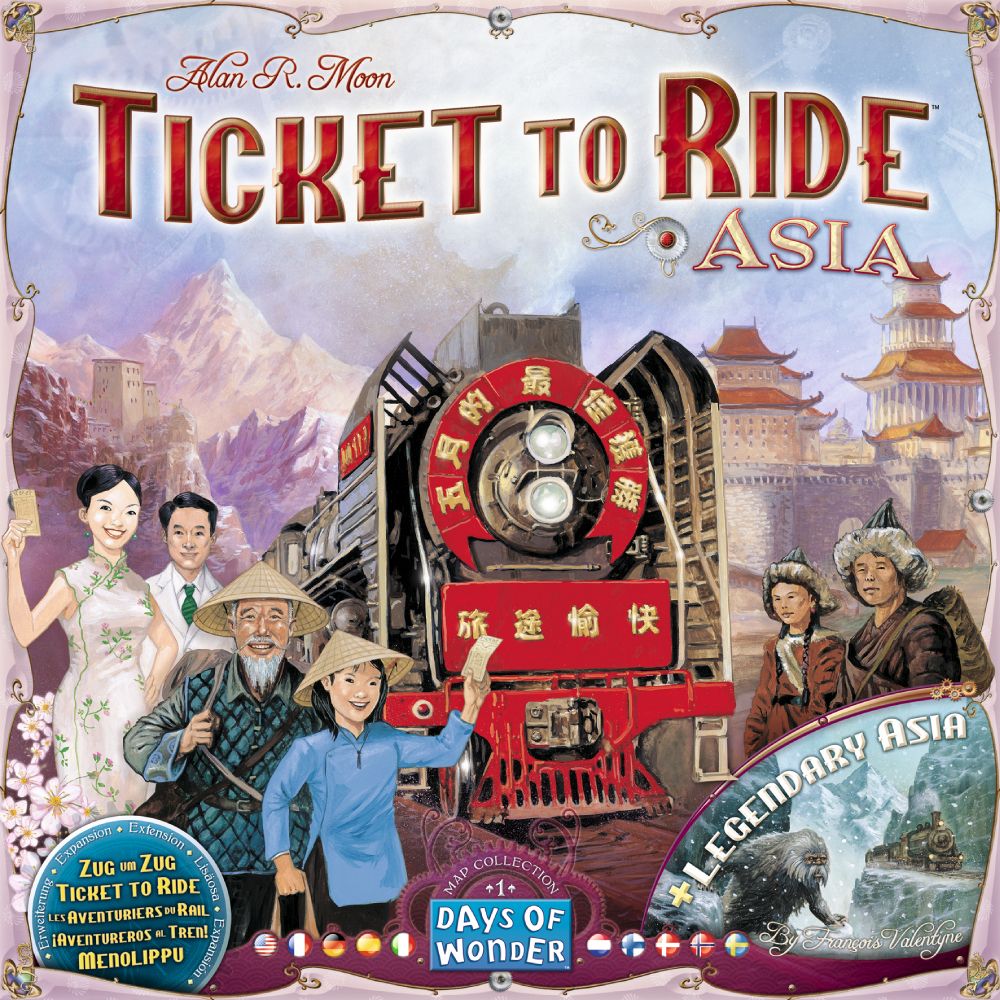 Ticket to Ride Map Collection 1: Asia + Legendary Asia
 Ticket to Ride Map Collection 2: India & Switzerland
 Ticket to Ride Map Collection 3: The Heart of Africa
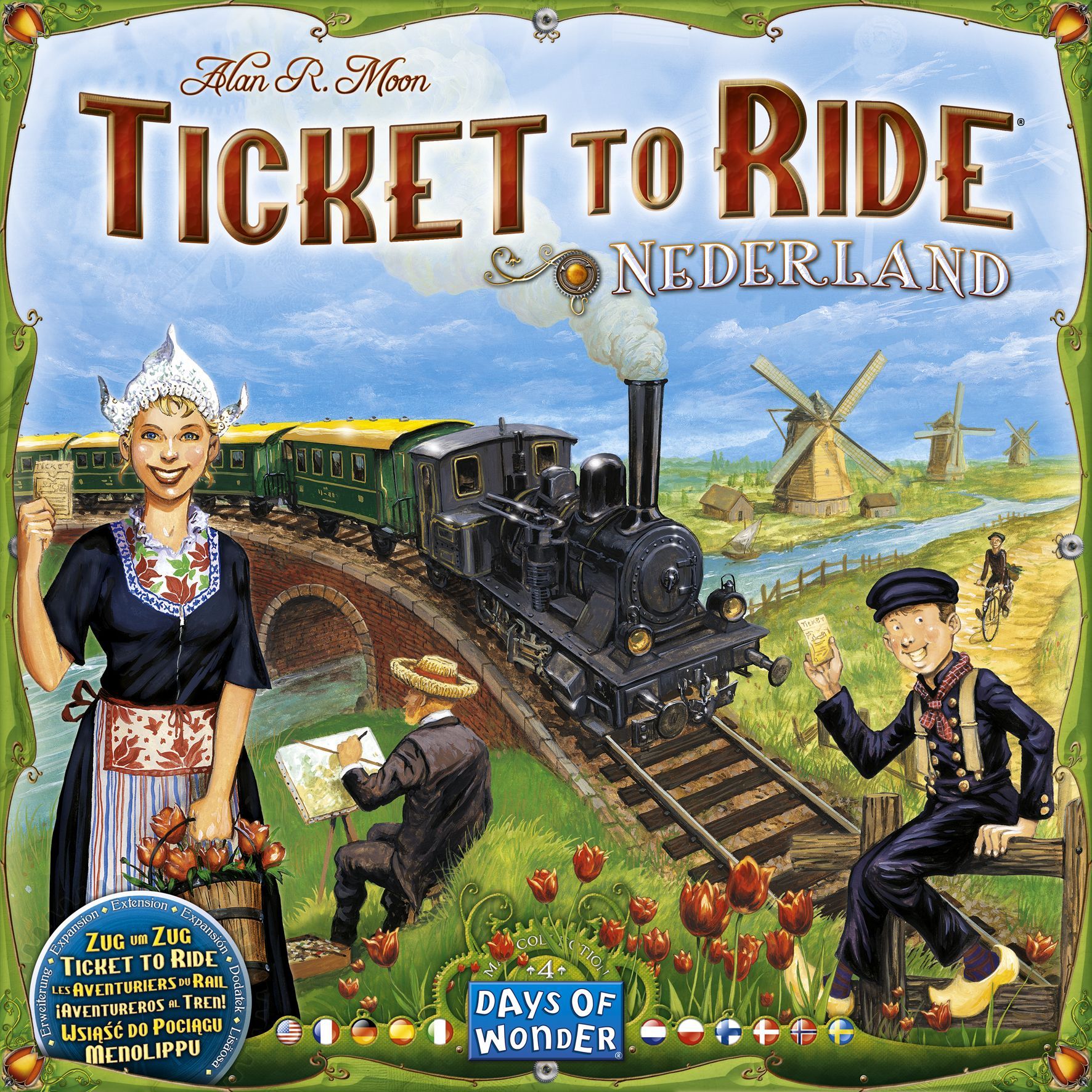 Ticket to Ride Map Collection 4: Nederland
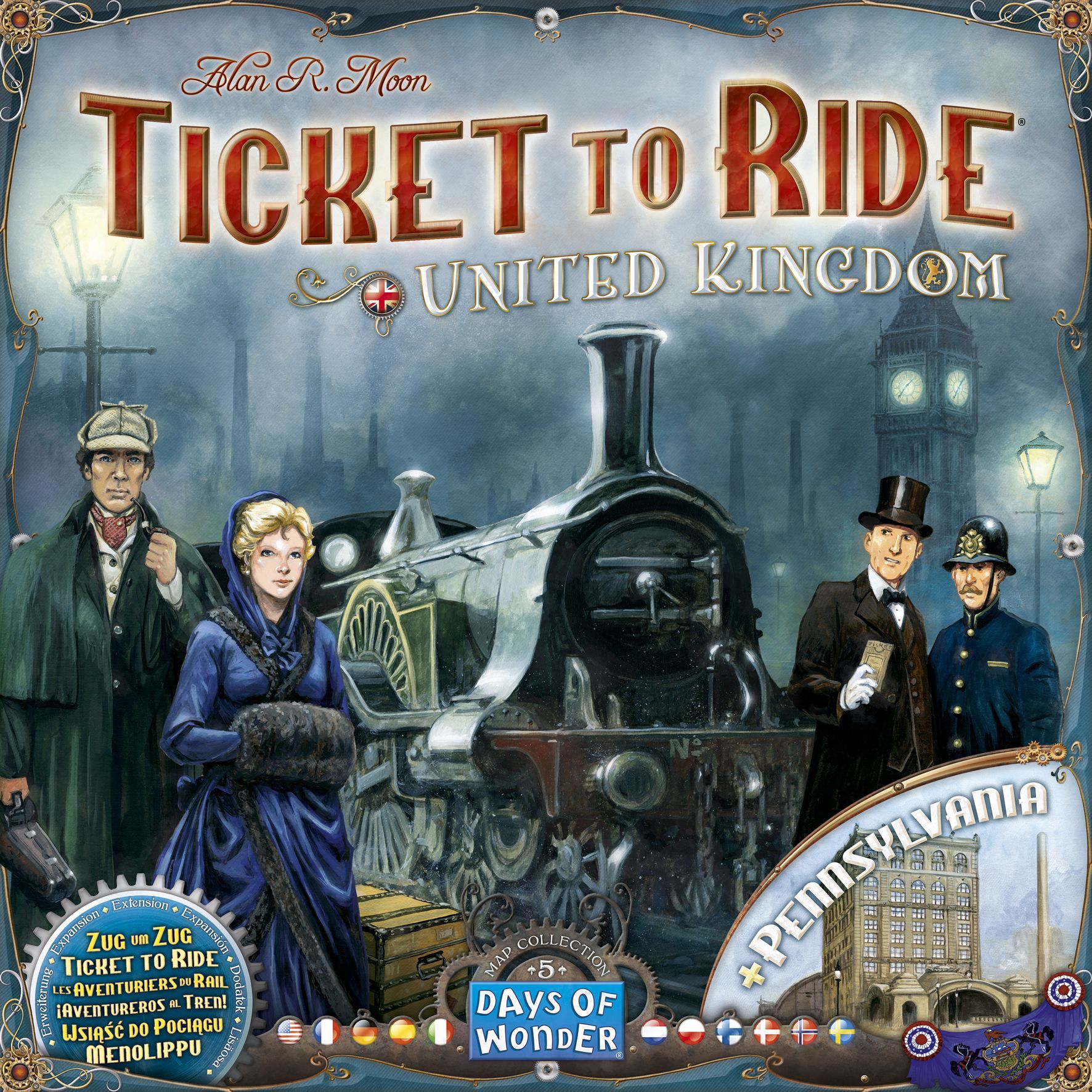 Ticket to Ride Map Collection 5: United Kingdom & Pennsylvania
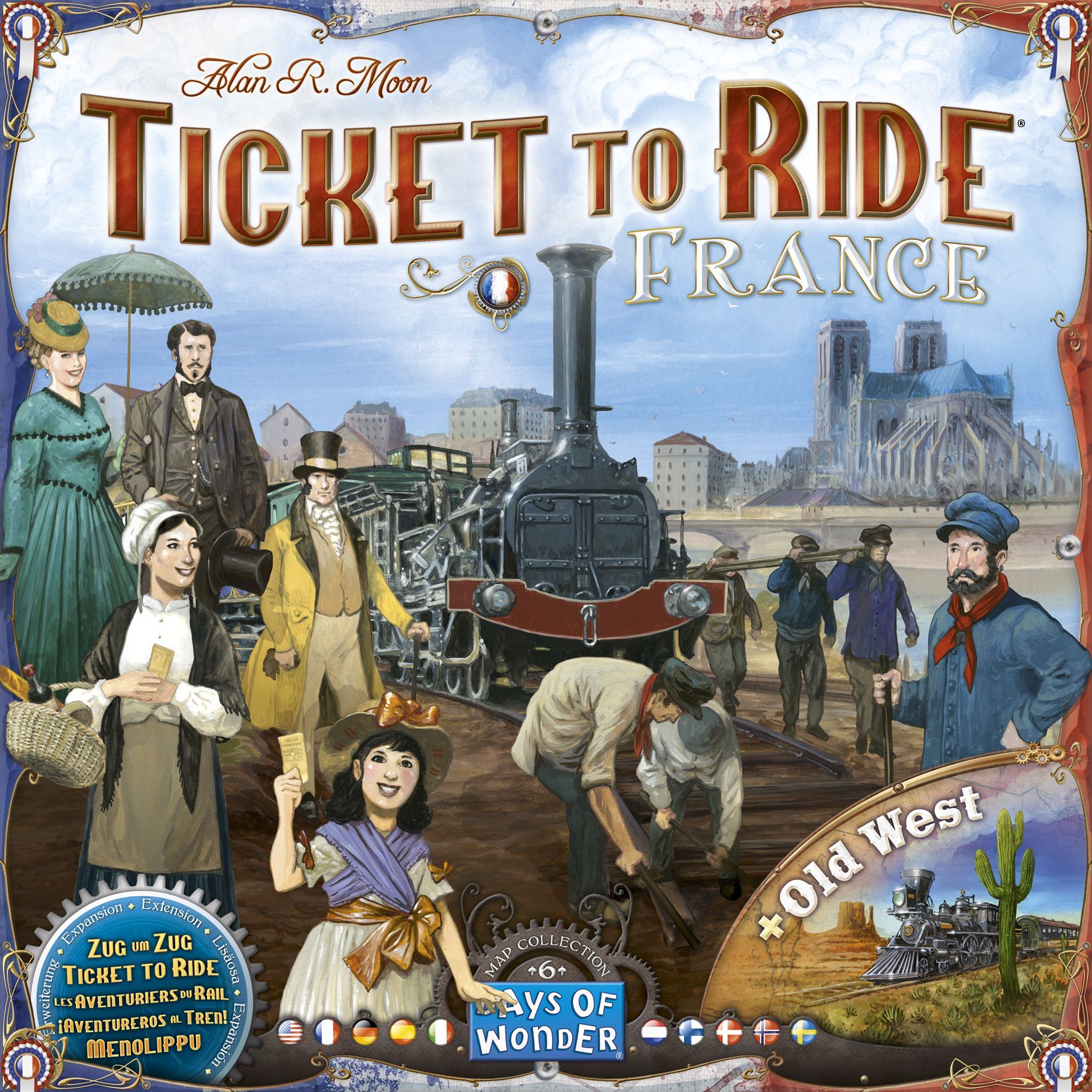 Ticket to Ride Map Collection 6: France & Old West
 Ticket to Ride Map Collection 6½: Poland
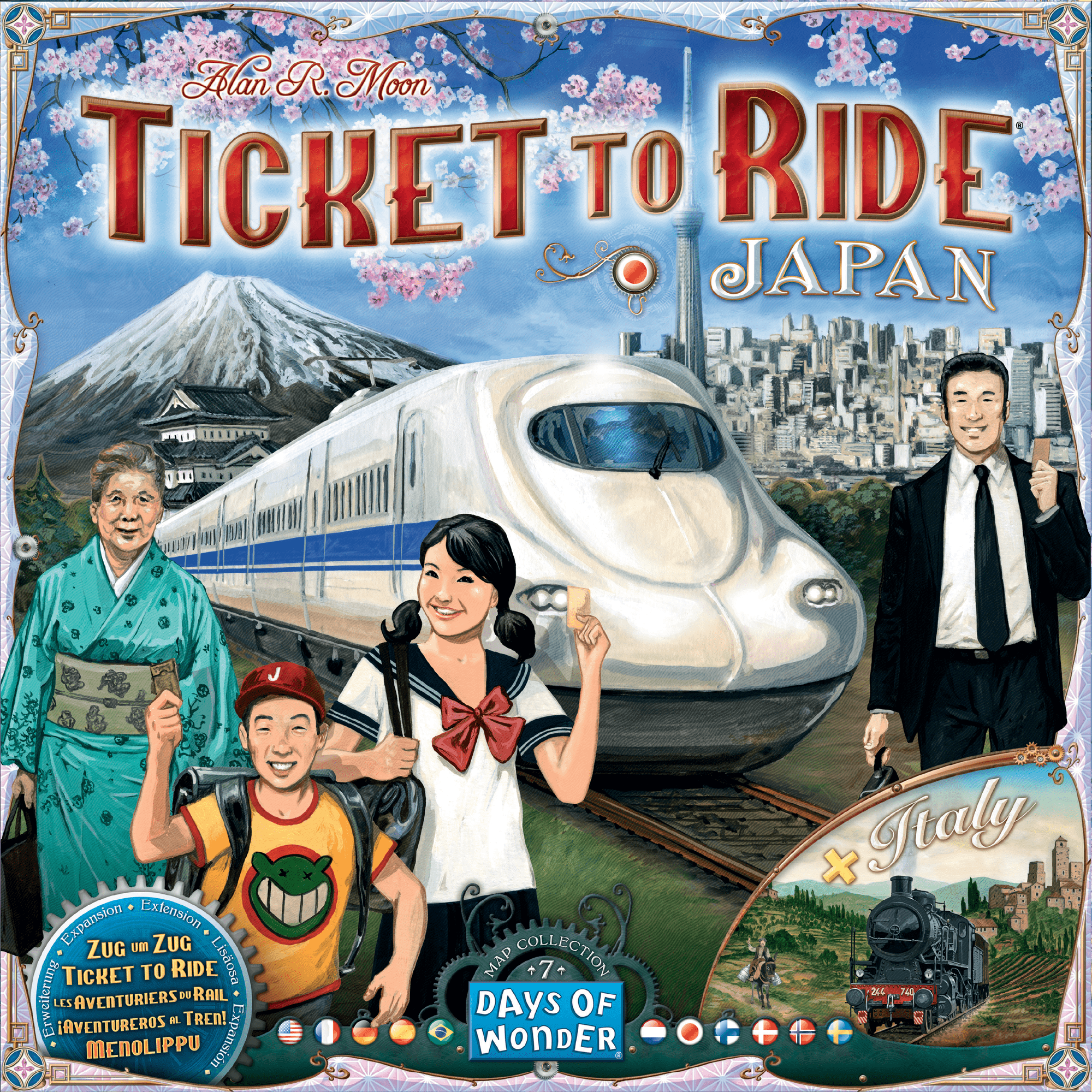 Ticket to Ride Map Collection 7: Japan & Italy
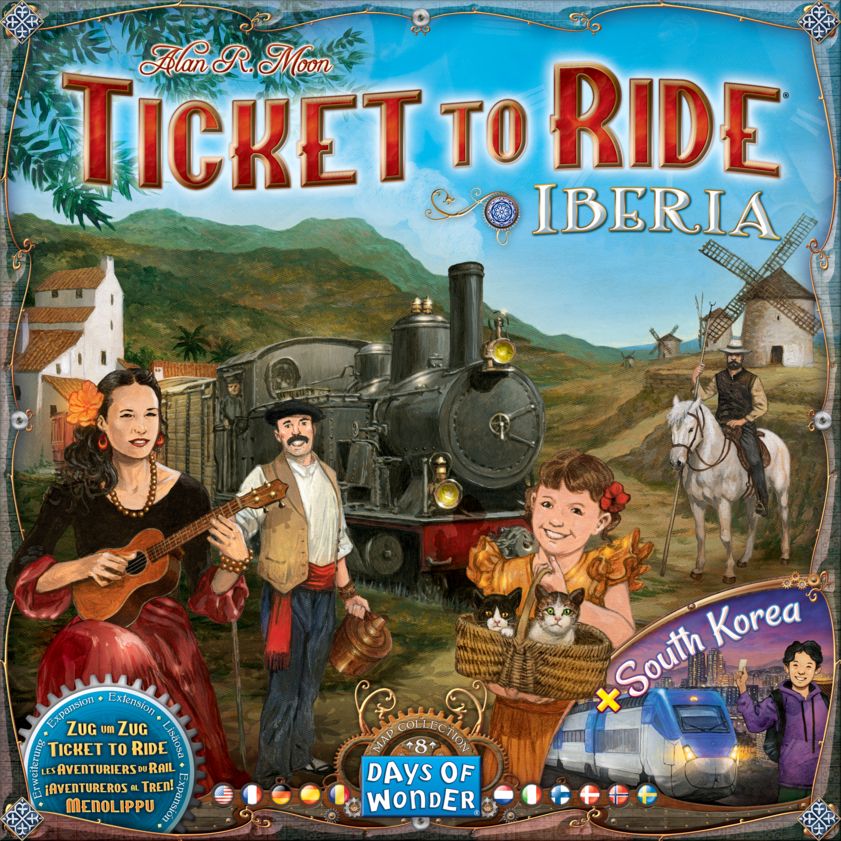 Ticket to Ride Map Collection 8: Iberia & South Korea
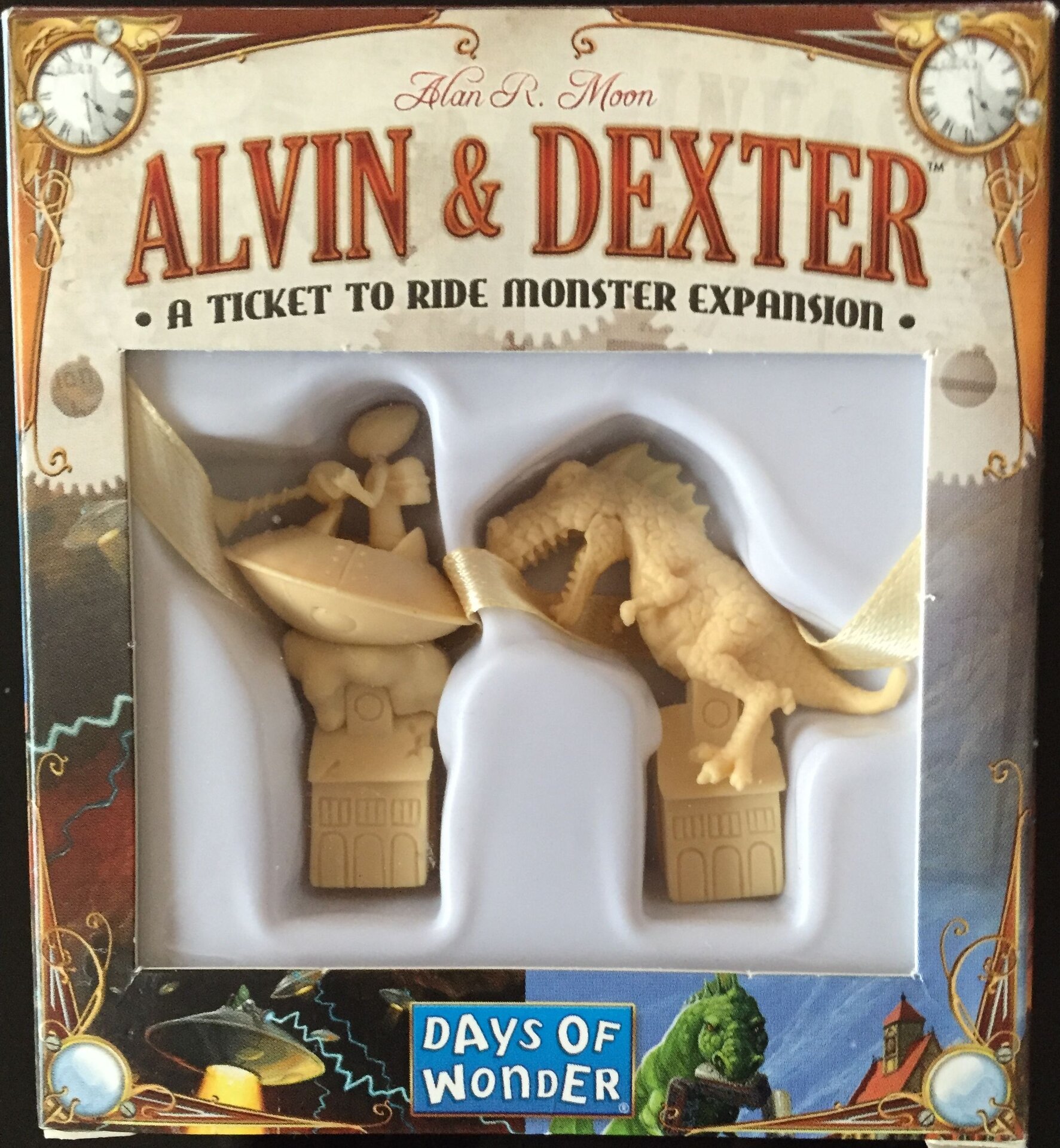 Ticket to Ride: Alvin & Dexter
 Ticket to Ride: Europa 1912
 Ticket to Ride: Mystery Train Expansion
 Ticket to Ride: Stay at Home
 Ticket to Ride: Switzerland
 Ticket to Ride: USA 1910
Other Games You'll Like
Based on mechanics and theme