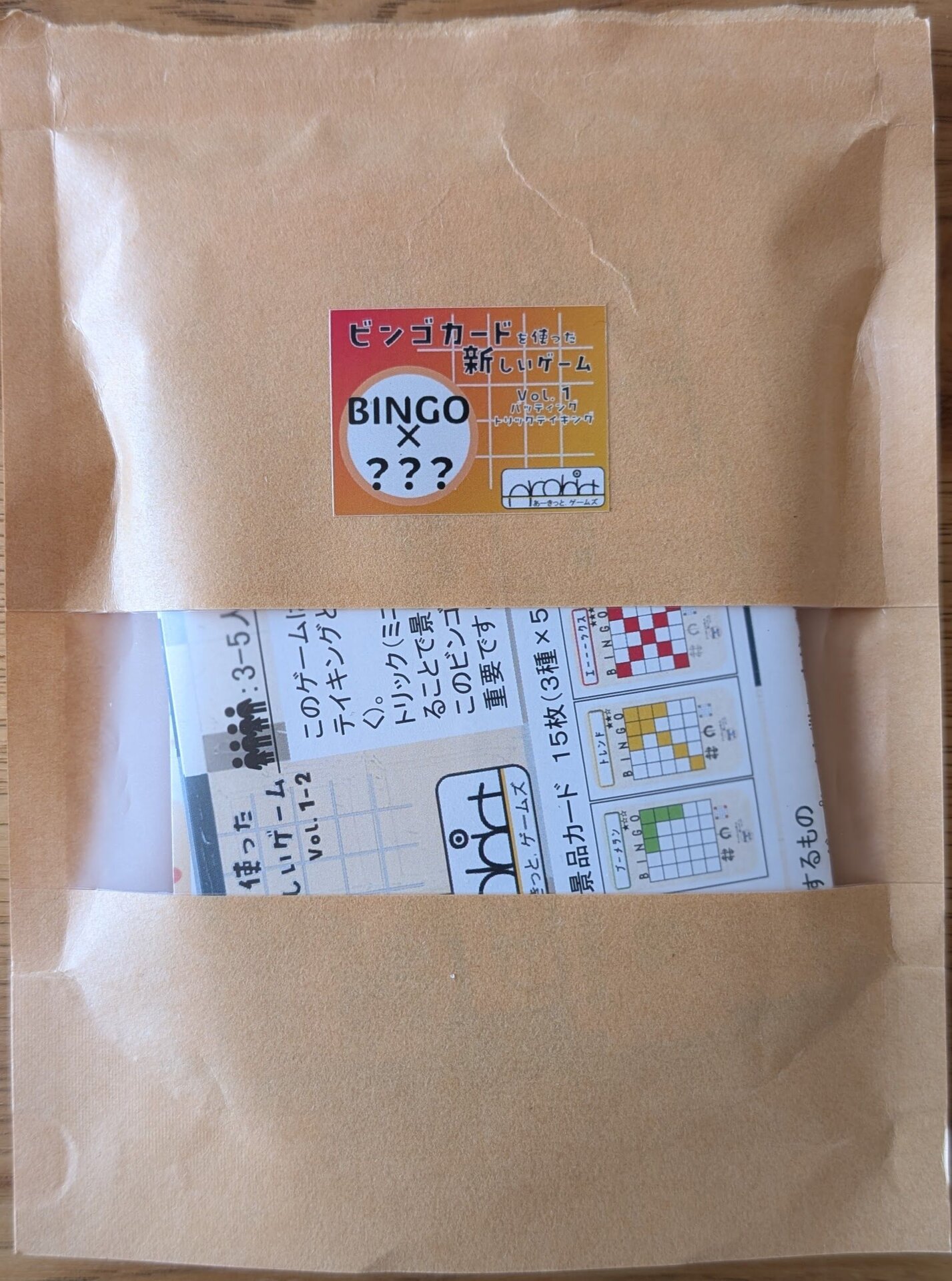
ビンゴカードを使った新しいゲーム (A New Game Using Bingo Cards)
あーきっと.ゲームズ (Archit Games) · Board game · 2024
2–5
20–30 min
Buy
—
rating
Ludopedia
5.0
rating
BGG
Our Verdict
HIGHLY RECOMMENDED
If you love bingo with a card game twist, this is a must‑try.
Highlights
- Bingo meets card play
- Trick‑taking fun
- Pattern strategy
- Simplicity of components
Keep in mind
- Rules can be confusing
- Short playtime may not satisfy
Rules manual not indexed yet
Upload the PDF rulebook to ask questions about this game with AI.
About the game
What you do in a play session
This game brings an unexpected twist to the table: traditional bingo combined with card mechanics. Each game starts with a 75‑ball deck, distributed onto 5x5 bingo cards. But it’s not your usual bingo: there are two gameplay variants running in parallel. In the first, players engage in a trick‑taking match. Whenever someone wins a trick, they must mark the corresponding cell on their card, following the column indicated by the lead player. The goal is to complete specific patterns—such as a row, column, or cross—but the catch is that you lose points for each trick won. Thus, strategy revolves around choosing when to attack and when to hold back, balancing the need to complete patterns against the risk of accumulating negative points.
The second variant operates like a “batting” bingo. All players simultaneously pick a number from their card. If two or more players choose the same number, it’s removed from consideration that round. At the center of the table sit rule cards that indicate which row or column will be used, what the goal of the round is (e.g., highest value, largest difference between tens and units), and how many points will be earned. This dynamic demands quick attention and reading of the table, as players must adapt their choices to what opponents are doing.
Components are simple: a 75‑ball deck, bingo cards, rule cards, and score tokens. Playtime ranges from 20 to 30 minutes, ideal for casual gatherings, but the need to follow simultaneous rules can be a bit challenging for those not used to more complex card games. If you enjoy mixing bingo, trick‑taking strategy, and a dash of competition, this title might be the missing piece in your repertoire.
The second variant operates like a “batting” bingo. All players simultaneously pick a number from their card. If two or more players choose the same number, it’s removed from consideration that round. At the center of the table sit rule cards that indicate which row or column will be used, what the goal of the round is (e.g., highest value, largest difference between tens and units), and how many points will be earned. This dynamic demands quick attention and reading of the table, as players must adapt their choices to what opponents are doing.
Components are simple: a 75‑ball deck, bingo cards, rule cards, and score tokens. Playtime ranges from 20 to 30 minutes, ideal for casual gatherings, but the need to follow simultaneous rules can be a bit challenging for those not used to more complex card games. If you enjoy mixing bingo, trick‑taking strategy, and a dash of competition, this title might be the missing piece in your repertoire.
Gallery
Box and component photos
Tap any photo to open fullscreen. Photos submitted by the community or publisher.
Best player count
BGG community vote
2
OK
3
OK
4
OK
5
OK
Soundtrack
Ambience suggested by Melodice
Loading playlist...
Where to Buy
Prices monitored daily
Finding best prices...
Prices unavailable at this time.
Price history — last 6 months (lowest new offer)
As an Amazon Associate I earn from qualifying purchases. Prices and availability subject to change.
Alert enabled!
Join the BoardGamesBot deals group
Get the best board game deals every day — without message spam.
Join the WhatsApp groupGame details
Mechanics, categories, families and credits
Mechanics
Categories
Publisher
あーきっと.ゲームズ (Archit Games)
Designer
アキト (Akito)
Community
Data from BoardGameGeek
Frequently Asked Questions
Quick answers before you buy
How many players can join?
2 to 5 players.
What is the typical game duration?
20 to 30 minutes.
Is the game easy to learn?
Yes, the rules are simple, but the mix of trick‑taking and bingo may need some practice.
What components are needed?
A 75‑ball deck, bingo cards, rule cards and score tokens.
Who is this game for?
Those who enjoy bingo, cards and want a quick, competitive experience.
Is there a main strategy?
Balancing pattern completion with point loss from tricks, and choosing smart numbers in the batting round.
Other Games You'll Like
Based on mechanics and theme