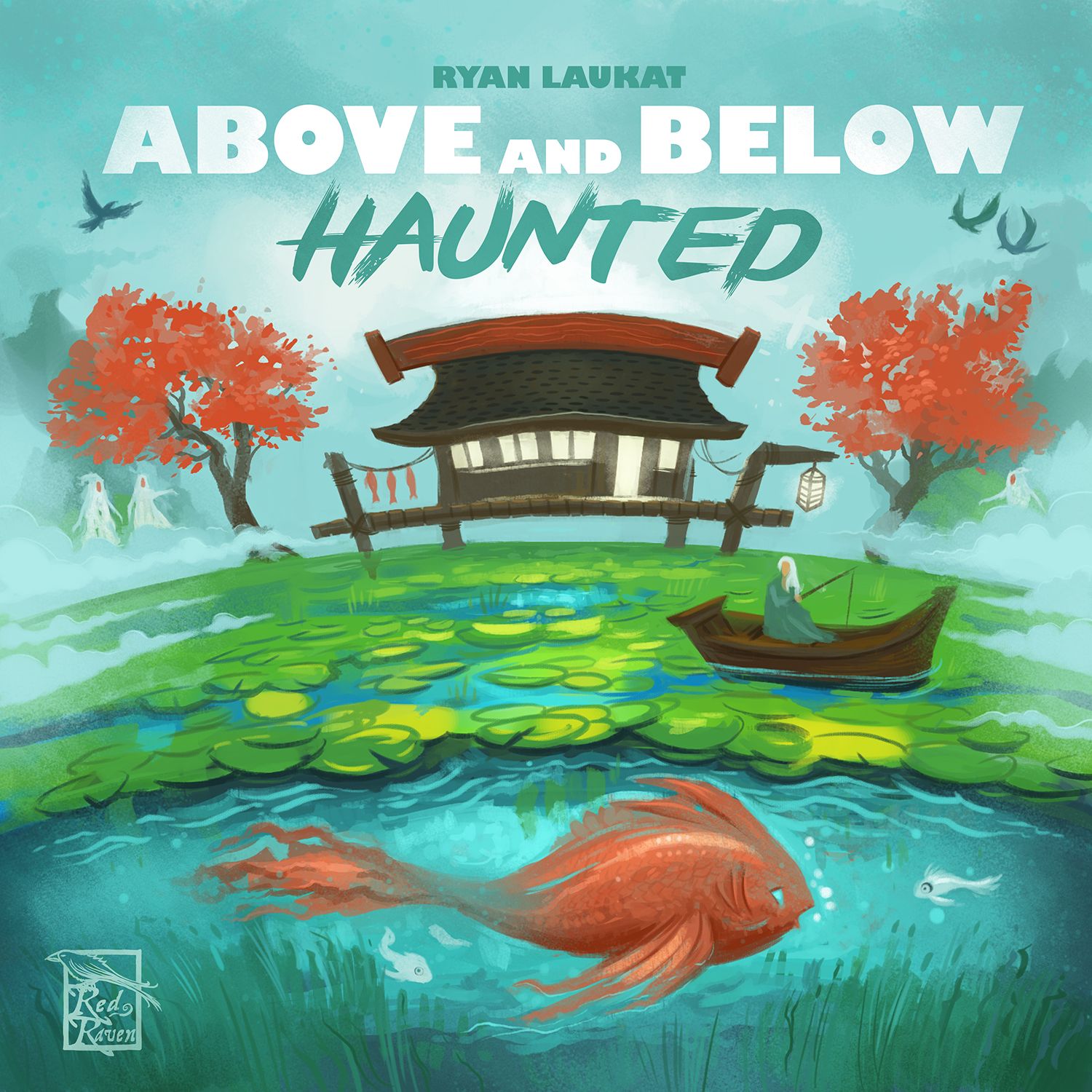
How to Play Above and Below
Red Raven Games, Arclight Games, Bard Centrum Gier · Board game · 2015What do you want to do now
Ask anything about Above and Below: rules, setup, components, complexity, price, or whether it fits your group.
Video: How to Play
Start here, then follow the written guide
Step by step
The Ultimate Guide: How to Play Above and Below
Prepare for an epic adventure where your last village has been plundered, and you need to rebuild everything from scratch! In Above and Below, you will not only raise a new community on the surface but also explore a vast and mysterious underground world, full of treasures and dangers. This guide will help you master the depths and heights to become the most prosperous leader in the region!
Game Objective
In Above and Below, your goal is to build the most prosperous and renowned village in the region. Over seven rounds, you will send your villagers to explore caves full of adventures and resources, build houses and outposts, and train new inhabitants for your growing community. In the end, the player with the most victory points will be the grand winner!
Preparation (Setup)
Let's set up the table and begin the adventure! Follow these steps to prepare your game of Above and Below:
- Each player receives:
- A player board.
- Seven coins.
- A starting house card.
- Three starting villagers (one of each type, with the house symbol on the back). Place them in the large grassy area to the left of your board, the "active area."
- If playing with four players, two of the starting villagers (those without the hammer symbol) start in the grassy area with the moon symbol, the "exhausted area." They will only be moved to the "active area" at the end of the first round.
- Form two rows of building cards:
- Place the 6 star house cards face up in one row.
- Shuffle the 9 key house cards, draw 4 randomly, and place them face up in another row below the star houses. The remaining cards return to the box.
- Position the reputation board in the center of the table.
- Unused starting villagers and special villagers (with a cave on the back) return to the box or are set aside, respectively.
- Shuffle the remaining villagers, form a face-down pile, and draw five, placing them in a row in the upper space of the reputation board.
- Place the round marker in the top cave of the seven-cave track on the reputation board.
- Create the general supply:
- Place the coins, goods tokens, cider, and potion near the reputation board.
- Place a cider token on the reputation board in the area with the cider symbol.
- Shuffle the cave cards and place them face up in a pile near the reputation board.
- Each player takes a wooden cube of their board's banner color and places it on the torch space on the reputation board.
- Decide the starting player (clockwise). The starting player receives the starting player card.
- In two-player games, the second player gains 1 extra coin.
- In three-player games, the second and third players gain 1 extra coin each.
- In four-player games, the fourth player gains 1 extra coin.
- Shuffle the house cards and outpost cards, forming two face-down piles below the reputation board. Draw the first four cards from each pile and place them in a face-up line, next to their piles.
- Place the encounter book and dice near the play area.
The Game Turn
Above and Below is played over seven rounds. Each round is divided into two main phases: Player Actions and End of Round.
1. Player Actions
Starting with the starting player and proceeding clockwise, each player performs one action per turn until everyone has "passed." You can perform free actions before a normal action, but not after. Normal actions are:
Exploration
Send villagers to explore the caves and find a place for an outpost!
- Draw a cave card and place it to the left of your board.
- Take two or more villagers from your "active area" and place them on the cave card.
- Roll a die. The result indicates which paragraph of the encounter book will be read.
- The player to your left reads the indicated paragraph, including the choices in uppercase and bold and the associated exploration number (e.g., "RUN AND HIDE: Exploration 3 or 4. STAY AND FIGHT: Exploration 7."). They do not read the rewards in parentheses.
- You choose one of the options (e.g., "run and hide").
- Roll a die for each villager sent. A roll of 1 or more generates 1 lantern; a roll of 3 or more generates 2 lanterns.
- Sum the total lanterns. If it is equal to or greater than one of the exploration numbers of your choice, you are successful!
- If you need more lanterns, you can Wound one or more villagers, moving them to the "wounded area" of your board. Each wounded villager generates 1 extra lantern.
- If successful, you gain the reward equivalent to the exploration number achieved (e.g., 5 lanterns on the "Exploration 4" option give you the reward for 4).
- Move the remaining villagers from the cave card to the "exhausted area."
- Place the cave card to the right of your board, below your row of houses.
- If you fail (do not reach the exploration number), you do not gain the cave card or rewards. The villagers go to the "exhausted area," and the cave card returns to the bottom of the pile. Some failures may have penalties.
Construction
A villager with the hammer symbol builds a house, star house, key house, or outpost.
- Slide a villager with the hammer symbol from the "active area" to the "exhausted area."
- Purchase one of the available building cards (house, star house, key house, or outpost), paying the coin cost to the supply.
- If it is an outpost, you must have an empty cave card available. Place the outpost on it.
- Houses, star houses, and key houses are placed in a row next to your starting house. Outposts are placed in a row below the houses.
- Buildings offer special abilities, income, and other benefits.
- After building a house or outpost, draw a new card to fill the space, keeping four cards available.
Harvest
Villagers harvest goods from their houses or outposts.
- Slide a villager from the "active area" to the "exhausted area."
- For each villager slid, take a goods token from your houses or outposts.
- You can keep the good, place it for sale in the upper left area of your board, or place it on your progress track.
Training
A villager with the feather symbol trains a new villager.
- Slide a villager with the feather symbol from the "active area" to the "exhausted area."
- Pay the coin cost (indicated on the reputation board) to train one of the available villagers.
- Place the newly trained villager in the "exhausted area" of your board. Do not replenish the villager on the reputation board now.
Work
Villagers work to earn coins.
- Slide a villager from the "active area" to the "exhausted area."
- For each villager slid, you gain 1 coin.
- The first player to use a villager for work in each round also gains the cider token from the reputation board (if available).
Free Actions
Can be performed before a normal action, without tiring villagers. You can do as many as you want.
- Buy from a Player: Buy goods, cider, or potions that another player has placed for sale for at least 3 coins.
- Place Something for Sale: Place one of your goods, cider, or potion in the upper left circle of your board. You can only have one item for sale at a time.
- Swap Building Row: Pay 1 coin to swap all four cards from one of the house or outpost rows. The old cards go to the bottom of the pile, and four new ones are drawn. Can only be done once per turn. Does not apply to star houses or key houses.
Pass
When you no longer wish to perform actions, declare "I pass." You will no longer be able to perform normal or free actions this round. If you have no villagers in the "active area" at the start of your turn, you must pass.
2. End of Round
When all players have passed, the round ends. Follow these steps:
- Round Marker: Slide the round marker one cave down the track. If it cannot be moved, the game ends.
- Cider: Place a cider token on the cider icon of the reputation board if there isn't one.
- New Villagers: Slide the remaining villagers on the reputation board to the left and fill the empty spaces with new villagers from the pile.
- Rest Villagers:
- Spend potions to move villagers from the "wounded area" to the "exhausted area."
- Spend ciders to move villagers from the "exhausted area" to the "active area." You can use both on the same villager.
- Move villagers from the "wounded area" to the "exhausted area," or from the "exhausted area" to the "active area" for each bed you own in your buildings. A villager cannot use two beds to go from "wounded" to "active."
- Collect Income: Collect coins based on your income level (starts at 4 and increases with goods on the progress track) and from any house cards or outpost cards that provide extra income.
- Replace Goods in Buildings: If any building with an arrow next to the good is empty, place the indicated good on it.
- Pass the Starting Player Card: The starting player passes the starting player card to the player on their left.
- If seven rounds have not yet passed, start the next one!
End of Game and Scoring
The game ends after seven rounds. Players sum their victory points as follows:
- Progress Track: Sum the victory points for each good on your progress track. The value of each good is indicated above its space.
- Buildings: Each building (houses, star houses, key houses, and outposts, including your starting house) is worth 1 victory point. Empty cave cards do not count.
- Reputation:
- The player with the highest reputation gains 5 extra victory points.
- The second highest gains 3 extra victory points.
- The third highest gains 2 extra victory points.
- In two-player games, the one with the highest reputation gains 3 victory points.
- In case of a tie, sum the appropriate scores and divide by two (rounding up) for each tied player.
- You also gain or lose victory points for the small victory point symbols indicated at your position on the reputation track.
- Card Bonuses: Some buildings give bonus victory points, indicated at the bottom of the card or by owning specific items (goods must be on the progress track or in your supply, not in buildings).
The player with the highest total victory points wins! In case of a tie, the player with the most coins wins. If the tie persists, the player with the most buildings wins.
Tips for Winning
- Balance Exploration and Construction: Don't focus on just one thing! Exploration gives you access to valuable cave cards and goods, which can be used to build outposts. Construction, in turn, gives you victory points, income, and special abilities. Find a good balance to maximize your gains.
- Manage Your Villagers Wisely: Your villagers are your most important resources. Plan your actions so that you always have villagers in the "active area" for crucial actions. Use potions and ciders strategically, or build houses with beds.
More videos
More rules explanations from the community
In English
-
 Above and Below - How To Play, by Watch It Played
-
 How to play Above and below
-
 How To Play Above and Below
-
 How to Play Above and Below
-
 Above and Below - How to play
-
 Top Shelf Boardgames How to Play Above and Below 12min
-
 Let's Unbox Above and Below
-
 Above and below play through part one
-
 Arriba y abajo | ¿Cómo se juega?
-
 How to Play Above and Below in about 5 minutes
-
 Peaky Boardgamer Episode #77 - Above and Below - Full rules explanation (English)
Rules manual
Official PDF file
Frequently Asked Questions
Quick answers about the rules
What is the objective of Above and Below?
How do you set up Above and Below?
How do you play Above and Below?
How does Above and Below end, and how do you score?
What are some tips for winning Above and Below?
Expansions
Published additional content

Other Games You'll Like
Based on mechanics and theme