
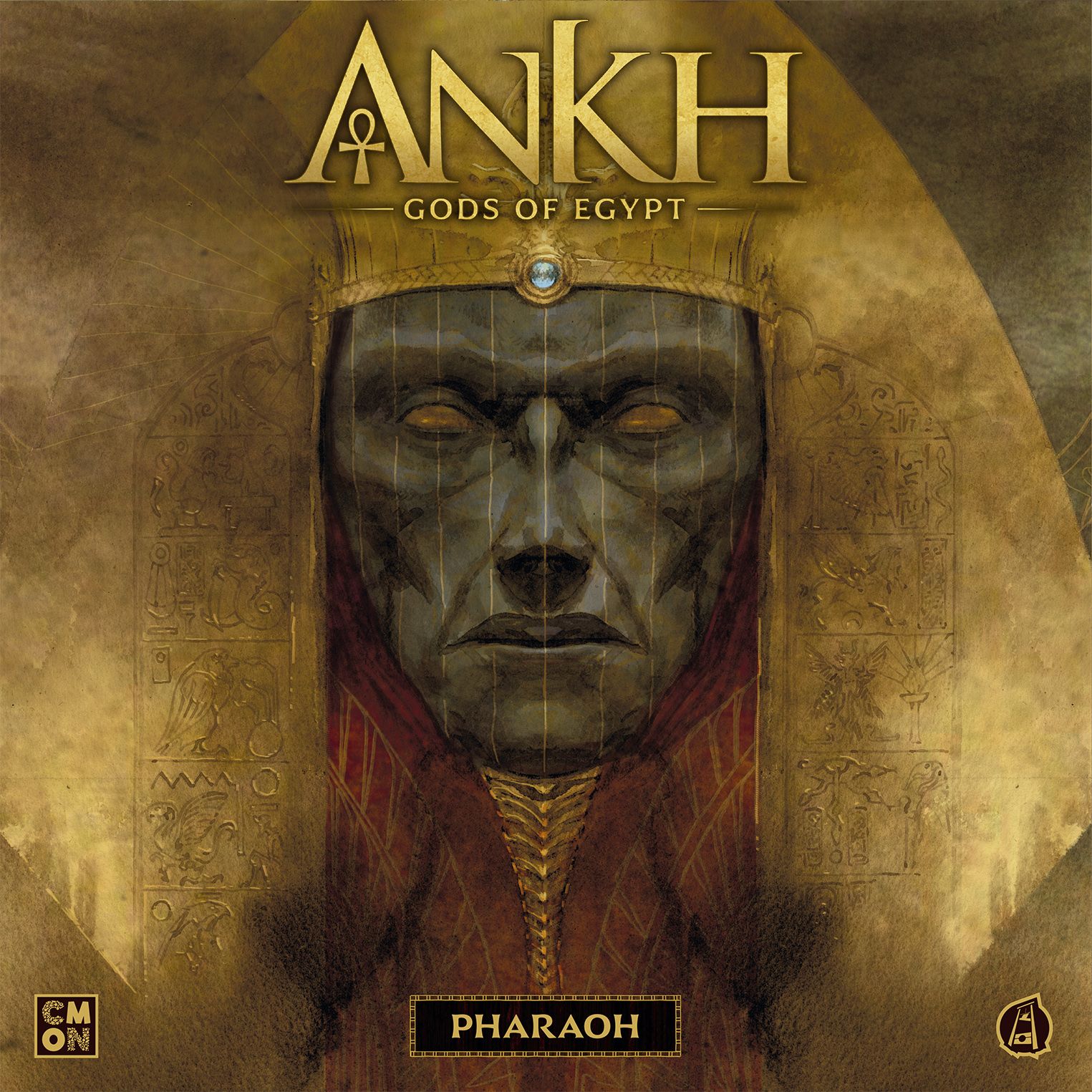
Ankh: Gods of Egypt – Pharaoh — How to Play
CMON Global Limited, Guillotine Games, BoardM Factory · Board game · 2021What do you want to do now
Ask anything about Ankh: Gods of Egypt – Pharaoh: rules, setup, components, complexity, price, or whether it fits your group.
Step by step
Game Objective
In Ankh: Gods of Egypt - Pharaoh, the gods battle to influence the affairs of the kingdom and convince the Pharaoh to recognize the supreme divinity of the one true god. To do so, players must bring their Priests to the royal Palace, manipulating governmental bodies for political advantage and exercising control over human matters. Refer to the rulebook for details on the victory condition.
Setup
- Palace Board and Political Cards: Place the Political Deck face down in the far left space of the Palace Board. Draw 3 Political Cards and place them face up in the spaces to the right of the deck.
- Priests: Each player receives 3 Priest miniatures. Place 2 in their personal reserve and the third in the Hall of Laws on the Palace Board.
- Sphinxes: Place the Sphinx Tokens in the general reserve so everyone can see the available quantity.
- The Pharaoh: Choose or draw one of the 5 Pharaoh Cards. Follow the specific instructions on the back of the card to position the Pharaoh Miniature on the board and perform additional steps (such as placing Pharaoh Tokens or a Death Token on the Event Track).
- Initial Placement: Depending on the chosen Pharaoh, the last player (or the first, in the case of Xerxes) places the Pharaoh miniature adjacent to one of their Monuments. In the case of Ramses, the last player also places 2 Follower (Infantry) tokens in different empty spaces in the Pharaoh region.
Game Flow
The game follows the turn and event structure of the base game, with the following additions and changes:
- Player Actions: During their turn, players perform actions that can now include manipulating Priests and using Political Cards.
- Control Monument Event: At the end of this event, the Palace Board is resolved. The Halls are checked in numerical order: Hall of Laws (1), Hall of War (2), Hall of Public Audience (3), and Hall of Throne (4).
- Hall Resolution: The player with the most Priests in each Hall gains that Hall's benefit. In case of a tie, victory goes to the player with the lowest Devotion. After resolution, the winner’s Priests return to their reserve, while the others remain in the Hall.
- Card Maintenance: After resolving all Halls, refill the empty Political Card spaces with new cards from the deck so that 3 remain available.
Actions and How to Play
Modified Actions
- Summon Miniature: In addition to summoning a miniature on the main board, the player summons 1 Priest from their personal reserve to any Hall on the Palace Board.
- Move Miniatures: In addition to moving miniatures on the main board, the player can move each of their Priests to an adjacent Hall in the Palace.
Political Cards
Once per action, a player may play 1 Political Card before or after resolving the action (but before resolving any triggered event). This allows the use of up to 2 Political Cards per turn (if performing 2 actions). Cards are laid openly on the table and recovered when the Battle Cards return to hand. Political Cards are not hidden information; any player can see them at any time.
Benefits of the Palace Halls
- Hall of Laws: Choose 1 of the open Political Cards OR remove one of your Political Cards from play so each opponent loses 1 Devotion.
- Hall of War: Replace 1 of your Monuments with a Sphinx (placing your Ankh token on it) and resolve the Sphinx Riddle effect from the Pharaoh Card.
- Hall of Public Audience: Choose 1 of the remaining Political Cards and gain 2 Followers.
- Hall of Throne: Choose 1 of the remaining Political Cards and move the Pharaoh up to 3 spaces (they may pass over miniatures, Monuments, Water, Rivers, and Caravans, but must end on an empty non‑Water space).
Special Component Rules
- Sphinx: Counts as all types of Monument (Obelisk, Pyramid, and Temple) simultaneously, except for Majority of Monuments, where it counts as its own type (4th type).
- God Fusion: If a fusion occurs, the Priests and Political Cards of the lesser god are removed. Players use the components of the greater god and may use only 1 Political Card per turn.
End of Game and Scoring
Refer to the rulebook for details on scoring, victory and defeat conditions.
Tips for Winning
- Control the Palace: Position your Priests strategically in the Halls to secure majority during the Control Monument event, allowing acquisition of Political Cards and replacement of Monuments with Sphinxes.
- Use the Sphinx: Since the Sphinx counts as multiple Monument types, it is a powerful tool for controlling the region and activating Sphinx Riddle effects.
- Devotion Management: Remember that in Palace ties, the player with the lowest Devotion wins the majority, which can be used tactically to secure Hall benefits.
Rules manual
Official PDF file
