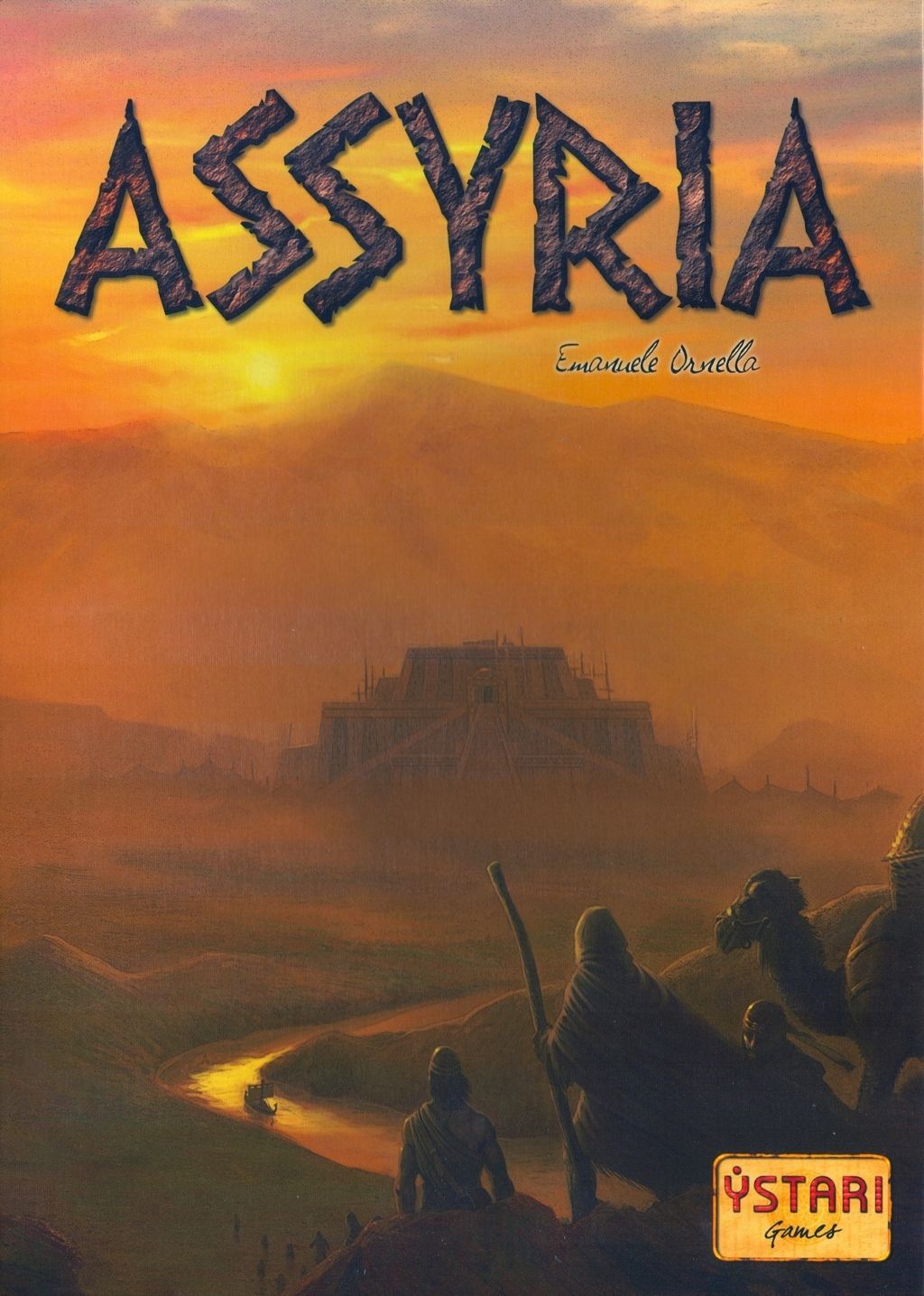
Assyria
Ystari Games, Rio Grande Games · Board game · 2009
2–4 · best 4
45–90 min
Weight 3.0/5
Buy · from US$ 75.44
7.7
rating
Ludopedia
6.8
rating
BGG
Our Verdict
RECOMMENDED
If you enjoy mid-weight euros with tactical and strategic decisions, Assyria is a great choice to explore Mesopotamia!
Highlights
- Short vs long-term dilemma
- Area expansion and control
- Classic worker placement
- Good quality components
- Interesting replayability
Keep in mind
- Indirect player interaction
- Initial learning curve
- Theme might feel dry
Rules manual not indexed yet
Upload the PDF rulebook to ask questions about this game with AI.
About the game
What you do in a play session
In Assyria, you lead a tribe in ancient Mesopotamia, tasked with expanding your influence and prosperity between the arid lands and the fertile region of the Tigris and Euphrates rivers. Get ready for a eurogame that presents you with intriguing choices: focus on quick gains or invest in the future of your civilization? The board is divided by these two iconic rivers, creating a dynamic setting for your decisions.
The game unfolds over three eras, each composed of cycles of phases. First, you select resource cards that determine your play order and expansion capability – whoever takes the most food plays last, while less food ensures the first action. Next, it's time to place your huts on the hexagonal board, forming strategic chains and clusters. Location is everything: building on fertile lands yields more points, while other areas might give you camels, the game's currency.
With your camels, you can make crucial investments. How about an immediate bonus from the nobles of Assur, the capital, or perhaps a long-term investment through sacrifices to the gods and the construction of Ziggurats? These permanent structures are outposts that solidify your presence. At the end of each era, a 'flood' reorganizes part of the board, but it's also when your long-term investments pay off. Points are scored for your huts, especially those on fertile lands, and for Ziggurats. Assyria is a game that balances the complexity of a euro with accessible gameplay, being lighter than classics like Caylus, but with more depth than titles like Yspahan.
The game unfolds over three eras, each composed of cycles of phases. First, you select resource cards that determine your play order and expansion capability – whoever takes the most food plays last, while less food ensures the first action. Next, it's time to place your huts on the hexagonal board, forming strategic chains and clusters. Location is everything: building on fertile lands yields more points, while other areas might give you camels, the game's currency.
With your camels, you can make crucial investments. How about an immediate bonus from the nobles of Assur, the capital, or perhaps a long-term investment through sacrifices to the gods and the construction of Ziggurats? These permanent structures are outposts that solidify your presence. At the end of each era, a 'flood' reorganizes part of the board, but it's also when your long-term investments pay off. Points are scored for your huts, especially those on fertile lands, and for Ziggurats. Assyria is a game that balances the complexity of a euro with accessible gameplay, being lighter than classics like Caylus, but with more depth than titles like Yspahan.
Gallery
Box and component photos
Tap any photo to open fullscreen. Photos submitted by the community or publisher.
Best player count
BGG community vote
2
REC
3
REC
4
BEST
Soundtrack
Ambience suggested by Melodice
Loading playlist...
Where to Buy
Prices monitored daily
Finding best prices...
Prices unavailable at this time.
Price history — last 6 months (lowest new offer)
As an Amazon Associate I earn from qualifying purchases. Prices and availability subject to change.
Alert enabled!
Join the BoardGamesBot deals group
Get the best board game deals every day — without message spam.
Join the WhatsApp groupGame details
Mechanics, categories, families and credits
Mechanics
Categories
Families
Publisher
Ystari Games, Rio Grande Games
Designer
Emanuele Ornella
Artist
Arnaud Demaegd
Community
Data from BoardGameGeek
2,388owners
340wishlist
73want to play
Frequently Asked Questions
Quick answers before you buy
Is Assyria a complex game for beginners?
It's considered a light-to-medium weight eurogame. It's not the simplest for newcomers, but it's also not overly daunting. The rules are straightforward, but the strategic depth requires a few plays to master.
How many players can participate in a game?
Assyria is designed for 2 to 4 players. The dynamic shifts slightly with the number of participants, being equally enjoyable at all counts, but with 3 or 4, competition for spaces and resources becomes more intense.
What is the average duration of an Assyria game?
A game typically lasts between 45 and 90 minutes. The time can vary depending on the number of players and the group's familiarity with the rules.
Is there much player interaction in the game?
Interaction in Assyria is primarily indirect. You compete for spaces on the board and for resource cards, and your choices can affect opponents' options, but there's no direct combat or sabotage.
What are the main components of the game?
You'll find a modular board with a hexagonal grid, hut and Ziggurat pieces, resource cards, camel tokens (currency), and sacrifice pieces. The artwork and component quality are typical of Ystari games.
Who would you recommend Assyria to?
I'd recommend it to anyone looking for a strategic eurogame with a good balance between short-term tactics and long-term planning, without being overly complex. Fans of hand management and worker placement games with a historical twist will enjoy it greatly.
Other Games You'll Like
Based on mechanics and theme