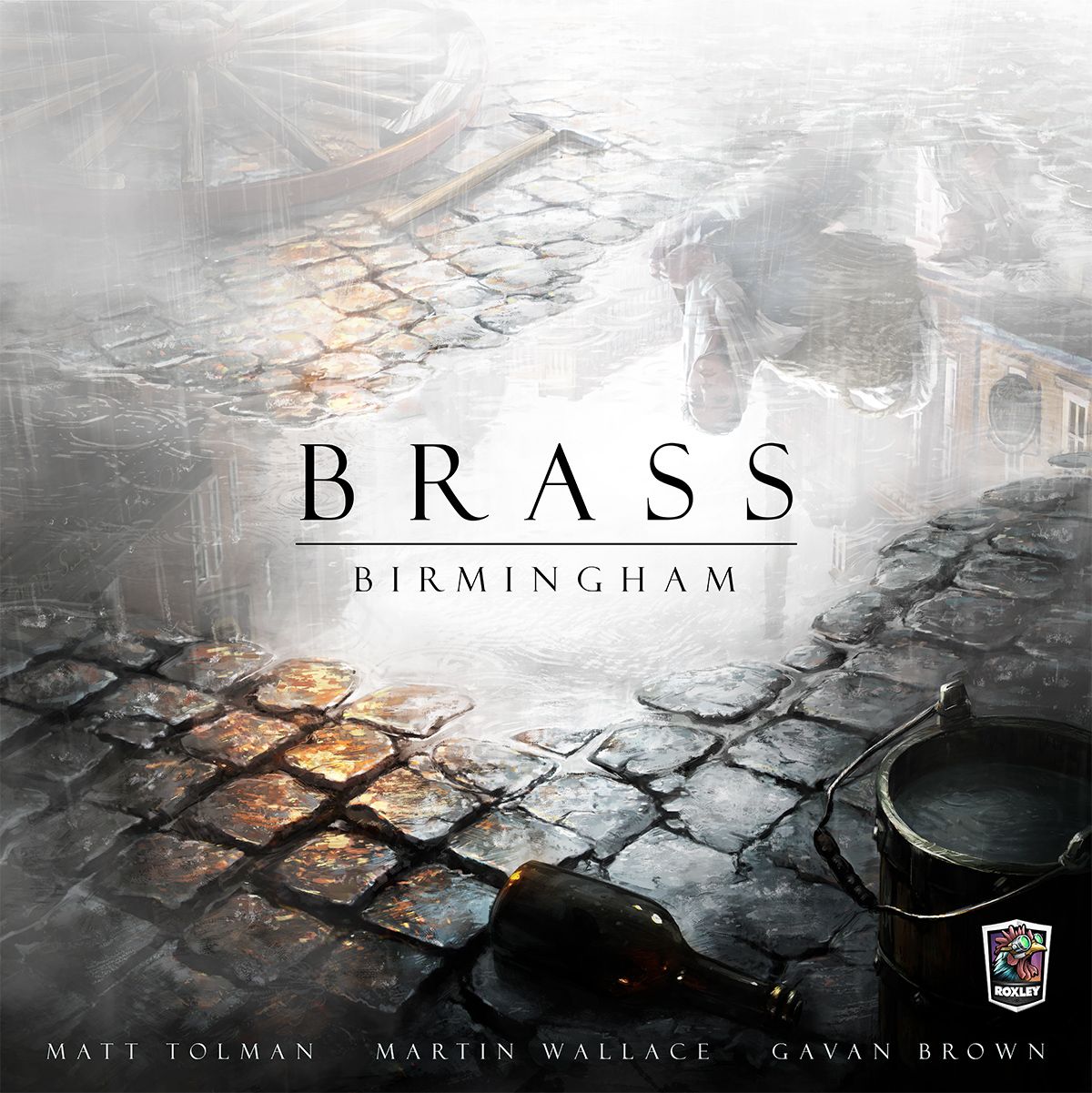
Brass: Birmingham
Roxley, Arclight Games, Board Game Rookie · Board game · 2018What do you want to do now
Ask anything about Brass: Birmingham: rules, setup, components, complexity, price, or whether it fits your group.
If you enjoy economic games that make you think and plan every move, Brass: Birmingham is a feast! It's an evolution of the classic that appeals to both veterans and newcomers to the world of strategy games.
- Incredible strategic depth
- Very high replayability
- Constant tension and tough decisions
- Evolution of the classic Brass
- Steep initial learning curve
- Can be a bit slow
- Interaction can be indirect
About the game
What you do in a play session
Your goal? To build an industrial empire, develop your industries, and expand your transportation network, whether through canals or railways. You'll need to keep a close eye on fluctuating market demands and use your resources wisely. The game is divided into two eras: the Canal Era and the Rail Era, each presenting its own unique challenges and opportunities.
Each round, you'll have two actions to choose from: build new industries, expand your network, develop technologies to increase the value of your ventures, sell your goods, or even take out a loan (when cash flow gets tight!). And there's more: a new 'Scout' action lets you discard cards to gain wild resources, providing that extra flexibility we all love.
Scoring occurs at the end of each era, rewarding those who have built the best transportation networks and the most profitable, established industries. Brass: Birmingham is one of those games that challenges you to think ahead, plan every move, and adapt to market shifts. If you enjoy games with strategic depth, resource management, and an engaging historical theme, prepare to be captivated!
Gallery
Box and component photos
Tap any photo to open fullscreen. Photos submitted by the community or publisher.
Rules videos
Learn by watching before you open the box
In English
-
 How to Play Brass: Birmingham in 17 Minutes
-
 Brass Birmingham Beginner Strategy
-
 Learn how to play Brass Birmingham better and faster
-
 Brass Birmingham - Start Playing in 13 Minutes - Quick Start Board Game Tutorial
-
 Brass Birmingham Rules Overview
-
 How To Play Brass Birmingham with @ezbgames
-
 Brass - Birmingham | Part 2: how to play | JLTEI
-
 Brass Birmingham | How to Play
-
 How to Win Brass Birmingham
-
 7 things I wish I knew before playing Brass Birmingham + difference between deluxe and retail editions of Brass games
-
 BRASS BIRMINGHAM / DEFINITIVE STRATEGY GUIDE / In Depth Strategy Tips for Brass Birmingham
-
 HOW To WIN At BRASS BIRMINGHAM At 3 Or 4 Player Counts / ADVANCED STRATEGY Coaching With Gameplay
Rules manual
Official PDF file
Best player count
BGG community vote
Soundtrack
Ambience suggested by Melodice
Where to Buy
Prices monitored daily
Price history — last 6 months (lowest new offer)
As an Amazon Associate I earn from qualifying purchases. Prices and availability subject to change.
Alert enabled!
Join the BoardGamesBot deals group
Get the best board game deals every day — without message spam.
Join the WhatsApp groupGame details
Mechanics, categories, families and credits
Mechanics
Categories
Families
Community
Data from BoardGameGeek
Frequently Asked Questions
Quick answers before you buy
How many players can play Brass: Birmingham?
How long does a game take?
Is it very difficult to learn?
What comes in the box?
Who would you recommend this game for?
Do I need to have played the original Brass to understand Birmingham?
Other Games You'll Like
Based on mechanics and theme