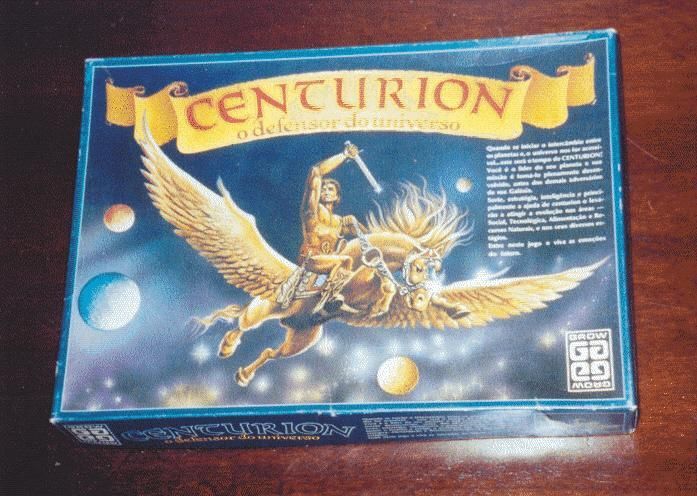
If you enjoy a classic with lots of interaction and a touch of science fiction, Centurion might be a good choice! It's for those who aren't afraid to negotiate and even 'borrow' some pieces from friends.
thumb_up
Highlights
check_circle
Direct player interaction
check_circle
Set collection mechanic
check_circle
Science fiction theme
check_circle
Strategic challenge
warning_amber
Keep in mind
report_problem
Might feel dated for some
report_problem
Moderate language dependency
report_problem
Limited availability
upload_file
Rules manual not indexed yetUpload the PDF rulebook to ask questions about this game with AI.
info
About the game
What you do in a play session
In Centurion, players take on the role of planetary leaders in an intergalactic race for development. The main objective is to guide your planet to the top in four crucial areas: social, transportation, health, and natural resources. To do this, you'll need to collect development tiles or, in a bolder move, take these tiles directly from your opponents. It's a strategic contest where set collection and trading play fundamental roles.
Each development area has different levels, and the key to victory lies in reaching the highest level in all of them. The set collection mechanic is central, encouraging players to assemble specific collections of tiles to progress. However, the game isn't just about passively collecting; interaction is intense, and the ability to trade or even 'acquire' tiles from other players adds a layer of strategy and rivalry. This means you need to keep an eye on what your opponents are building and decide whether it's better to focus on your own collection or try to sabotage others' progress.
Released in 1985 by Grow, Centurion is a classic that combines elements of deduction and science fiction, offering a gaming experience that demands planning and adaptability. Although the game is older, its essence of direct and strategic competition still resonates with those seeking a challenge. Language dependency is moderate, suggesting that a translation of the tiles or a reference guide might be helpful for a smoother experience. It's a title that, despite its age, proposes an interesting dynamic of building and confrontation, ideal for those who enjoy games where interaction between participants is a decisive factor.
photo_library
Gallery
Box and component photos
3 photos · from the community
01 / 03
Tap any photo to open fullscreen. Photos submitted by the community or publisher.
groups
Best player count
BGG community vote
2–4 players
2
OK
3
OK
4
OK
BestRecommendedWorks
music_note
Soundtrack
Ambience suggested by Melodice
music_noteLoading playlist...
sell
Where to Buy
Prices monitored daily
shopping_cartFinding best prices...
US$
infoPrices unavailable at this time.
Price history — last 6 months (lowest new offer)
As an Amazon Associate I earn from qualifying purchases. Prices and availability subject to change.
notifications_active
Alert enabled!
Join the BoardGamesBot deals group
Get the best board game deals every day — without message spam.
Is Centurion a complex game for beginners? expand_more
Not really! Centurion is a 1985 game with relatively simple set collection and trading rules. The complexity comes more from player interaction than from the mechanics themselves, so it's accessible for newcomers but offers depth for strategy enthusiasts.
How many players can participate in a game of Centurion? expand_more
The game is designed for 2 to 4 players. The dynamics shift slightly depending on the number, with more players increasing competition for tiles and trading opportunities.
What is the average duration of a Centurion game? expand_more
A game of Centurion typically lasts between 45 and 45 minutes. It's a very reasonable time, ideal for a quicker game session, but with important decisions.
Do I need any translation to play Centurion? expand_more
Ludopedia indicates a moderate language dependency. This means that while there isn't a lot of text, having a translated sheet or reference cards in your language can greatly facilitate understanding and game flow, especially for less experienced players.
What are the main components of the game? expand_more
Centurion is an older game, so expect components that reflect the era. It generally includes a game board, development tiles for the four areas (social, transportation, health, and natural resources), and player markers. The quality and design are quite characteristic of Grow games from that period.
Who is Centurion most recommended for today? expand_more
It's a game for those who appreciate classics and enjoy games with high interaction and direct competition. If you like the idea of collecting sets, trading, and even 'stealing' from opponents in a science fiction setting, and don't mind a retro look, Centurion can be a fun experience.