—
rating
Ludopedia
6.4
rating
BGG
Our Verdict
RECOMMENDED
If you enjoy card games with a strategic twist and competitive edge, Conclusion will win you over.
Highlights
- Fun trick-taking
- Three-player exclusive
- Strategic scoring
- Minimal components
Keep in mind
- Focus on bids
- Moderate learning curve
Rules manual not indexed yet
Upload the PDF rulebook to ask questions about this game with AI.
About the game
What you do in a play session
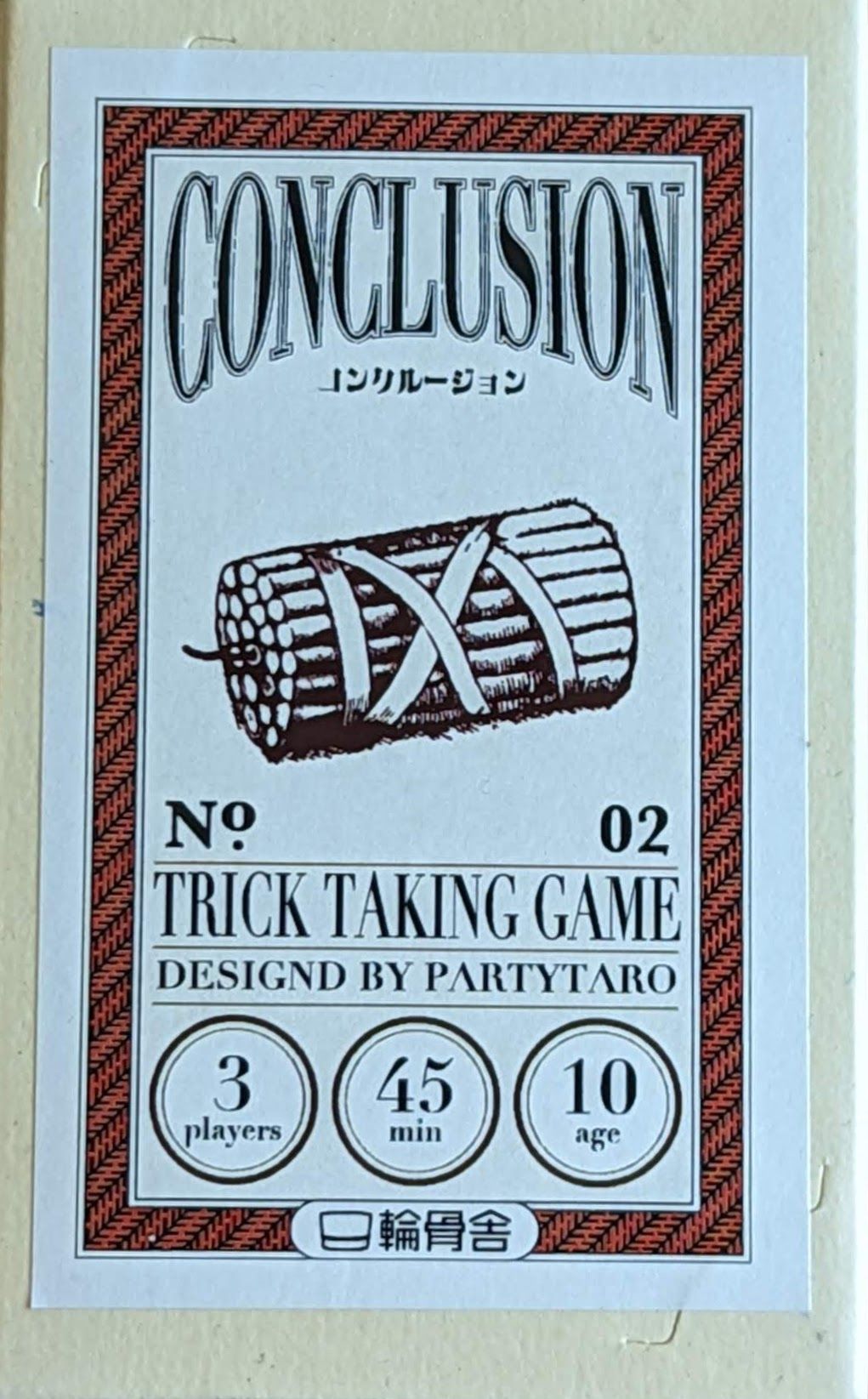
Conclusion reimagines David Parlett’s Collusion for a trio of players. The game’s core revolves around trick-taking: each round is a card battle where the highest card of the led suit or the strongest trick wins the trick. What sets it apart is the scoring: you earn points not only for winning tricks but also for matching the exact number of tricks won by one other player. This introduces a strategic dilemma—you want to match another player’s trick count, but not everyone’s, and you must plan your plays to achieve that goal. When a player wins three tricks, a set of face‑up cards enters play—representing a “virtual player” that will be added to each trick. The player who just won three tricks chooses which card the virtual player places, influencing the next tricks’ dynamics. Besides trick‑win points, there’s also the traditional points for meeting your bid. If all three players finish with the same trick count, or no one matches, specific rules resolve the situation, keeping the game balanced. The ultimate goal is to reach 30 points: the player with the most points when someone hits that mark wins. The game is short (30‑45 minutes), ideal for quick sessions, yet deep thanks to the interplay between trick-taking mechanics and the strategy of matching tricks. Components are minimal—just a deck of cards and score markers—making it easy to set up and portable. In short, Conclusion blends the familiarity of trick-taking with an extra layer of strategy that makes each game unique and engaging. Perfect for groups who enjoy quick card games but don’t want to miss the thrill of strategic competition.
Gallery
Box and component photos
Tap any photo to open fullscreen. Photos submitted by the community or publisher.
Best player count
BGG community vote
3
OK
Soundtrack
Ambience suggested by Melodice
Loading playlist...
Where to Buy
Prices monitored daily
Finding best prices...
Prices unavailable at this time.
Price history — last 6 months (lowest new offer)
As an Amazon Associate I earn from qualifying purchases. Prices and availability subject to change.
Alert enabled!
Join the BoardGamesBot deals group
Get the best board game deals every day — without message spam.
Join the WhatsApp groupGame details
Mechanics, categories, families and credits
Mechanics
Categories
Families
Publisher
Saispiel (サイシュピール)
Designer
パーティ太郎 (Party Taro)
Artist
やまざきおさむ (Osamu Yamazaki)
Community
Data from BoardGameGeek
27owners
5wishlist
1want to play
Frequently Asked Questions
Quick answers before you buy
How many players is Conclusion designed for?
Conclusion is specifically designed for three players, ensuring balanced and engaging interaction for that number.
What is the typical game duration?
A game usually lasts between 30 and 45 minutes, making it great for quick sessions or hinging into a break.
What is the complexity level of the game?
Conclusion has a moderate complexity: the rules are straightforward, but the trick‑matching strategy adds depth that requires focus and planning.
What components are needed?
The game uses a deck of cards, score markers, and a small set of face‑up cards that come into play when someone wins three tricks.
Who will enjoy Conclusion the most?
Players who like fast card games but appreciate an extra strategic challenge—especially those familiar with trick‑taking mechanics.
How does the scoring system work?
You earn points for winning tricks, for meeting your bid, and for matching the exact number of tricks won by exactly one other player. The goal is to reach 30 points.
Does the game offer variations or expansions?
As of now, Conclusion has no official expansions, but the mechanics allow creative adaptations for those who want to experiment.
Other Games You'll Like
Based on mechanics and theme