6.4
rating
Ludopedia
6.5
rating
BGG
What do you want to do now
Ask questions about the game
Ask anything about Detetive: rules, setup, components, complexity, price, or whether it fits your group.
Example questions
Continue this chat in the Assistant
Soundtrack
Learn to play
Step by step, manual and videos
Our Verdict
RECOMMENDED
Perfect for those who love classic mysteries and want a straightforward deduction game.
Highlights
- Very easy rules to learn
- Engaging suspenseful atmosphere
- Great for larger groups
- Satisfying deduction mechanics
Keep in mind
- Significant reliance on dice luck
- Pacing can be slow for veterans
About the game
What you do in a play session
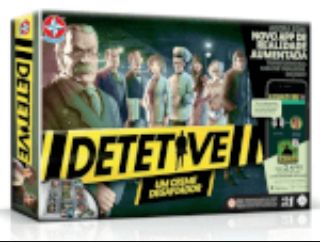
Ever felt like you're in a mysterious mansion with dim lights and a crime to solve? That's exactly the vibe of Detetive. The game puts you and your friends in the shoes of investigators trying to answer three fundamental questions: Who did it? With what weapon? And in which room of the house did it happen? The dynamics are all about deduction and elimination. At the start, three cards (culprit, weapon, and location) are hidden in a secret envelope, and the rest are distributed among the players.
To win, you need to move through the mansion, enter the rooms, and make suggestions. For example, if you suggest that Mr. Maroon committed the crime with the knife in the kitchen, other players must try to disprove your guess. If someone holds any of those cards, they must show it to you secretly, proving that the item is not in the envelope. This is where the note-taking comes in: you use your checklist to cross off discarded options until only the truth remains.
The game is a simplified and iconic version of the classic Clue, published by Estrela, making it more accessible for those who don't want to read massive rulebooks. The tension peaks when you decide to make the final accusation. If you're right, congratulations, you're the greatest detective of the night! But be careful: if you guess wrong, you're out of the competition, remaining only as an assistant who can still disprove other players' guesses. It's a game of logic, patience, and a bit of luck with the dice to reach the right room at the right time. Perfect for those who love suspense movies but want something light for a family gathering or a weekend with friends.
To win, you need to move through the mansion, enter the rooms, and make suggestions. For example, if you suggest that Mr. Maroon committed the crime with the knife in the kitchen, other players must try to disprove your guess. If someone holds any of those cards, they must show it to you secretly, proving that the item is not in the envelope. This is where the note-taking comes in: you use your checklist to cross off discarded options until only the truth remains.
The game is a simplified and iconic version of the classic Clue, published by Estrela, making it more accessible for those who don't want to read massive rulebooks. The tension peaks when you decide to make the final accusation. If you're right, congratulations, you're the greatest detective of the night! But be careful: if you guess wrong, you're out of the competition, remaining only as an assistant who can still disprove other players' guesses. It's a game of logic, patience, and a bit of luck with the dice to reach the right room at the right time. Perfect for those who love suspense movies but want something light for a family gathering or a weekend with friends.
Gallery
Box and component photos
Tap any photo to open fullscreen. Photos submitted by the community or publisher.
Rules manual
Official PDF file
Best player count
BGG community vote
3
BEST
4
BEST
5
BEST
6
BEST
7
BEST
8
BEST
Soundtrack
Ambience suggested by Melodice
Loading playlist...
Where to Buy
Prices monitored daily
Finding best prices...
Prices unavailable at this time.
Price history — last 6 months (lowest new offer)
Alert enabled!
Join the BoardGamesBot deals group
Get the best board game deals every day — without message spam.
Join the WhatsApp groupGame details
Mechanics, categories, families and credits
Mechanics
Categories
Publisher
Estrela
Community
Data from BoardGameGeek
42owners
Frequently Asked Questions
Quick answers before you buy
Is the game hard to learn?
Not at all! The rules are very simple and intuitive, making it ideal even for those who don't play many board games.
How many people can play?
The game accommodates 3 to 8 players, making it excellent for parties and family gatherings.
How long does a game last?
Usually between 45 and 75 minutes, depending on how quickly players can deduce the clues.
Do I need extra materials to play?
The game comes with note sheets, but you can use regular paper and pen if you prefer.
Is it similar to Clue?
Yes, the core is the same, but the Estrela version typically has more simplified rules.
Other Games You'll Like
Based on mechanics and theme