—
rating
Ludopedia
10.0
rating
BGG
Our Verdict
RECOMMENDED
Drop 16 is an abstract duel that will appeal to those looking for a tactical and fast experience, perfect for challenging a friend.
Highlights
- Tactical and strategic duel
- Two game variants
- Fast and intense matches
- High replayability
- Easy to learn, hard to master
Keep in mind
- Two players only
- Player elimination might bother some
- No narrative theme
Rules manual not indexed yet
Upload the PDF rulebook to ask questions about this game with AI.
About the game
What you do in a play session
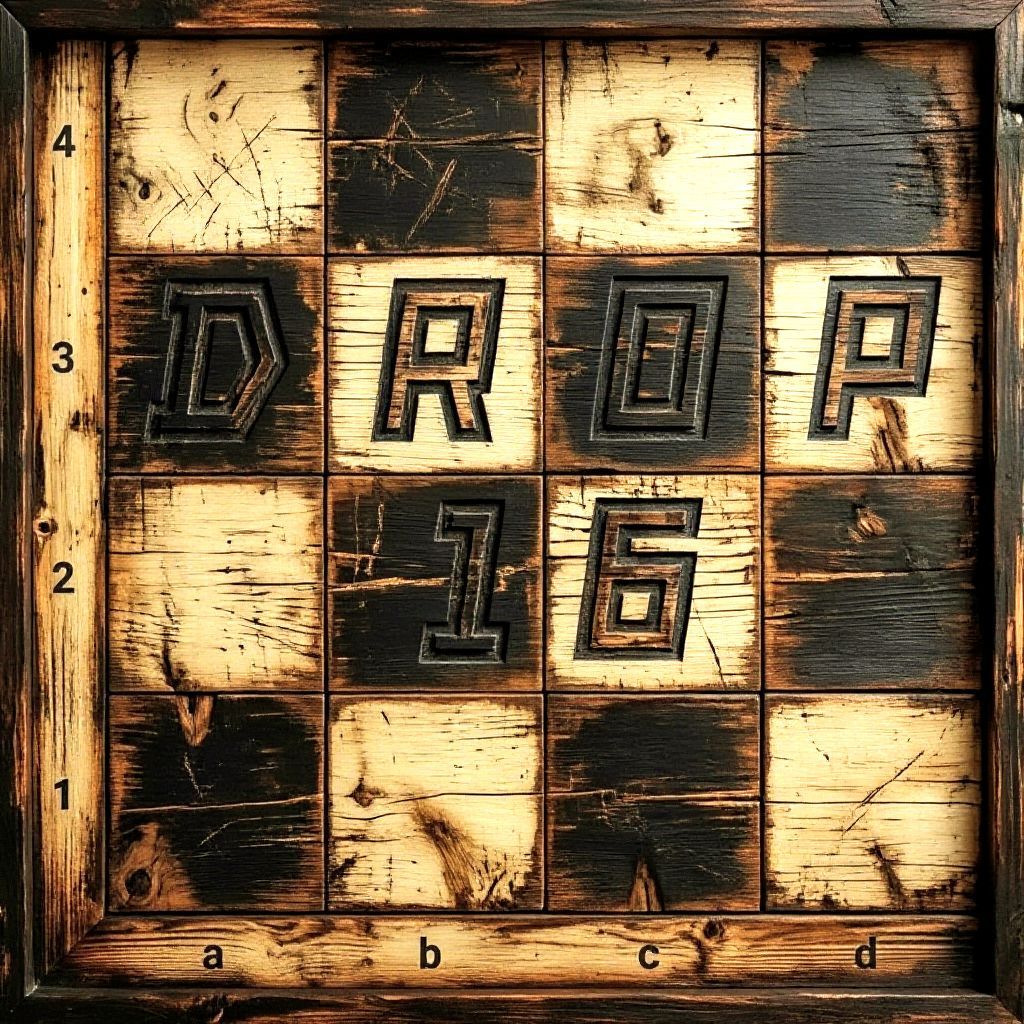
Hey board game enthusiasts! Get ready for a brainy duel with Drop 16, an abstract strategy game for two players that will challenge your mind on a 4x4 board. Each participant starts with an army of eight pieces, much like chess: two knights, two bishops, two rooks, one queen, and one king. But don't be fooled, the king here is just another piece, without that special checkmate status. The board starts empty, and the magic happens with two rule variants that completely change the game's dynamic.
In Variant A, 'Full Board,' the placement phase is pure strategy. No pieces can be captured while you and your opponent fill all 16 squares of the board. Only after all pieces are in place does the capture phase begin, following classic chess movement rules. Here, the focus is on building a solid foundation and thinking far ahead. In Variant B, 'Drop&Capture,' things are more dynamic. You can either place a new piece on an empty space or move a piece already on the board. The catch? You can only move if the play results in a capture! There are no 'quiet' moves here; it's all or nothing. And the coolest part is that you can capture your opponent's pieces or even your own, opening up a huge tactical range.
In both variants, the objective is simple: leave your opponent with no valid moves. If a player has no more pieces in reserve and none of their pieces on the board can capture anything (neither their own nor an opponent's), they lose. There are no draws in Drop 16, ensuring a winner in every match. Despite the compact board, the strategic depth is surprising, whether you're a fan of meticulous planning or lightning-fast attacks. Which variant will be your favorite?
In Variant A, 'Full Board,' the placement phase is pure strategy. No pieces can be captured while you and your opponent fill all 16 squares of the board. Only after all pieces are in place does the capture phase begin, following classic chess movement rules. Here, the focus is on building a solid foundation and thinking far ahead. In Variant B, 'Drop&Capture,' things are more dynamic. You can either place a new piece on an empty space or move a piece already on the board. The catch? You can only move if the play results in a capture! There are no 'quiet' moves here; it's all or nothing. And the coolest part is that you can capture your opponent's pieces or even your own, opening up a huge tactical range.
In both variants, the objective is simple: leave your opponent with no valid moves. If a player has no more pieces in reserve and none of their pieces on the board can capture anything (neither their own nor an opponent's), they lose. There are no draws in Drop 16, ensuring a winner in every match. Despite the compact board, the strategic depth is surprising, whether you're a fan of meticulous planning or lightning-fast attacks. Which variant will be your favorite?
Gallery
Box and component photos
Tap any photo to open fullscreen. Photos submitted by the community or publisher.
Best player count
BGG community vote
2
OK
Soundtrack
Ambience suggested by Melodice
Loading playlist...
Where to Buy
Prices monitored daily
Finding best prices...
Prices unavailable at this time.
Price history — last 6 months (lowest new offer)
Alert enabled!
Join the BoardGamesBot deals group
Get the best board game deals every day — without message spam.
Join the WhatsApp groupGame details
Mechanics, categories, families and credits
Mechanics
Categories
Families
Publisher
(Self-Published)
Designer
Vadrya Pokshtya
Community
Data from BoardGameGeek
Frequently Asked Questions
Quick answers before you buy
Is Drop 16 a chess game or something similar?
It uses pieces with chess-inspired movements (knight, bishop, rook, etc.), but the rules are quite different! There's no checkmate, the king is a regular piece, and the goal is to leave your opponent with no valid moves, not to capture the king.
How many players can play Drop 16?
Drop 16 is an exclusive two-player game, perfect for a direct and strategic confrontation.
What is the average game length?
Games are super quick, ranging from 5 to 15 minutes, making it ideal for multiple rematches or fitting into a short timeframe.
Is it a complex game to learn?
The basic rules are quite simple to pick up, but the strategic depth, especially with the two variants, offers a growing challenge to master.
What are the main differences between the two variants?
Variant A focuses on long-term planning, filling the board before captures. Variant B is more tactical and aggressive, allowing captures from the start, but only if the move results in one.
Who is Drop 16 best suited for?
It's ideal for fans of abstract games, puzzles, and those who enjoy chess but are looking for a more agile experience with twists. If you like brainy duels, you'll love it!
Other Games You'll Like
Based on mechanics and theme