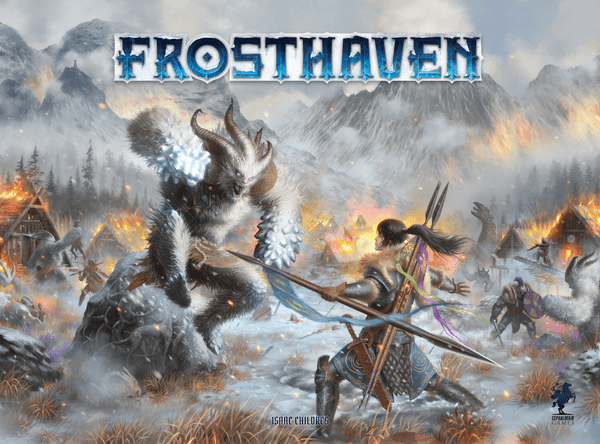
How to Play Frosthaven
Cephalofair Games, Albi, Albi Polska · Board game · 2022What do you want to do now
Ask anything about Frosthaven: rules, setup, components, complexity, price, or whether it fits your group.
Video: How to Play
Start here, then follow the written guide
Step by step
1. Objetivo do Jogo
In Frosthaven, you and your friends play as a party of adventurers exploring the frozen outpost and its surrounding wilderness. The theme is survival and conquest in a harsh, icy environment. Each scenario presents a specific goal—such as defeating a named monster, rescuing a captive, or securing a resource. The condition of victory is achieved when the scenario’s stated goal is met. If the party fails to meet the goal or all characters become exhausted, the scenario is lost.
2. Preparação (Setup)
Follow these steps to set up a scenario. If any step is unclear, consult the manual for details.
- Map Board: Place the scenario map on the table. If the scenario is unlocked, affix its sticker to the map board at the coordinates shown in the scenario flowchart.
- Monster Standees: Insert each monster’s stat card into the appropriate stat sleeve (six‑section or ten‑section side, depending on the number of standees). Place the standees on the map in the locations indicated by the scenario rules.
- Monster Ability Decks: Shuffle each monster set’s ability deck and place it face down. If a monster set has no standees on the map, its deck remains unused until the set appears.
- Character Sheets: Each player selects a character, records their name on the sheet, and places their character standee on the map in the starting location.
- Tokens and Items: Place any scenario‑specific tokens (loot, traps, etc.) on the map as instructed. Distribute any starting items or equipment to the characters.
- Round Track: If the scenario uses a round track, place the marker at the start position.
After all components are in place, the first round begins.
3. Fluxo do Jogo
The game proceeds in rounds. Each round consists of the following phases, in order:
- Player Turn Phase: Each character takes a turn in initiative order. On a character’s turn, they may play ability cards, move, attack, or use items according to the rules for actions (see section 4).
- Monster Turn Phase: For every monster set that has at least one standee on the map, draw an ability card from its deck. The card’s initiative value determines when that set acts during the round. Monsters act in ascending order of initiative value, with elite standees acting before normal standees. Each monster follows the monster acting order rules: it moves (if the card lists a move ability), then attacks (if the card lists an attack ability), and applies any other abilities listed.
- End of Round: After all figures have taken a turn (excluding summons added this round), perform the following steps in order:
- Trigger any end‑of‑round effects in the scenario rules or on items or character ability cards.
- If any drawn attack modifier card or monster ability card has a shuffle icon, shuffle the corresponding discard pile back into the deck.
- If any character ability card in a character’s active area has a round bonus, place it in their discard pile or lost pile, depending on whether the action has a lost icon.
- Any character with at least two cards in their discard pile may perform a short rest.
- Move any infused elements one column to the left on the element board, from strong to waning or from waning to inert.
After the End of Round step, the next round begins.
4. Ações e Como Jogar
During a character’s turn, they may perform the following actions. Each action is described with its purpose, timing, and any restrictions. If a rule is not fully detailed here, consult the manual.
- Move: A character may move up to their movement value, following the movement rules for the map. Movement can be interrupted by obstacles or terrain effects.
- Attack: A character may perform a melee or ranged attack using an ability card that lists an attack. The attack’s range and damage are specified on the card. If the card lists multiple attacks, the character may perform all of them on a single focus.
- Use Item: A character may activate an item from their inventory, following the item’s description.
- Play Ability Card: A character may play an ability card from their hand. The card’s effects are resolved immediately. Some cards may grant bonuses, heal, or apply conditions.
- Short Rest: If a character has at least two cards in their discard pile, they may perform a short rest, which typically restores some resources or recovers a condition (exact effects depend on the character’s class).
- Long Rest: Not covered in the provided context; consult the manual for details.
Characters can only perform actions that are allowed by their class and the current scenario rules.
5. Fim de Jogo e Pontuação
The scenario ends when one of the following triggers occurs:
- The party achieves the scenario’s goal (victory).
- All characters become exhausted or a scenario‑specific loss condition is met (defeat).
Once the end‑of‑scenario trigger is reached, play continues until the current round is over, and then the scenario ends. After the scenario ends, perform the following cleanup steps:
- All characters recover discarded and lost ability cards, spent and lost items, and reset their red dial to maximum hit points.
- All conditions are removed from the characters.
- All b, c, and * cards are removed from the attack modifier decks.
- All battle goals are shuffled back into the battle goal deck.
- If any loot tokens or treasure tiles remain on the map, they cannot be looted.
Experience and gold are awarded based on the scenario level and whether the scenario was completed or lost. The exact experience and gold calculations are detailed in the manual; consult it for the precise formulas.
6. Dicas para Vencer
- Use Monster Ability Cards Wisely: When a monster set’s ability card lists a move ability, the monsters will move the fewest points needed to maximize attacks. Position your characters to block or redirect these moves to protect key objectives.
- Focus on the Shortest Path: Monsters prioritize paths that trigger the fewest negative hexes. Plan your attacks so that monsters are forced to take longer routes, potentially exposing them to your ranged attacks.
- Summon Strategically: Summoned monsters act after the round in which they appear. Place them in positions that can immediately threaten enemies or protect allies, and remember that they do not take a turn in the round they are summoned.
More videos
More rules explanations from the community




Rules manual
Official PDF file
Frequently Asked Questions
Quick answers about the rules