—
rating
Ludopedia
5.8
rating
BGG
Our Verdict
FOR GENRE FANS
For those who love wargaming history and aren't intimidated by dense rulebooks. A true genre milestone!
Highlights
- Deep tactical simulation
- Tense hidden movement rules
- Immense historical value
- Classic CRT combat
Keep in mind
- Very steep learning curve
- Slow game pace
Rules manual not indexed yet
Upload the PDF rulebook to ask questions about this game with AI.
About the game
What you do in a play session
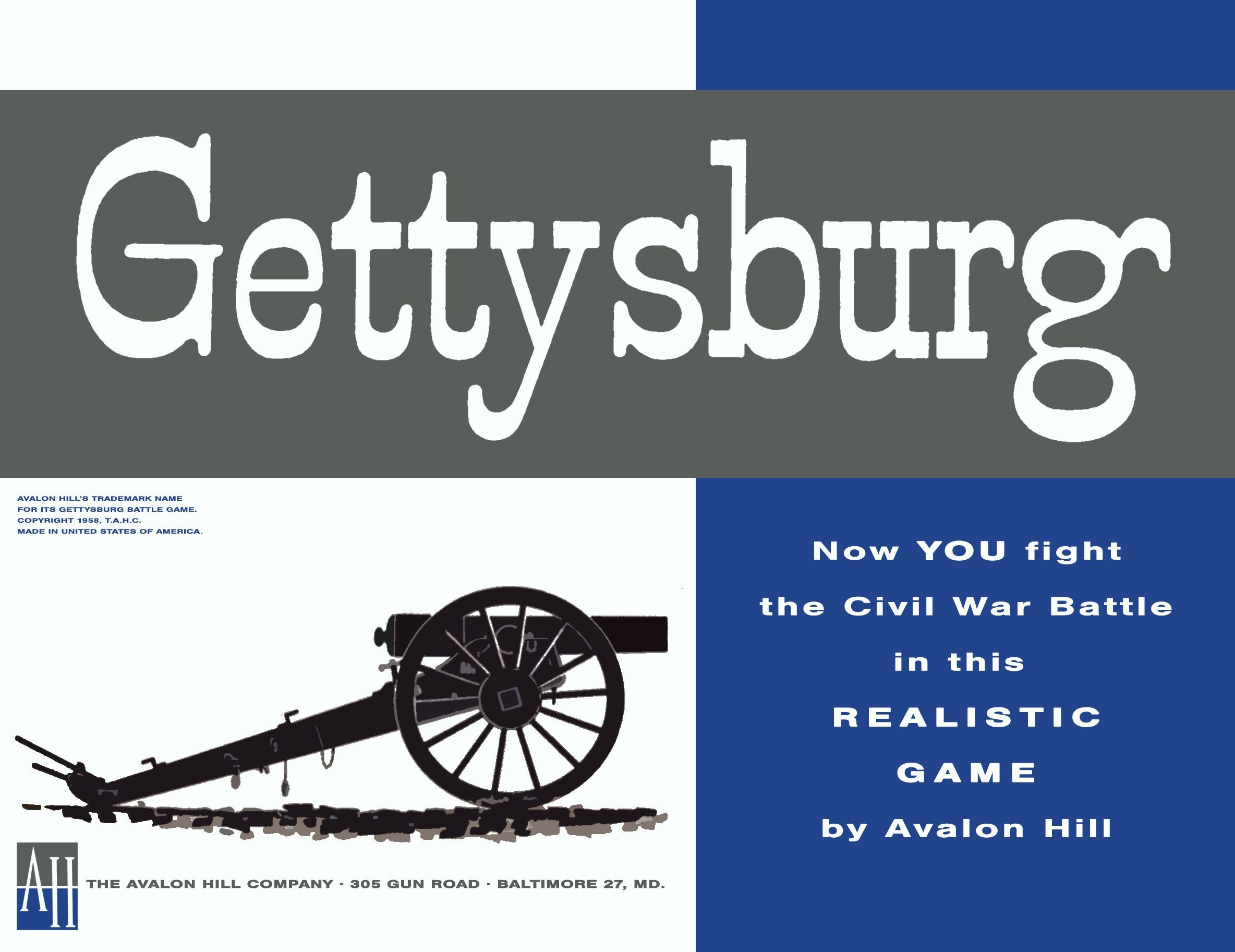
Gettysburg is a true wargaming classic, hailing from that Avalon Hill golden era where complexity was the standard. The game puts you in command of either the Union or Confederate forces during one of the most iconic clashes of the American Civil War. If you love the feeling of moving armies across detailed maps, this title is a deep dive into the genre's history. The experience varies significantly depending on the edition: the 1958 version played almost like a miniatures game, using range cards to measure firing and movement distance, even allowing you to rotate pieces to flank the enemy. The 1964 version shifted to a rigid square grid, moving toward a more traditional wargame style, though it sparked debates regarding the effectiveness of the Zone of Control (ZOC) on diagonals.
The game doesn't strive to be a perfect casualty simulator; instead, it prioritizes balance between the forces to ensure a competitive match. You'll manage infantry, cavalry, and artillery, dealing with orders of appearance and resolving combat via Combat Results Tables (CRT). One of the most intriguing aspects is the optional hidden movement rule, which requires one player to leave the room while the other positions their pieces, creating an intense 'where on earth is the enemy?' tension. The battle unfolds over three days, divided into one-hour turns, with the goal of maintaining control of key strategic locations. It is a dense, technical game made for those who enjoy planning every step with surgical precision, managing troop morale and dealing with the possibility of unexpected counter-attacks.
The game doesn't strive to be a perfect casualty simulator; instead, it prioritizes balance between the forces to ensure a competitive match. You'll manage infantry, cavalry, and artillery, dealing with orders of appearance and resolving combat via Combat Results Tables (CRT). One of the most intriguing aspects is the optional hidden movement rule, which requires one player to leave the room while the other positions their pieces, creating an intense 'where on earth is the enemy?' tension. The battle unfolds over three days, divided into one-hour turns, with the goal of maintaining control of key strategic locations. It is a dense, technical game made for those who enjoy planning every step with surgical precision, managing troop morale and dealing with the possibility of unexpected counter-attacks.
Gallery
Box and component photos
Tap any photo to open fullscreen. Photos submitted by the community or publisher.
Rules videos
Learn by watching before you open the box
In English

Best player count
BGG community vote
2
BEST
Soundtrack
Ambience suggested by Melodice
Loading playlist...
Where to Buy
Prices monitored daily
Finding best prices...
Prices unavailable at this time.
Price history — last 6 months (lowest new offer)
As an Amazon Associate I earn from qualifying purchases. Prices and availability subject to change.
Alert enabled!
Join the BoardGamesBot deals group
Get the best board game deals every day — without message spam.
Join the WhatsApp groupGame details
Mechanics, categories, families and credits
Mechanics
Categories
Families
Publisher
The Avalon Hill Game Co
Designer
Charles S. Roberts
Community
Data from BoardGameGeek
1,162owners
49wishlist
9want to play
Frequently Asked Questions
Quick answers before you buy
Is the game hard to learn?
Yes, it's an expert-level game. Be prepared to study the rulebook carefully and perhaps run a few test games.
How many people can play?
The game is designed exclusively for 2 players, as a strategic duel.
How long does a game take?
Games are long, potentially taking several hours due to the one-hour turn scale and rule complexity.
What's in the box?
Depending on the edition, you'll find a map (square or hex), unit counters (infantry, cavalry, artillery), and combat tables.
Do I need historical knowledge to play?
It's not mandatory, but knowing about the Battle of Gettysburg greatly enhances immersion and decision-making.
What is the difference between versions?
The 1958 version uses free measurement (miniatures style), while the 1964 version uses a rigid square grid.
Other Games You'll Like
Based on mechanics and theme