Legend of the Five Rings
Alderac Entertainment Group, Five Rings Publishing Group, Wizards of the Coast · Board game · 1995
2–8 · best 2
45 min
Weight 3.3/5
Buy
7.9
rating
Ludopedia
7.2
rating
BGG
Our Verdict
RECOMMENDED
If you love cards, strategy, and a samurai vibe, L5R is for you. The biggest draw is clan loyalty and a growing community.
Highlights
- Clan community support
- Dynamic combat combos
- Inspiring artwork
- Fast, engaging games
Keep in mind
- Collectibility can be pricey
- High language requirement
- Rules steep at first
Rules manual not indexed yet
Upload the PDF rulebook to ask questions about this game with AI.
About the game
What you do in a play session
Legend of the Five Rings (L5R) is a collectible card game that whisks you straight into the heart of Rokugan, an empire inspired by feudal Japan but infused with fantasy and Japanese mythology. Since 1995, and players have built decks around one of the seven great clans—Crab, Crane, Dragon, Lion, Phoenix, Scorpion, and Unicorn—each with its own aesthetic and play style. What makes L5R truly special is clan loyalty: when you pick a clan, you join a whole community of players who share cards, strategies, and stories, creating a support network that goes beyond the table. In addition to the classic clans, newer editions have added the Spider Clan, Mantis, and an unaligned Ronin stronghold, giving players more deck‑building options.
The game blends three core mechanics: open drafting, where players choose cards from a common pool; player elimination, which adds tension by removing opponents strategically; and set collection, rewarding the construction of complete combos. Each game lasts about 45 minutes, making it perfect for quick sessions or filling a break between other activities.
The components are simple yet charming: a 200‑card deck, damage tokens, honor markers, and a set of combat dice. The artwork draws from traditional Japanese art, with detailed illustrations that bring each clan and event to life. While the game is collectible, the LCG (Living Card Game) version released by FFG in 2015 brought a more affordable purchase model, with pre‑constructed card packs and a streamlined rules set.
For those who enjoy deep strategy card games, rich themes, and a vibrant community, Legend of the Five Rings delivers an engaging experience full of storytelling. If you’re looking for a game that combines epic combat, deck building, and an immersive narrative universe, L5R is a choice that won’t disappoint.
The game blends three core mechanics: open drafting, where players choose cards from a common pool; player elimination, which adds tension by removing opponents strategically; and set collection, rewarding the construction of complete combos. Each game lasts about 45 minutes, making it perfect for quick sessions or filling a break between other activities.
The components are simple yet charming: a 200‑card deck, damage tokens, honor markers, and a set of combat dice. The artwork draws from traditional Japanese art, with detailed illustrations that bring each clan and event to life. While the game is collectible, the LCG (Living Card Game) version released by FFG in 2015 brought a more affordable purchase model, with pre‑constructed card packs and a streamlined rules set.
For those who enjoy deep strategy card games, rich themes, and a vibrant community, Legend of the Five Rings delivers an engaging experience full of storytelling. If you’re looking for a game that combines epic combat, deck building, and an immersive narrative universe, L5R is a choice that won’t disappoint.
Gallery
Box and component photos
Tap any photo to open fullscreen. Photos submitted by the community or publisher.
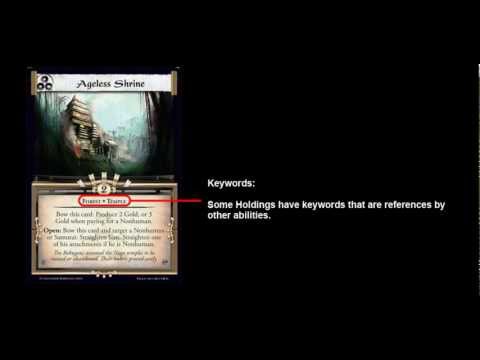
Rules videos
Learn by watching before you open the box



Best player count
BGG community vote
2
BEST
3
OK
4
REC
5
OK
6
OK
7
OK
8
OK
Soundtrack
Ambience suggested by Melodice
Loading playlist...
Where to Buy
Prices monitored daily
Finding best prices...
Prices unavailable at this time.
Price history — last 6 months (lowest new offer)
As an Amazon Associate I earn from qualifying purchases. Prices and availability subject to change.
Alert enabled!
Join the BoardGamesBot deals group
Get the best board game deals every day — without message spam.
Join the WhatsApp groupGame details
Mechanics, categories, families and credits
Mechanics
Categories
Families
Publisher
Alderac Entertainment Group, Five Rings Publishing Group, Wizards of the Coast
Designer
Brent Keith, Bryan Reese, Dave Williams (II), David Seay, Jeff Alexander, John Zinser, Mark Wootton
Artist
Aaron Acevedo, Adam Bray, Adam Denton, Alayna Lemmer-Danner, Alberto Tavira, Ancor Hernandez, Andrew Hepworth, Angga Satriohadi, Anson Maddocks, Anthony Grabski, April Lee, Audrey Corman, Ben Peck, Beth Trott, Bob E. Hobbs, Bob Stevlic, Bonnie Hill, Brad Williams, Bradley McDevitt, Brandon Leach, Brent Chumley, Brian Snoddy, Britt Martin, Bryon Wackwitz, Carl Frank, Charles Urbach, Chris Arneson, Chris Pritchard, Chris Seaman, Christina Wald, Chuck Lukacs, Cline Seigenthaler, Corene Werhane, Craig Maher, Cristina McAllister, Daniel Gelon, Dave Kendall, David Bollt, David Fooden, David Horne, David Trowbridge, Diana Vick, Doug Kovacs, Doug Shuler, Drew Baker, Ed Cox, Edward Fetterman, Edwin David, Ellym Sirac, Eric David Anderson, Eric Lofgren, Eric Polak, Erich Schreiner, Franz Vohwinkel, Glen Osterberger, Gonzalo Ordoñez, Heather Bruton, Heather Kreiter, Jaime Jones, James Hall, Janine Johnston, Jarreau Wimberly, Jason Engle, Jason Juta, Jeff Himmelman, Jeff Menges, Jeff Reitz, Jesus Barony, Jim Pavelec, Joachim Gmoser, Joe Wilson, John Donahue, John Moriarty, Jonathan Moore, Jose Cua, Julie Baroh, K. C. Lancaster, Kari Christensen, Ken Meyer, Jr., Kevin Daily, Kevin Ward, Kevin Wasden, Leonardo Borazio, Lisa M. Hunt, Lissanne Lake, Liz Danforth, Llyn Hunter, Luke Stelmaszek, Malcolm McClinton, Manuel Calderon, Margaret Organ-Kean, Mario Wibisono, Mark Hyzer, Mark Poole, Mark Tedin, Matt Busch, Matt Wilson (I), Matthew S. Armstrong, Max Degen, McLean Kendree, Michael Apice, Michael Kaluta, Michael Komarck, Michael Lavoie (I), Michael Phillippi, Michael Williams, Miguel Coimbra, Mike Capprotti, Mike Raabe, Monika Livingstone, Monte Moore, Nate Barnes, Nicola Leonard, Noah Bradley, Ozan Art, Patrick McEvoy, Paul Herbert, Pete Garcia, Peter Mohrbacher, Quinton Hoover, Randy Elliott, Randy Gallegos, Randy Liu, Raymond Gaustadnes, Rob Alexander, Robin Wood, Robin Wouters, Ron Spencer, Sandra Garavito, Shane Coppage, Sławomir Maniak, Stacy Drum, Stacy Fitz, Stephanie Pui-Mun Law, Steve Argyle, Steve Ellis (I), Susan Van Camp, Ted Galaday, Theodor Black, Thomas Biondiolillo, Thomas Manning, Tony Moseley, Troy Graham, Veronica Jones, William O'Connor
Community
Data from BoardGameGeek
2,336owners
166wishlist
45want to play
Frequently Asked Questions
Quick answers before you buy
What is the average game time?
About 45 minutes, perfect for a quick session.
How many players can play?
2 to 8 players, but it runs best with 2 to 4.
How complex are the rules?
Moderate complexity; the learning curve can be steep at first, but it becomes more approachable.
What are the main components?
A 200-card deck, damage tokens, honor markers, and combat dice.
Is it suitable for beginners?
Yes, though some familiarity with collectible card games helps.
Is there an active community?
Absolutely, the clan communities are very active with tournaments, events, and card trading.
Other Games You'll Like
Based on mechanics and theme