Monopoly
Parker Brothers, (Self-Published), (Unknown) · Board game · 1935
2–8 · best 4
60–180 min
Weight 1.6/5
Buy · from US$ 15.95
6.7
rating
Ludopedia
4.4
rating
BGG
Our Verdict
FOR GENRE FANS
If you're looking for a classic game about real estate wheeling and dealing, Monopoly offers a straightforward path to market domination. It's all about buying, building, and bankrupting your friends!
Highlights
- Simple rules, easy to learn
- Classic family game experience
- Thrilling property acquisition and development
- Iconic game board and pieces
- Engaging player interaction
Keep in mind
- High player elimination potential
- Luck-dependent dice rolls
- Can overstay its welcome
About the game
What you do in a play session
In Monopoly, players take on the role of real estate investors, aiming to acquire and develop properties to dominate the market. The core idea is straightforward: buy land, build houses and hotels, and collect rent from opponents who land on your properties. But be careful, as you'll also have to pay rent when visiting others' domains! If cash runs low, you can mortgage your assets to gain some breathing room, whether to pay fines, taxes, or other unforeseen game events.
Each turn begins with the roll of two dice, determining how many spaces you'll advance around the board. If you land on an unowned property, you can either buy it outright or put it up for auction to the highest bidder. By collecting all properties of the same color group, a player earns the right to build, exponentially increasing the rent charged. Beyond properties, the board features spaces that trigger Chance or Community Chest cards, demand tax payments, grant income, or perhaps even send you to jail!
The classic objective is to be the last player remaining with money, driving others into bankruptcy. However, some editions might end when the first player goes bankrupt. It's interesting how Monopoly has official printed rules, yet most people learn to play by ear, passing down a series of 'house rules.' Many of these adaptations, while making the game more 'friendly' for children or sore losers, ultimately distort the original experience, making it harder for players to go bankrupt or slowing down property acquisition. For instance, the famous 'Free Parking' rule that accumulates money in the center of the board, or the possibility of infinite 'loans' from the bank, can prolong the game indefinitely. Another point many don't know is that unbought properties should go to auction, with bids starting at $1, which can be a great opportunity for a savvy deal!
Each turn begins with the roll of two dice, determining how many spaces you'll advance around the board. If you land on an unowned property, you can either buy it outright or put it up for auction to the highest bidder. By collecting all properties of the same color group, a player earns the right to build, exponentially increasing the rent charged. Beyond properties, the board features spaces that trigger Chance or Community Chest cards, demand tax payments, grant income, or perhaps even send you to jail!
The classic objective is to be the last player remaining with money, driving others into bankruptcy. However, some editions might end when the first player goes bankrupt. It's interesting how Monopoly has official printed rules, yet most people learn to play by ear, passing down a series of 'house rules.' Many of these adaptations, while making the game more 'friendly' for children or sore losers, ultimately distort the original experience, making it harder for players to go bankrupt or slowing down property acquisition. For instance, the famous 'Free Parking' rule that accumulates money in the center of the board, or the possibility of infinite 'loans' from the bank, can prolong the game indefinitely. Another point many don't know is that unbought properties should go to auction, with bids starting at $1, which can be a great opportunity for a savvy deal!
Expansions
Published additional content

Gallery
Box and component photos
Tap any photo to open fullscreen. Photos submitted by the community or publisher.
Rules videos
Learn by watching before you open the box
In English
-
 Monopoly - How To Play
-
 Monopoly - intro
-
 The Toy Channel: A Brief History of Monopoly Tokens
-
 Tips on How to Win at Monopoly
-
 Rare "Monopoly Live "Game With Electronic Talking Tower Demo
-
 11 Strategies For Winning Monopoly
-
 180-second Video Review
-
 AI Learns Insane Monopoly Strategies
-
 How to Play Monopoly | The CORRECT Way!
-
 How to Play: Monopoly
-
 Monopoly - a list of wrong ways to play it by JustLetTerenceExplainIt
-
 2GASCB - Monopoly Tutorial
Best player count
BGG community vote
2
OK
3
REC
4
BEST
5
REC
6
REC
7
OK
8
OK
Soundtrack
Ambience suggested by Melodice
Loading playlist...
Where to Buy
Prices monitored daily
Finding best prices...
Prices unavailable at this time.
Price history — last 6 months (lowest new offer)
Alert enabled!
Join the BoardGamesBot deals group
Get the best board game deals every day — without message spam.
Join the WhatsApp groupGame details
Mechanics, categories, families and credits
Mechanics
Categories
Families
Publisher
Parker Brothers, (Self-Published), (Unknown), A. F. Tompson & Son Ltd., Åhlén & Åkerlund, Alga
Designer
Charles Darrow, Elizabeth J. Magie (Phillips)
Artist
(Uncredited), Charles Darrow, Edison Girard
Community
Data from BoardGameGeek
60,893owners
685wishlist
50want to play
Frequently Asked Questions
Quick answers before you buy
How many players can play Monopoly?
Monopoly is suitable for 2 to 8 players, making it a great option for various group sizes, from a duel to a table full of friends or family.
What is the average game time for Monopoly?
A game can vary quite a bit, usually between 60 and 180 minutes. But honestly, if you use house rules like Free Parking jackpot or infinite loans, prepare for a marathon that can last much longer!
Is Monopoly a complex game to learn?
No, it's considered a light complexity game (BGG weight 1.619/5). The basic rules are quite easy to pick up, but mastering the nuances of negotiation and buying strategy might take a few plays.
What are the main components of the game?
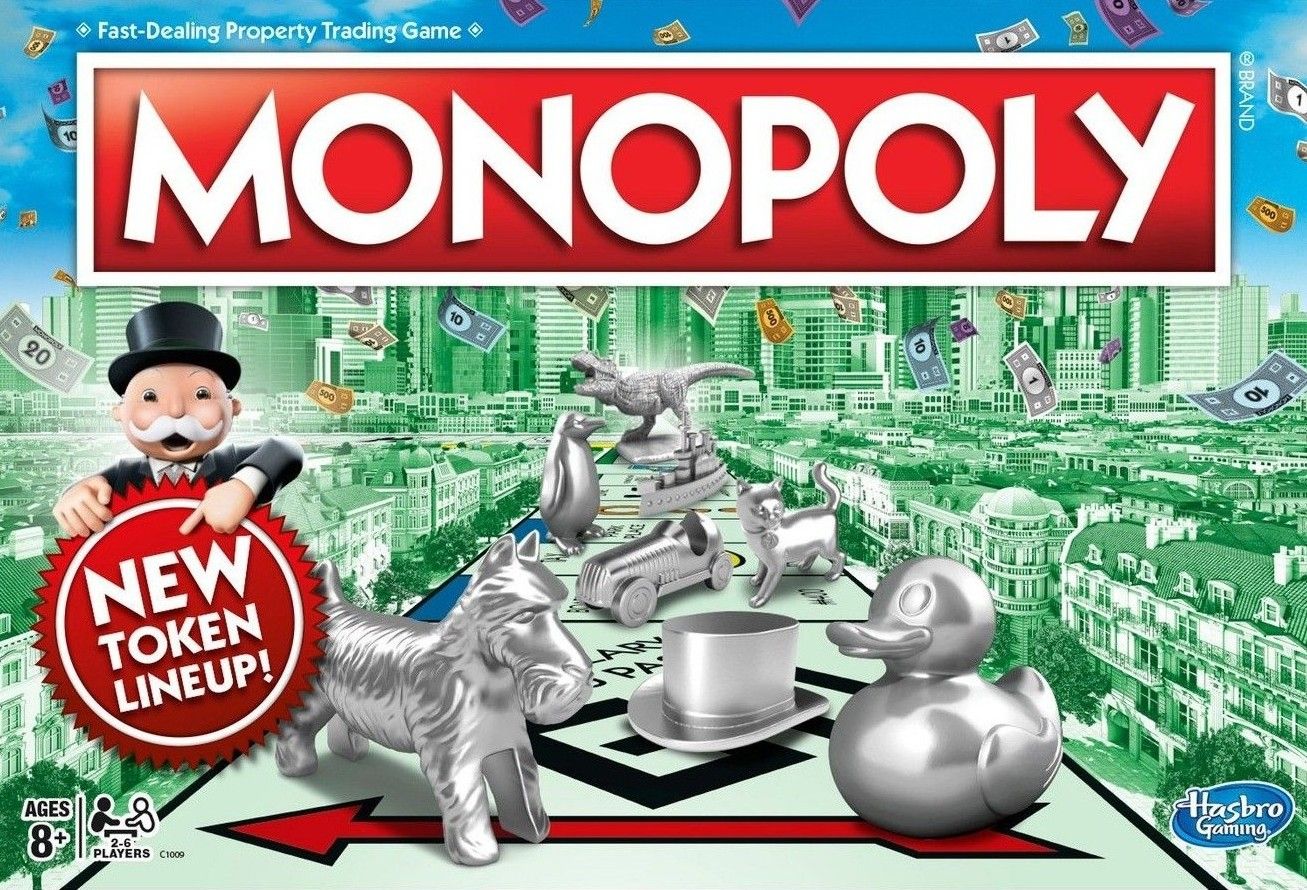
You'll find a game board, player tokens, houses and hotels for building, Chance and Community Chest cards, property deeds for each land, and of course, plenty of play money for your real estate transactions!
Who is Monopoly most recommended for?
It's perfect for families, groups of friends, and anyone who enjoys negotiation games, economic strategy, and a bit of dice luck. It's a classic that spans generations!
Is there a rule that most people play incorrectly?
Yes! The most famous one is the 'Free Parking' jackpot. In the official rules, if no one buys a property, it goes to auction, and money paid to the bank (taxes, fines) simply leaves the game, it doesn't go into a 'jackpot' in the center.
Other Games You'll Like
Based on mechanics and theme