7.5
rating
Ludopedia
6.0
rating
BGG
Our Verdict
RECOMMENDED
Perfect for those who love fast abstract games and want to explore ancient cultures. The capture system is brilliant!
Highlights
- Super original capture mechanic
- Easy to learn and play
- Rich historical and cultural context
- Five variants for variety
Keep in mind
- Two players only
- Reliance on dice luck
Rules manual not indexed yet
Upload the PDF rulebook to ask questions about this game with AI.
About the game
What you do in a play session
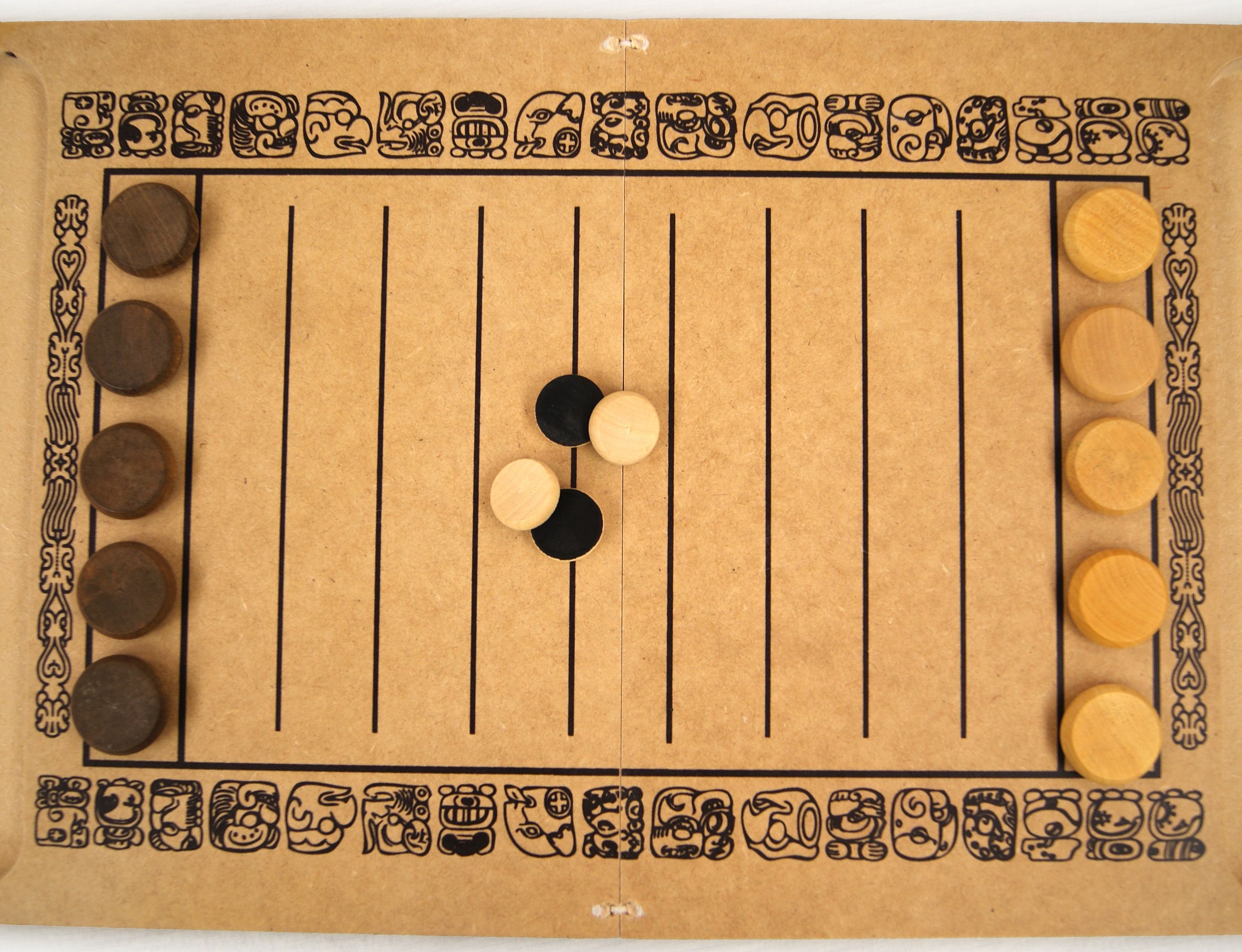
Imagine playing a game so high-stakes that, in the past, the loser could end up becoming a slave to pay off their debts. Welcome to Puluc! This fascinating game hails from Guatemala, created by the Ketchi people, and offers a deep dive into Mesoamerican culture. At its core, it's a strategic duel for two players on a linear board of 21 spaces, where the goal is simple yet challenging: capture all of your opponent's warriors.
What makes Puluc truly unique is its capture mechanic. Unlike most games where an opponent's piece is immediately removed from the board, Puluc is a bit more 'clingy'. When you capture an enemy warrior, you place it underneath your own piece. They then move together as a single unit! The captured piece is only permanently removed from the board once the capturer manages to return to their starting position. This 'kidnapping' system adds a thrilling tactical layer, as you must balance the hunt with the necessity of returning home to secure the victory.
Movement is determined by corn grains (or dice in modern versions), honoring the agricultural traditions of the region. And if one game isn't enough, Puluc offers five different variants, each with its own name and spirit: the ant (aj sayil), the eagle (aj t'iwil), the scorpion (aj sina'anil), the warrior ants (aj sakalil), and the fire (a k'aak'il). Tradition suggests playing all five versions in sequence, turning the session into a true tournament of endurance and strategy. It's a game that's quick to learn but requires critical thinking to dominate the board and avoid becoming the prey.
What makes Puluc truly unique is its capture mechanic. Unlike most games where an opponent's piece is immediately removed from the board, Puluc is a bit more 'clingy'. When you capture an enemy warrior, you place it underneath your own piece. They then move together as a single unit! The captured piece is only permanently removed from the board once the capturer manages to return to their starting position. This 'kidnapping' system adds a thrilling tactical layer, as you must balance the hunt with the necessity of returning home to secure the victory.
Movement is determined by corn grains (or dice in modern versions), honoring the agricultural traditions of the region. And if one game isn't enough, Puluc offers five different variants, each with its own name and spirit: the ant (aj sayil), the eagle (aj t'iwil), the scorpion (aj sina'anil), the warrior ants (aj sakalil), and the fire (a k'aak'il). Tradition suggests playing all five versions in sequence, turning the session into a true tournament of endurance and strategy. It's a game that's quick to learn but requires critical thinking to dominate the board and avoid becoming the prey.
Gallery
Box and component photos
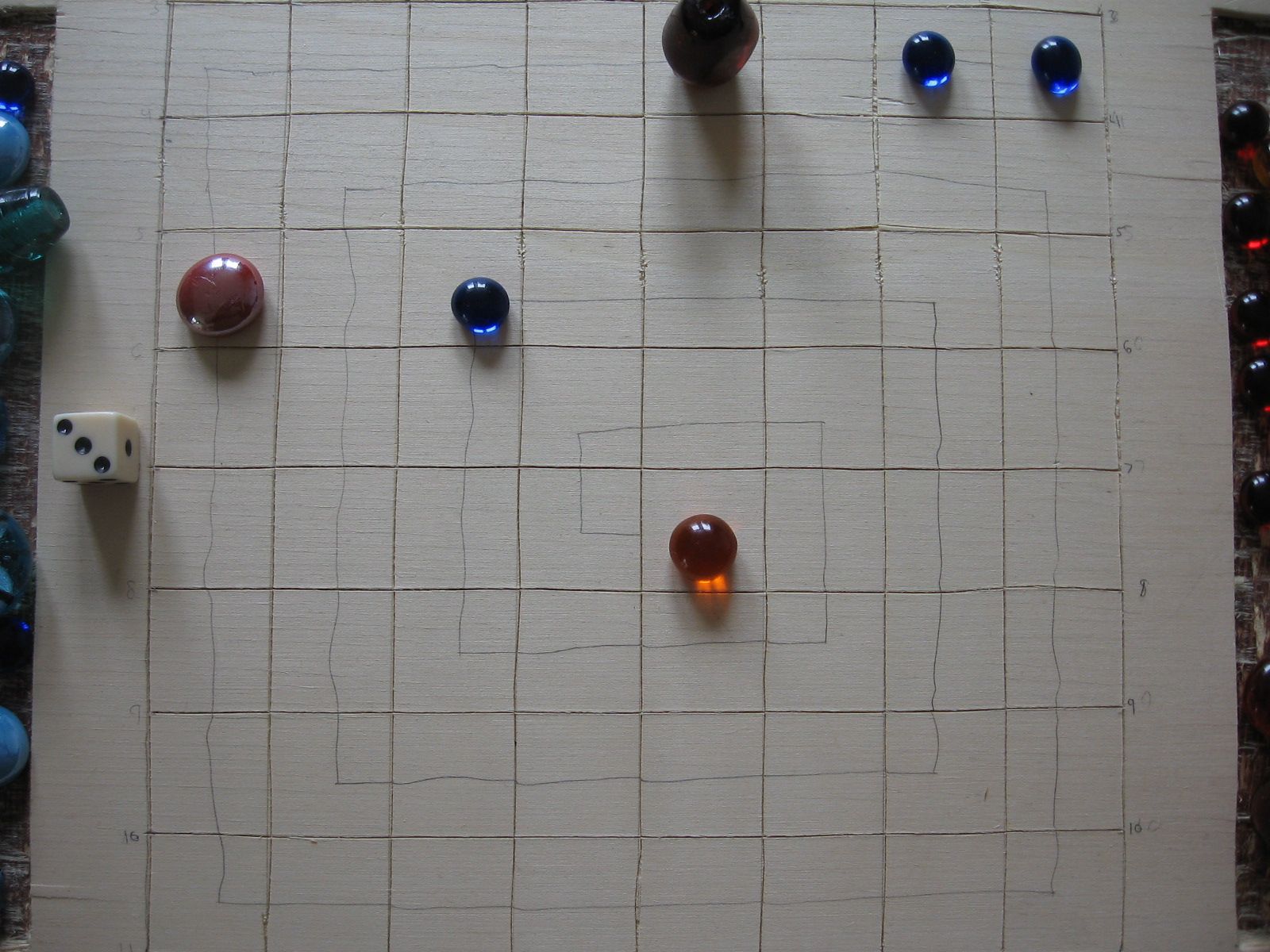
Tap any photo to open fullscreen. Photos submitted by the community or publisher.
Rules videos
Learn by watching before you open the box


Best player count
BGG community vote
2
BEST
Soundtrack
Ambience suggested by Melodice
Loading playlist...
Where to Buy
Prices monitored daily
Finding best prices...
Prices unavailable at this time.
Price history — last 6 months (lowest new offer)
Alert enabled!
Join the BoardGamesBot deals group
Get the best board game deals every day — without message spam.
Join the WhatsApp groupGame details
Mechanics, categories, families and credits
Mechanics
Categories
Families
Publisher
(Public Domain), 3Joy Games, Bibelot Games, Fratelli Fabbri Editori (Fabbri Editore), Geoludie, JACAMBLY GAMES, Krealudik, Lemery Games, Ludens Planet, Mitra
Designer
Jorge Yañez
Artist
Lívia Varga, Mariela Arratia, Tímea Kőszegi
Community
Data from BoardGameGeek
232owners
33wishlist
4want to play
Frequently Asked Questions
Quick answers before you buy
How many people can play?
The game is exclusively for 2 players (or two teams).
Is it hard to learn?
Not at all! The basic rules are very simple, making it ideal for those starting with abstract strategy games.
How long does a game last?
A single match is quick, but since there are 5 variants, you can spend a significant amount of time playing the full sequence.
What's in the box?
It typically includes the board (often made of cloth), warrior pieces, and the randomizers (dice or grains).
Who would you recommend this to?
Anyone who enjoys Chess or Backgammon but wants something with a different cultural twist and faster rules.
Other Games You'll Like
Based on mechanics and theme