6.8
rating
Ludopedia
6.7
rating
BGG
Our Verdict
RECOMMENDED
If you love fast duels with tactical depth and a dash of luck, Roma gives you that blend of cards and dice.
Highlights
- Unique card‑dice synergy
- Hand‑management strategy
- Entertaining sabotage actions
Keep in mind
- Light weight, limited depth
- Dice roll luck matters
- No standalone expansions
Rules manual not indexed yet
Upload the PDF rulebook to ask questions about this game with AI.
About the game
What you do in a play session
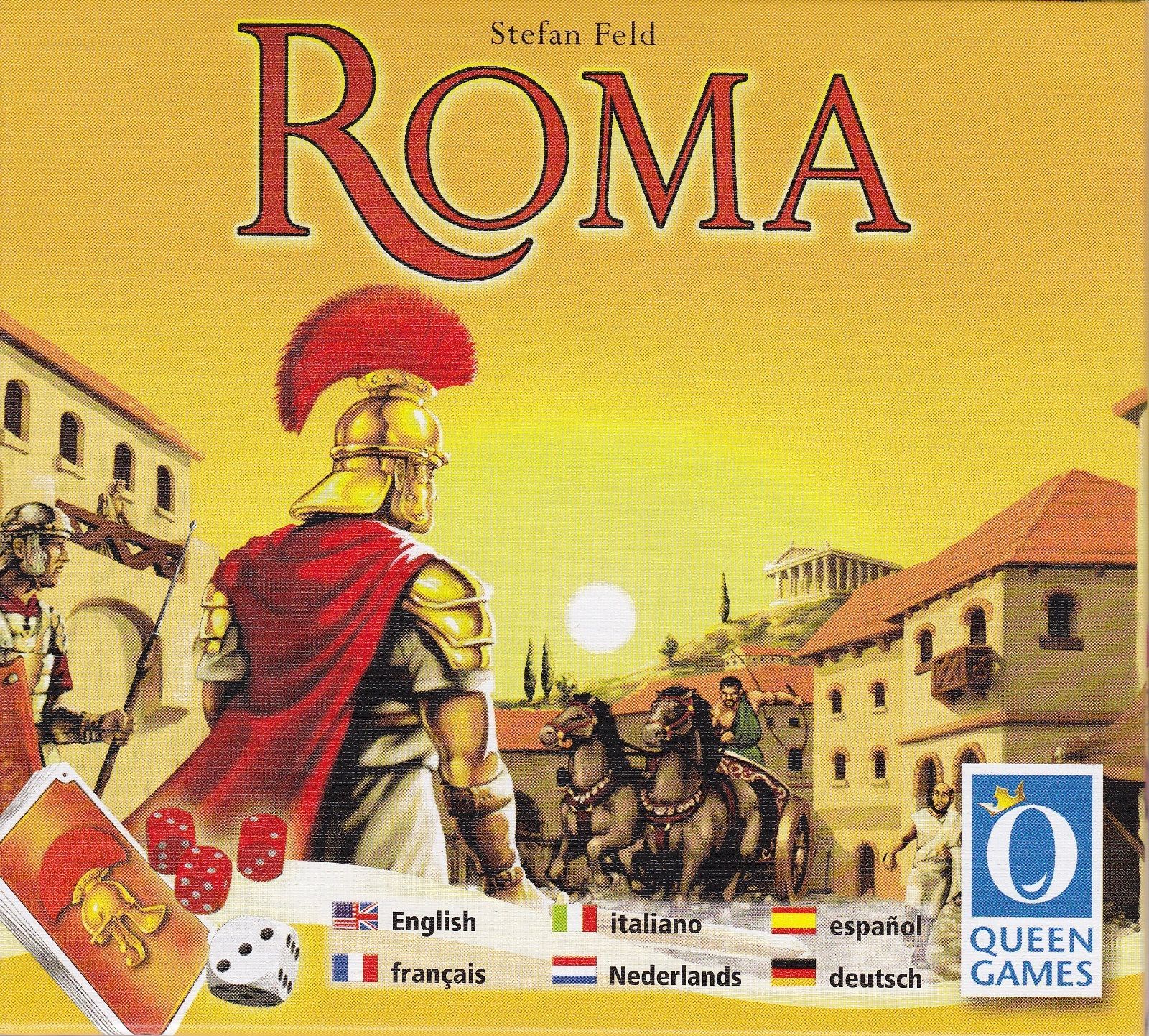
Rome is in crisis: the Senate argues, the Guard rages, and the populace is split. In "Roma", two players clash using powerful cards—like the Tower or the Praetorian Guard—and political figures such as the Consul and Tribune to protect their power and victory points or to pull the strings behind the scenes. Each match contains a fixed pool of victory points; once they’re all taken, the player with the most points wins.
The board is minimal: six numbered "dice stations" from 1 to 6. At the start each player places cards on some stations. Every turn a die is rolled, and the result lets you activate the corresponding station, triggering the card’s effect. Cards can shift resources, grant money, award victory points, or sabotage the opponent—using Action Points, Hand Management, Open Drafting, and the dreaded Take‑That mechanics.
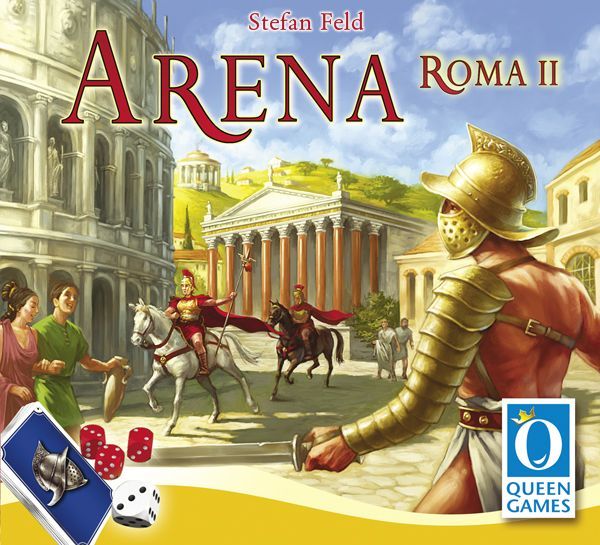
The blend of dice and cards creates a tense rhythm where luck of the roll mixes with strategic placement. Hand management is key: you must balance attack, defense, and control cards while watching the tags that create synergies or expose weaknesses. The game runs about 45 minutes, has a light weight (2/5), and suits players who enjoy fast decisions, direct duels, and a well‑flavored historical setting. "Roma" can also link to its sequel, Arena: Roma II, expanding play options.
The board is minimal: six numbered "dice stations" from 1 to 6. At the start each player places cards on some stations. Every turn a die is rolled, and the result lets you activate the corresponding station, triggering the card’s effect. Cards can shift resources, grant money, award victory points, or sabotage the opponent—using Action Points, Hand Management, Open Drafting, and the dreaded Take‑That mechanics.
The blend of dice and cards creates a tense rhythm where luck of the roll mixes with strategic placement. Hand management is key: you must balance attack, defense, and control cards while watching the tags that create synergies or expose weaknesses. The game runs about 45 minutes, has a light weight (2/5), and suits players who enjoy fast decisions, direct duels, and a well‑flavored historical setting. "Roma" can also link to its sequel, Arena: Roma II, expanding play options.
Gallery
Box and component photos
Tap any photo to open fullscreen. Photos submitted by the community or publisher.
Rules videos
Learn by watching before you open the box
In English

Best player count
BGG community vote
2
BEST
Soundtrack
Ambience suggested by Melodice
Loading playlist...
Where to Buy
Prices monitored daily
Finding best prices...
Prices unavailable at this time.
Price history — last 6 months (lowest new offer)
As an Amazon Associate I earn from qualifying purchases. Prices and availability subject to change.
Alert enabled!
Join the BoardGamesBot deals group
Get the best board game deals every day — without message spam.
Join the WhatsApp groupGame details
Mechanics, categories, families and credits
Mechanics
Categories
Families
Publisher
Queen Games, Corfix
Designer
Stefan Feld
Artist
Michael Menzel
Community
Data from BoardGameGeek
5,963owners
663wishlist
142want to play
Frequently Asked Questions
Quick answers before you buy
How many players can play?
Only two players take part in a game.
How long does a game last?
Approximately 45 minutes, depending on player familiarity.
What is the complexity level?
It’s a light game, BGG weight 2/5, easy to learn and play.
What components are included?
Cards, six‑sided dice, a small board with six numbered stations, and victory‑point markers.
Who is the game best suited for?
Players who enjoy tactical duels, historical themes, and a mix of cards and dice.
Can it be played with more than two players?
No. The design is strictly for two participants.
Are there expansions or companion games?
Yes, it can be linked with Arena: Roma II, which adds extra play options.
Other Games You'll Like
Based on mechanics and theme