How to Play Sagrada
Floodgate Games, Cranio Creations, CrowD Games · Board game · 2017What do you want to do now
Ask anything about Sagrada: rules, setup, components, complexity, price, or whether it fits your group.
Video: How to Play
Start here, then follow the written guide
Step by step
Game Objective
In Sagrada, you are a master artisan competing to create the most stunning stained-glass window for the Sagrada Familia! Your "glass pieces" are represented by colored dice, where the value indicates the shade (lower means lighter). Over 10 rounds, you and your fellow artisans will take turns selecting dice from a pool and placing them in your personal windows, following color, shade, and adjacency restrictions. The goal is to be the artisan with the highest score at the end of 10 rounds, based on public and private objectives!
Preparation (Setup)
Let's set up the table to create your masterpiece!
Player Setup
- Shuffle the Private Objective Cards (those with a gray die on the back) and deal 1 card face down to each player. Each player may look at their card secretly.
- Deal 2 random Window Pattern Cards and 1 Window Frame Player Board to each player. Each player chooses 1 of the 4 window patterns (front or back) to play; the other card will not be used.
- BoardGameBot Tip: Windows have difficulty levels from 3 (easiest) to 6 (hardest). Harder windows grant more Favor Tokens!
- Each player receives the number of Favor Tokens indicated by the difficulty number on their chosen Window Pattern Card.
- Slide the chosen Window Pattern Card into the Player Board.
- Place a Score Marker that matches the color of each player's board next to the Round Track. These will be used for final scoring.
Game Setup
- Place the Round Track in the center of the table.
- Shuffle the Tool Cards and place 3 of them face up in the center of the play area.
- Shuffle the Public Objective Cards (those with a blue die on the back) and place 3 of them face up.
- Place all 90 dice into the Dice Bag.
- Randomly choose a player to be the Starting Player and hand them the Dice Bag. (A fun suggestion is whoever visited a cathedral most recently!)
- Put away all remaining cards (Objective, Tool, and Window); they will not be used in this game.
The Game Turn
A game of Sagrada lasts 10 rounds. Each round is a ballet of selecting and placing dice!
Start of Round
The Starting Player (who has the Dice Bag) draws and rolls a specific number of dice from the bag, forming the Draft Pool:
- 2 Players: 5 dice
- 3 Players: 7 dice
- 4 Players: 9 dice
Player Actions
Turns proceed clockwise, starting with the Starting Player. During their turn, a player can perform the following actions, in any order:
- Select 1 die from the Draft Pool and place it in their Window.
- Use 1 Tool Card by spending Favor Tokens.
Both actions are optional. You can do both, only one, or pass your turn without doing anything!
Turn Order
Turns proceed clockwise until the last player has completed their first turn. Then, the round continues in reverse order (counter-clockwise), starting with the last player, so that everyone takes a second turn. When the Starting Player completes their second turn, the round ends.
Placing Dice: The Golden Rules
When placing a die in your Window, you must follow these strict restrictions:
- First die: Each player's first die in the game must be placed in a space on the edge or corner of the window.
- Subsequent dice: All other dice must be placed adjacent to an already placed die, either diagonally (different row and column) or orthogonally (same row or column).
- Space restrictions: The die must match the color or value restriction of the space. White spaces have no color or value restrictions.
- Example: A red space only accepts a red die. A space with the number 3 only accepts a die with value 3.
- Adjacency restrictions: Dice can never be placed orthogonally adjacent to a die of the same color or same value.
- Example: You cannot place two red dice side by side, nor two dice with value 3 side by side.
Note: Any die can be placed in a white space, provided all other restrictions are met.
Tool Cards and Favor Tokens
During your turn, you can spend Favor Tokens to use a special ability from a Tool Card:
- Place Favor Tokens on the Tool Card:
- 1 Favor Token if there are no tokens on the card.
- 2 Favor Tokens if there are already tokens on the card.
- Use the ability indicated on the Tool Card.
BoardGameBot Tip: Being the first to use a Tool Card is cheaper! However, the abilities can be more impactful when your window is already more filled.
End of Game and Scoring
The game ends at the end of the 10th round. Time to see who created the most glorious stained-glass window!
End of Round
All remaining dice in the Draft Pool are placed on the Round Track, covering the space corresponding to the newly completed round. If too many dice remain, they will not cover additional numbered spaces.
The Dice Bag is passed clockwise to the next player, who becomes the new Starting Player for the next round.
If this was the 10th round, the game ends and you proceed to Final Scoring!
Final Scoring
- Remove the dice from the Round Track and flip it to the Score Track side.
- Use each player's Score Marker to mark their positions on the Score Track. Flip the marker if the score exceeds 50 points.
Each player sums their Victory Points (VPs) as follows:
- Public Objective Cards: Earn points from each card multiple times. Row/column-based objectives only grant points for complete rows/columns (no empty spaces).
- Your Private Objective Card: Sum the values of the dice of the indicated color in your window.
- Favor Tokens: Gain 1 VP for each unspent token.
- Empty Spaces: Lose 1 VP for each empty space in your window.
The player with the highest total Victory Points is the winner!
Tie-breaker
In case of a tie, the criteria are, in order:
- Who has more points from Private Objectives.
- Who has more remaining Favor Tokens.
- By reverse player order during the last round.
Errors in Die Placement
If you realize your window violates any restriction, you must immediately remove dice (of your choice) until all rules are obeyed. These dice are out of the game, and the resulting empty spaces count as empty spaces in final scoring.
Tips for Winning
- Plan Adjacency: Remember that you cannot have dice of the same color or value orthogonally adjacent. Try to avoid placing dice next to a corresponding space (like a 2 die next to a 2 space or a red die next to a red space) to keep your options open for future dice.
- Manage your Favor Tokens: Tool Cards can be very powerful, but using the same tool repeatedly becomes more expensive. Think carefully about when and which tool to use, especially early in the game, to take advantage of the 1 Favor Token cost.
- Balance Objectives: Don't focus only on your Private Objective! Public Objectives can yield many points if you can combine them well with your window's restrictions. Keep an eye on what your opponents are building too.
More videos
More rules explanations from the community
In English
-
 How To Play Sagrada (New Print) Board Game
-
 Questions about tools, objectives and solo mode in Sagrada boardgame
-
 Quick how to play for Sagrada
-
 Remastered Sagrada Solo Play Through
-
 Sagrada - A Board Game Peek
-
 Sagrada - How to Play
-
 Sagrada - rules quickly explained
-
 Board Game Bakes| Sagrada Stained Glass Cookies
-
 How to play Sagrada
-
 Sagrada Solo Variant Using Private Objective Cards by Danicha
-
 Sagrada Updated Solo Teach & Play
Rules manual
Official PDF file
Frequently Asked Questions
Quick answers about the rules
What is the objective of Sagrada?
How do you set up Sagrada?
How does Sagrada end, and how do you score?
What are some tips for winning Sagrada?
Expansions
Published additional content
 Sagrada: 2020 Promo Pack
 Sagrada: 2022 Promo Pack
 Sagrada: 5-6 Player Expansion
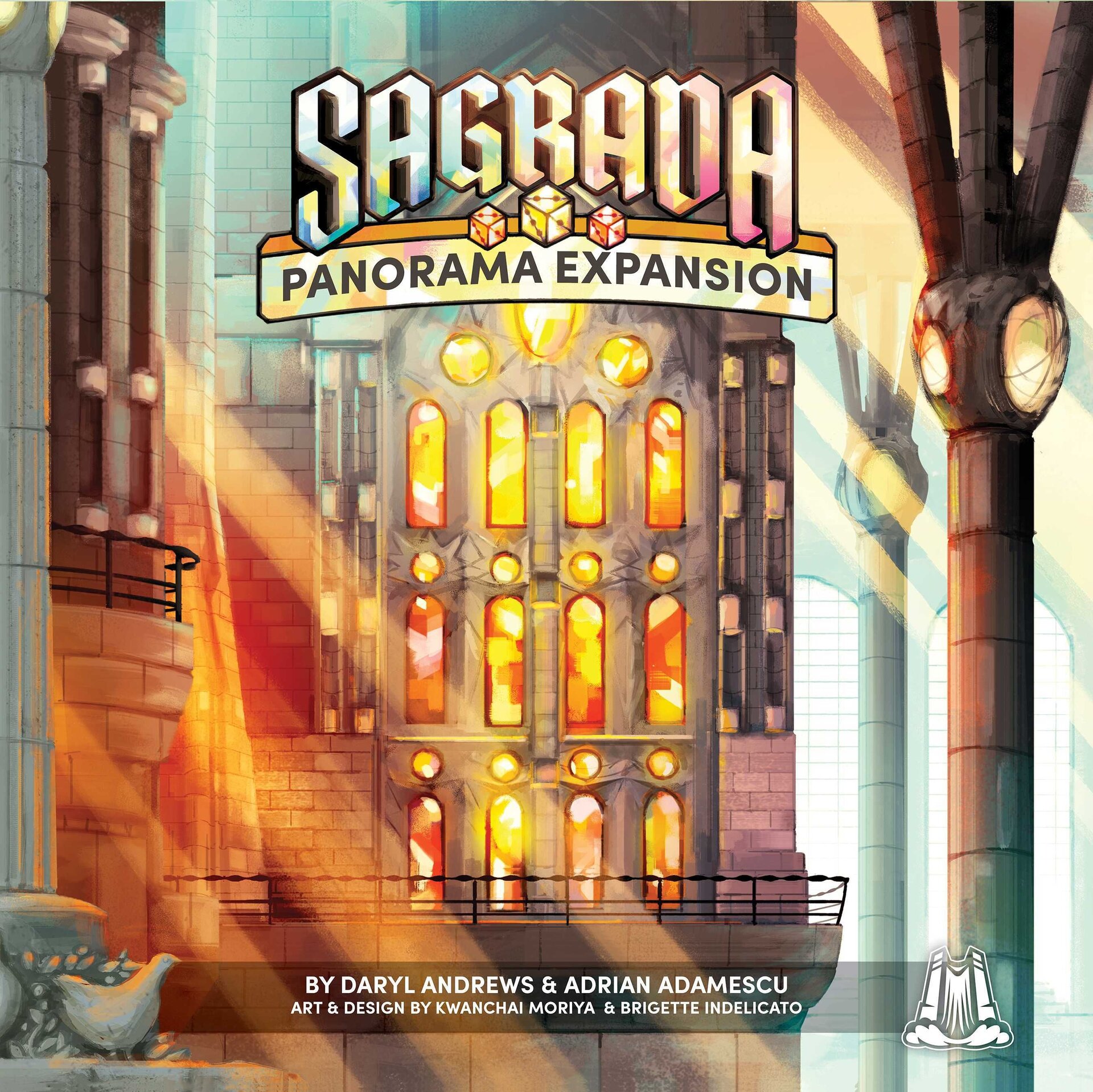 Sagrada: Panorama
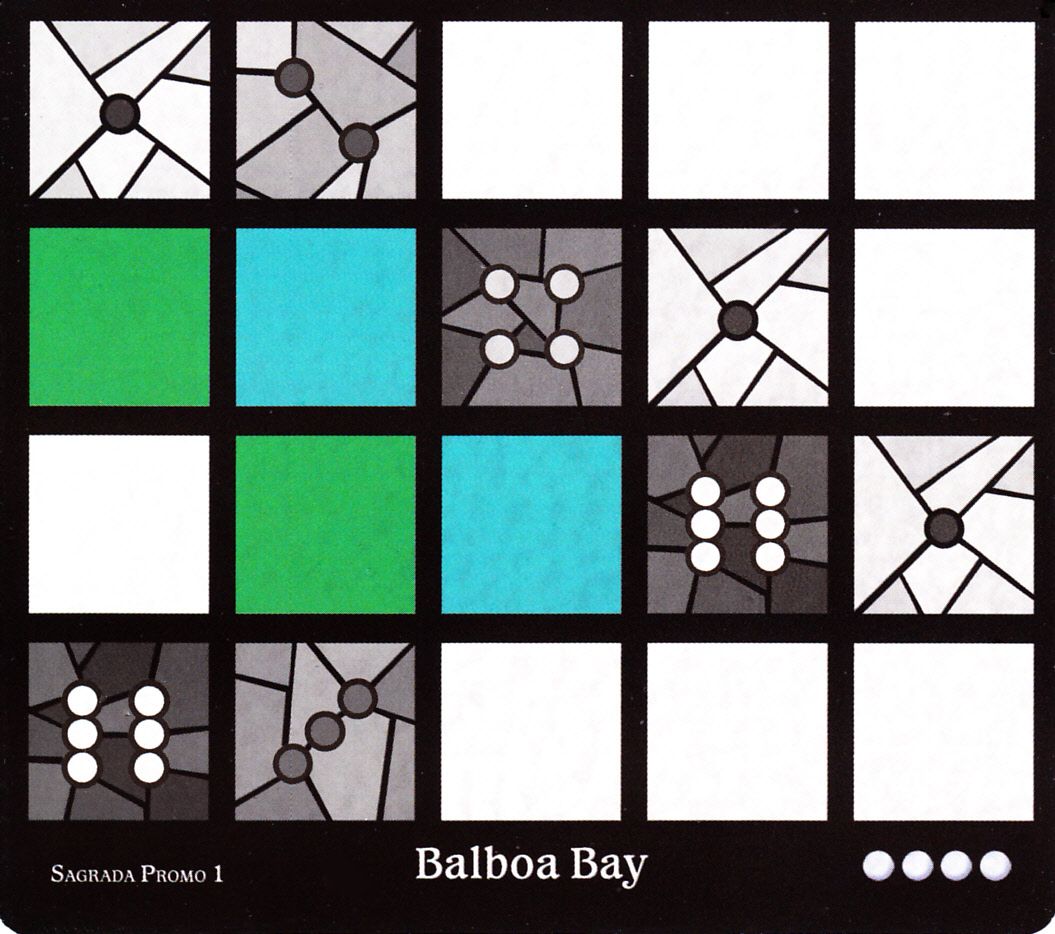 Sagrada: Promo 1 – Vitraux/Balboa Bay Window Pattern Card
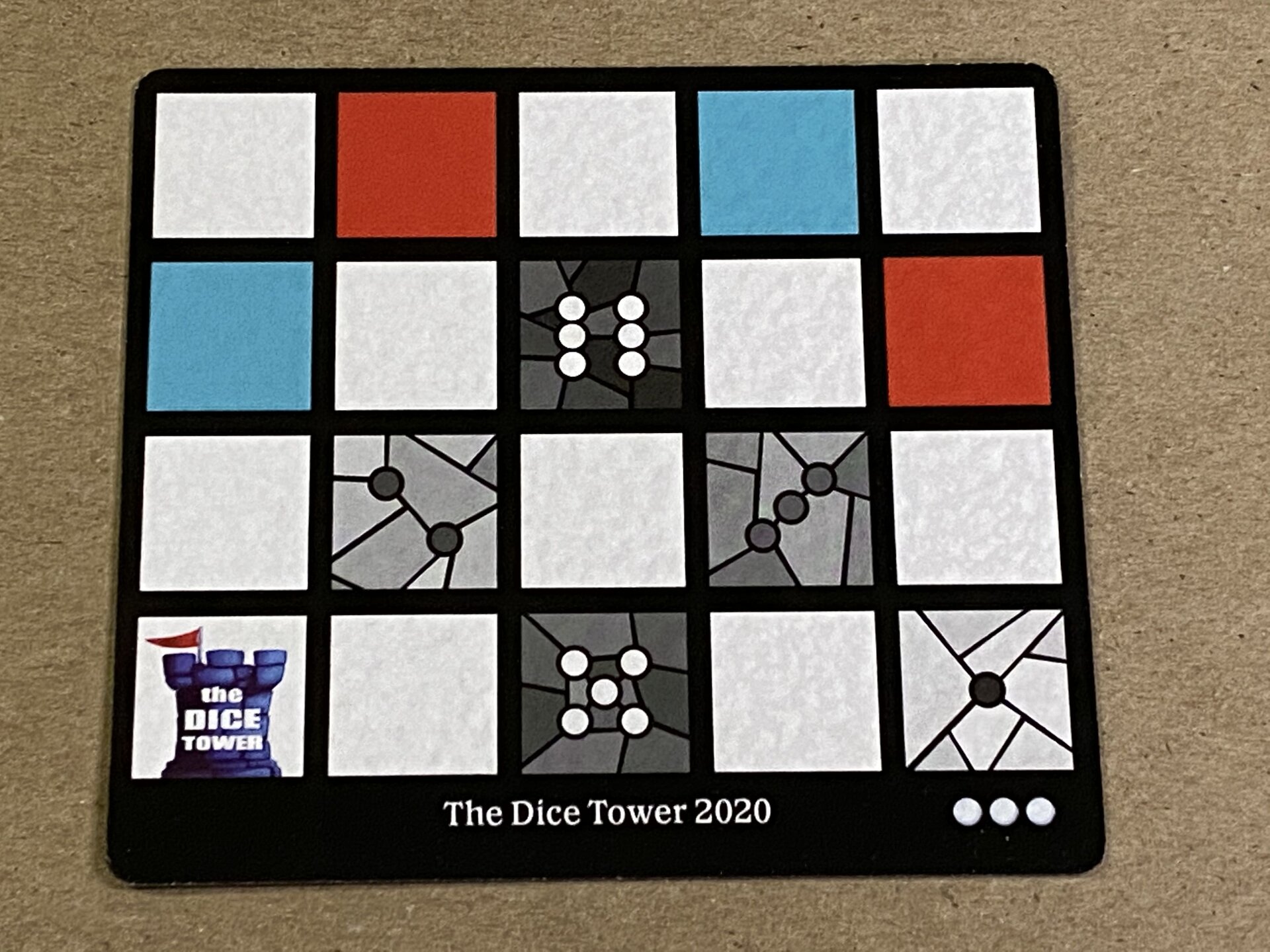 Sagrada: Promo 10 – Dice Tower 2020 Window Pattern Card
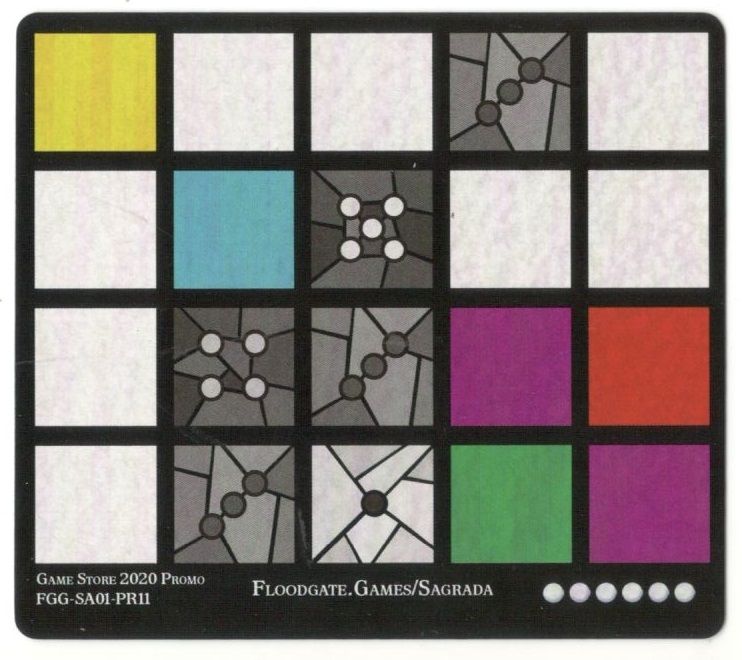 Sagrada: Promo 11 – Game Store 2020 Window Pattern Card
 Sagrada: Promo 12 – Tantrum House 2020 Window Pattern Card
 Sagrada: Promo 14 – Game Boy Geek 2021 Window Pattern Card
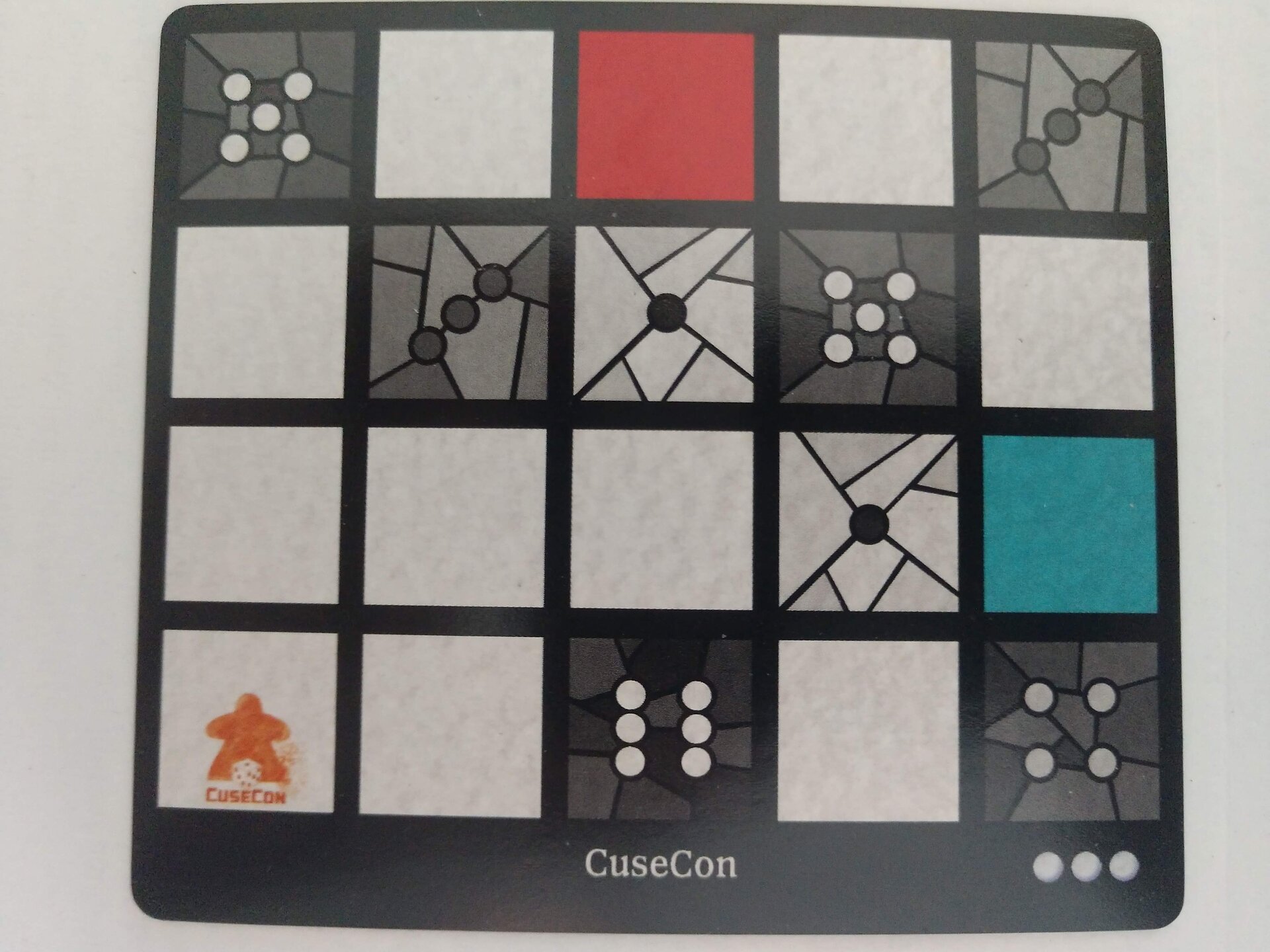 Sagrada: Promo 16 – CuseCon 2021 Window Pattern Card
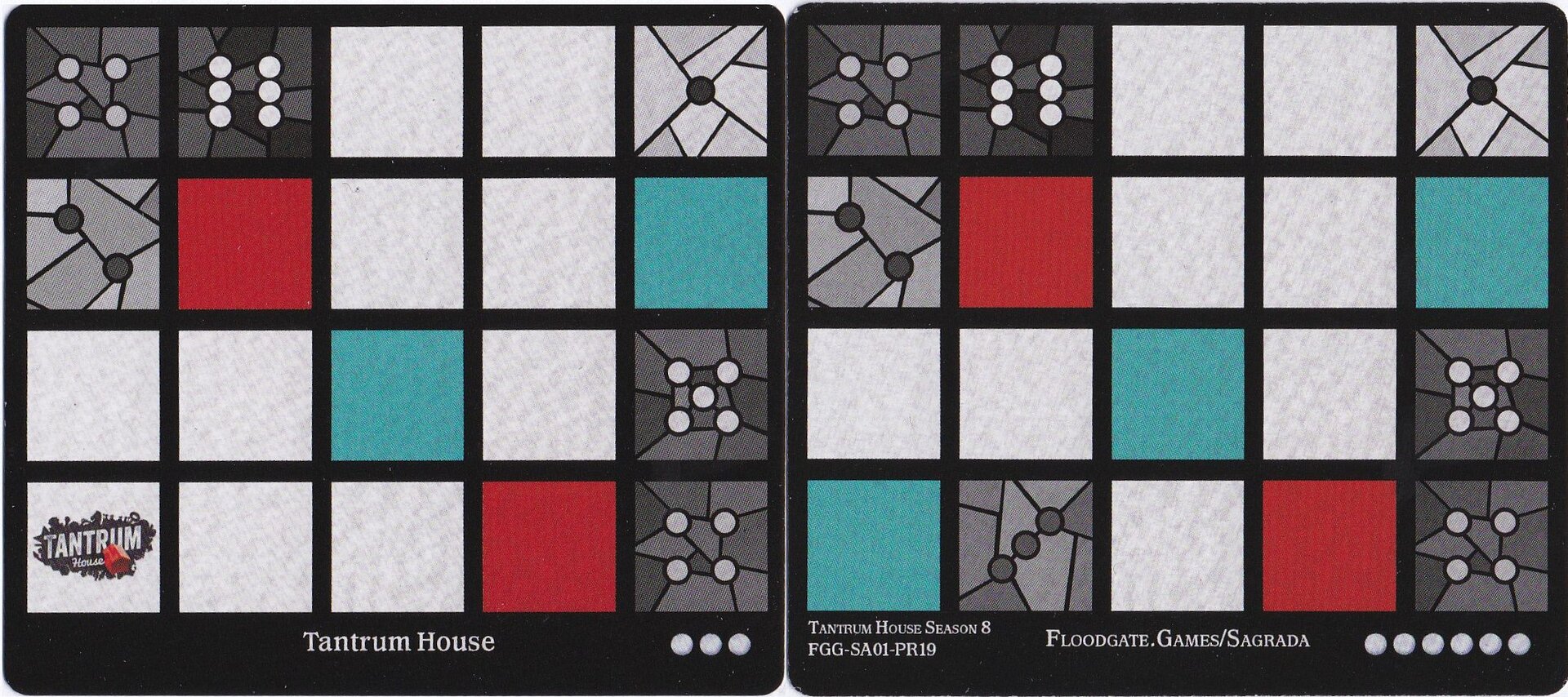 Sagrada: Promo 19 – Tantrum House 2022 Window Pattern Card
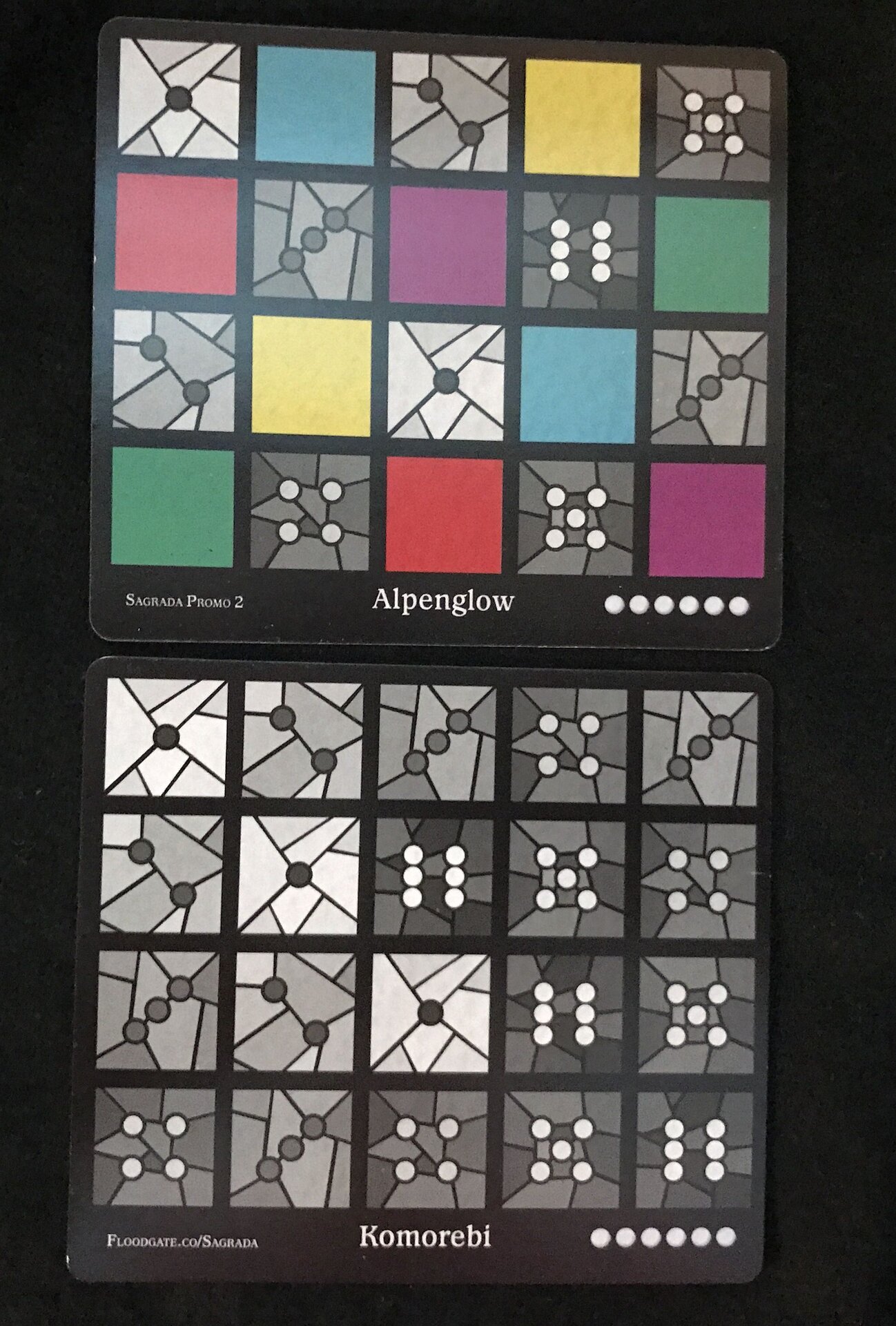 Sagrada: Promo 2 – Alpenglow/Komorebi Window Pattern Card
 Sagrada: Promo 21 – Game Boy Geek 2022 Window Pattern Card
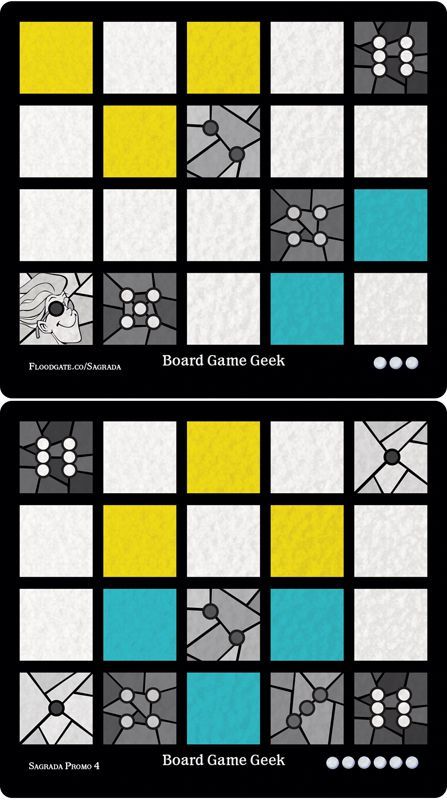 Sagrada: Promo 4 – BoardGameGeek Window Pattern Card
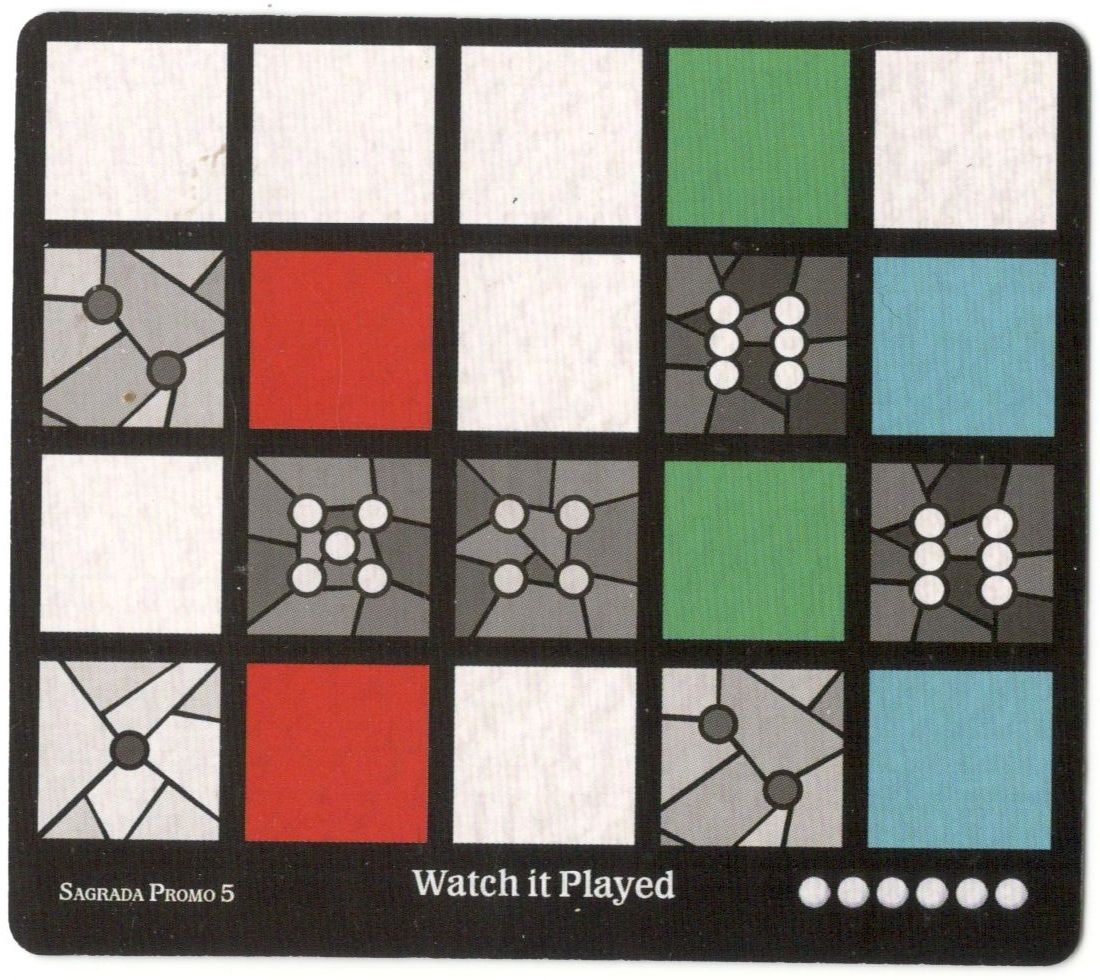 Sagrada: Promo 5 – Watch It Played Window Pattern Card
 Sagrada: Promo 6 – Man Vs Meeple Window Pattern Card
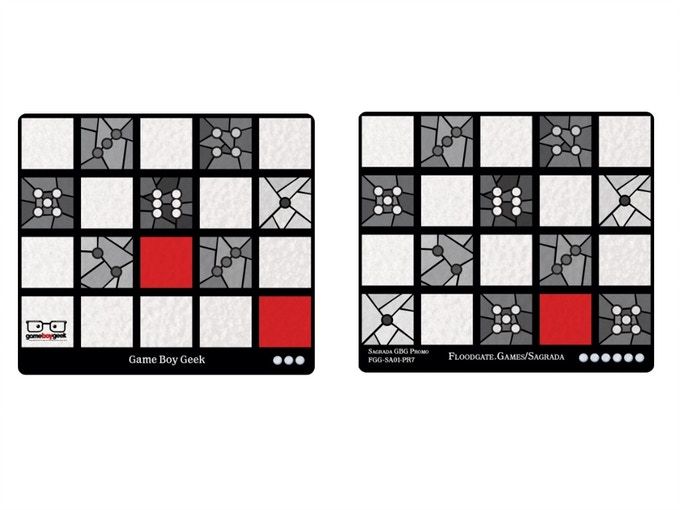 Sagrada: Promo 7 – Game Boy Geek Window Pattern Card
 Sagrada: Promo 8 – Apollo/Godfather Window Pattern Card
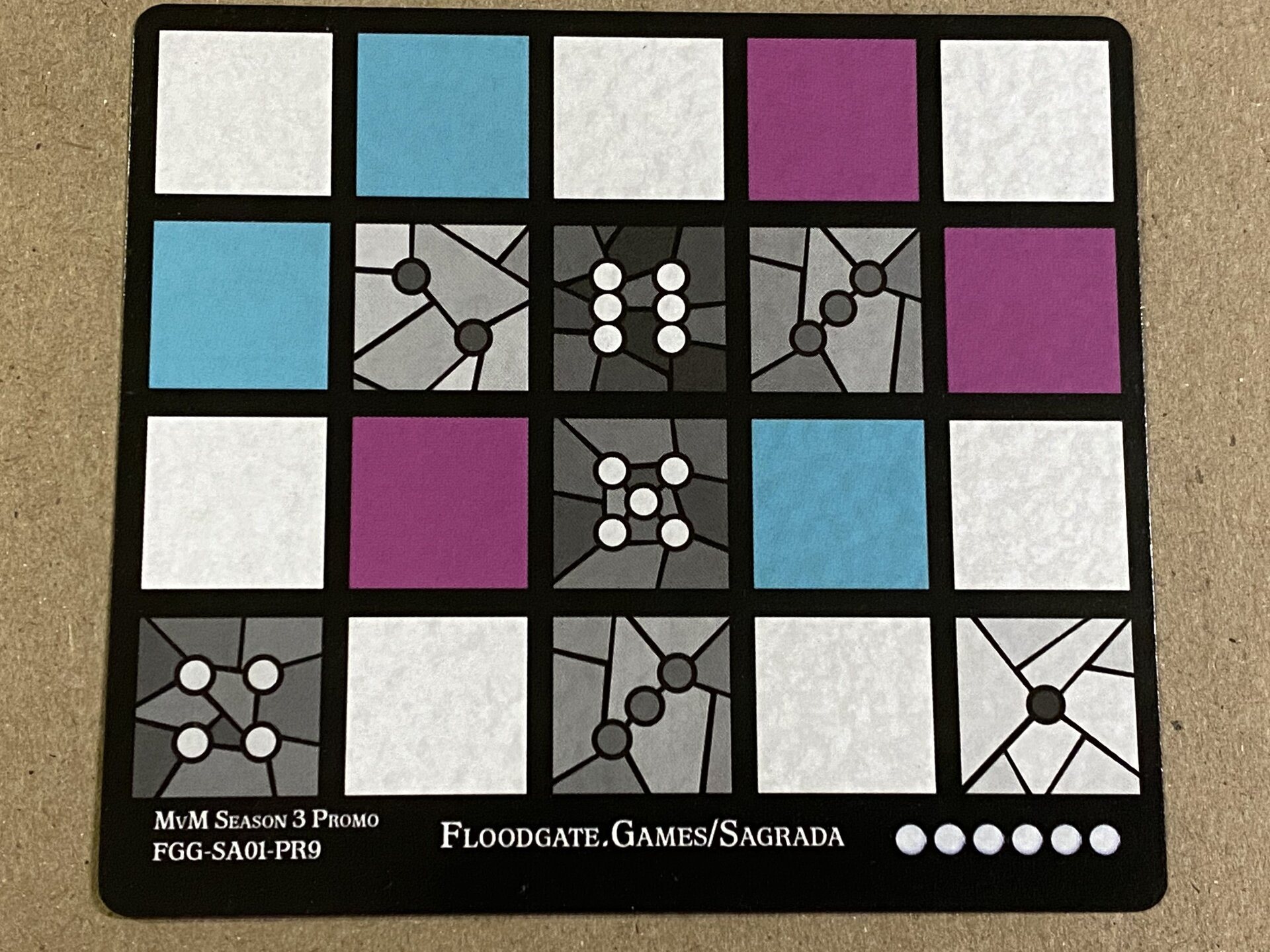 Sagrada: Promo 9 – Man Vs Meeple Window Pattern Card
 Sagrada: The Great Facades – Glory
 Sagrada: The Great Facades – Life
 Sagrada: The Great Facades – Passion
Other Games You'll Like
Based on mechanics and theme