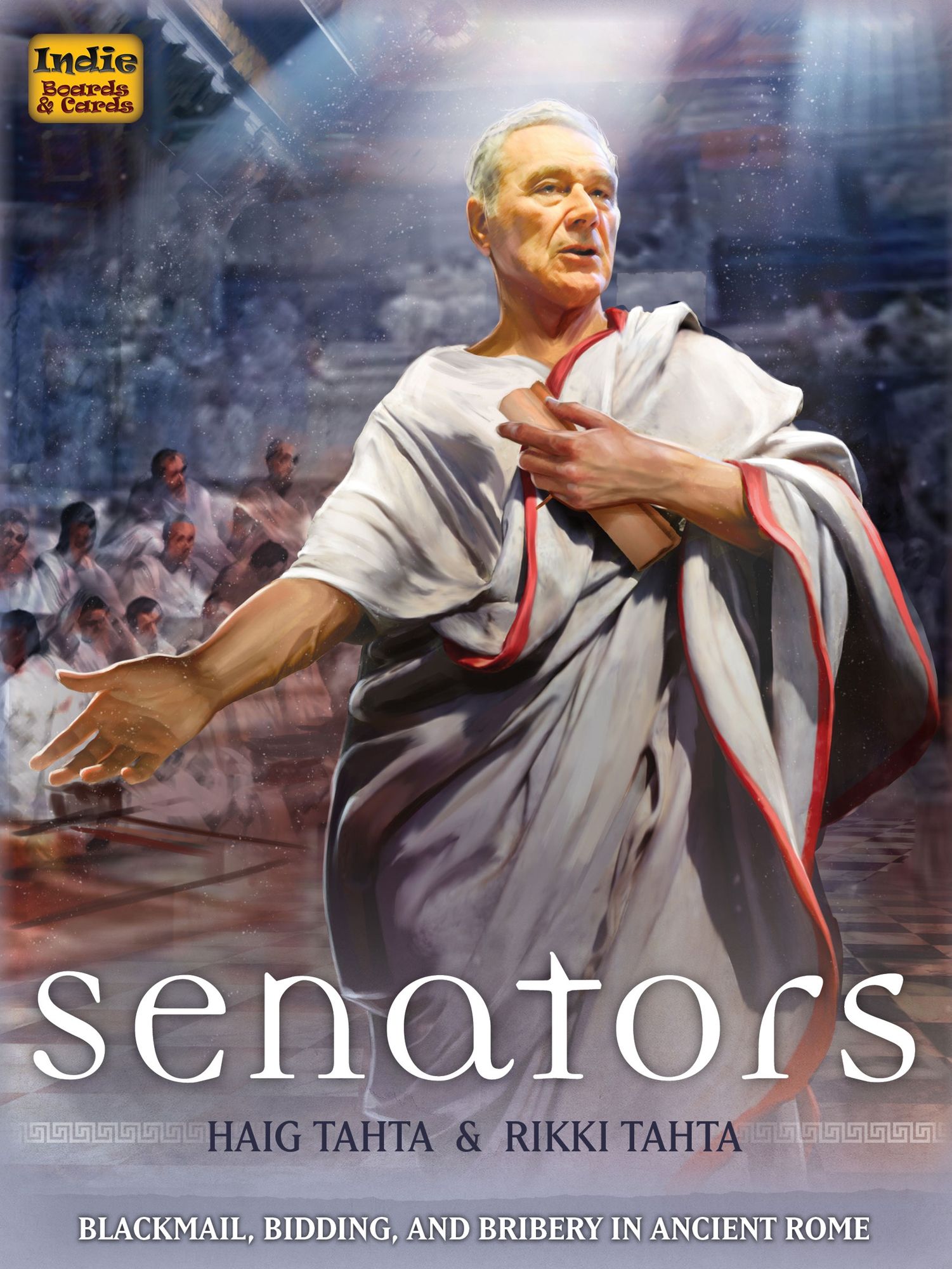
Senators
La Mame Games, DMZ Games, Ferti · Board game · 2017
3–5 · best 4
45–60 min
Weight 2.1/5
Buy · from US$ 8.99
7.8
rating
Ludopedia
6.9
rating
BGG
Our Verdict
RECOMMENDED
If you love auctions and Roman intrigue, Senators will hook you.
Highlights
- Varied, dynamic auctions
- Constant player interaction
- Strategic senator collection
Keep in mind
- Learning curve for auction types
- Event cards demand focus
Rules manual not indexed yet
Upload the PDF rulebook to ask questions about this game with AI.
About the game
What you do in a play session
In the late Roman Republic, each player heads a faction vying for influence in the Senate. First you buy resources through a mix of auctions – Dutch, sealed, high/low – and sell them in sets to the bank, generating cash. That cash funds wars, defends against aggressive offers, and most importantly "buys" senators, increasing your voting power. Each turn starts by drawing an event card, which may trigger wars, deficits, or other situations that demand quick decisions. Then you choose to open a new market auction, extort cards from another player (a classic shotgun offer), or cash in your resource sets to acquire more senators. The game ends as soon as the fourth war is revealed; the player with the most senators becomes Caesar.
Senators blends many bidding styles – open step bids, blind bids, high/low blind – and adds a Push Your Luck element when deciding whether to press a bid further. Strategy splits between building valuable resource sets and converting those sets into senators before the war ends the game. Both tactical choices (valuing cards in auctions) and strategic planning (which senators to collect, when to stop building sets) matter equally. The pace is brisk, with constant negotiation and card trading, and a typical playtime is 45‑60 minutes for 3‑5 players. Its low weight (2.1/5) and historical theme make it approachable, though the variety of auction mechanisms may need a short learning curve for newcomers to bidding games.
Senators blends many bidding styles – open step bids, blind bids, high/low blind – and adds a Push Your Luck element when deciding whether to press a bid further. Strategy splits between building valuable resource sets and converting those sets into senators before the war ends the game. Both tactical choices (valuing cards in auctions) and strategic planning (which senators to collect, when to stop building sets) matter equally. The pace is brisk, with constant negotiation and card trading, and a typical playtime is 45‑60 minutes for 3‑5 players. Its low weight (2.1/5) and historical theme make it approachable, though the variety of auction mechanisms may need a short learning curve for newcomers to bidding games.
Gallery
Box and component photos
Tap any photo to open fullscreen. Photos submitted by the community or publisher.
Rules videos
Learn by watching before you open the box


Best player count
BGG community vote
3
REC
4
BEST
5
BEST
Soundtrack
Ambience suggested by Melodice
Loading playlist...
Where to Buy
Prices monitored daily
Finding best prices...
Prices unavailable at this time.
Price history — last 6 months (lowest new offer)
As an Amazon Associate I earn from qualifying purchases. Prices and availability subject to change.
Alert enabled!
Join the BoardGamesBot deals group
Get the best board game deals every day — without message spam.
Join the WhatsApp groupGame details
Mechanics, categories, families and credits
Mechanics
Categories
Families
Publisher
La Mame Games, DMZ Games, Ferti, Indie Boards & Cards, New Games Order, LLC
Designer
Haig Tahta, Rikki Tahta
Artist
Andrew Higgins, Diletta De Santis, Pascal Quidault
Community
Data from BoardGameGeek
1,422owners
271wishlist
75want to play
Frequently Asked Questions
Quick answers before you buy
How many players can play?
3 to 5 players.
What is the typical playing time?
About 45‑60 minutes, depending on player count.
How complex is the game?
Light weight (2.12/5) – simple core rules, but the variety of auction mechanics requires focus.
What components are included?
Resource cards, event cards, senator cards, money tokens, and a reference board for auctions.
Who is the game best suited for?
Fans of auction games, historical settings, and players who enjoy heavy negotiation with 3‑5 participants.
Other Games You'll Like
Based on mechanics and theme