Shokoba
asmodee, Egmont Polska, FoxMind · Board game · 2007
2–4 · best 4
20 min
Weight 1.2/5
Buy · from US$ 9.95
5.9
rating
Ludopedia
5.3
rating
BGG
Our Verdict
RECOMMENDED
Perfect for those looking for a smart, fast-paced filler to start or end the night. Its simplicity hides a delightful tactical battle.
Highlights
- Learned in under 2 minutes
- Fast and dynamic gameplay
- Simple and satisfying math
- Great for all ages
Keep in mind
- Might be too simple for hardcore gamers
- Luck of the draw plays a role
Rules manual not indexed yet
Upload the PDF rulebook to ask questions about this game with AI.
About the game
What you do in a play session
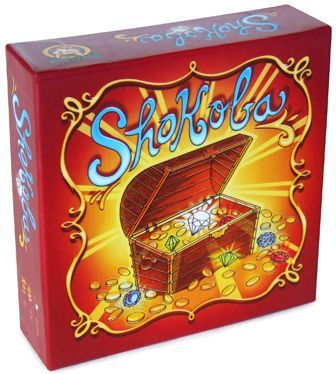
Ever played a card game that's so fast and elegant you immediately want a rematch? That's Shokoba. Inspired by the traditional Italian game Scopa, the goal is straightforward: collect as many jewels as possible. The deck consists of 40 cards, split between sapphires, rubies, emeralds, and the elusive single diamond.
The gameplay is very intuitive. To start, each player gets three cards, and four are laid out face-up on the table. On your turn, you play one card from your hand. If its value matches a card on the table, or equals the sum of two or more cards, you 'fish' those cards and add them to your score pile. If you can't make a match, your card stays on the table, potentially helping the next player. The most satisfying moment is when you clear the table entirely, which earns you an immediate bonus gem!
As players run out of cards, new sets are dealt until the deck is empty. Then comes the final tally: bonus gems are awarded to the player who captured the diamond, the one with the most of each jewel type, and the one who collected the most cards overall. Ties result in no points, keeping the competition tight. The first player to reach 11 gems wins. It's a game of quick mental math and hand management, perfect for those who love light games that still require a bit of strategic thinking to avoid leaving the table open for opponents.
The gameplay is very intuitive. To start, each player gets three cards, and four are laid out face-up on the table. On your turn, you play one card from your hand. If its value matches a card on the table, or equals the sum of two or more cards, you 'fish' those cards and add them to your score pile. If you can't make a match, your card stays on the table, potentially helping the next player. The most satisfying moment is when you clear the table entirely, which earns you an immediate bonus gem!
As players run out of cards, new sets are dealt until the deck is empty. Then comes the final tally: bonus gems are awarded to the player who captured the diamond, the one with the most of each jewel type, and the one who collected the most cards overall. Ties result in no points, keeping the competition tight. The first player to reach 11 gems wins. It's a game of quick mental math and hand management, perfect for those who love light games that still require a bit of strategic thinking to avoid leaving the table open for opponents.
Gallery
Box and component photos
Tap any photo to open fullscreen. Photos submitted by the community or publisher.
Best player count
BGG community vote
2
BEST
3
REC
4
BEST
Soundtrack
Ambience suggested by Melodice
Loading playlist...
Where to Buy
Prices monitored daily
Finding best prices...
Prices unavailable at this time.
Price history — last 6 months (lowest new offer)
As an Amazon Associate I earn from qualifying purchases. Prices and availability subject to change.
Alert enabled!
Join the BoardGamesBot deals group
Get the best board game deals every day — without message spam.
Join the WhatsApp groupGame details
Mechanics, categories, families and credits
Mechanics
Categories
Families
Publisher
asmodee, Egmont Polska, FoxMind, GaGa Games, GoKids 玩樂小子, MJ Games
Designer
Michael Ferch
Artist
Janique Crépeau, Maciej Szymanowicz
Community
Data from BoardGameGeek
321owners
30wishlist
Frequently Asked Questions
Quick answers before you buy
Is the game hard to learn?
Not at all! The rules are very simple, and you can explain it to anyone in under 5 minutes.
How long does a game last?
It's very quick, usually taking about 20 minutes, making it a perfect warm-up game.
Can children play it?
Yes! Since it involves simple addition, it's great for kids to practice math while having fun.
How many players can join?
From 2 to 4 players. With 4 players, it is typically played in teams.
Is it language dependent?
No, there is no text on the cards, so it is completely language independent.
Is it a strategic or luck-based game?
It's a balance. Luck determines your hand, but strategy lies in how you play your cards to prevent opponents from clearing the table.
Other Games You'll Like
Based on mechanics and theme