9.0
rating
Ludopedia
6.8
rating
BGG
Our Verdict
RECOMMENDED
Perfect for those who love social deduction but prefer card strategy over endless arguing.
Highlights
- Genial power-reversal mechanic
- Fast and dynamic gameplay
- Constant deduction tension
- Easy to learn rules
Keep in mind
- Requires a group that enjoys bluffing
- Can be frustrating with bad card luck
Rules manual not indexed yet
Upload the PDF rulebook to ask questions about this game with AI.
About the game
What you do in a play session
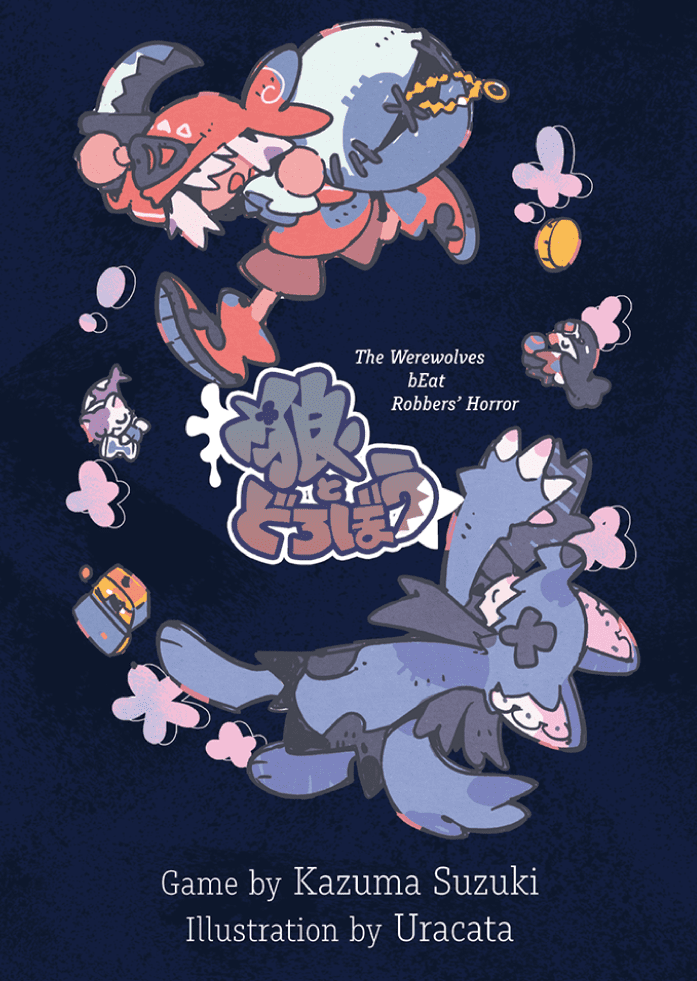
Imagine a remote village where greedy robbers and hungry werewolves wage a silent war. In The Werewolves bEat Robbers' Horror, you dive into this conflict, but with a twist: you don't know who your allies are until the cards start hitting the table. The game blends the tension of hidden role games (Mafia style) with the strategy of trick-taking, adding a malicious twist to the formula.
The goal is straightforward, but the execution is where the fun lies. Robbers aim to collect treasure chests, while werewolves want to capture the robbers. The masterstroke is the card strength mechanic: the type of card played by the lead player reverses the power logic. If the leader plays a chest, robber cards become stronger; if they play a robber, chests dominate. This creates a cat-and-mouse game where you must deduce your teammates by observing who is intentionally trying to win (or lose) specific tricks.
Unlike traditional trick-taking games, you aren't forced to follow the lead suit, which opens up a massive strategic window. You can play a weak card to avoid taking a chest (if you're a werewolf) or force opponents to play their high cards. To spice up the chaos, special cards like the Seer—who is nearly unbeatable—and the Dagger—which can severely penalize werewolves—are added to the mix. It's a game of instinct, observation, and bluffing, where communication happens through gameplay rather than endless arguments. Will you be the hunter or the prey?
The goal is straightforward, but the execution is where the fun lies. Robbers aim to collect treasure chests, while werewolves want to capture the robbers. The masterstroke is the card strength mechanic: the type of card played by the lead player reverses the power logic. If the leader plays a chest, robber cards become stronger; if they play a robber, chests dominate. This creates a cat-and-mouse game where you must deduce your teammates by observing who is intentionally trying to win (or lose) specific tricks.
Unlike traditional trick-taking games, you aren't forced to follow the lead suit, which opens up a massive strategic window. You can play a weak card to avoid taking a chest (if you're a werewolf) or force opponents to play their high cards. To spice up the chaos, special cards like the Seer—who is nearly unbeatable—and the Dagger—which can severely penalize werewolves—are added to the mix. It's a game of instinct, observation, and bluffing, where communication happens through gameplay rather than endless arguments. Will you be the hunter or the prey?
Gallery
Box and component photos
Tap any photo to open fullscreen. Photos submitted by the community or publisher.
Best player count
BGG community vote
3
OK
4
REC
5
OK
Soundtrack
Ambience suggested by Melodice
Loading playlist...
Where to Buy
Prices monitored daily
Finding best prices...
Prices unavailable at this time.
Price history — last 6 months (lowest new offer)
As an Amazon Associate I earn from qualifying purchases. Prices and availability subject to change.
Alert enabled!
Join the BoardGamesBot deals group
Get the best board game deals every day — without message spam.
Join the WhatsApp groupGame details
Mechanics, categories, families and credits
Mechanics
Categories
Families
Publisher
Tarte Games
Designer
Kazuma Suzuki
Artist
裏方 (Uracata)
Community
Data from BoardGameGeek
91owners
41wishlist
11want to play
Frequently Asked Questions
Quick answers before you buy
Is the game hard to learn?
Not at all! The basic rules are simple and the game flows quickly. The real challenge is learning how to read your opponents.
How long does a game last?
Quite fast, between 20 to 30 minutes, making it great for playing multiple rounds in a row.
Do I need many people to play?
The game works for 3 to 5 players. With 5, the deduction experience becomes even richer.
Is it similar to 'Werewolf' or 'Mafia'?
Yes, in the essence of secret identities, but the difference is that here you discover who is who through played cards, not through voting or talking.
Is the game language dependent?
None. The cards are intuitive and there are no complex texts, so anyone can play.
Who do you recommend this game for?
For those who enjoy card games, bluffing, and want something light for a group but with strategic depth.
Other Games You'll Like
Based on mechanics and theme