Ulm
DV Games, HUCH!, R&R Games · Board game · 2016
2–4 · best 3
45–75 min
Weight 2.7/5
Buy · from US$ 113.33
8.0
rating
Ludopedia
7.0
rating
BGG
Our Verdict
RECOMMENDED
If you enjoy light strategy with a historic vibe, Ulm offers fun around the cathedral.
Highlights
- Simple, quick rule
- Beautiful detailed map
- Nice blend of mechanics
Keep in mind
- Games may run long
- Influence can dominate
Rules manual not indexed yet
Upload the PDF rulebook to ask questions about this game with AI.
About the game
What you do in a play session
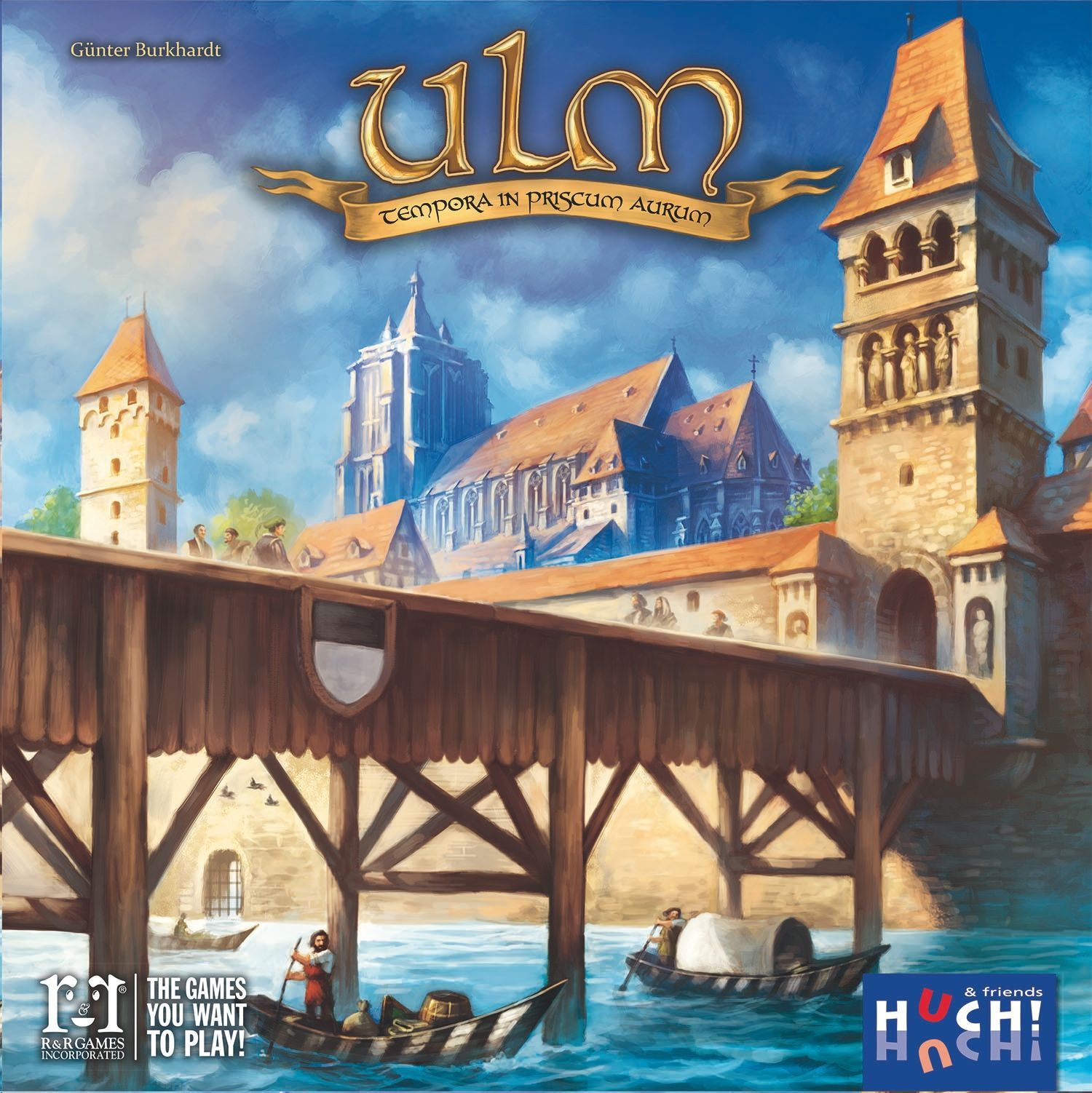
Ulm drops players into the bustling free imperial city at the dawn of the 16th century, when trade, art and the soaring cathedral dominate urban life. The game runs for ten rounds; each turn you place an action tile in the Cathedral area and carry out its three linked actions, causing the tower to rise steadily. As the cathedral climbs, you spread influence across neighborhoods, collect sets of goods—wood, wine, salt, textiles—and court the guilds and patricians that control the market. Area Majority/Influence mechanics make you vie for control of strategic zones, while bias gives an edge to players already entrenched. The Slide/Push mechanic shifts tiles along tracks, creating push‑chains that can flip the board’s balance. Victory points act as a resource: you may spend them to buy extra actions or improve your standing, adding an economic planning layer. The goal is straightforward—score more victory points than opponents before the tenth round, when the cathedral is finished—but reaching it requires juggling commerce, construction, and political alliances. With high‑quality components, a detailed city map, and easy‑to‑learn rules, Ulm offers a strategic experience that blends history and market dynamics without feeling heavy.
Gallery
Box and component photos
Tap any photo to open fullscreen. Photos submitted by the community or publisher.
Rules videos
Learn by watching before you open the box
In English

Best player count
BGG community vote
2
REC
3
BEST
4
REC
Soundtrack
Ambience suggested by Melodice
Loading playlist...
Where to Buy
Prices monitored daily
Finding best prices...
Prices unavailable at this time.
Price history — last 6 months (lowest new offer)
As an Amazon Associate I earn from qualifying purchases. Prices and availability subject to change.
Alert enabled!
Join the BoardGamesBot deals group
Get the best board game deals every day — without message spam.
Join the WhatsApp groupGame details
Mechanics, categories, families and credits
Mechanics
Categories
Families
Publisher
DV Games, HUCH!, R&R Games, Sharp Games, Swan Panasia Co., Ltd.
Designer
Günter Burkhardt
Artist
Michael Menzel
Community
Data from BoardGameGeek
4,722owners
718wishlist
129want to play
Frequently Asked Questions
Quick answers before you buy
How many players can play?
2 to 4 players.
What is the playing time?
Typically 45–75 minutes, depending on player count.
How complex is the game?
BGG weight 2.7/5 – easy to learn, with strategic depth.
What components are included?
City board, action tiles, resource tokens, influence markers, and a modular cathedral tower.
Who is the game best suited for?
Fans of medieval/renaissance themes and area‑control/set‑collection mechanics.
Other Games You'll Like
Based on mechanics and theme