—
rating
Ludopedia
5.8
rating
BGG
Our Verdict
RECOMMENDED
If you love fast, funny races with comic‑book flair, Warhamster Rally serves up quick fun and tactical depth.
Highlights
- Creative action‑point use
- Unique player powers
- Obstacle‑filled board
Keep in mind
- Movement planning can be tricky
- Basic component quality
Rules manual not indexed yet
Upload the PDF rulebook to ask questions about this game with AI.
About the game
What you do in a play session
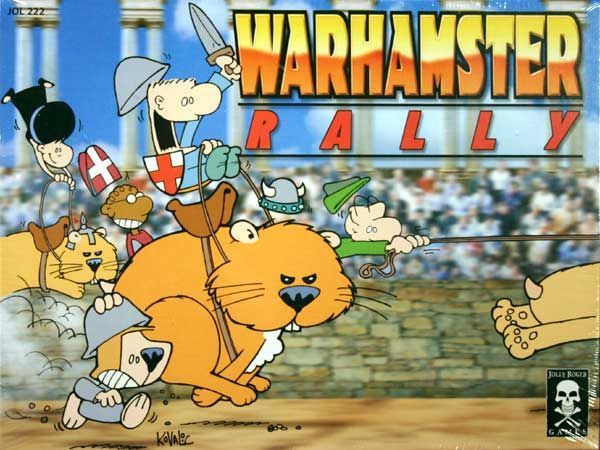
Warhamster Rally is the board‑game adaptation of the wild race featured in John Kovalic's Dork Tower comic strips. Three to five players take on the roles of the comic's characters, each trying to steer their hyper‑competitive Warhamsters toward the coveted Warhamster Cup. The board is a hex‑grid covered in arrows that dictate movement directions. Every round you flip over the movement card that will apply this turn and secretly pick the card for the next turn. Each card tells you how many spaces to move or turn, always relative to the arrow on the hex you currently occupy. The catch is that when you play a card you’re usually not yet on the hex it references, so you have to anticipate where you’ll end up.
The real spice comes from Action Points. Throughout the game you collect these points and can spend them to rescue yourself from a bad spot, mess with opponents, or trigger special abilities, reminiscent of the Trip Tickets system in Wildlife Adventure. This adds a puzzle‑like layer because there are often multiple ways to turn a dire situation around.
The track is littered with thematic hazards – aggressive Battle Budgies, juggling Jongleurs, mischievous Kobold Kin, and, of course, the monstrous rivals controlled by other players. Each character enjoys Variable Player Powers that slightly tweak how they use movement cards and action points, ensuring no two games feel the same. With a playtime of about 45 minutes and a light complexity rating, the game is perfect for fans of fast‑paced racing with a dash of humor and strategy. If you’ve ever laughed at Dork Tower comics, you’ll love seeing its cast sprinting for glory while trying not to get trampled by the competition.
The real spice comes from Action Points. Throughout the game you collect these points and can spend them to rescue yourself from a bad spot, mess with opponents, or trigger special abilities, reminiscent of the Trip Tickets system in Wildlife Adventure. This adds a puzzle‑like layer because there are often multiple ways to turn a dire situation around.
The track is littered with thematic hazards – aggressive Battle Budgies, juggling Jongleurs, mischievous Kobold Kin, and, of course, the monstrous rivals controlled by other players. Each character enjoys Variable Player Powers that slightly tweak how they use movement cards and action points, ensuring no two games feel the same. With a playtime of about 45 minutes and a light complexity rating, the game is perfect for fans of fast‑paced racing with a dash of humor and strategy. If you’ve ever laughed at Dork Tower comics, you’ll love seeing its cast sprinting for glory while trying not to get trampled by the competition.
Gallery
Box and component photos
Tap any photo to open fullscreen. Photos submitted by the community or publisher.
Best player count
BGG community vote
3
REC
4
BEST
5
BEST
Soundtrack
Ambience suggested by Melodice
Loading playlist...
Where to Buy
Prices monitored daily
Finding best prices...
Prices unavailable at this time.
Price history — last 6 months (lowest new offer)
As an Amazon Associate I earn from qualifying purchases. Prices and availability subject to change.
Alert enabled!
Join the BoardGamesBot deals group
Get the best board game deals every day — without message spam.
Join the WhatsApp groupGame details
Mechanics, categories, families and credits
Mechanics
Categories
Families
Publisher
Jolly Roger Games
Designer
Frank Branham
Artist
John Kovalic
Community
Data from BoardGameGeek
479owners
25wishlist
11want to play
Frequently Asked Questions
Quick answers before you buy
How many players can join?
3 to 5 players.
What is the playing time?
About 45 minutes.
What is the complexity level?
Light (around 1.8/5 on BGG).
What components are included?
Hex board, movement cards, action‑point tokens, Warhamster miniatures, and obstacle markers.
Do I need to know the Dork Tower comic?
No, but fans will appreciate the extra humor.
How do Action Points work?
You earn them during the game and can spend them to rescue yourself, hinder opponents, or trigger special abilities.
What are the Variable Player Powers?
Each character has a unique ability that tweaks how they use movement cards and action points, leading to different strategies.
Other Games You'll Like
Based on mechanics and theme