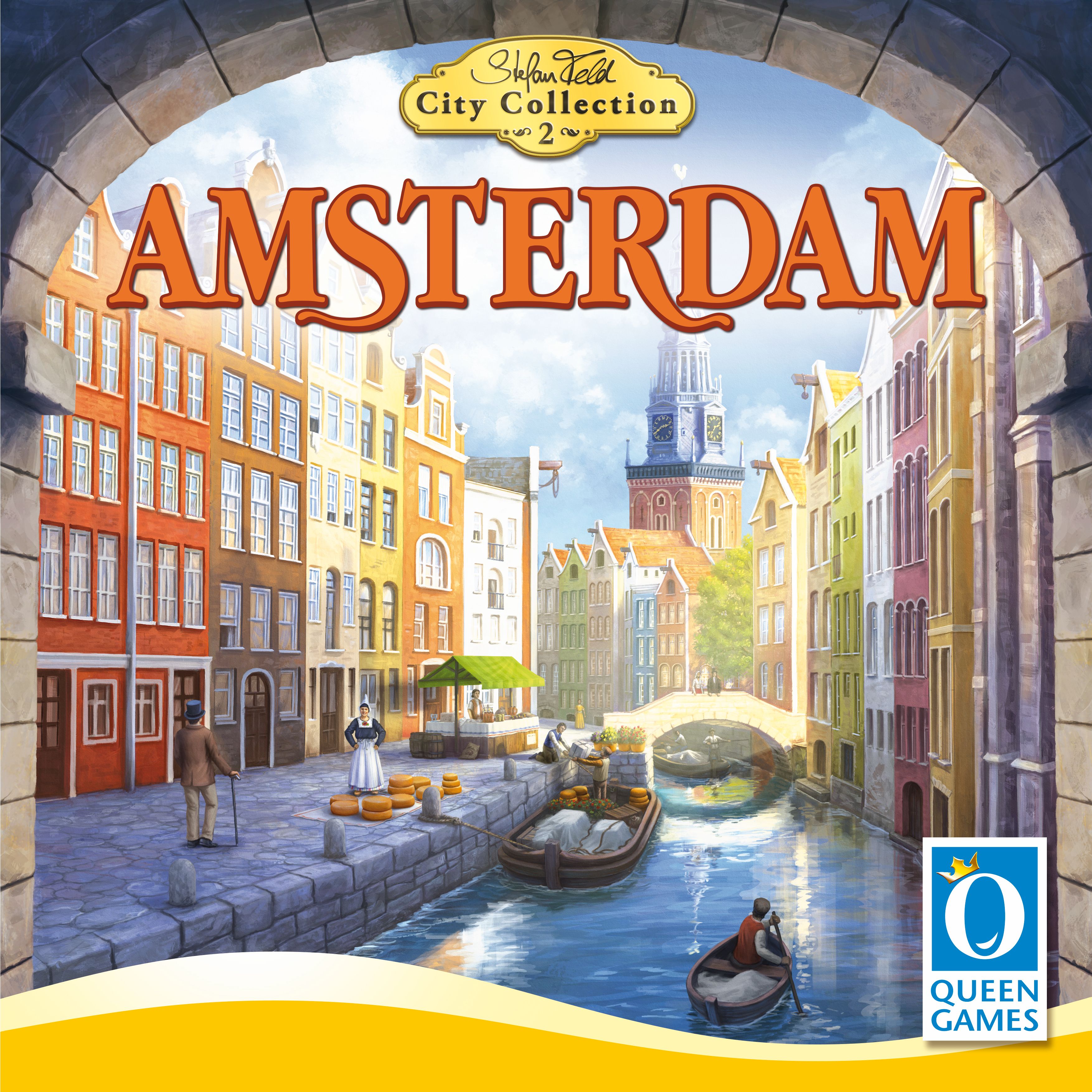
Amsterdam — Prices
Queen Games, Evrikus, White Goblin Games · Board game · 2022If you enjoy games with long-term planning and a touch of controlled luck, Amsterdam might become your new favorite. It's a game that rewards patience and strategy!
- Long-term planning
- Creative resource management
- High replayability
- Well-integrated theme
- Dice dependency
- Initial learning curve
About the game
What you do in a play session
And speaking of planning, the dice mechanic is the heart of Amsterdam. After choosing your card, colored dice are rolled. You pick a die and gain cubes of that color, but here's the catch: the number of cubes you get depends on the number rolled. Then comes the clever part: you don't use these cubes immediately! You place them on your personal 'windrose,' indicating how many future turns you want them to become available. It's that 'delayed gratification' thing, you know? Waiting a bit can yield much more. These cubes are the currency to buy the cards you've taken, to grab goods scattered around the city, or to transport everything through the canals to warehouses. Delivering these goods earns points, as do the bonuses on the cards. The game lasts 12 rounds, and whoever has the most points at the end claims the fame and glory (and the win!). It's a game that demands strategic vision and good resource management, with a touch of luck from the dice to keep things exciting.
Gallery
Box and component photos
Tap any photo to open fullscreen. Photos submitted by the community or publisher.
Rules videos
Learn by watching before you open the box


Best player count
BGG community vote
Soundtrack
Ambience suggested by Melodice
Where to Buy
Prices monitored daily
Price history — last 6 months (lowest new offer)
As an Amazon Associate I earn from qualifying purchases. Prices and availability subject to change.
Alert enabled!
Join the BoardGamesBot deals group
Get the best board game deals every day — without message spam.
Join the WhatsApp groupGame details
Mechanics, categories, families and credits
Mechanics
Categories
Families
Community
Data from BoardGameGeek
Frequently Asked Questions
Quick answers before you buy
How many people can play Amsterdam?
How long does a game take?
Is it a difficult game to learn?
Who would you recommend Amsterdam to?
Is there a lot of player interaction?
Is it worth playing solo?
Other Games You'll Like
Based on mechanics and theme