Macao — Prices
alea, Ravensburger AG, Rio Grande Games · Board game · 2009
2–4 · best 3
50–100 min
Weight 3.1/5
Buy · from US$ 28.95
8.2
rating
Ludopedia
7.4
rating
BGG
Our Verdict
FOR GENRE FANS
Perfect for those who love dense 'euro' games and enjoy planning several moves ahead. The cube programming system is brilliant!
Highlights
- Innovative action programming
- High strategic depth
- Well-integrated nautical theme
- Multiple scoring paths
Keep in mind
- Steep learning curve
- Moderate language dependence
Rules manual not indexed yet
Upload the PDF rulebook to ask questions about this game with AI.
About the game
What you do in a play session
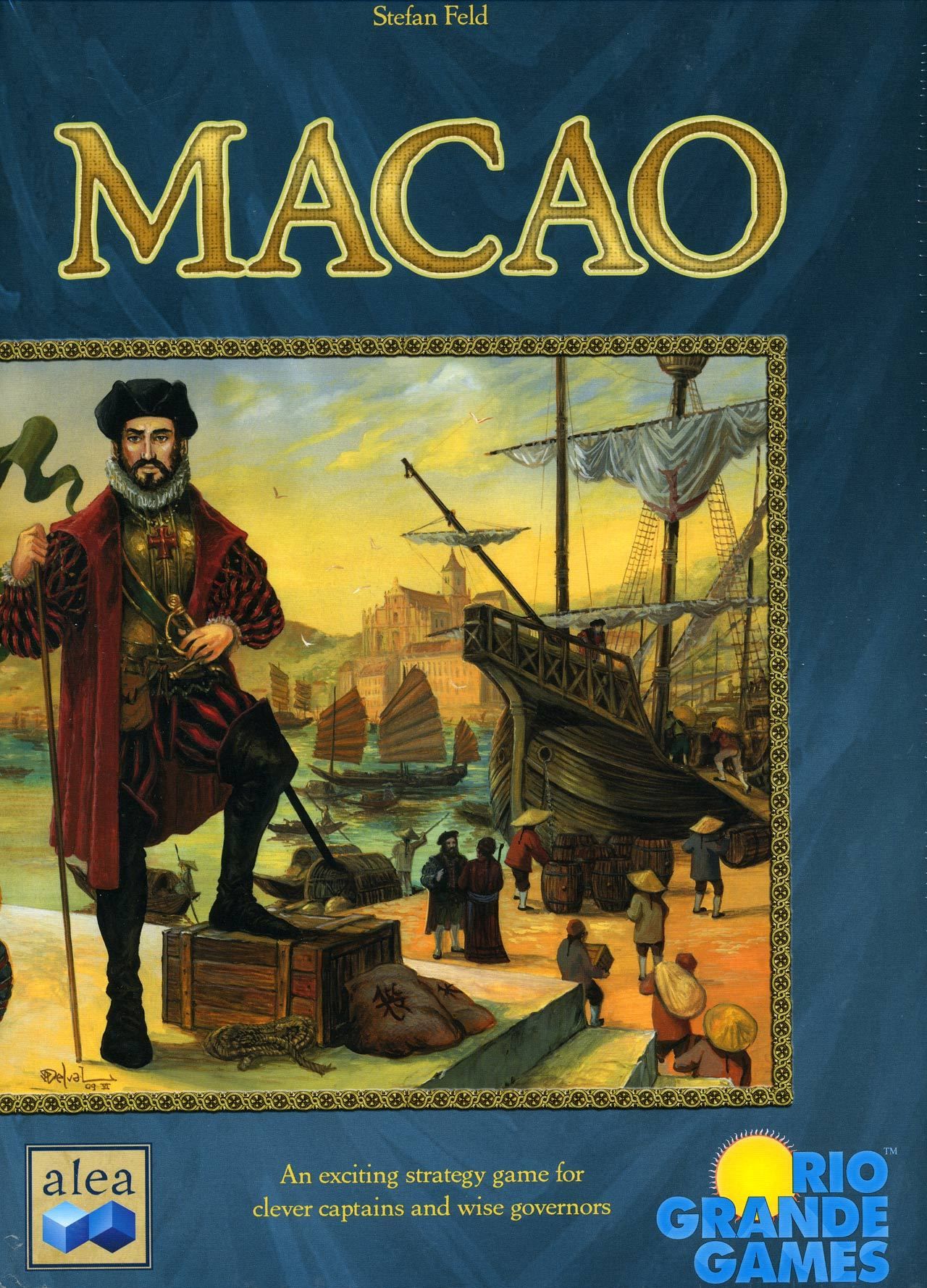
Imagine yourself as a daring adventurer in the late 17th century, seeking fortune in Macao, the mysterious port city on China's southern coast that served as a Portuguese trading post. Whether you take the role of a fearless captain, an influential governor, a skilled craftsman, or a keen scholar, your goal is simple: accumulate the most prestige through a tightly woven global strategy.
The game unfolds over 12 rounds, and this is where it gets interesting. Each round, you select a card from a display (some are available from the start, others are revealed as the game progresses). These cards provide special abilities, though the most powerful ones require more resources to activate. The heart of the game, however, is the 'ship's wheel'. One player rolls six different-colored dice, and everyone chooses two of them. The die value determines how many cubes of that color you place on your wheel, but there's a twist: you place these cubes in future positions. In essence, you are programming your resources for upcoming rounds!
As the wheel rotates and your cubes become available, you use these action points to do everything: activate the cards you've collected, buy city quarters to gather goods, sail across Europe to deliver those goods, acquire gold coins, or even climb the turn order track to act before your opponents. It's a game of long-term planning, where you must balance hand management with transport logistics and city building. The player who best manages their resources and opportunities over the 12 rounds claims victory. Part of the Alea Big Box series, it has a significant weight, so get ready to put your brain to work with its tactical complexity!
The game unfolds over 12 rounds, and this is where it gets interesting. Each round, you select a card from a display (some are available from the start, others are revealed as the game progresses). These cards provide special abilities, though the most powerful ones require more resources to activate. The heart of the game, however, is the 'ship's wheel'. One player rolls six different-colored dice, and everyone chooses two of them. The die value determines how many cubes of that color you place on your wheel, but there's a twist: you place these cubes in future positions. In essence, you are programming your resources for upcoming rounds!
As the wheel rotates and your cubes become available, you use these action points to do everything: activate the cards you've collected, buy city quarters to gather goods, sail across Europe to deliver those goods, acquire gold coins, or even climb the turn order track to act before your opponents. It's a game of long-term planning, where you must balance hand management with transport logistics and city building. The player who best manages their resources and opportunities over the 12 rounds claims victory. Part of the Alea Big Box series, it has a significant weight, so get ready to put your brain to work with its tactical complexity!
Gallery
Box and component photos
Tap any photo to open fullscreen. Photos submitted by the community or publisher.
Rules videos
Learn by watching before you open the box
In English

Best player count
BGG community vote
2
REC
3
BEST
4
REC
Soundtrack
Ambience suggested by Melodice
Loading playlist...
Where to Buy
Prices monitored daily
Finding best prices...
Prices unavailable at this time.
Price history — last 6 months (lowest new offer)
Alert enabled!
Join the BoardGamesBot deals group
Get the best board game deals every day — without message spam.
Join the WhatsApp groupGame details
Mechanics, categories, families and credits
Mechanics
Categories
Families
Publisher
alea, Ravensburger AG, Rio Grande Games, White Goblin Games
Designer
Stefan Feld
Artist
Harald Lieske, Julien Delval
Community
Data from BoardGameGeek
6,951owners
2,254wishlist
708want to play
Frequently Asked Questions
Quick answers before you buy
Is the game very difficult?
Yes, it's considered an 'Expert' game. With a BGG weight of 3.13, it requires significant planning and attention to detail; it's not for casual gaming.
How long does a game take?
Expect to spend between 50 to 100 minutes. Playtime may vary depending on the group's familiarity with the programming mechanic.
Is there language dependence?
Yes, there is moderate language dependence. You'll need a translation sheet or translated cards to understand the special abilities.
How many players can play?
From 2 to 4 players. It works well in any configuration, but the competition for dice and cards gets more intense with more players.
What is the overall feel of the game?
It feels like a puzzle. You're planning something for round 5 while you're still in round 2, trying to predict what will be needed.
Other Games You'll Like
Based on mechanics and theme