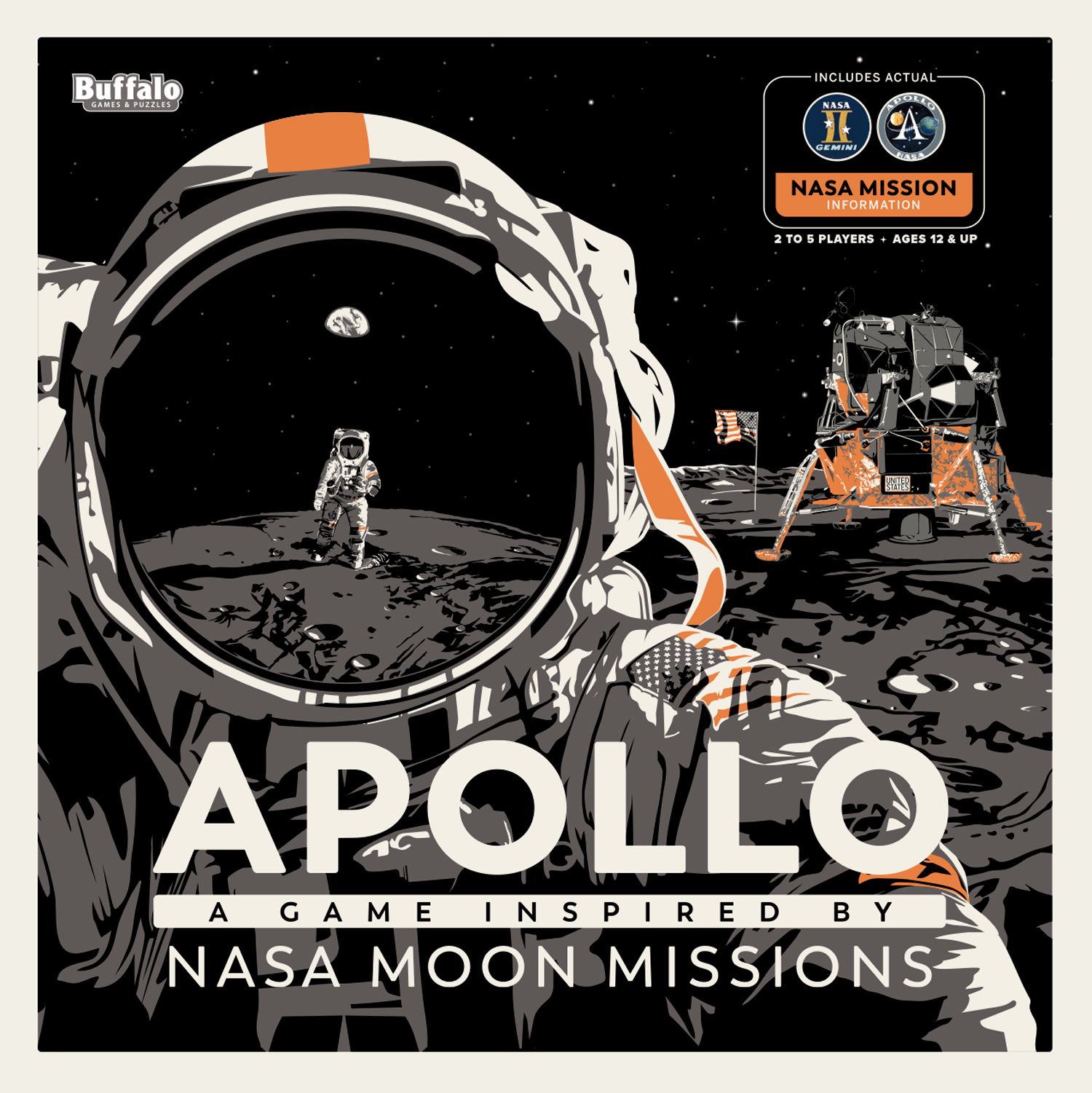
Apollo: A Game Inspired by NASA Moon Missions — Prices
Buffalo Games, Pandasaurus Games · Board game · 2020
2–5 · best 3
30–60 min
Weight 2.8/5
Buy · from US$ 8.34
5.9
rating
Ludopedia
6.2
rating
BGG
Our Verdict
RECOMMENDED
Perfect for those who love tension and cooperative games that put the group's communication to the test.
Highlights
- Fantastic historical immersion
- Addictive real-time tension
- Well-executed asymmetric roles
- True sense of achievement upon winning
Keep in mind
- Requires translated sheets or cards
- Can be chaotic for beginners
Rules manual not indexed yet
Upload the PDF rulebook to ask questions about this game with AI.
About the game
What you do in a play session
Ever wondered what it feels like to have the fate of humanity in your hands while oxygen runs low and the radio starts to crackle? In Apollo, you dive into NASA's golden age to relive the missions that put man on the moon. But don't be fooled: this isn't a relaxing simulator. It's a frantic cooperative experience where communication is your most precious tool and, simultaneously, your biggest bottleneck.
The dynamics split the table into two poles: Mission Control on Earth and the Astronauts inside the command module. While the astronauts struggle to keep life support, power, and flight control systems operational by rolling and allocating dice, they realize they don't have all the answers. That's where Mission Control comes in, monitoring everything via control panels and providing the crucial information and bonuses needed to keep the crew from becoming space dust.
The game simulates the real tension of historical missions. If you fail to maintain the flight systems, disasters strike — and nothing is worse than losing communication with Earth in the middle of a critical maneuver. To win, the team must complete flight stages and conduct scientific experiments, all under real-time pressure. It's a test of coordination, composure under pressure, and teamwork. If you can understand each other amidst the chaos, victory is glorious; if not, well... the Moon is a very lonely place for those left behind.
The dynamics split the table into two poles: Mission Control on Earth and the Astronauts inside the command module. While the astronauts struggle to keep life support, power, and flight control systems operational by rolling and allocating dice, they realize they don't have all the answers. That's where Mission Control comes in, monitoring everything via control panels and providing the crucial information and bonuses needed to keep the crew from becoming space dust.
The game simulates the real tension of historical missions. If you fail to maintain the flight systems, disasters strike — and nothing is worse than losing communication with Earth in the middle of a critical maneuver. To win, the team must complete flight stages and conduct scientific experiments, all under real-time pressure. It's a test of coordination, composure under pressure, and teamwork. If you can understand each other amidst the chaos, victory is glorious; if not, well... the Moon is a very lonely place for those left behind.
Gallery
Box and component photos
Tap any photo to open fullscreen. Photos submitted by the community or publisher.
Rules videos
Learn by watching before you open the box

Best player count
BGG community vote
2
REC
3
BEST
4
REC
5
OK
Soundtrack
Ambience suggested by Melodice
Loading playlist...
Where to Buy
Prices monitored daily
Finding best prices...
Prices unavailable at this time.
Price history — last 6 months (lowest new offer)
As an Amazon Associate I earn from qualifying purchases. Prices and availability subject to change.
Alert enabled!
Join the BoardGamesBot deals group
Get the best board game deals every day — without message spam.
Join the WhatsApp groupGame details
Mechanics, categories, families and credits
Mechanics
Categories
Families
Publisher
Buffalo Games, Pandasaurus Games
Designer
Jonathan Gilmour-Long, Sarah Addison
Artist
Thomas Römer
Community
Data from BoardGameGeek
3,539owners
414wishlist
25want to play
Frequently Asked Questions
Quick answers before you buy
Is the game too complex?
It has a medium weight (2.8), but the complexity comes more from real-time coordination than dense rules. If you like co-ops, you'll pick it up quickly.
Do I need English to play?
Yes, there is a moderate language dependency. You'll need translated sheets or cards to fully enjoy the experience.
What is the ideal player count?
It works well from 2 to 5, but with more people, the communication tension increases, making the experience more fun and chaotic.
How long does a game take?
Between 30 to 60 minutes, depending on the chosen mission and the team's skill.
Is it recommended for people who dislike luck?
The game uses dice, but the strategy lies in how you allocate those results and how Mission Control mitigates the risks.
Other Games You'll Like
Based on mechanics and theme