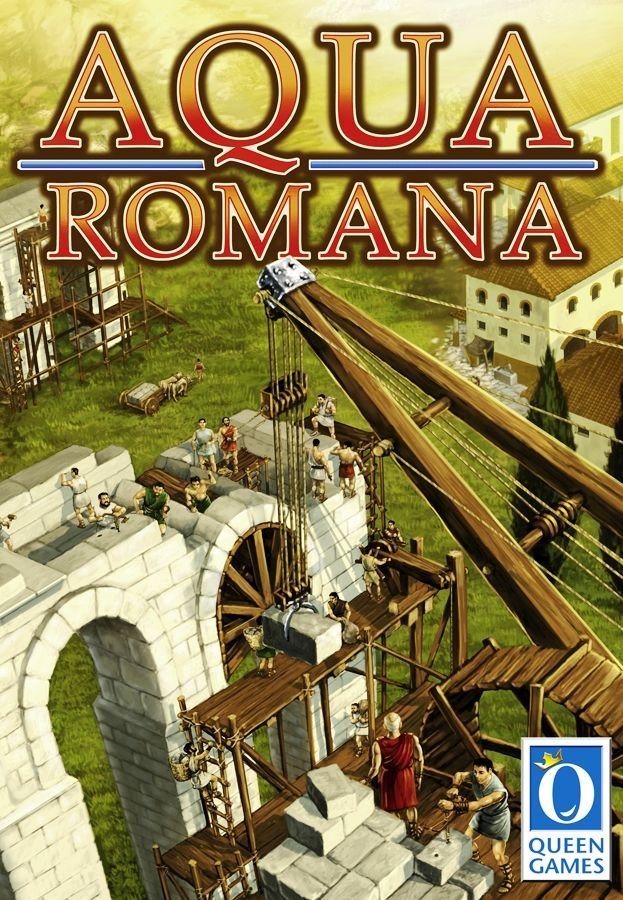
Aqua Romana — Prices
Queen Games, Piatnik · Board game · 2005
2–4 · best 3
45–60 min
Weight 2.2/5
Buy · from US$ 32.49
7.3
rating
Ludopedia
6.3
rating
BGG
Our Verdict
RECOMMENDED
If you enjoy abstract strategy games with a historical twist, Aqua Romana is for you. The game elegantly blends planning and network building.
Highlights
- Simple yet deep mechanics
- Engaging brainy challenge
- Well-integrated historical theme
Keep in mind
- Can be slow for some
- Limited player interaction
Rules manual not indexed yet
Upload the PDF rulebook to ask questions about this game with AI.
About the game
What you do in a play session
In Aqua Romana, you are an architect in Ancient Rome tasked with building aqueducts to supply the city with drinking water. The game is a mix of abstract strategy and network building, where you must carefully plan to create the longest and most efficient aqueducts. Each player controls workers and architects, who place tiles to extend the aqueducts. When an aqueduct is closed (reaching the edge of the board or encountering an incompatible tile), you earn points based on the aqueduct's length. If an aqueduct crosses a tile for the second time, you earn extra points. The game ends when no one can play more tiles, and the winner is the player with the most points. With simple yet deep mechanics, Aqua Romana is a brainy challenge that will appeal to strategy game fans.
Gallery
Box and component photos
Tap any photo to open fullscreen. Photos submitted by the community or publisher.
Rules videos
Learn by watching before you open the box
In English

Best player count
BGG community vote
2
REC
3
BEST
4
REC
Soundtrack
Ambience suggested by Melodice
Loading playlist...
Where to Buy
Prices monitored daily
Finding best prices...
Prices unavailable at this time.
Price history — last 6 months (lowest new offer)
As an Amazon Associate I earn from qualifying purchases. Prices and availability subject to change.
Alert enabled!
Join the BoardGamesBot deals group
Get the best board game deals every day — without message spam.
Join the WhatsApp groupGame details
Mechanics, categories, families and credits
Mechanics
Categories
Families
Publisher
Queen Games, Piatnik
Designer
Martin Schlegel
Artist
Michael Menzel
Community
Data from BoardGameGeek
2,468owners
220wishlist
52want to play
Frequently Asked Questions
Quick answers before you buy
How many players can play?
2 to 4 players.
How long does a game last?
About 45 to 60 minutes.
What is the game's complexity?
BGG weight of 2.1598, indicating medium complexity.
Is the game language-dependent?
No, the game is language-independent.
Who is it recommended for?
For fans of abstract strategy and network building games.
Other Games You'll Like
Based on mechanics and theme