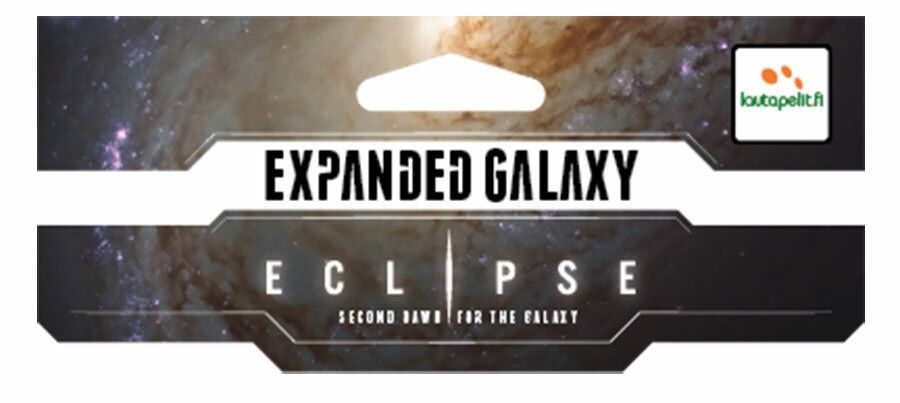
What is your question about Eclipse: Second Dawn for the Galaxy – Expanded Galaxy?
Ask before downloading the manual: the assistant was trained on this file and answers instantly, citing the exact page.
Ask questions about the game
Ask anything about Eclipse: Second Dawn for the Galaxy – Expanded Galaxy: rules, setup, components, complexity, price, or whether it fits your group.
Write your question first. You will create your free account to see the answer — it takes 20 seconds.
Full rulebook
Browse the manual or download the original PDFFull manual text available to read Open text
expanded galaxy
As fighting among the Seven drags on without a dominant force emerging, paths to victory materialize for additional factions who eagerly join the expanding conflict. Even former adversaries consider alliances to thwart the new entrants. The times are interesting indeed.
This expansion provides the rules and components needed to play Eclipse with up to nine players and an optional Alliances Variant for enhancing diplomacy with 4+ players. To include any of these elements in your games, follow the applicable instructions provided below.
contents
Sector Hexes: 6 Outer Sectors (320–325).
Action Markers: Primary Turn Marker, Secondary Turn Marker.
Ship Part Tiles: 2 Antimatter Cannons, 2 Electron Computers, 2 Fusion Sources, 1 Gauss Shield, 2 Gluon Computers, 3 Hulls, 6 Improved Hulls, 2 Ion Cannons, 1 Phase Shield, 4 Plasma Cannons, 4 Plasma Missiles, 6 Positron Computers, 1 Tachyon Source.
Extra Tech Tiles: Orbital, Advanced Robotics, Monolith, Wormhole Generator, Advanced Labs, Fusion Drive, Fusion Source, Improved Hull, Positron Computer, Advanced Economy, Antimatter Cannon, Quantum Grid, Plasma Cannon, Phase Shield, Tachyon Source, Gluon Computer, Plasma Missile, Advanced Mining.
Extra Reputation Tiles: 2 ones, 2 twos, 3 threes, 2 fours.
Alliance Tiles: 3 Flare, 3 Vortex, 3 Nova.
Turn Order Variant (requires Turn Order Variant expansion): 3 Next Turn Order Tiles, Turn Order Track.
NOTE: The Extra Tech Tiles and Extra Reputation Tiles are marked with a small notch and person symbol to distinguish them from their base game counterparts.
Second dawn for the galaxy
credits
Game design: Touko Tahkokallio
Graphic design: Jere Kasanen
Editors: Sampo Sikiö, Van Willis
Illustration: Kory Lynn Hubbell
Publisher: © 2019 Lautapelit.fi Oy, lautapelit.fi
Note:
Game rules and hexes use elements of images created by ESA/Hubble and released with their kind permission.
eclipse typeface is based on Franchise by Derek Weathersbee.
---
7–9-player games
7–9-player games are meant for experienced players. The game is tighter and more unforgiving, but also allows for grander strategies and more intricate tactical situations.
Note: Planta and Descendants of Draco are not recommended for 7–9-player games.
Sectors 320–325 can also be used in 2–6-player games: to do so, include them with the other Outer (III) Sectors before shuffling the Outer (III) Sector stack with the number of Sectors indicated for your player count.
Setup
Before Setup, add the Extra Tech Tiles, Extra Reputation Tiles, Ship Part Tiles, and Sectors 320–325 to their corresponding base game components.
Then, follow all normal setup instructions with the following changes:
• Use the numbers indicated for 7–9 players when drawing starting Tech Tiles and forming the Outer (III) Sector stack.
• Place random Inner (I) and Middle (II) Sectors facedown in every Zone in Rings I and II (this will help you find the locations for the Starting Sectors).
• Use the Starting Zones indicated for 7–9 players when placing Starting Sectors; Starting Sectors may be oriented freely as long as at least one Wormhole is adjacent to a Middle (II) Zone.
• Orient each Guardian Sector (if any) so that its arrow matches the Starting Layout illustration for 7–9 players.
• Each player returns one Population Cube from the Population Track of their choice to their Species Tray (the cube is removed from the game).
Cleanup phase
Use the numbers indicated for 7–9 players when drawing Tech Tiles during the Cleanup Phase.
Tech Tiles (Cleanup Phase)
7 players: 22
8 players: 24
9 players: 26
Outer Sectors
7 players: 22
8 players: 24
9 players: 24
Tech Tiles (Starting)
7 players: 10
8 players: 11
9 players: 11
---
7–9-player games
7–9-player games are meant for experienced players. The game is tighter and more unforgiving, but also allows for grander strategies and more intricate tactical situations.
Note: Planta and Descendants of Draco are not recommended for 7–9-player games.
Sectors 320–325 can also be used in 2–6-player games: to do so, include them with the other Outer (III) Sectors before shuffling the Outer (III) Sector stack with the number of Sectors indicated for your player count.
Setup
Before Setup, add the Extra Tech Tiles, Extra Reputation Tiles, Ship Part Tiles, and Sectors 320–325 to their corresponding base game components.
Then, follow all normal setup instructions with the following changes:
• Use the numbers indicated for 7–9 players when drawing starting Tech Tiles and forming the Outer (III) Sector stack.
• Place random Inner (I) and Middle (II) Sectors facedown in every Zone in Rings I and II (this will help you find the locations for the Starting Sectors).
• Use the Starting Zones indicated for 7–9 players when placing Starting Sectors; Starting Sectors may be oriented freely as long as at least one Wormhole is adjacent to a Middle (II) Zone.
• Orient each Guardian Sector (if any) so that its arrow matches the Starting Layout illustration for 7–9 players.
• Each player returns one Population Cube from the Population Track of their choice to their Species Tray (the cube is removed from the game).
Cleanup phase
Use the numbers indicated for 7–9 players when drawing Tech Tiles during the Cleanup Phase.
Tech Tiles
7 players: 22
8 players: 24
9 players: 26
Outer Sectors
7 players: 22
8 players: 24
9 players: 24
Tech Tiles (Starting)
7 players: 10
8 players: 11
9 players: 11
Tips for games with 7–9 players
During Setup, orient your Starting Sector wisely; starting positions are not completely equal (some can access two Middle Sectors from the start), and the orientation of your neighbors’ Starting Sectors can present possible threats and opportunities for Diplomatic Relations.
The Middle and Inner Sectors will be much more contested than in games with fewer players, so it is often vital to ensure you secure a position in at least the Middle Ring.
The board will be more crowded. If you are locked out of expansion, the Wormhole Generator may offer you a way to gain more ground (the Extra Tech Tiles contain one additional Wormhole Generator).
7- AND 9-PLAYER GAME
Secondary Turn marker
Start player Sector with primary Turn marker
7- AND 8-PLAYER GAME
7-PLAYER GAME
8-PLAYER GAME
Secondary Turn marker
Secondary Turn marker
Secondary Turn marker
Starting layout for 7–9 players
---
Simultaneous Play Variant for 7–9 Players
This variant can be used to speed up games with 7–9 players by allowing the players holding the Primary and Secondary Turn Markers to take Turns simultaneously. However, this can also cause timing issues which some groups may feel unable to easily resolve. Consider these tradeoffs when deciding whether to use this variant.
Note: This variant is not compatible with the Turn Order Variant and not recommended for use with the Warp Portals module.
Turn order: Before beginning each Round, give the Primary Turn Marker to the player with the Start Player Tile and the Secondary Turn Marker to the player indicated in the Starting Layout illustration for 7–9 players (4 players clockwise from the Start Player in 7–8-player games, and 5 players clockwise in the 9-player game).
Rules: When holding the Primary or Secondary Turn Marker, you may take one Action or Reaction or Pass while adhering to the following restrictions:
• Only the player with the Primary Turn Marker may take the Research Action.
• Once you have taken one Action or Reaction or Passed, you must immediately pass your Turn Marker clockwise to the next player.
• A single player cannot hold both Turn Markers at the same time; wait to pass your Turn Marker until the recipient has passed the other Turn Marker.
• If neither player is willing to take their Turn due to conflicting interests, the player who has had their Turn Marker longest must take their Turn first.
Tips for simultaneous play: To ensure that the game flows smoothly, announce what you are doing on your Turn (e.g., Build, Explore, Pass). No backtracking should be allowed unless everyone agrees it does not affect any of the other players.
Primary Turn Marker
Secondary Turn Marker
---
Alliances Variant
This variant allows players with Diplomatic Relations to found an Alliance. Allied Ships do not Pin each other and battle jointly against their opponents. At the end of the game, Allied players share their points and win or lose together.
Note: Alliances are not used in 2- or 3-player games.
Forming an alliance: At any time during either player’s Turn, two players with Diplomatic Relations may found an Alliance while adhering to the following restrictions:
• You can only be part of one Alliance.
• A maximum of two players may belong to the same Alliance in games with 4–5 players.
• A maximum of three players may belong to the same Alliance in games with 6+ players; a third player may join an Alliance at any time during any of the applicable players’ Turns if they have Diplomatic Relations with either Ally, and both founders agree.
Each player that joins an Alliance places a matching Alliance Tile faceup next to their Species Board.
Leaving an alliance: You can leave an Alliance before taking an Action or Reaction or Passing on any of your Turns prior to the last Round of the game by flipping your Alliance Tile with the Betrayer side faceup.
• The other players in the Alliance keep their Alliance Tiles faceup.
• Leaving an Alliance does not affect your Diplomatic Relations nor give you the Traitor Card; however, if your Ships are in a Sector where your former Allies have a Ship or Control at the end of your Action or Turn, it is considered an Act of Aggression.
• You may not rejoin an Alliance you have left.
Effects of an Alliance: Players in the same Alliance are not considered opponents and are subject to the following benefits and restrictions:
Action Phase
• Allied Ships do not Pin each other; they are considered collectively when determining Pinning by opponents.
• The presence of your Ships at the end of your Action or Turn in a Sector where your Ally has a Ship or Control does not count as an Act of Aggression.
Flare Alliance
Nova Alliance
Vortex Alliance
Betrayer side
ALLIANCE example
Green and Red are part of the Nova Alliance. Green has two Interceptors and Red has one Interceptor in a Sector. Their opponent Blue has two Dreadnoughts in the same Sector. Either Green or Red may still move one Ship out of the Sector. Green or Red may use the Influence action to place an Influence Disc on the neighboring Sector.
---
Combat Phase
• Allied players cannot attack each other.
• In combat, players in the same Alliance fight on the same side against opponents instead of in separate battles. If one of the Allies is the Defender, all other allies are also considered Defenders for Initiative ties.
• Allied Ships are considered collectively when assigning dice from non-player opponent Attacks; if there are multiple similar targets in an Alliance, dice are first assigned to the Ships of the player who entered the Sector last.
• Allied players draw Reputation Tiles separately for the Ships they individually destroyed, in the order they entered the Sector.
• If multiple Allies are in a Sector where an Influence Disc can be placed at the end of the Combat Phase, players decide whether to place an Influence Disc in order of player entry to the Sector.
Game End
• Faceup Alliance Tiles are worth 2 VP.
• Facedown (Betrayer) Alliance Tiles are worth -3 VP.
• Allied players share their points and win or lose together; sum the VP of each player in the same Alliance, then divide that total by the number of players in the Alliance (rounded down). If this score is higher than all other opponent scores, players in the Alliance share the win. In the case of a tie, an Alliance’s Resource total is calculated using the same method.
FAQ
Q: What happens if the Descendants of Draco and their Ally both have Ships in a Sector containing Ancients?
A: A battle between the Ally and the Ancients ensues; the Descendants of Draco are not allowed to participate.
Q: If I leave an Alliance while my Ally has Ships in Sectors I Control, do they receive the Traitor Tile or do I?
A: You become the Traitor since the conflict happened because of your actions.
Q: In a battle between an Alliance of two players and a single enemy, how are the Reputation Tiles allocated to the Allied players if the single player’s Ships are destroyed by a stalemate?
A: Assign Ships destroyed this way one at a time to each Ally in the order they entered the Sector, largest to smallest.
Q: Does the Rho Indi Syndicate lose VP for holding an Alliance Tile with the Betrayer side faceup?
A: Yes.
---
Why ask BoardGamesBot
Instead of flipping through the whole manual- Accurate answers Based exactly on this manual, with the source page.
- Save time Find the rule in seconds, without flipping 6 pages.
- Anytime Settle rules mid-game, straight from your phone.
- 100% free Create your free account and start using it now.
How it works
Three steps to the answer- 1 Ask your question Type your question about this game's rules.
- 2 Create your free account Takes 20 seconds — it only saves your history.
- 3 Get the answer The AI finds the exact rule and cites the manual page.
Expansion for
Published additional content
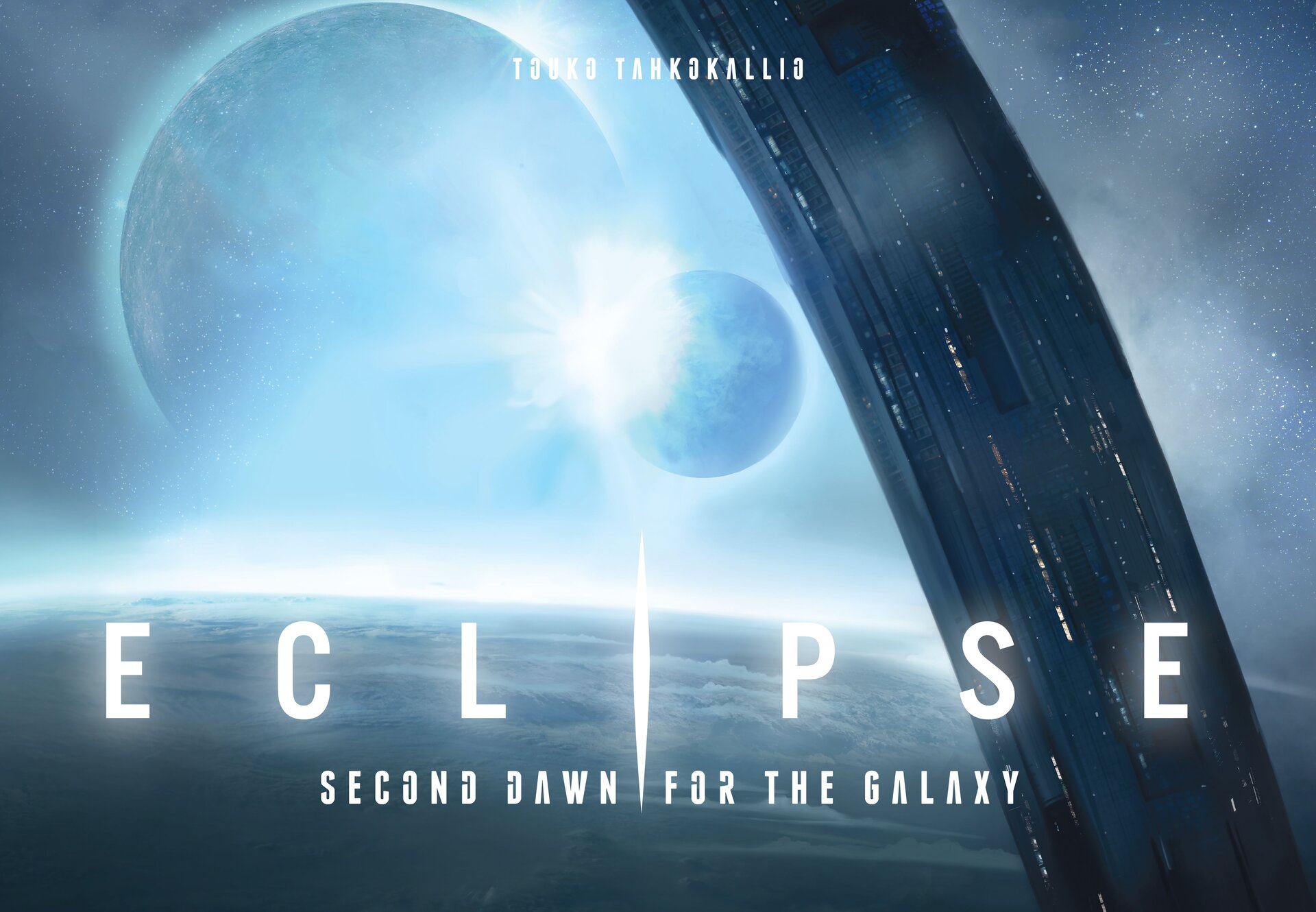
Manual published by the publisher · for rules reference only. More about the game on BoardGameGeek and Ludopedia .