How to Play Carcassonne: The Peasant Revolts
Hans im Glück · Board game · 2020What do you want to do now
Ask anything about Carcassonne: The Peasant Revolts: rules, setup, components, complexity, price, or whether it fits your group.
Video: How to Play
Start here, then follow the written guide
Step by step
Game Objective
In this mini-expansion, the theme is deciding whether you want to protect yourself against rebellious peasants (and thus direct their anger towards your fellow players) or if you prefer to let things happen. The overall game objective remains the same as in base Carcassonne, with the addition of new scoring and meeple protection dynamics related to peasant revolts.
Setup
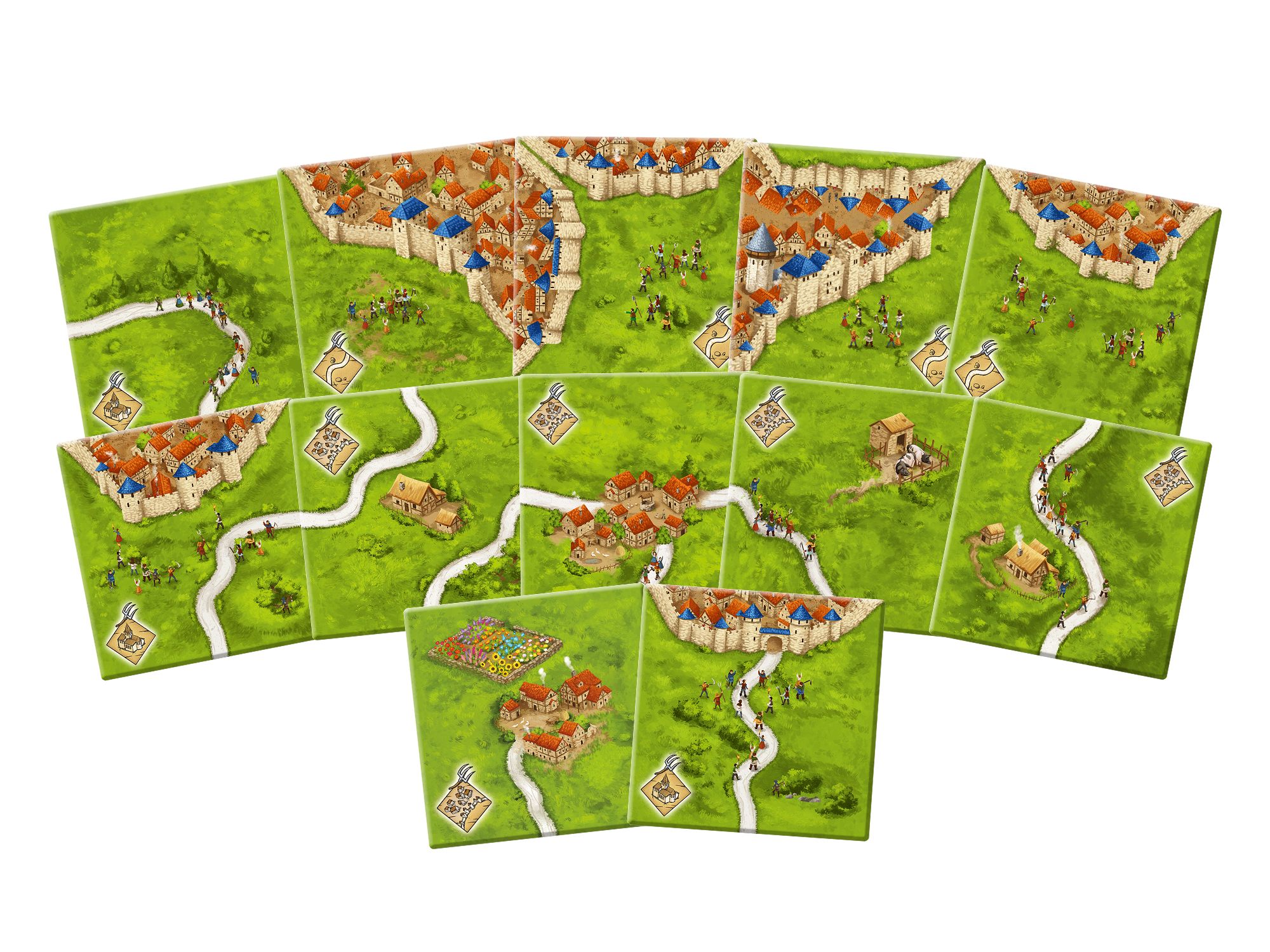
- Shuffle the 12 terrain tiles from this mini-expansion.
- Place 3 of them back in the box (without looking). These tiles will not be used in this game.
- Shuffle the remaining 9 tiles with the other terrain tiles from the base game.
This expansion was developed for the Carcassonne base game. All rules remain the same. You can combine The Peasant Revolts with other expansions, but at your own risk, meaning there will be no official rules for these combinations.
Game Flow
The game flow follows the rules of base Carcassonne. The main addition occurs when a player draws a peasant revolt tile:
- The peasant revolt: As soon as you draw a peasant revolt tile, a revolt happens. Place the tile in front of you.
- Meeple check: Check if one or more of your meeples are on features shown on the tile's symbol (city, road, or monastery), and if these meeples are "unprotected" or "protected."
- Revolt effects:
- All your unprotected meeples that are on the respective features must be immediately returned to your supply.
- Each protected meeple that is on the respective features scores 2 points. Protected meeples remain protected after the revolt.
- The peasant revolt passes to the next player: If you do not have to return a meeple to your supply, the peasant revolt advances and affects the player to your left. They also check, in the same way described above, if the revolt affects them and if they score points for protected meeples. If the player does not have to return a meeple, the next player in line checks the meeples in those areas and so on. This continues until a player has to return at least 1 meeple to their supply, or none of the players have been affected.
- End of revolt: As soon as you have to return at least one meeple, the revolt ends.
- Continue turn: Now, place the terrain tile according to the usual rules and continue your turn.
Note! Only players who need to check their meeples during the peasant revolt score points for their protected meeples. Players who are not affected by the peasant revolt cannot score points for protected meeples.
Actions and How to Play
The basic actions of a turn (placing a terrain tile, placing a meeple, scoring points) remain the same as in the base game. The expansion introduces new ways to protect your meeples and interact with peasant revolts.
Protecting a Meeple from a Peasant Revolt
There are two ways to protect a meeple:
- Protection when scoring points: If you score points, you can move your meeple on the scoring track 4 spaces backward. It is possible to score negative points. Then, "lay down" this meeple. (The meeple has now joined the peasants.) A "laid down" meeple is protected from a peasant revolt.
- Protection when not placing a new meeple: Each time you choose not to place a meeple on the tile you just placed, you can protect one of your meeples already on tiles, at the cost of 2 points. To do this, you must move your meeple on the scoring track 2 spaces backward.
Protected meeples:
- A "laid down" meeple is protected from a peasant revolt.
- When scoring a feature, a protected meeple is treated as an unprotected meeple. It is returned to your supply after the feature is scored. After that, it loses its protection against peasant revolts. This means that if you place this meeple again, it will be unprotected once more.
- Farmers cannot be protected; however, they are never affected by peasant revolts.
End of Game and Scoring
Refer to the manual for details on this section.
Tips for Winning
- Decide whether you want to protect yourself against rebellious peasants (and thus direct their anger towards your fellow players) or if you prefer to let things happen.
- Consider protecting your meeples on important features, even if it costs points, to prevent them from being returned to your supply during a peasant revolt.
- Observe the revolt symbols on the tiles to anticipate which features might be affected and plan your protections or meeple placement accordingly.
Rules manual
Official PDF file
Frequently Asked Questions
Quick answers about the rules
What is the objective of Carcassonne: The Peasant Revolts?
How do you set up Carcassonne: The Peasant Revolts?
How do you play Carcassonne: The Peasant Revolts?
How does Carcassonne: The Peasant Revolts end, and how do you score?
What are some tips for winning Carcassonne: The Peasant Revolts?
Expansion for
Published additional content