Cashflow 101
Cashflow Technologies, Inc., (Unknown), Bagolyvár Kiadó · Board game · 1996
2–6 · best 4
180 min
Weight 2.1/5
Buy
100.0
rating
Ludopedia
5.3
rating
BGG
Our Verdict
RECOMMENDED
If you love learning finance while gaming, Cashflow 101 serves it up with style.
Highlights
- Teaches real concepts
- High replay value
- Player interaction
Keep in mind
- Lengthy rules
- Long play time
- Paper‑sheet dependent
Rules manual not indexed yet
Upload the PDF rulebook to ask questions about this game with AI.
About the game
What you do in a play session
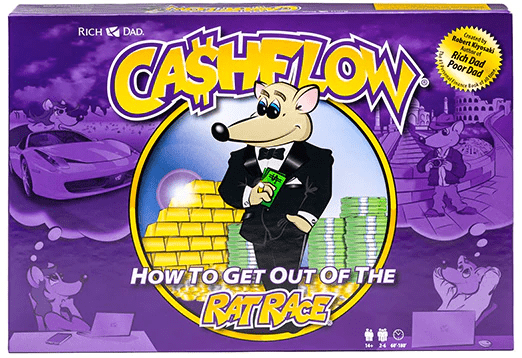
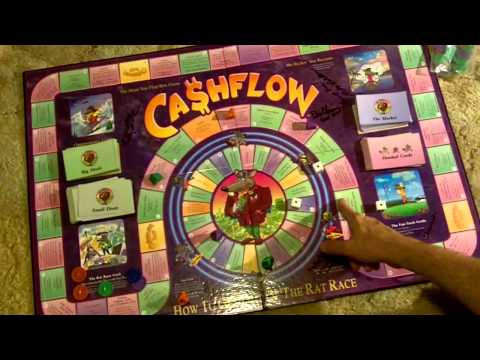
Cashflow 101 was designed by Robert Kiyosaki, author of "Rich Dad Poor Dad," as a hands‑on training tool for personal finance. The goal is straightforward: escape the Rat Race and achieve financial independence by reaching the Fast Track where money works for you. Each player picks a starting career – from truck driver to airline pilot – and fills out a personal balance‑sheet, tracking income, expenses, assets and liabilities. The board features two tracks: a small loop where you move with one die and collect your salary when passing the Paycheck space, and a larger loop that uses two dice and offers bolder investment opportunities.
Landing on specific spaces triggers draws from four decks of cards. Some cards present lucrative deals, others bring losses, taxes, divorce or lawsuits. The core challenge is cash management: in the Rat Race cash is scarce, while on the Fast Track excess cash can be wasted without proper investments. All transactions are recorded on the individual sheets, which often become templates for players' real‑world budgeting. The game encourages joint purchases, resale, and player‑to‑player negotiations, sparking strategic discussions.
For 2‑6 players the experience shifts: fewer players tilt the game toward real‑estate deals, whereas larger groups speed up card turnover, making medium‑size businesses viable. Although the rules are extensive and a full session lasts about three hours, Cashflow 101 is widely used in finance clubs worldwide as a fun, practical teaching aid.
Landing on specific spaces triggers draws from four decks of cards. Some cards present lucrative deals, others bring losses, taxes, divorce or lawsuits. The core challenge is cash management: in the Rat Race cash is scarce, while on the Fast Track excess cash can be wasted without proper investments. All transactions are recorded on the individual sheets, which often become templates for players' real‑world budgeting. The game encourages joint purchases, resale, and player‑to‑player negotiations, sparking strategic discussions.
For 2‑6 players the experience shifts: fewer players tilt the game toward real‑estate deals, whereas larger groups speed up card turnover, making medium‑size businesses viable. Although the rules are extensive and a full session lasts about three hours, Cashflow 101 is widely used in finance clubs worldwide as a fun, practical teaching aid.
Gallery
Box and component photos
Tap any photo to open fullscreen. Photos submitted by the community or publisher.
Rules videos
Learn by watching before you open the box
In English
Best player count
BGG community vote
2
REC
3
REC
4
BEST
5
BEST
6
REC
Soundtrack
Ambience suggested by Melodice
Loading playlist...
Where to Buy
Prices monitored daily
Finding best prices...
Prices unavailable at this time.
Price history — last 6 months (lowest new offer)
As an Amazon Associate I earn from qualifying purchases. Prices and availability subject to change.
Alert enabled!
Join the BoardGamesBot deals group
Get the best board game deals every day — without message spam.
Join the WhatsApp groupGame details
Mechanics, categories, families and credits
Mechanics
Categories
Families
Publisher
Cashflow Technologies, Inc., (Unknown), Bagolyvár Kiadó, Nakladatelství PRAGMA, Popurri (Попурри)
Designer
Robert Kiyosaki
Community
Data from BoardGameGeek
1,525owners
115wishlist
28want to play
Frequently Asked Questions
Quick answers before you buy
How long does a game typically last?
Around three hours on average, though it can vary with player count and rule familiarity.
What is the minimum and maximum number of players?
It supports 2 to 6 players.
Do I need accounting knowledge to play?
No, the game teaches the basics as you play, though being comfortable with numbers is a plus.
What components are included in the box?
A board with two tracks, money tokens, individual financial sheets, four decks of cards, dice and player tokens.
Who is the game best suited for?
Anyone interested in personal finance, economics students, or groups that enjoy educational board games.
Other Games You'll Like
Based on mechanics and theme