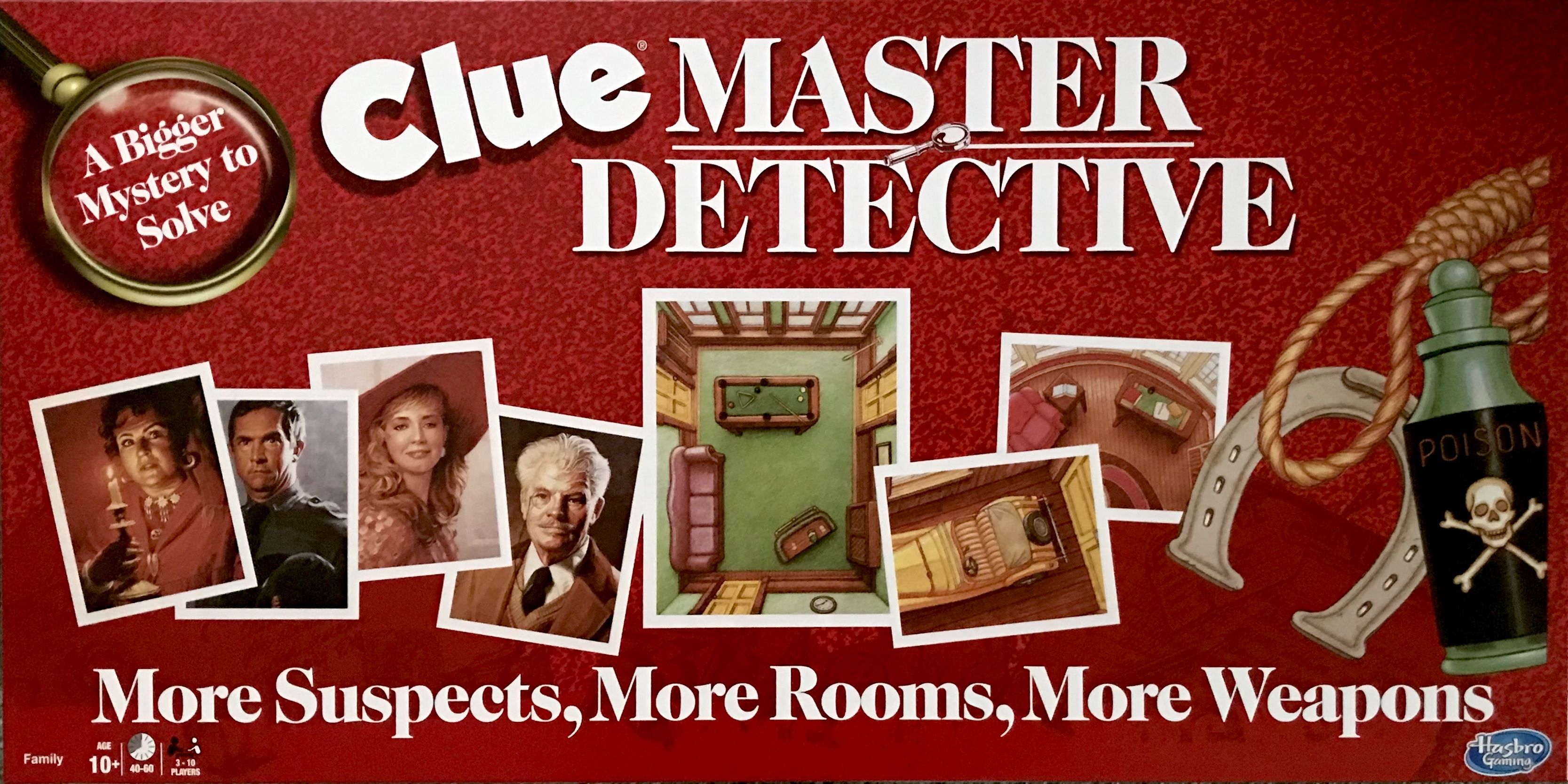
Clue — Prices
Hasbro, John Waddington Ltd., (Self-Published) · Board game · 1949
2–6 · best 4
45 min
Weight 1.6/5
Buy · from US$ 7.20
6.4
rating
Ludopedia
5.7
rating
BGG
Our Verdict
RECOMMENDED
Perfect for mystery lovers and those looking for an easy-to-teach family game. The highlight is the satisfaction of crossing off the last option and solving the crime.
Highlights
- Intuitive deduction mechanics
- Immersive classic theme
- Great for group play
- Accessible mental challenge
Keep in mind
- Reliance on dice luck
- Pacing can be slow with 6 players
Rules manual not indexed yet
Upload the PDF rulebook to ask questions about this game with AI.
About the game
What you do in a play session
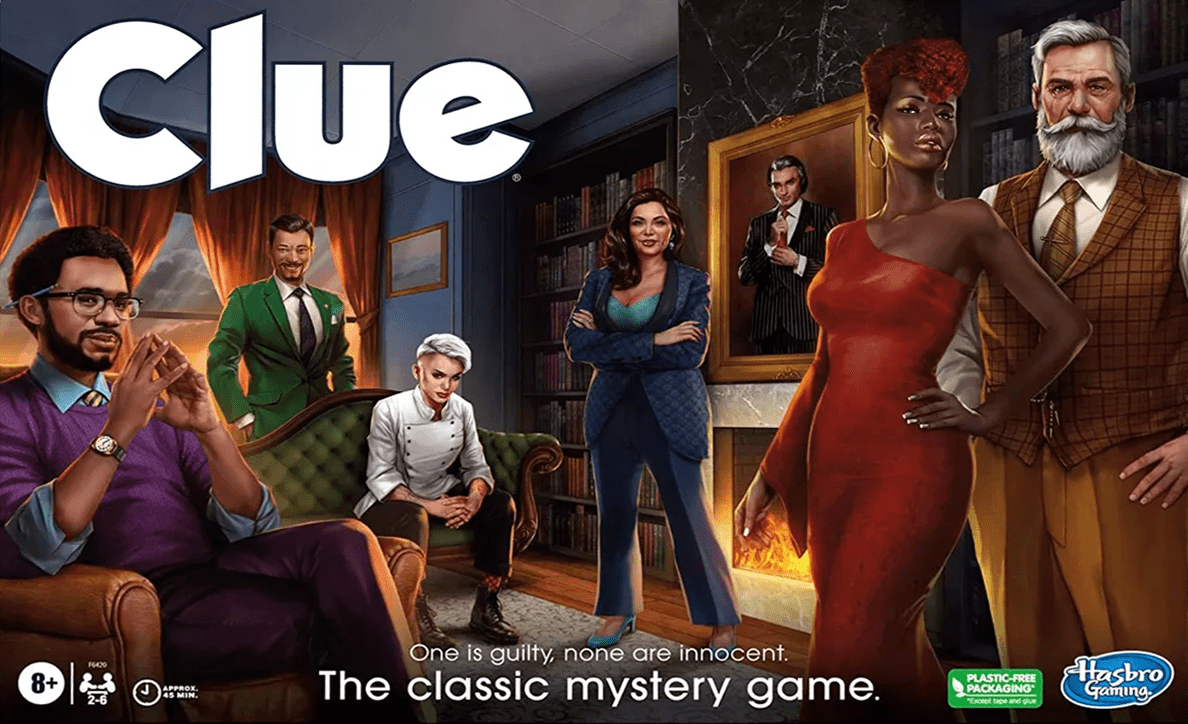
Get your magnifying glass and notepad ready because Clue is the absolute gold standard of deduction games. The premise is simple yet addictive: someone has been murdered in a luxurious mansion, and you must figure out who did it, with what weapon, and in which room. The game turns your table into a real investigation scene, where each player takes on the role of a suspect trying to clear their name (or hide their guilt).
At the start, three cards — one suspect, one weapon, and one location — are randomly selected and hidden inside a confidential envelope. These cards hold the solution to the crime. The remaining cards are dealt among the players. To win, you must use logic to eliminate the cards held by your opponents; if you know Colonel Mustard has the 'Knife' card, then the knife cannot be the murder weapon.
The gameplay involves moving your pawn through the mansion's rooms. Upon entering a room, you make a suggestion: 'I suspect Miss Scarlett, with the candlestick, in the library'. If the player to your left holds any of those cards, they must secretly show it only to you, proving that item is not in the envelope. By doing this, you cross off options on your checklist until only one possible combination remains. Once you are certain, you make a final accusation. If you're correct, you're the deduction genius and win the game. If you're wrong, you're out of the race, only able to disprove other players' suggestions but unable to win. It's a game of patience, memory, and observation, perfect for anyone who wants to feel like Sherlock Holmes for a while.
At the start, three cards — one suspect, one weapon, and one location — are randomly selected and hidden inside a confidential envelope. These cards hold the solution to the crime. The remaining cards are dealt among the players. To win, you must use logic to eliminate the cards held by your opponents; if you know Colonel Mustard has the 'Knife' card, then the knife cannot be the murder weapon.
The gameplay involves moving your pawn through the mansion's rooms. Upon entering a room, you make a suggestion: 'I suspect Miss Scarlett, with the candlestick, in the library'. If the player to your left holds any of those cards, they must secretly show it only to you, proving that item is not in the envelope. By doing this, you cross off options on your checklist until only one possible combination remains. Once you are certain, you make a final accusation. If you're correct, you're the deduction genius and win the game. If you're wrong, you're out of the race, only able to disprove other players' suggestions but unable to win. It's a game of patience, memory, and observation, perfect for anyone who wants to feel like Sherlock Holmes for a while.
Gallery
Box and component photos
Tap any photo to open fullscreen. Photos submitted by the community or publisher.
Rules videos
Learn by watching before you open the box
In English
-
 How To Play Clue Correctly! - A Full Tutorial
-
 How to play Clue
-
 How to play clue
-
 How To Play Clue - Iggy Kidd's Whiteboard Games
-
 Product feature video by Lucky Penny Shop (1963 Parker Brothers edition)
-
 2 Player Rule
-
 How To Play - Clue
-
 How to Play Clue
-
 Strategy Tips for Clue!
-
 Board Game Bakes: How to make a 1949/50 Clue board carrot cake!
-
 CLUE BOARD GAME / 3 RULES You AREN'T USING & 1 HOUSE RULE You SHOULD BE USING / RULES To LEARN
-
 How to play Clue (2024 Rules)
Best player count
BGG community vote
2
OK
3
REC
4
BEST
5
BEST
6
REC
Soundtrack
Ambience suggested by Melodice
Loading playlist...
Where to Buy
Prices monitored daily
Finding best prices...
Prices unavailable at this time.
Price history — last 6 months (lowest new offer)
Alert enabled!
Join the BoardGamesBot deals group
Get the best board game deals every day — without message spam.
Join the WhatsApp groupGame details
Mechanics, categories, families and credits
Mechanics
Categories
Families
Publisher
Hasbro, John Waddington Ltd., (Self-Published), (Unknown), Alga, Basic Fun, Inc., Borras Plana S.A., Brohm-Parker-Spiele, Carlit, CentroCoop, Clipper, Editions ATLAS, Editrice Giochi, Eleven Force, Estrela, Funskool Games, Giochiclub, HanbitSoft, John Sands Pty Ltd, Joker, Juegos Crone, Kod Kod, Korea Boardgames, Louvre Editions, Magic Toys, Majora, Manhattan Agencies, Miro Company, N.V. Smeets & Schippers Amsterdam, N.W. Damm & Søn (Damm), Nilco S.A., The Op Games, Oy Fenno-Alga Ab, Parker Brothers, Parker Spiele, Schmidt Spiele, Smeets & Schippers, Spółdzielnia Rzemieślnicza "Otwock", US Ghost Adventures, Waddingtons, Winning Eleven Productions, Winning Moves Australia Pty Ltd, Winning Moves France, Winning Moves Games (USA), Winning Moves Germany, Winning Moves International Ltd, Winning Moves UK Ltd., Winning Solutions (WS Game Company), Zontik Games
Designer
Anthony E. Pratt
Artist
Albert Uderzo, Anders Jeppsson, Anthony E. Pratt, Drew Struzan, Fabrice Weiss, Henning Ludvigsen, Matt Groening, Peter Dobbin, René Goscinny, Rune Johansson, Stephen Millingen, Urs Waldvogel
Community
Data from BoardGameGeek
43,505owners
609wishlist
49want to play
Frequently Asked Questions
Quick answers before you buy
Is the game hard to learn?
Not at all! It's very intuitive. If you can ask questions and cross items off a list, you're ready to play.
How long does a game last?
Usually around 45 minutes, depending on how quickly players can deduce the cards.
Do I need paper and a pen?
Yes, the game comes with checklists where you mark the cards you've seen so you don't get confused.
Is it suitable for children?
Yes, it's great for developing logical reasoning in children aged 8-10 and up.
What happens if I make a wrong accusation?
You are eliminated from winning, but you stay in the game only to show your cards and help others deduce the solution.
Other Games You'll Like
Based on mechanics and theme