—
rating
Ludopedia
—
rating
BGG
Our Verdict
FOR GENRE FANS
A feast for historical wargame enthusiasts seeking depth and realism. Its strongest point is the detailed recreation of three iconic battles.
Highlights
- Extremely detailed historical simulation
- Well-implemented maneuver systems
- Robust components and precise scale
- Variety of tactical scenarios
Keep in mind
- Very steep learning curve
- Strictly for 2 players
Rules manual not indexed yet
Upload the PDF rulebook to ask questions about this game with AI.
About the game
What you do in a play session
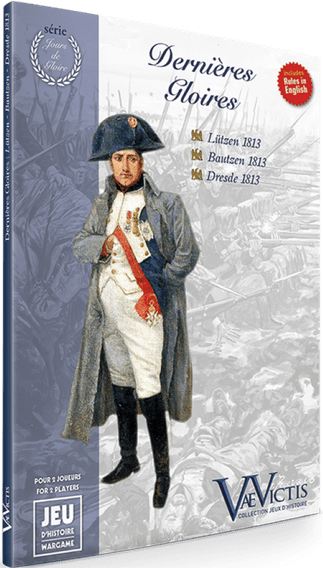
If you're a military history buff who loves the feeling of commanding massive armies, Dernières Gloires is your next big challenge. This title is the largest box ever produced in the Jours de Gloire series, bringing together three pivotal clashes from the 1813 German Campaign. Here, you take control of brigades in scenarios where coordination and maneuver are the difference between eternal glory and humiliating defeat.
The game leads us through three distinct moments: first, Lützen, where Napoleon attempts to regain the initiative after the Russian disaster, facing Russo-Prussian attacks in brutal fighting. Then, we move to Bautzen, a true lesson in maneuver where the French goal is to annihilate the enemy through a convergent attack, attempting to encircle the Allied forces. Finally, we reach Dresden, Napoleon's last great triumph on German soil, where, under pouring rain and outnumbered, the skillful use of reserves and counter-attacks decides the victory.
Technically, the game utilizes a Chit-Pull system to dictate the pace of action, blending the unpredictability of the battlefield with pure strategy. The hexagonal map allows for precise positioning, essential for those wanting to master artillery and coordinate infantry. The scale is detailed: each strength point represents 400 infantry, 300 cavalry, or a few cannon batteries. With a high complexity level (8/9), this isn't a game for beginners, but rather for those seeking tactical depth and historical realism. Prepare your 'Marie-Louise' conscripts and try to reproduce the Emperor's genius (or correct his mistakes). Can you coordinate the perfect maneuver or will you be swallowed by the opponent's numerical superiority?
The game leads us through three distinct moments: first, Lützen, where Napoleon attempts to regain the initiative after the Russian disaster, facing Russo-Prussian attacks in brutal fighting. Then, we move to Bautzen, a true lesson in maneuver where the French goal is to annihilate the enemy through a convergent attack, attempting to encircle the Allied forces. Finally, we reach Dresden, Napoleon's last great triumph on German soil, where, under pouring rain and outnumbered, the skillful use of reserves and counter-attacks decides the victory.
Technically, the game utilizes a Chit-Pull system to dictate the pace of action, blending the unpredictability of the battlefield with pure strategy. The hexagonal map allows for precise positioning, essential for those wanting to master artillery and coordinate infantry. The scale is detailed: each strength point represents 400 infantry, 300 cavalry, or a few cannon batteries. With a high complexity level (8/9), this isn't a game for beginners, but rather for those seeking tactical depth and historical realism. Prepare your 'Marie-Louise' conscripts and try to reproduce the Emperor's genius (or correct his mistakes). Can you coordinate the perfect maneuver or will you be swallowed by the opponent's numerical superiority?
Gallery
Box and component photos
Tap any photo to open fullscreen. Photos submitted by the community or publisher.
Best player count
BGG community vote
2
OK
Soundtrack
Ambience suggested by Melodice
Loading playlist...
Where to Buy
Prices monitored daily
Finding best prices...
Prices unavailable at this time.
Price history — last 6 months (lowest new offer)
As an Amazon Associate I earn from qualifying purchases. Prices and availability subject to change.
Alert enabled!
Join the BoardGamesBot deals group
Get the best board game deals every day — without message spam.
Join the WhatsApp groupGame details
Mechanics, categories, families and credits
Mechanics
Categories
Families
Publisher
Cérigo Editions, Vae Victis
Designer
Frédéric Bey
Artist
Pascal Da Silva
Community
Data from BoardGameGeek
50owners
5wishlist
1want to play
Frequently Asked Questions
Quick answers before you buy
Is this game suitable for wargame beginners?
Honestly? Not really. With a complexity of 8/9, it's quite dense. It's ideal for those already experienced in the genre or those with a lot of patience to study the rulebook.
How many people can play?
The game is specifically designed for 2 players, simulating the strategic duel between opposing commanders.
What is the 'Chit-Pull System' mentioned?
It's a system where you draw chits from a bag to decide which unit can act, simulating the 'fog of war' and communication difficulties on the field.
Which historical period does the game focus on?
It focuses on the 1813 German Campaign during the Napoleonic Wars, covering the battles of Lützen, Bautzen, and Dresden.
What is the unit scale?
The scale is at the brigade level, where 1 strength point equals 400 infantry or 300 cavalry soldiers.
Other Games You'll Like
Based on mechanics and theme