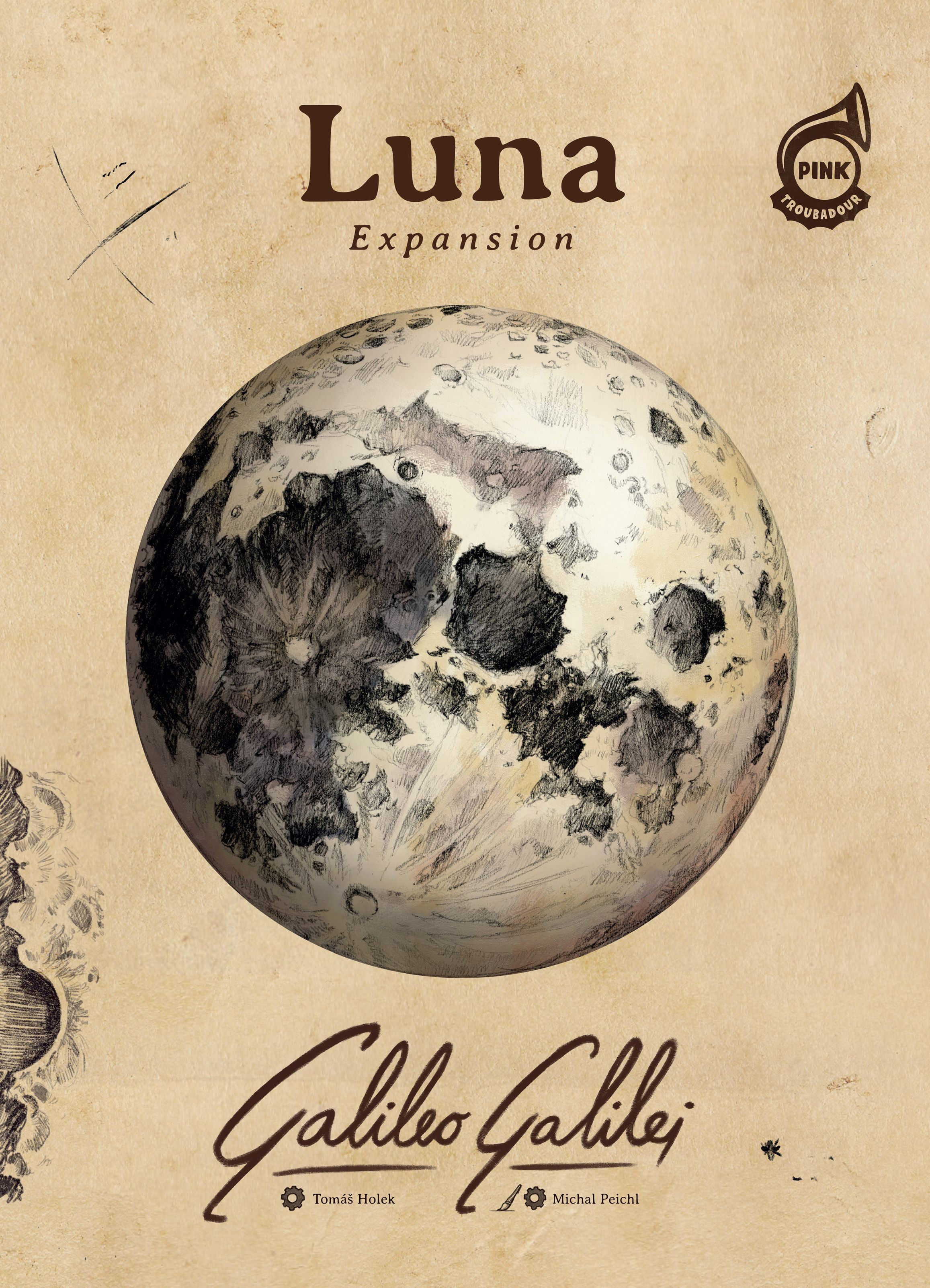
How to Play Galileo Galilei: Luna
Pink Troubadour, Capstone Games, Frosted Games · Board game · 2025What do you want to do now
Ask anything about Galileo Galilei: Luna: rules, setup, components, complexity, price, or whether it fits your group.
Video: How to Play
Start here, then follow the written guide
Step by step
Objective of the Game
In Galileo Galilei: Luna, players take on the roles of astronomers studying the Moon’s movements and phases. The goal is to observe the Moon’s surface using telescopes, earn bonuses, and manage inquisitors. The game introduces new characters and mechanics, allowing players to combine them with the base game. The player with the most victory points at the end of the game wins.
Preparation (Setup)
1. Place the Dividing tile for Tier II on the first Tier II card and the Dividing tile for Tier III on the first Tier III card in the Discovery deck. Set up the base game as usual.
2. Arrange the nine Moon tiles dark side up in a 3x3 square to the right of the Game Board. Use the Roman numerals on the tiles for setup.
3. Shuffle the Scoring tiles face-down and randomly select three to place face-up on the Moon’s left column. Place the remaining tiles face-down on the rest of the Moon.
4. Place one Grand Inquisitor figure on each Moon tile.
5. Place the Bonus Board beneath the Moon with a randomly selected side face-up.
6. Stack the nine Moon Observation tiles in numerical order, with #5 on top and #13 at the bottom. Place the stack near the Moon.
7. Place the Moon Achievement tile over the deck setup table, to the left of the University.
8. Each player takes a fifth Achievement token in their color and places it with the others near their Player Board.
Flow of the Game
The game progresses through turns where players take actions to observe the Moon, manage inquisitors, and earn rewards. The Moon changes phases as Dividing tiles are revealed from the Discovery deck, flipping additional columns of Scoring tiles face-up. Players can observe any face-up Scoring tile on the Moon, earning rewards and victory points.
Actions and How to Play
Observe the Moon: When using the Observe action, players may choose the Moon as a new Major Object. Observing the Moon requires using observation dice of all three colors to pay the observation cost on the current Moon Observation tile. Players can use Comet tokens to discount the cost. After paying, flip the top-most Moon Observation tile face-down and place it near the Player Board. Earn the observation reward and victory points from the Scoring tile. Other players earn the tile’s basic scoring.
Phases of the Moon: The Moon starts in its first phase, with the leftmost column of Scoring tiles face-up. When a Dividing tile is revealed, the Moon changes phases, flipping additional columns of Scoring tiles face-up.
Grand Inquisitor: When observing the Moon, players gain a Grand Inquisitor figure. These figures can be persuaded like normal inquisitors but have unique rules. Fully-persuaded Grand Inquisitors are placed on the Bonus Board for rewards.
End of Game and Scoring
The game ends as described in the base game Galileo Galilei. Players earn victory points from observing the Moon, completing constellations, and managing inquisitors. The player with the most victory points wins.
Tips for Winning
1. Focus on observing the Moon early to gain rewards and flip Scoring tiles face-up.
2. Manage your Grand Inquisitors carefully to maximize rewards from the Bonus Board.
3. Use Comet tokens strategically to discount observation costs and gain additional benefits.
Consulte o manual para detalhes sobre esta seção.
Rules manual
Official PDF file
Frequently Asked Questions
Quick answers about the rules