
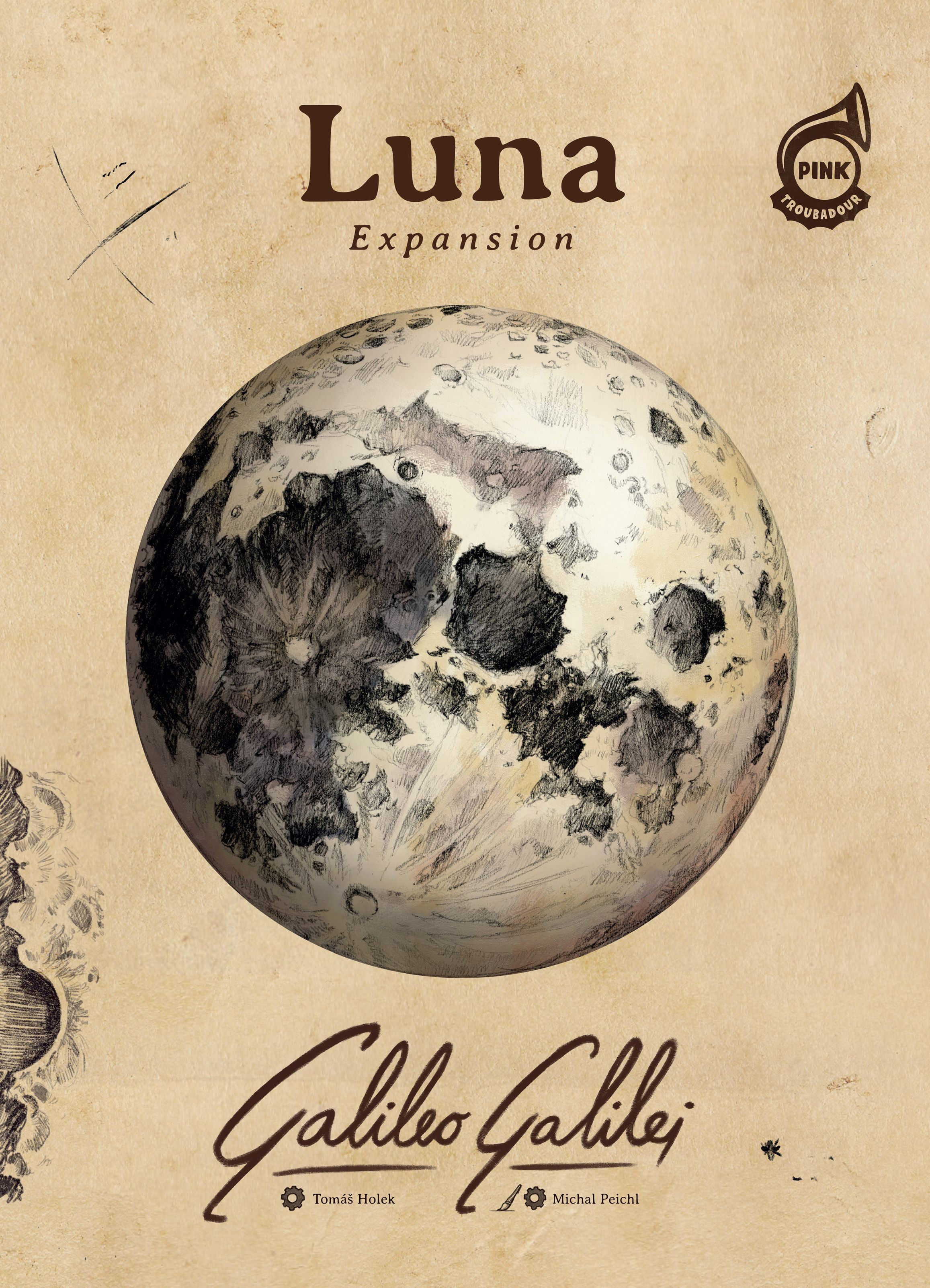
Galileo Galilei: Luna — Prices
Pink Troubadour, Capstone Games, Frosted Games · Board game · 2025What do you want to do now
Ask anything about Galileo Galilei: Luna: rules, setup, components, complexity, price, or whether it fits your group.
If you love Renaissance science and want extra lunar challenges, you’ll love this expansion.
- Unique character powers
- Dynamic Rondel
- Variable lunar map
- End‑game bonuses
- Extra learning curve
- Inquisitors may unbalance
- Replayability hinges on setup
About the game
What you do in a play session
Beyond the characters, powerful inquisitors appear, offering generous rewards if you can persuade them to back your mission. These function as event cards that can swing the game’s direction, forcing you to weigh risk versus reward. Variable set‑up ensures the lunar board differs each play, boosting replayability. End‑game bonuses reward players who meet specific goals, such as mapping an entire quadrant or collecting a set number of observations.
With a playtime of about 60 minutes and support for 1‑4 players, the expansion keeps a moderate complexity (weight 3/5), making it approachable for newcomers and appealing to veterans who love historical and scientific themes. Components include new lunar boards, inquisitor cards, character markers, and scoring tokens. In short, *Luna* expands the *Galileo Galilei* universe by putting players in the shoes of 16th‑century astronomers, challenging them to turn the Moon from a bright speck in the sky into a detailed map of discovery.
Expansion for
Published additional content
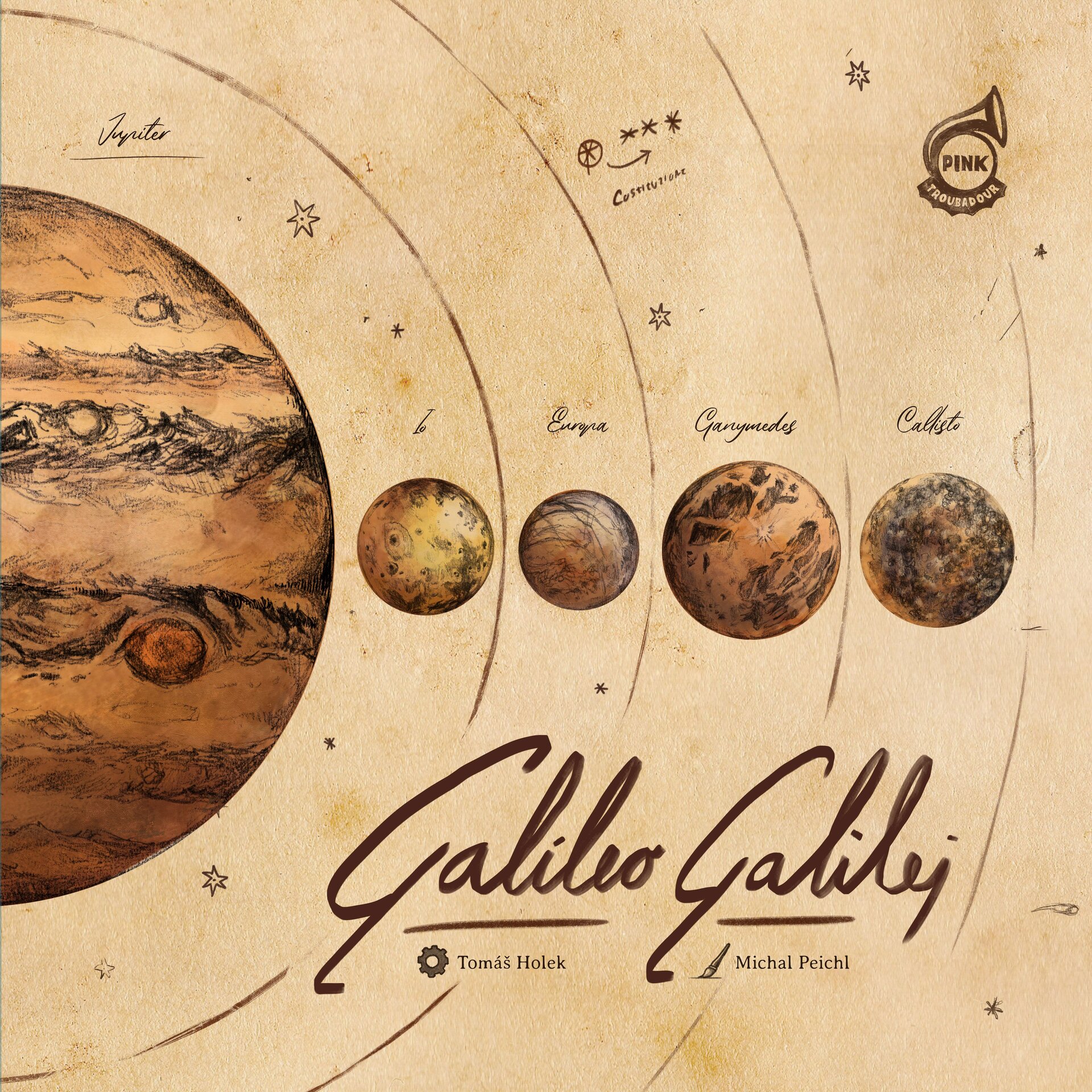
Gallery
Box and component photos
Tap any photo to open fullscreen. Photos submitted by the community or publisher.
Rules videos
Learn by watching before you open the box

Rules manual
Official PDF file
Best player count
BGG community vote
Soundtrack
Ambience suggested by Melodice
Where to Buy
Prices monitored daily
Price history — last 6 months (lowest new offer)
Alert enabled!
Join the BoardGamesBot deals group
Get the best board game deals every day — without message spam.
Join the WhatsApp groupGame details
Mechanics, categories, families and credits
Mechanics
Categories
Families
Community
Data from BoardGameGeek
Frequently Asked Questions
Quick answers before you buy
