Go
(Public Domain), (Self-Published), (Unknown) · Board gameWhat do you want to do now
Ask anything about Go: rules, setup, components, complexity, price, or whether it fits your group.
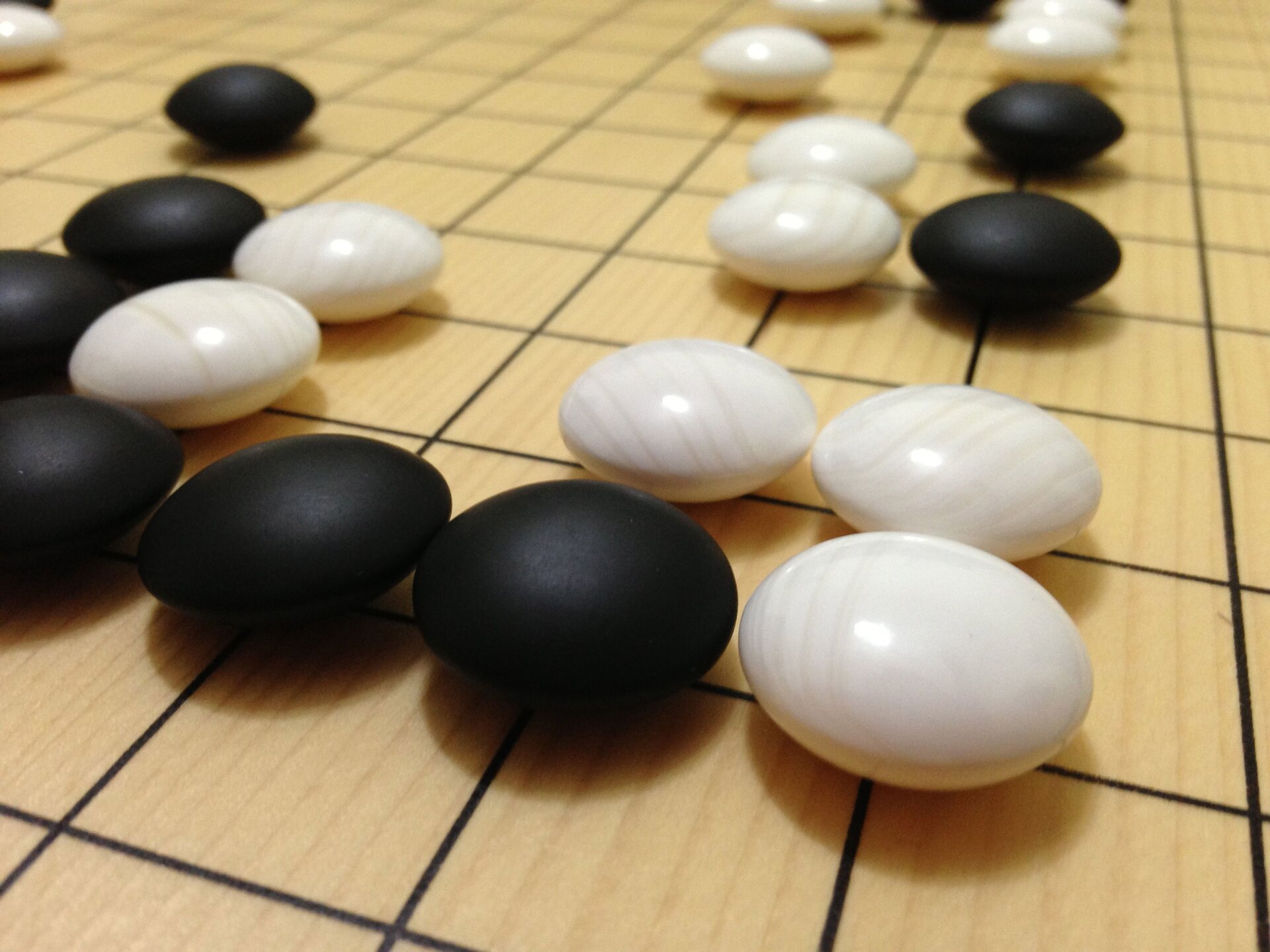
If you're into a mental challenge that transcends generations, Go is a perfect fit. It's pure abstract strategy, elegantly simple in its rules, yet infinitely complex in execution.
- Pure, deep strategy
- Easy to learn rules
- Infinite strategic depth
- Minimalist, elegant components
- High replayability
- Steep learning curve
- Can be time-consuming
- Only two players
About the game
What you do in a play session
Gallery
Box and component photos
Tap any photo to open fullscreen. Photos submitted by the community or publisher.
Rules videos
Learn by watching before you open the box
In English
-
 Surrounding Game documentary promo trailer
-
 Level Up 08 : Go/Igo/Weiqi Basic Strategy for beginners
-
 How to Play Go in 5 Minutes
-
 How to Play Go — Beginner Tutorial | Go Rules
-
 Level Up 26 : Go/Igo/Weiqi Basic Strategy for beginners 2
-
 How to Play Go : by Clossius
-
 How to Play Go | Learn to Play Board Games
-
 Drako Learns a Game: GO - Part1 - How to Play
-
 3 Important tips for beginners
-
 Beginner Level Branching Joseki Videos
-
 Level Up 17: Free App/websites to play real players for Go/Igo/Weiqi/Baduk
-
 How to Play Go
Rules manual
Official PDF file
Best player count
BGG community vote
Soundtrack
Ambience suggested by Melodice
Where to Buy
Prices monitored daily
Price history — last 6 months (lowest new offer)
As an Amazon Associate I earn from qualifying purchases. Prices and availability subject to change.
Alert enabled!
Join the BoardGamesBot deals group
Get the best board game deals every day — without message spam.
Join the WhatsApp groupGame details
Mechanics, categories, families and credits
Mechanics
Categories
Families
Community
Data from BoardGameGeek
Frequently Asked Questions
Quick answers before you buy
Is Go a difficult game to learn?
What is the average game time for Go?
How many players are needed to play Go?
What are the components of a Go game?
Is Go a game of luck or strategy?
Who is Go recommended for?
Other Games You'll Like
Based on mechanics and theme