Honey Buzz — Prices
Elf Creek Games, Galápagos Jogos, Ghenos Games · Board game · 2020
1–4 · best 3
Solo
45–90 min
Weight 2.7/5
Buy · from US$ 24.00
8.3
rating
Ludopedia
7.5
rating
BGG
Our Verdict
RECOMMENDED
Perfect for those who love building efficient game engines with a cute and original theme.
Highlights
- Innovative action ring mechanic
- Beautiful wooden components
- Smart blend of deduction and management
- Solid and challenging solo mode
Keep in mind
- Moderate initial learning curve
- Can be punishing if layout is poorly planned
Rules manual not indexed yet
Upload the PDF rulebook to ask questions about this game with AI.
About the game
What you do in a play session
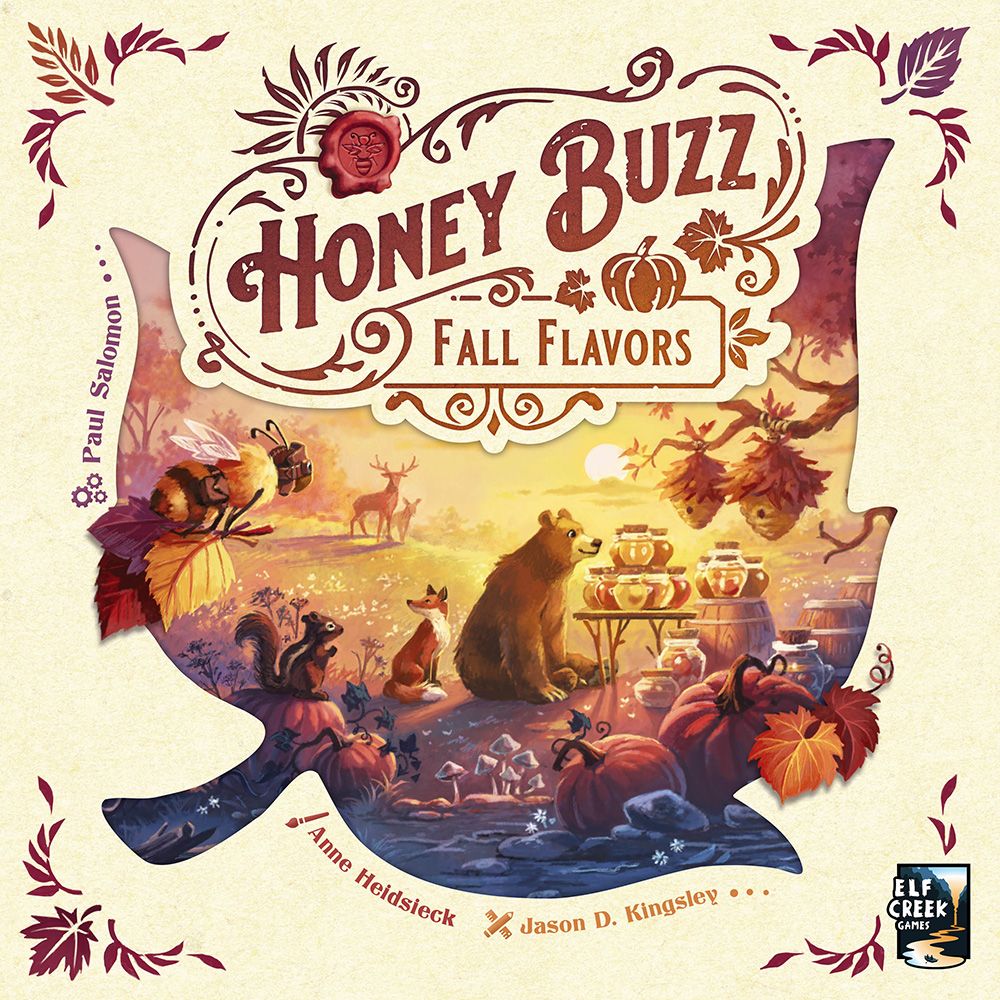
Who knew bees could be such savvy entrepreneurs? In Honey Buzz, the queens have decided that the path to peace and prosperity in the forest is through economics. The goal is straightforward: produce high-quality honey and sell it to bears, badgers, and other woodland creatures. However, achieving this requires more than just hard work; it demands a highly efficient hive.
The core of the game lies in the construction of your personal beehive. Instead of simply selecting actions from a shared board, you draft honeycomb tiles and fit them into your own board. Here is where the magic happens: each tile represents a specific action, and when you complete certain placement patterns, you trigger 'rings' of actions. This means a tile placed in the very first turn could be activated multiple times throughout the game, depending on how you've planned your hive's expansion. It's essentially an organic engine-builder where efficiency is queen.
As you expand your hive, you'll deploy your 'beeples' (bee-meeples!) to forage for nectar and pollen. But be warned: the nectar field is a game of deduction. You'll need to scout the area and, crucially, pay close attention to where other players are searching to deduce the location of the resources you need. Once the honey is produced, it's time to hit the bear market, host honey tastings, and attend to the queen's court. It's a fascinating blend of worker placement, pattern building, and a touch of memory and deduction, all wrapped in an adorable yet competitive theme.
The core of the game lies in the construction of your personal beehive. Instead of simply selecting actions from a shared board, you draft honeycomb tiles and fit them into your own board. Here is where the magic happens: each tile represents a specific action, and when you complete certain placement patterns, you trigger 'rings' of actions. This means a tile placed in the very first turn could be activated multiple times throughout the game, depending on how you've planned your hive's expansion. It's essentially an organic engine-builder where efficiency is queen.
As you expand your hive, you'll deploy your 'beeples' (bee-meeples!) to forage for nectar and pollen. But be warned: the nectar field is a game of deduction. You'll need to scout the area and, crucially, pay close attention to where other players are searching to deduce the location of the resources you need. Once the honey is produced, it's time to hit the bear market, host honey tastings, and attend to the queen's court. It's a fascinating blend of worker placement, pattern building, and a touch of memory and deduction, all wrapped in an adorable yet competitive theme.
Expansions
Published additional content
Gallery
Box and component photos
Tap any photo to open fullscreen. Photos submitted by the community or publisher.
Rules videos
Learn by watching before you open the box
In English
-
 Honey Buzz - How To Play
-
 Honey Buzz Tutorial & Playthrough - JonGetsGames
-
 One Minute Overview of Honey Buzz
-
 Board Game Bakes: How to make No-Bake Cheesecake Honey Buzz Hive tiles!
-
 How to Play and Solo Playthrough of Honey Buzz
-
 Honey Buzz - Rules Speed Through with John LaRuffa
-
 How to Play Honey Buzz
-
 Honey Buzz - Part 1: game set up
-
 Honey Buzz - Part 2: how to play | JLTEI
-
 LIVE - Honey Buzz - Playthrough & Worldwide Giveaway
Best player count
BGG community vote
1
REC
2
REC
3
BEST
4
REC
Soundtrack
Ambience suggested by Melodice
Loading playlist...
Where to Buy
Prices monitored daily
Finding best prices...
Prices unavailable at this time.
Price history — last 6 months (lowest new offer)
Alert enabled!
Join the BoardGamesBot deals group
Get the best board game deals every day — without message spam.
Join the WhatsApp groupGame details
Mechanics, categories, families and credits
Mechanics
Categories
Families
Publisher
Elf Creek Games, Galápagos Jogos, Ghenos Games, Goliath Games, Happy Meeple Games, Hobby Japan, Lucky Duck Games, Lucrum Games, Maldito Games, MINDOK, Popcorn Games, Rawstone, Skellig Games
Designer
Paul Salomon
Artist
Anne Heidsieck
Community
Data from BoardGameGeek
20,442owners
4,589wishlist
441want to play
Frequently Asked Questions
Quick answers before you buy
Is the game too complex for beginners?
It has a medium weight (2.7 on BGG). It's not ultra-complex, but the action ring mechanic requires some focus during the rulebook reading.
Does it work well with 2 players or is it better with more?
It works great with 2, but with 3 or 4 players, the competition for resources in the nectar field becomes more intense and exciting.
Is the solo mode any good?
Yes! It's a well-implemented solitaire experience for those who enjoy testing their own construction efficiency.
How long does a game typically last?
Generally between 45 and 90 minutes, depending on the group's familiarity with the rules.
Is the game language dependent?
Hardly. There is very little text, and it's easily memorizable, making it accessible regardless of the edition's language.
Other Games You'll Like
Based on mechanics and theme