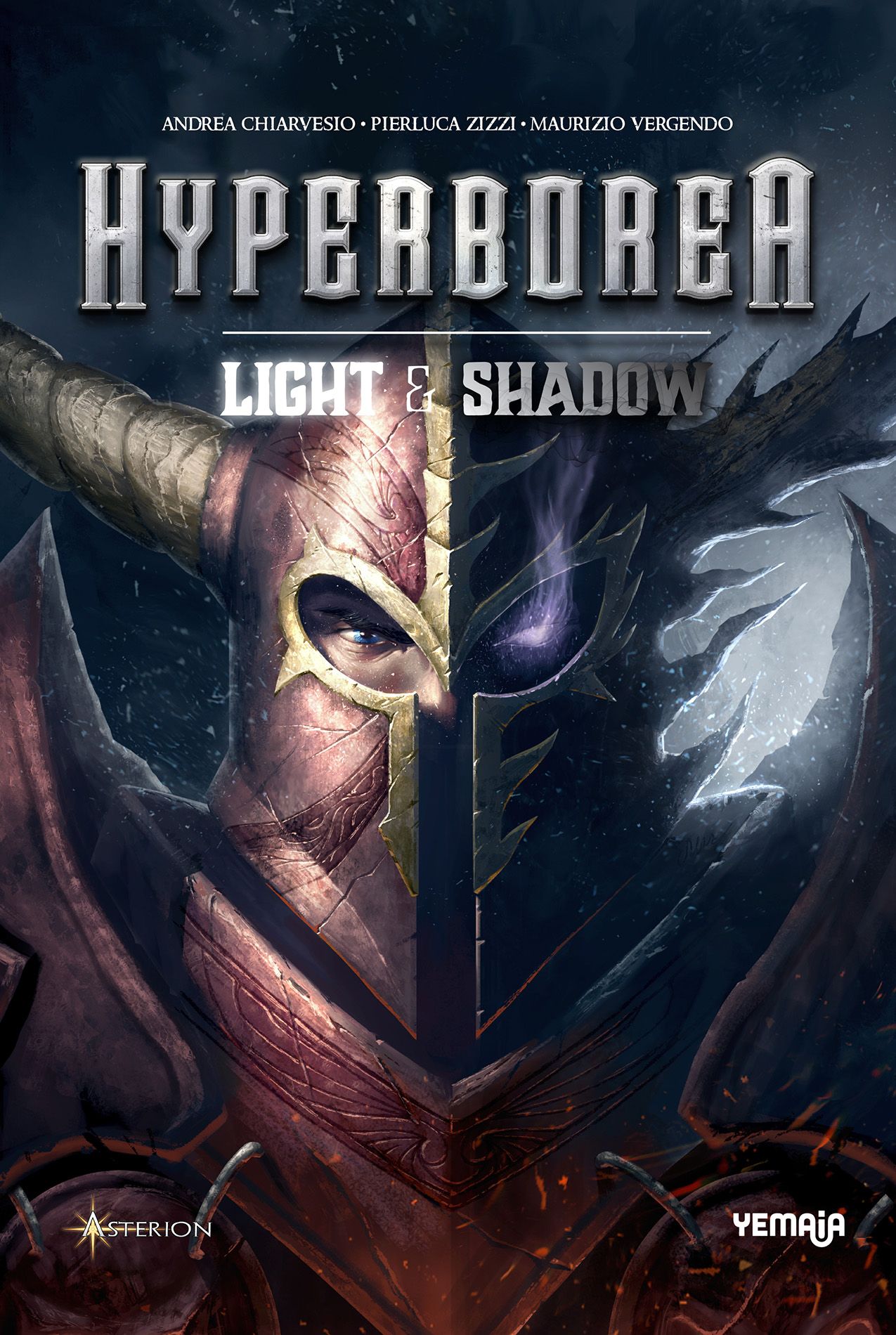
Hyperborea: Light & Shadow
Asterion Press, Hack and Slash Games, Yemaia · Board game · 2016
2–6 · best 3
60–180 min
Weight 3.0/5
Buy
7.8
rating
Ludopedia
7.8
rating
BGG
Our Verdict
RECOMMENDED
If you love war-torn civilizations and want a game full of strategy and miniatures, Hyperborea will hook you.
Highlights
- Dynamic modular board
- Grid-based tactical combat
- Engaging deck building
- Unique faction powers
Keep in mind
- High replayability
- Requires strategic planning
Rules manual not indexed yet
Upload the PDF rulebook to ask questions about this game with AI.
About the game
What you do in a play session
Hyperborea: Light & Shadow is a strategy game that places you at the heart of an ancient world where six nations are at war, each vying for powerful artifacts known as Relics. Each faction seeks to control these relics, which house Soul Cubes – Black Soul Cubes that bring destruction, and White Soul Cubes that bring enlightenment. The goal is to use these artifacts to dominate territory while preventing the power from falling into the wrong hands.
The game blends several mechanics that keep the play dynamic. The modular board creates a different setting each game, while grid movement allows miniatures to maneuver strategically across territories. The Area Majority/Influence mechanic makes control of regions vital, and players must use their power cards and pieces wisely to dominate. Deck, Bag, and Pool Building adds depth to resource management, letting each player develop a unique play style.
Moreover, variable player powers add a personalization element: each faction has special abilities that influence strategic choices. The balance between exploration, combat, and resource management makes Hyperborea a game that demands long‑term planning but also offers room for improvisation and adaptation.
If you enjoy civilization games that require long‑term planning but with the thrill of tactical real‑time battles, Hyperborea: Light & Shadow could be the perfect pick. The game’s replayability is high, thanks to the modular board and the varied strategies each faction can employ.
The game blends several mechanics that keep the play dynamic. The modular board creates a different setting each game, while grid movement allows miniatures to maneuver strategically across territories. The Area Majority/Influence mechanic makes control of regions vital, and players must use their power cards and pieces wisely to dominate. Deck, Bag, and Pool Building adds depth to resource management, letting each player develop a unique play style.
Moreover, variable player powers add a personalization element: each faction has special abilities that influence strategic choices. The balance between exploration, combat, and resource management makes Hyperborea a game that demands long‑term planning but also offers room for improvisation and adaptation.
If you enjoy civilization games that require long‑term planning but with the thrill of tactical real‑time battles, Hyperborea: Light & Shadow could be the perfect pick. The game’s replayability is high, thanks to the modular board and the varied strategies each faction can employ.
Gallery
Box and component photos
Tap any photo to open fullscreen. Photos submitted by the community or publisher.
Rules videos
Learn by watching before you open the box

Best player count
BGG community vote
2
REC
3
BEST
4
REC
5
REC
6
REC
Soundtrack
Ambience suggested by Melodice
Loading playlist...
Where to Buy
Prices monitored daily
Finding best prices...
Prices unavailable at this time.
Price history — last 6 months (lowest new offer)
As an Amazon Associate I earn from qualifying purchases. Prices and availability subject to change.
Alert enabled!
Join the BoardGamesBot deals group
Get the best board game deals every day — without message spam.
Join the WhatsApp groupGame details
Mechanics, categories, families and credits
Mechanics
Categories
Families
Publisher
Asterion Press, Hack and Slash Games, Yemaia
Designer
Andrea Chiarvesio, Maurizio Vergendo, Pierluca Zizzi
Artist
Fabio Gorla, Federico Musetti, Miguel Coimbra, Roberto Pitturru
Community
Data from BoardGameGeek
814owners
199wishlist
81want to play
Frequently Asked Questions
Quick answers before you buy
How many players can play Hyperborea?
2 to 6 players, making it great for both small and larger groups.
What is the average game length?
60 to 180 minutes, depending on player count and strategic depth.
What is the game’s complexity level?
Medium to high; it requires long-term planning, resource management, and real-time tactical decisions.
What are the main components?
Faction miniatures, territory control pieces, power cards, modular board, and soul cubes.
Who is Hyperborea for?
Fans of civilization, strategy, and miniature games who want a deep, replayable experience.
Which mechanics stand out?
Grid movement, area control, deck building, and variable player powers.