—
rating
Ludopedia
6.3
rating
BGG
Our Verdict
FOR GENRE FANS
Fans of monster battles and shifting boards will love Kaiju Crush.
Highlights
- Fun combat
- Shared objectives
- Modular board
Keep in mind
- Complex combat rule
- Short playtime
Rules manual not indexed yet
Upload the PDF rulebook to ask questions about this game with AI.
About the game
What you do in a play session
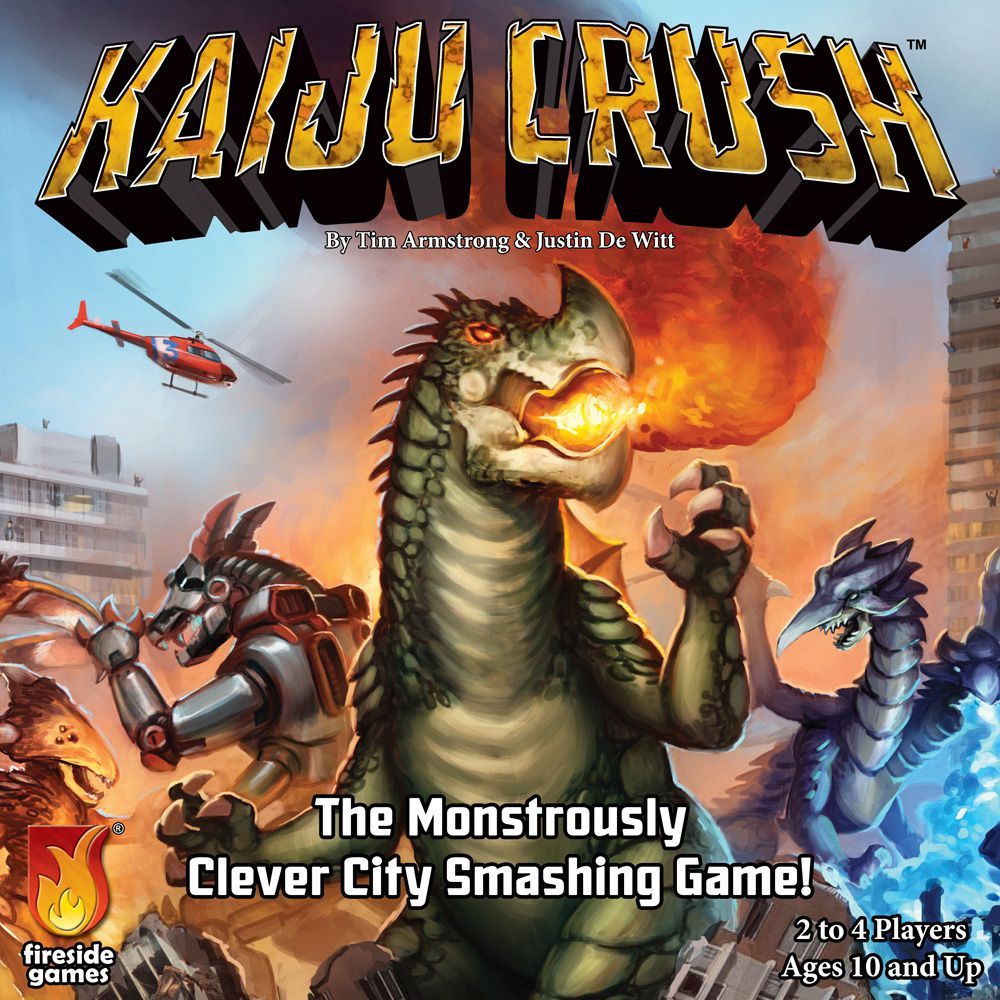
Kaiju Crush is a light, fun strategy game that drops you into giant monster battles. Each player picks a distinct kaiju—ranging from a fire‑breathing dragon to a steel titan—and uses movement cards to advance across a modular board that reshuffles each round. The goal is to seize territories, demolish cities, and win Rock‑Paper‑Scissors‑style combats while meeting shared objectives that vary from connecting territories to forming specific patterns. Combat relies on five symbols—fire, claw, tail, kick, and spikes—that beat each other in a cyclical, intransitive way, giving the game a surprise‑and‑strategy element. Each kaiju also has unique abilities that change every game, ensuring replayability. The game runs for about 45 minutes, supports 2 to 4 players, and sits at a moderate complexity level—great for those who want something lighter than a war game but still crave tactical decisions. Components include a 4×4 modular board, movement cards, territory markers, victory tokens, and combat tokens. If you love strategic battles, shifting boards, and giant monster aesthetics, Kaiju Crush could be a great pick. However, the combat rule can be a bit confusing at first and the playtime may feel short for those who prefer longer sessions. The modular board ensures each game is unique, as city tiles are shuffled and placed randomly, creating varied attack and defense opportunities. Each city carries a victory value from 1 to 4 points, and when you capture one, you replace it with a territory marker that can earn extra points when objective cards are revealed. Shared objectives include controlling the largest connected territory area, owning the most cities of a certain value, or forming a specific geometric shape on the map. To win a combat, the attacking player selects five territory markers, flips the backs, and compares symbols against the defender’s, following the cyclical strength chain: fire beats tail, tail beats spikes, spikes beat claw, claw beats kick, and kick beats fire. The winner receives a random victory token worth 1 to 3 points and, in a territorial combat, replaces the defender’s marker, helping to meet objectives.
Gallery
Box and component photos
Tap any photo to open fullscreen. Photos submitted by the community or publisher.
Best player count
BGG community vote
2
REC
3
BEST
4
REC
Soundtrack
Ambience suggested by Melodice
Loading playlist...
Where to Buy
Prices monitored daily
Finding best prices...
Prices unavailable at this time.
Price history — last 6 months (lowest new offer)
As an Amazon Associate I earn from qualifying purchases. Prices and availability subject to change.
Alert enabled!
Join the BoardGamesBot deals group
Get the best board game deals every day — without message spam.
Join the WhatsApp groupGame details
Mechanics, categories, families and credits
Mechanics
Categories
Families
Publisher
Fireside Games
Designer
Justin De Witt, Tim Armstrong (II)
Artist
JJ Ariosa, Roland MacDonald
Community
Data from BoardGameGeek
540owners
64wishlist
5want to play
Frequently Asked Questions
Quick answers before you buy
How many players can play?
2 to 4 players.
How long does a game last?
About 45 minutes.
What is the complexity level?
Moderate, suitable for those looking for a light but strategic game.
What components are included?
Modular 4x4 board, movement cards, territory markers, victory tokens, combat tokens, and objective cards.
How does the Rock‑Paper‑Scissors combat work?
Players select five territory markers, flip the backs, and compare symbols following the cyclical strength chain.
Is the game suitable for kids?
Yes, though the combat rule may be a bit confusing for very young children.
Are there expansions?
No official expansions are available.
Other Games You'll Like
Based on mechanics and theme