Moesteiro
PYTHAGORAS, Giochix.it, Maldito Games · Board game · 2022
2–4 · best 3, 4
30–60 min
Weight 2.6/5
Buy · from US$ 24.33
7.9
rating
Ludopedia
6.8
rating
BGG
Our Verdict
RECOMMENDED
Perfect for those who love medieval Eurogames and enjoy seeing dice luck tamed by strategic planning.
Highlights
- Immersive and elegant historical theme
- Clever use of dice as workers
- Variable powers increase replayability
- Fluid and dynamic game pace
Keep in mind
- Moderate initial learning curve
- Dice luck might frustrate purists
Rules manual not indexed yet
Upload the PDF rulebook to ask questions about this game with AI.
About the game
What you do in a play session
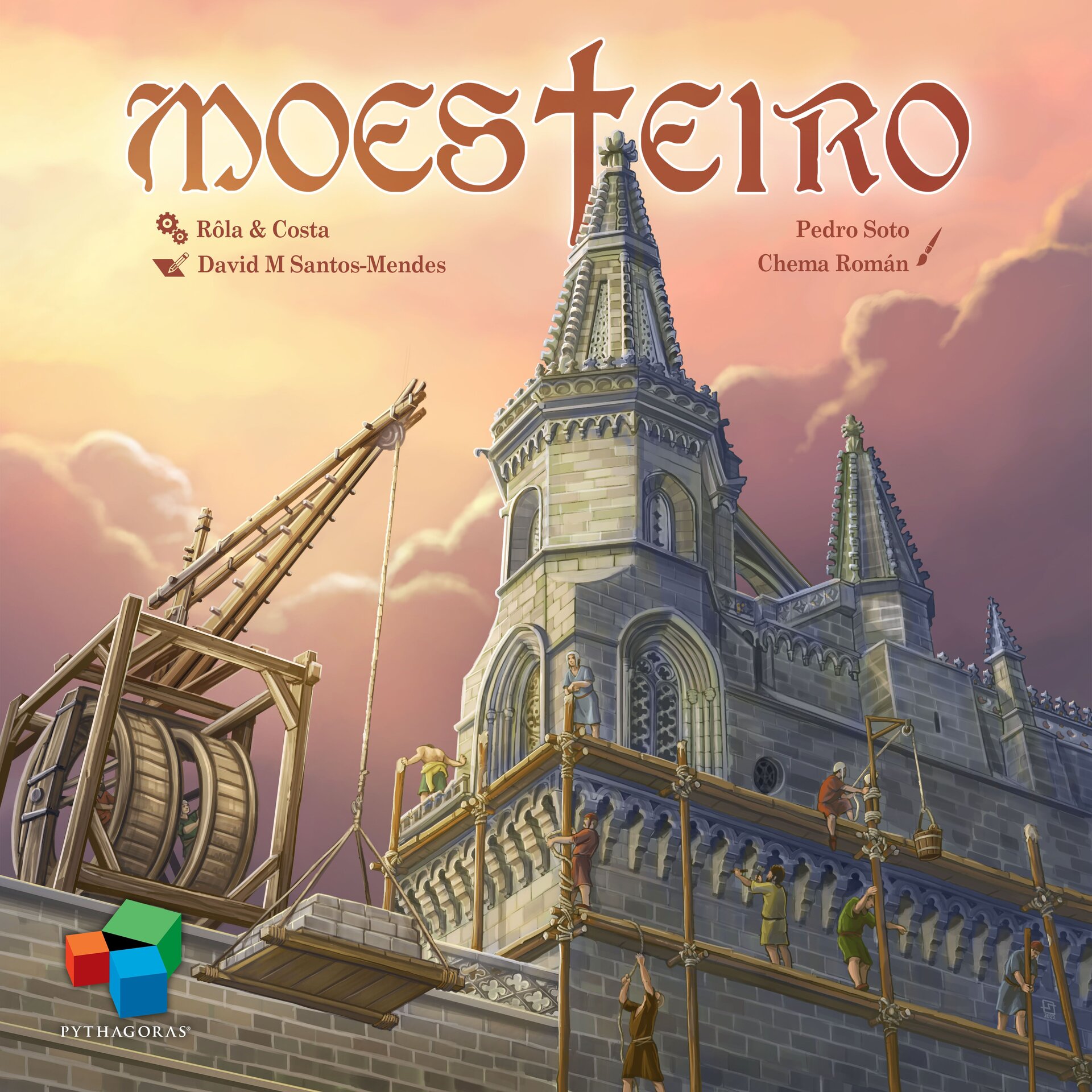
Imagine being summoned by King D. João I for one of the most ambitious projects of the 14th century: the construction of the Monastery of Santa Maria da Vitória. In Moesteiro, you step into the shoes of a visionary architect leading teams of master craftsmen and apprentices. Your goal isn't just to build walls, but to ensure your name is remembered as the most prolific and influential architect of the era. To achieve this, you'll need careful planning and a bit of luck.
The game unfolds over five intense rounds. The core dynamic revolves around worker placement, but with a twist: your workers are dice. You roll the dice and place them in different action areas (numbered I to V). The execution order of these actions is strict, meaning you must strategically place your dice to avoid being caught off guard when the action phase triggers. Once the primary actions are resolved, it's time to get your hands dirty and actively help build the monastery.
To win, you must accumulate Victory Points (VPs). There are several ways to score: by earning the King's favor through specific tiles, investing in the village, or contributing to the monastery's construction. But be careful! The game also rewards efficiency. At the end, if you've kept sets of unused stained glass and stonework tiles, or if you've climbed high on the labor track, you'll earn bonus points. It's the kind of game where every decision counts and the management of your resources (and your dice) determines whether you'll be a master of architecture or just another laborer on the site. With a medium-strategic weight, Moesteiro balances the randomness of dice with deep resource management, creating a competitive and elegant experience.
The game unfolds over five intense rounds. The core dynamic revolves around worker placement, but with a twist: your workers are dice. You roll the dice and place them in different action areas (numbered I to V). The execution order of these actions is strict, meaning you must strategically place your dice to avoid being caught off guard when the action phase triggers. Once the primary actions are resolved, it's time to get your hands dirty and actively help build the monastery.
To win, you must accumulate Victory Points (VPs). There are several ways to score: by earning the King's favor through specific tiles, investing in the village, or contributing to the monastery's construction. But be careful! The game also rewards efficiency. At the end, if you've kept sets of unused stained glass and stonework tiles, or if you've climbed high on the labor track, you'll earn bonus points. It's the kind of game where every decision counts and the management of your resources (and your dice) determines whether you'll be a master of architecture or just another laborer on the site. With a medium-strategic weight, Moesteiro balances the randomness of dice with deep resource management, creating a competitive and elegant experience.
Gallery
Box and component photos
Tap any photo to open fullscreen. Photos submitted by the community or publisher.
Rules videos
Learn by watching before you open the box


Best player count
BGG community vote
2
REC
3
BEST
4
BEST
Soundtrack
Ambience suggested by Melodice
Loading playlist...
Where to Buy
Prices monitored daily
Finding best prices...
Prices unavailable at this time.
Price history — last 6 months (lowest new offer)
As an Amazon Associate I earn from qualifying purchases. Prices and availability subject to change.
Alert enabled!
Join the BoardGamesBot deals group
Get the best board game deals every day — without message spam.
Join the WhatsApp groupGame details
Mechanics, categories, families and credits
Mechanics
Categories
Families
Publisher
PYTHAGORAS, Giochix.it, Maldito Games, Matagot
Designer
Costa, Rôla
Artist
Chema Román, Pedro Soto
Community
Data from BoardGameGeek
778owners
168wishlist
32want to play
Frequently Asked Questions
Quick answers before you buy
Is the game too complex?
It has a medium weight (2.63 on BGG). It's not a gateway game, but anyone familiar with Eurogames will pick it up quickly. The trickiest part is understanding the action execution order.
Do the dice make the game purely luck-based?
Not at all! The dice define your options, but the strategy lies in how you allocate those values and use your variable powers to mitigate luck.
How many people can play?
From 2 to 4 players. It works well at all counts, but with 4 players, the competition for action spaces becomes much more intense.
How long does a game take?
Usually between 30 and 60 minutes. It's a very focused game, ideal for those who want depth without needing a 4-hour session.
Who would you recommend Moesteiro to?
To those who love worker placement games, enjoy historical themes, and are looking for a game with beautiful components and tight mechanics.
Other Games You'll Like
Based on mechanics and theme