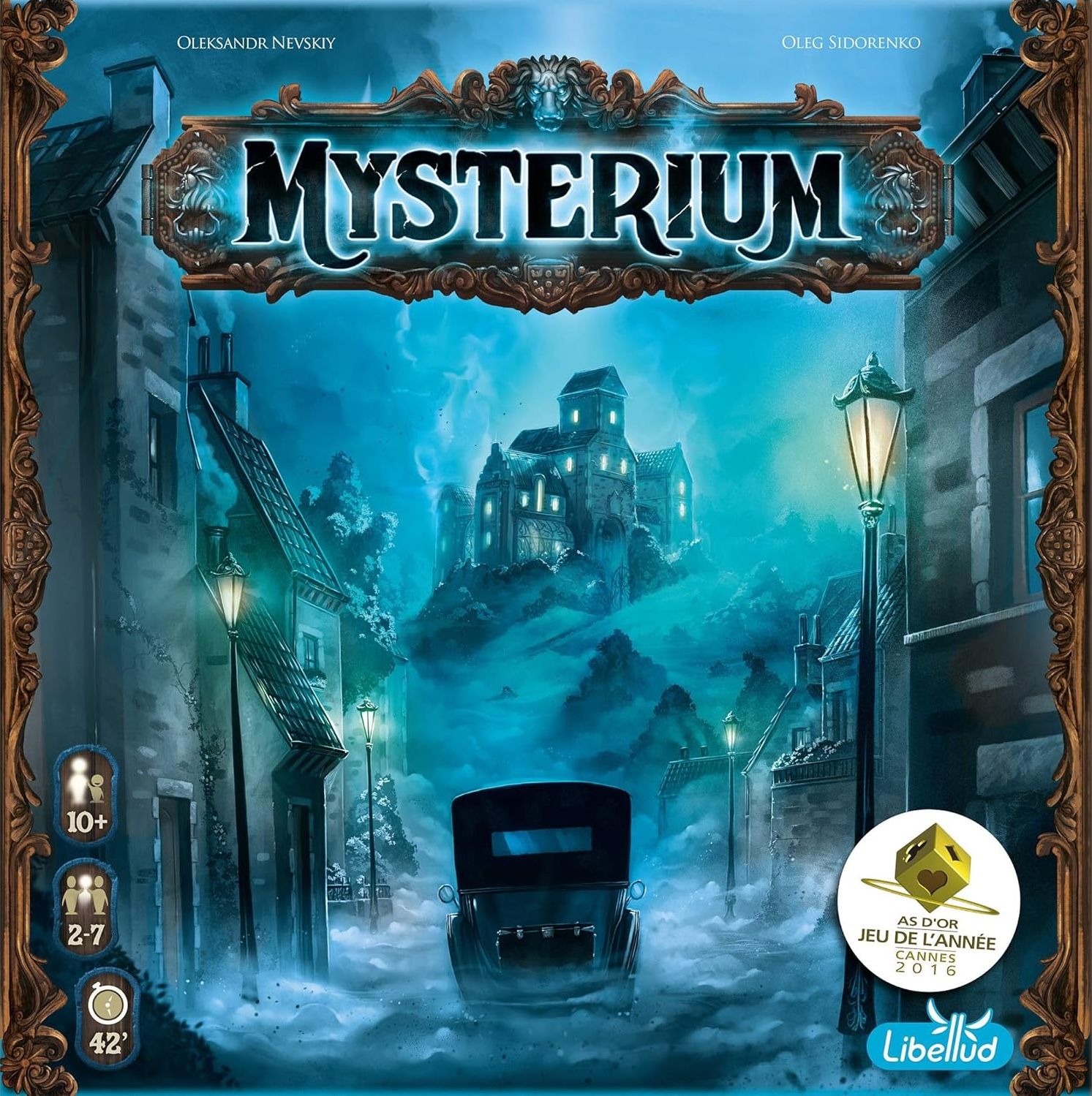
Mysterium

Libellud, ADC Blackfire Entertainment, Enigma (Bergsala Enigma) · Board game · 2015
2–7 · best 5 42 min Weight 1.9/5
7.9 rating Ludopedia
7.2 rating BGG
7.9 rating Ludopedia
7.2 rating BGG
Our Verdict

If you love cooperative deduction and beautiful, evocative artwork, Mysterium is a must-play seance experience that will challenge your interpretive skills. It's perfect for groups looking for a unique, atmospheric puzzle to solve together.

Highlights
  • Stunning, evocative artwork fuels imaginative deduction
  • Engaging cooperative mystery-solving experience
  • Unique ghost communication mechanic
  • High replayability with varied clues
Keep in mind
  • Can be frustrating with abstract clues
  • Ghost player experience can be isolating
  • Player count impacts game flow
HIGHLY RECOMMENDED
Learn How to Play Step by Step Check out our complete step-by-step rules guide.
Access Rules Guide
About the game
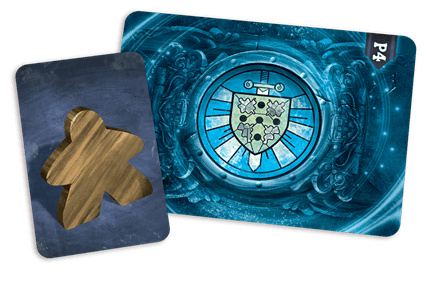
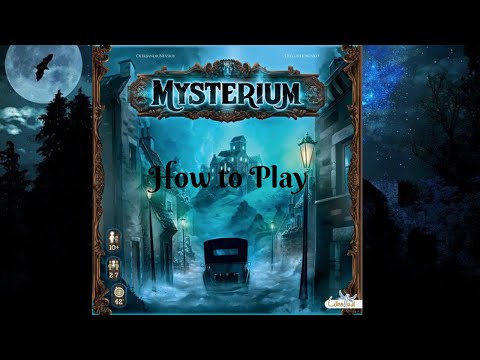
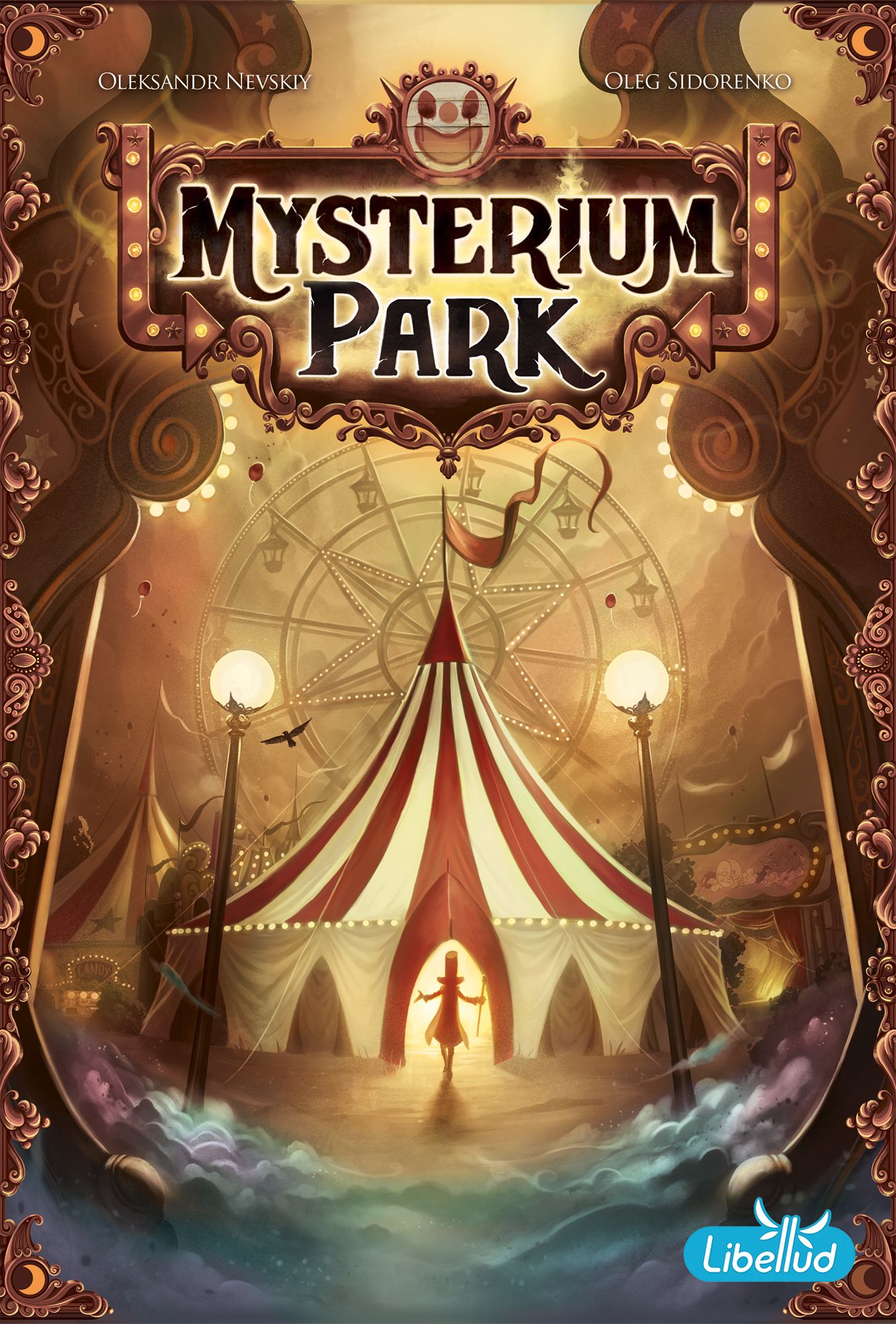
Get ready for a seance like no other in Mysterium, a cooperative deduction game that puts you in the shoes of psychics trying to unravel an ancient crime! The story begins in 1920s Scotland, when astrologer Mr. MacDowell moves into a new house and immediately senses a supernatural presence. He summons the greatest mediums of the era for an extraordinary seance, and you, as these mediums, have just seven hours to connect with the ghost and decipher its clues to solve a forgotten mystery. The ghost, suffering from amnesia and unable to speak, communicates through enigmatic visions, represented by illustrated cards. Your mission is to interpret these images to help the ghost recall the details of its murder: who was the culprit, where the crime took place, and what weapon was used. The more you cooperate and guess correctly, the easier it will be to identify the true killer. Mysterium is a reimagining of the game system from Tajemnicze Domostwo, where one player takes on the role of the ghost and the others are the mediums. To solve the crime, the ghost must first recall (with the help of the mediums) all the suspects present on the night of the murder. Suspect, location, and weapon cards are laid out on the table, and the ghost secretly assigns one of each to each medium. Each hour (or round), the ghost deals one or more face-up vision cards to each medium, refilling their hand to seven cards after each distribution. These vision cards present dreamlike images to the mediums, with each medium first needing to deduce which suspect corresponds to the received vision cards. After the ghost has dealt cards to the final medium, a two-minute sand timer begins. Once a medium has placed their token on a suspect, they can also use clairvoyancy tokens to agree or disagree with other mediums' guesses. When time runs out, the ghost reveals whether the guesses were correct. Mediums who guessed correctly move on to guess the crime's location (and then the murder weapon), while those who didn't keep their vision cards and receive new ones next hour, corresponding to the same suspect. Once a medium has correctly guessed the suspect, location, and weapon, they move their token to the epilogue board and receive one clairvoyancy point for each hour remaining. They can still use their remaining clairvoyancy tokens to score additional points. If one or more mediums fail to identify their proper suspect, location, and weapon before the end of the seventh hour, the ghost has failed and dissipates, leaving the mystery unsolved. If, however, they have all succeeded, the ghost has recovered enough memory to identify the culprit. Mediums then group their suspect, location, and weapon cards on the table and assign a number to each group. The ghost then selects one group, places the matching culprit number face down on the epilogue board, picks three vision cards (one for the suspect, one for the location, and one for the weapon), and shuffles these cards. Players who have achieved few clairvoyancy points flip over one vision card at random, then secretly vote on which suspect they think is guilty; players with more points then flip over a second vision card and vote; then those with the most points see the final card and vote. If a majority of the mediums have identified the proper suspect, with ties being broken by the vote of the most clairvoyant medium, then the killer has been identified and the ghost can now rest peacefully. If not, well, perhaps you can try again…
Rules videos

In English

Rules manual
Rules manual — Mysterium English · PDF
Download PDF
BEST PLAYER COUNT
2 OK
3 REC
4 REC
5 BEST
6 BEST
7 REC
WHERE TO BUY
Finding best prices...
Game details

Families

Components: Official Music Soundtrack Components: Player Screens Components: Sand Timers Creatures: Ghosts Digital Implementations: Steam Game: Mysterium Holidays: Halloween Mechanism: Give a Clue / Get a Clue Mechanism: Image Interpretation Theme: Spooky Old Houses
Publisher Libellud, ADC Blackfire Entertainment, Enigma (Bergsala Enigma), Esdevium, F2Z Digital Media Inc., Filosofia Éditions
Designer Oleg Sidorenko, Oleksandr Nevskiy
Artist Igor Burlakov, Xavier Collette
Frequently Asked Questions
How many players can participate in Mysterium?
Mysterium is ideal for groups, supporting 2 to 7 players. It works very well with more people, as the interaction and clue interpretation become more dynamic.
What is the average duration of a Mysterium game?
A game of Mysterium usually takes about 45 minutes. It's a great length for a complete experience without overstaying its welcome.
Is Mysterium a complex game for beginners?
It's not complex! While it involves deduction, the rules are quite accessible. The complexity comes more from interpreting the ghost's visions, which is part of the fun and can be adapted for different experience levels.
Are the game components of good quality?
Yes, Mysterium's components are of excellent quality, particularly the beautifully illustrated vision cards and the immersive game board. The artwork is one of the game's major strengths!
Who is Mysterium recommended for?
Mysterium is perfect for those who enjoy cooperative games, mystery, deduction, and plenty of social interaction. If you like games like Dixit or Codenames, but with a narrative and mystery layer, you'll love it!
Is language dependency an issue in Mysterium?
Language dependency is minimal. The vision cards are images, and the main communication is visual. The rules and some text on suspect/location/weapon cards are important, but with a translation or a player who knows the language, there are no major barriers.
Are there any expansions for Mysterium?
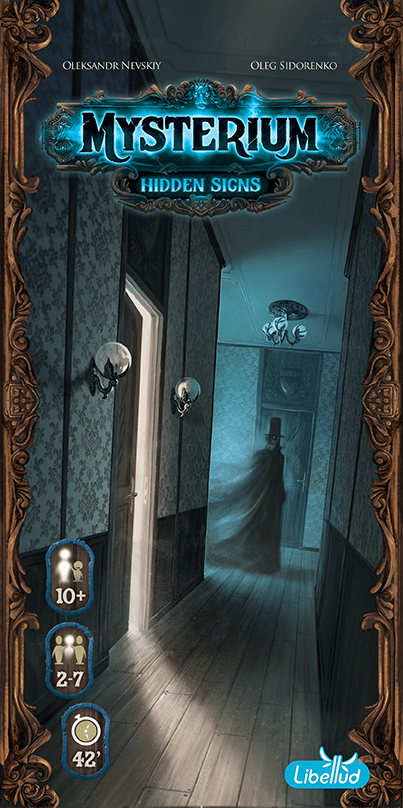
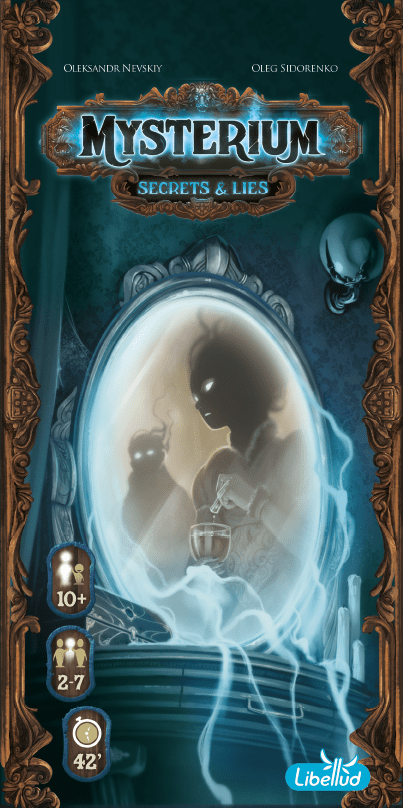
Yes, Mysterium has expansions that add new vision cards, suspects, locations, and weapons, increasing replayability and game variety. They are great for those who have already thoroughly explored the base game.