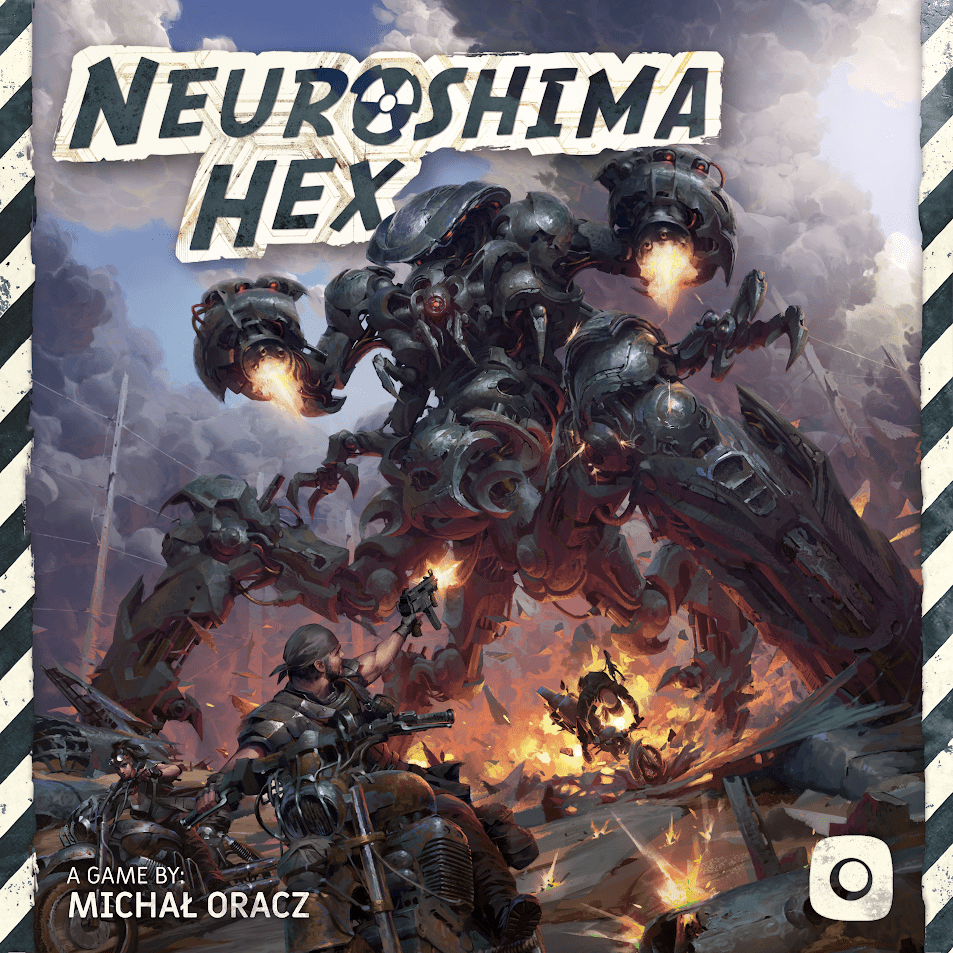
How to Play Neuroshima Hex! 3.0: Dancer
Portal Games, Z-Man Games · Board game · 2012- Players
- 2–4 · best 2
- Play Time
- 30 min
- Weight
- Weight 2.5/5
- Year
- Year 2012
- Minimum age
- Minimum age 8+
What do you want to do now
Ask anything about Neuroshima Hex! 3.0: Dancer: rules, setup, components, complexity, price, or whether it fits your group.
Step by step
Objective of the Game
In Neuroshima Hex! Dancer, players control three unique creatures, codenamed "Dancer," that have escaped from a secret genetic research project. These creatures are half-mad and driven by uncontrollable instincts, fighting for survival in a post-apocalyptic wasteland. The primary goal for the Dancer player is to eliminate the opponent's Headquarters. However, the Dancer player loses the game if even one of their three Object units is destroyed. If the opponent's Headquarters is also destroyed during a battle, the game ends in a draw. If no Objects are destroyed and the final battle concludes, the Dancer player sums the remaining Resistance Points of all their Objects and compares this total to the opponent's remaining Resistance Points. The player with more points wins; if both players have the same number of points, the game is a draw.
Preparation (Setup)
- The Dancer player is always the starting player.
- The Dancer player places all three Object tiles anywhere on the game board. They may be placed adjacently.
- Each Object starts with 10 Resistance Points. Each Object has its own scoring tile, which is placed on space 10 of the game board. (The additional orange marker is used in Neuroshima Hex: Duel and is placed on space 0 of the energy track).
- The opponent(s) then place their own Headquarters.
- The rest of the game proceeds according to normal rules, meaning the Dancer player draws one tile they can use, then the second player draws two tiles, and so on.
Game Flow
The game proceeds according to normal rules. The Dancer player draws one tile they can use, then the second player draws two tiles, and so on. The destruction of an Object during a battle is treated the same as the destruction of a Headquarters (the destroyed Object remains in play until the end of the Initiative Phase in which it was destroyed and is removed after all actions of the phase have been executed).
At the beginning of their turn, the Dancer player may discard all their tiles (even if they have fewer than 3) and, instead of playing tiles, may perform Dancing – swapping places between all Objects and/or rotating them.
Actions and How to Play
Dancer Objects
The Dancers possess only 3 tiles, which simultaneously function as Headquarters, Soldiers, and Modules. These tiles are referred to as Objects. The Dancers do not possess any other tiles that remain on the game board – neither Soldiers nor Modules. Each Object begins with 10 Resistance Points. Damage sustained by an Object is counted individually.
Dancer Objects are both Soldiers and Headquarters. Action tiles or effects that do not affect Headquarters but do affect Soldiers and Modules (Grenade, Sniper, Air Strike, Bomb, Mine) cause one point of damage to the Dancer Object they are used on.
Dancer Objects can damage opposing Headquarters and take damage from opposing Headquarters (even from their own attack if reflected by the Steel Police's Judge).
Module properties are permanently active and function like other Modules. The only difference is that the special Module property (Healing) is activated with an Action tile.
Object Red
- Resistance: 10
- Initiative: 1
- Action: Hunter attack in one of the possible directions.
- Module Property: Officer (increases melee strength, affects one direction).
Object Blue
- Resistance: 10
- Initiative: 2
- Action: Melee attack in one of the possible directions.
- Module Property: Officer (increases ranged strength, affects one direction).
Object Yellow
- Resistance: 10
- Initiative: 0
- Actions:
- Hunter attack (only in one direction)
- Special activation (Healing)
- Module Property: Scout (increases initiative of own connected units, affects two directions).
- Special Module Property: Healing
Action Tile
This tile allows you to choose a Dancer Object and activate one edge of the Object tile to perform its attack (melee, ranged). The Action tile is also used to activate Object Yellow's special Module property (Healing). If the attack triggered by the Action tile is strengthened by another Object's Module property, the strengthened attack is performed. During a turn, only one Action tile may be played on an Object. This means that with two Action tiles, first one edge of an Object can be activated, but then only one edge of another Object can be activated. An Action cannot be played on immobilized Objects or Objects taken over by Vegas.
Healing
Object Yellow has the Healing ability. It works in the indicated direction; if another Object is connected to that side, it can be healed. Object Yellow can also heal itself. Healing restores 2 Resistance Points to the target Object; Resistance cannot increase above 10 as a result. Healing is activated by an Action tile. If Object Yellow is immobilized by a Net (or taken over by Vegas), it cannot use Healing, as the Action tile cannot be played on an immobilized or taken-over Object. If another Object is immobilized or taken over, it may not be healed.
Dancing
At the beginning of their turn, the Dancer player may discard all their tiles (even if they have fewer than 3) and can, instead of playing tiles, perform Dancing – swapping places between all Objects and/or rotating them. The player may therefore:
- Swap all Objects with each other (and rotate them);
- Swap two Objects with each other (and rotate them) and – if desired – also rotate the third;
- Keep all Objects in the same place but rotate one or more.
Liberation
The Net normally immobilizes Dancer Objects, but the following exception applies: an Object immobilized by a Net can Dance, and it can be pushed away from the Net using a Movement tile (but the Action tile may not be used). In both cases, the previously immobilized Object loses one Resistance Point for each Net by which it was immobilized. The same rules also apply to the Steel Police's Steel Net – Dancing or using a Movement tile can liberate an Object, and the Steel Net returns to the Steel Police's Headquarters. The rules also apply to a takeover by Vegas.
Liberation has another function: by using a Movement, Rochade, or Vegas' Rotation tile, an opposing Headquarters can be freed from the Dancer's Net, causing it to lose one Resistance Point. This damage is absorbed as usual by the Medic if it was connected to the Headquarters while it was immobilized (i.e., before the liberating movement).
Special Rules for Other Factions
- Vegas takes over Dancer Objects in the conventional way – at the time of takeover, the taken-over Object can be rotated and counts as a Vegas unit. It causes damage to other Objects during combat and takes damage from them, but not from Vegas units.
- Terror (SMART, Steel Police) – since the Dancers have no tiles, Terror prevents the use of Dancing and Action tiles in the next turn.
- Scout (Outpost) – works normally against the Dancers as long as it is connected to the Object. The Module properties of this Object apply to the Outpost instead of other Objects. Scout also blocks Healing, which means the Outpost cannot benefit from it.
- Espionage (New York) – works normally, so that a unit with this ability can benefit from the Module properties of an Object, with the exception of Healing, which must be activated by an Action tile.
- Executioner (Steel Police) – its ability does not work against the Dancers; it counts as a normal Soldier.
- The Dancers can use the Swap procedure normally. All procedures that would destroy units instead cause one point of damage.
Multiplayer Game Notes
- In a team game, bonuses from allied Modules and Headquarters do not apply to the Dancer Objects; allied units are modified normally by the Object Module properties.
- If a Dancer Object is immobilized or taken over by Vegas, a liberating Object (Dancing or Movement tile) takes one point of damage per Net and takeover.
- In a multiplayer game for points, each opponent receives as many points upon liberation as they have Nets and/or takeovers affecting the Object to be liberated.
- In a team game, Healing can also be used to heal friendly Headquarters, but not beyond 20 Resistance Points.
End of Game and Scoring
The game ends if:
- One of the Dancer's Objects is reduced to 0 Resistance Points. In this case, the Dancers lose the game.
- The opponent's Headquarters is destroyed. In this case, the Dancers win.
- If both an Object and the opponent's Headquarters are destroyed during the same battle, the game ends in a draw.
- If none of the Objects are destroyed and the last battle has concluded, the Dancer player sums the remaining Resistance Points of all their Objects and compares this total to the opponent's remaining Resistance Points. The player with more points wins; if both players have the same number of points, the game ends with a draw.
Tips for Winning
- The Dancer Objects show their strength primarily in offense. It is advisable to place all three Object tiles in the middle of the game board so that the distance to the enemy Headquarters tile is as small as possible, regardless of where it is placed.
- When moving the Dancer Objects on the game board, they should always be brought into a strong configuration where they support each other with their Module properties.
Rules manual
Official PDF file
Frequently Asked Questions
Quick answers about the rules
What is the objective of Neuroshima Hex! 3.0: Dancer?
How do you set up Neuroshima Hex! 3.0: Dancer?
How do you play Neuroshima Hex! 3.0: Dancer?
How does Neuroshima Hex! 3.0: Dancer end, and how do you score?
What are some tips for winning Neuroshima Hex! 3.0: Dancer?
Expansion for
Published additional content