Poker — Price & soundtrack
(Public Domain), (Self-Published), (Unknown) · Board game · 1810
2–10 · best 6
60 min
Weight 2.4/5
Buy · from US$ 10.17
7.7
rating
Ludopedia
6.7
rating
BGG
Our Verdict
RECOMMENDED
If you love tension, bluffs, and a pile of chips, poker will hook you from the first hand.
Highlights
- Strategic bluffing
- Iconic hand rankings
- Endless replayability
Keep in mind
- Steep learning curve
- Chip dependency
- Long rounds
Rules manual not indexed yet
Upload the PDF rulebook to ask questions about this game with AI.
About the game
What you do in a play session
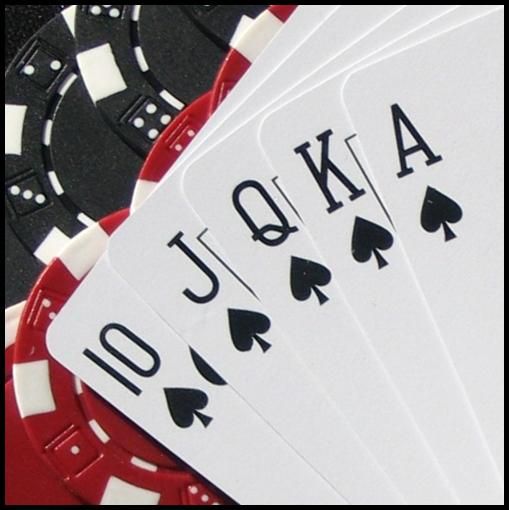
Poker, dating back to around 1810, is the quintessential card game that still rules casino tables and living‑room gatherings. Played with a standard 52‑card deck—sometimes adding jokers as wild cards—it accommodates 2 to 10 players and typically lasts about an hour. The goal is straightforward: win the pot, which gathers all bets placed during the hand. Each participant receives cards that are eventually reduced to a five‑card poker hand. Betting and bluffing rounds alternate until all wagers are matched or opponents fold. If bets are equal, a showdown occurs, revealing the hands; the highest‑ranking hand according to the classic hierarchy (Royal Flush down to High Card) claims the pot.
The core mechanics revolve around betting and bluffing, demanding keen reads and emotional control. Player elimination (folding) and set collection (forming the best card combination) also play key roles. Numerous variants exist—closed‑draw poker, open‑stud poker, and the wildly popular Texas Hold'em (community cards)—each adding its own flavor while preserving the same blend of risk, strategy, and drama.
Components are minimal: a traditional deck, chips or cash for wagering, and optionally a dealer to manage the game. Modern players can also enjoy digital implementations on Board Game Arena or Tabletopia, which automate rules and pit you against opponents worldwide. Whether in a casino, a friend's living room, or online, poker remains the card game that fuses skill, luck, and, above all, the art of deceiving your opponents.
The core mechanics revolve around betting and bluffing, demanding keen reads and emotional control. Player elimination (folding) and set collection (forming the best card combination) also play key roles. Numerous variants exist—closed‑draw poker, open‑stud poker, and the wildly popular Texas Hold'em (community cards)—each adding its own flavor while preserving the same blend of risk, strategy, and drama.
Components are minimal: a traditional deck, chips or cash for wagering, and optionally a dealer to manage the game. Modern players can also enjoy digital implementations on Board Game Arena or Tabletopia, which automate rules and pit you against opponents worldwide. Whether in a casino, a friend's living room, or online, poker remains the card game that fuses skill, luck, and, above all, the art of deceiving your opponents.
Gallery
Box and component photos
Tap any photo to open fullscreen. Photos submitted by the community or publisher.
Rules videos
Learn by watching before you open the box
In English
-
 Board Games with Scott 018
-
 The Hendon Mob Scam
-
 Back in my day 05: My Rise & Fall in Poker
-
 Everything Poker - Episode 1.1, The Basics
-
 Everything Poker - Episode 1.3, Position 1
-
 Everything Poker - Episode 1.6, Tournament Basics
-
 10 Quick Tips to WIN MORE at POKER / Strategies To Help YOU Dominate Your Friends
-
 A Quick and Easy Tutorial for Five O Poker
-
 Everything Poker - Episode 1.2, Starting Hands
-
 Everything Poker - Episode 1.4, Position 2
-
 Everything Poker - Episode 1.5, Bluffing
-
 Everything Poker - Episode 2.1, Betting 1
Best player count
BGG community vote
2
OK
3
REC
4
REC
5
BEST
6
BEST
7
REC
8
REC
9
OK
10
OK
Soundtrack
Ambience suggested by Melodice
Loading playlist...
Where to Buy
Prices monitored daily
Finding best prices...
Prices unavailable at this time.
Price history — last 6 months (lowest new offer)
As an Amazon Associate I earn from qualifying purchases. Prices and availability subject to change.
Alert enabled!
Join the BoardGamesBot deals group
Get the best board game deals every day — without message spam.
Join the WhatsApp groupGame details
Mechanics, categories, families and credits
Mechanics
Categories
Families
Publisher
(Public Domain), (Self-Published), (Unknown), AG Müller (AGMüller), Ambassador Games (Merchant Ambassador), ASS Altenburger Spielkarten, Basic Fun, Inc., Berliner Spielkarten, Capitol Carta Roma, Cardinal, Coach House Games, Inc., Coca-Cola, Editions ATLAS, Endless Games (I), Excalibur Electronics, F.X. Schmid, Front Porch Classics, Fundex, Helmut Lingen Verlag, Heraclio Fournier, Jax, Ltd., Marigó, Offason, Piatnik, Prime Promotion, Queensell, Rosiness, Skor-Mor, Spear's Games, Spin Master Ltd., Starz Entertainment, Tactic, TS Spielkarten, TV Products USA Inc, Uitgeverij van der Meulen, The United States Playing Card Company, University Games, Waddingtons, White Wolf Publishing, Inc.
Designer
(Uncredited)
Artist
Albert Uderzo, René Goscinny
Community
Data from BoardGameGeek
12,113owners
142wishlist
9want to play
Frequently Asked Questions
Quick answers before you buy
How many players can join a game?
Between 2 and 10 players, depending on the specific poker variant.
What’s the typical playing time?
Around 60 minutes, though it can be longer with more players or slower variants.
Do I need real money or chips?
No, you can use plastic chips, tokens, or even make‑shift markers; real money isn’t required.
Which variants are best for beginners?
Five‑Card Draw and Texas Hold'em are great starter games because their rules are straightforward and widely taught.
Any special equipment needed?
Just a standard 52‑card deck; jokers are optional and used as wild cards in some versions.
Can I play poker online?
Absolutely—sites like Board Game Arena and Tabletopia host digital poker with automated rules.
Is poker suitable for kids?
It depends on age; the betting aspect may be unsuitable for younger players, but non‑monetary versions are sometimes used for educational purposes.
Other Games You'll Like
Based on mechanics and theme