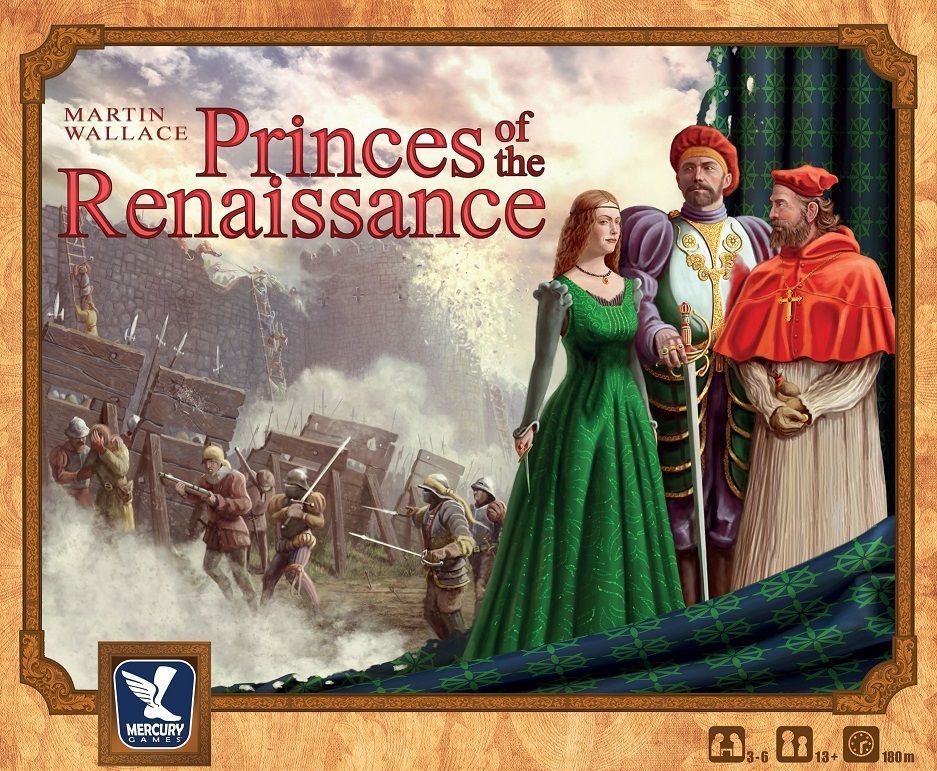
Princes of the Renaissance
Mercury Games, Warfrog Games, Giochix.it · Board game · 2003If you enjoy games with lots of interaction, auctions, and a well-explored historical theme, Princes of the Renaissance is a feast! Get ready to negotiate, betray, and dominate Renaissance Italy.
- Tense auctions full of twists
- Unique and interesting player powers
- Constant player interaction
- Well-integrated Renaissance theme
- Rules can seem complex initially
- Language dependency can be a factor
- Dice luck might frustrate some
About the game
What you do in a play session
Your goal is to accumulate Victory Points (VP) by controlling interests in these major cities. Each city has tiles representing iconic historical figures, such as Lucrezia Borgia or Lorenzo de' Medici. Each of these characters grants unique abilities: one helps you become more treacherous, another increases your income. These tiles also award VP at the end of the game, depending on the city's status. And a city's status changes, primarily through war!
When cities go to war, they need Condottieri to fight for them. That's where the action heats up! You'll use your influence points to bid in auctions, deciding who will represent each side in the battle. The outcome of the war depends on a touch of luck with dice rolls and the size of your army, but don't worry, you get paid gold for fighting, regardless of the result. That gold can be reinvested in more city tiles, strengthening your position.
But wait, treachery is part of the game! You can buy "Treachery" tiles to perform sneaky actions like stealing influence or sabotaging auctions. Or you can be subtle: rig a war so the city you want to lose has a terrible army, or use treachery to make your own troops not fight. And when the Pope enters the scene, forming the "Holy League," you might even try to bribe him to ensure he's on your side. The game doesn't force you to negotiate, but the opportunities for bargaining and making deals are plentiful, making each game a complex web of alliances and betrayals. "Princes of the Renaissance" is a rich experience for those who enjoy strategy, negotiation, and good historical drama!
Gallery
Box and component photos
Tap any photo to open fullscreen. Photos submitted by the community or publisher.
Rules videos
Learn by watching before you open the box
In English

Best player count
BGG community vote
Soundtrack
Ambience suggested by Melodice
Where to Buy
Prices monitored daily
Price history — last 6 months (lowest new offer)
As an Amazon Associate I earn from qualifying purchases. Prices and availability subject to change.
Alert enabled!
Join the BoardGamesBot deals group
Get the best board game deals every day — without message spam.
Join the WhatsApp groupGame details
Mechanics, categories, families and credits
Mechanics
Categories
Families
Community
Data from BoardGameGeek
Frequently Asked Questions
Quick answers before you buy
What is the average playtime for 6 players?
Is it a very complex game for beginners?
Do I need to know a lot about the Italian Renaissance to play?
Is negotiation mandatory or optional?
Are the player powers balanced?
Do I need translated cards?
Other Games You'll Like
Based on mechanics and theme